The Four Spheres Of The Earth
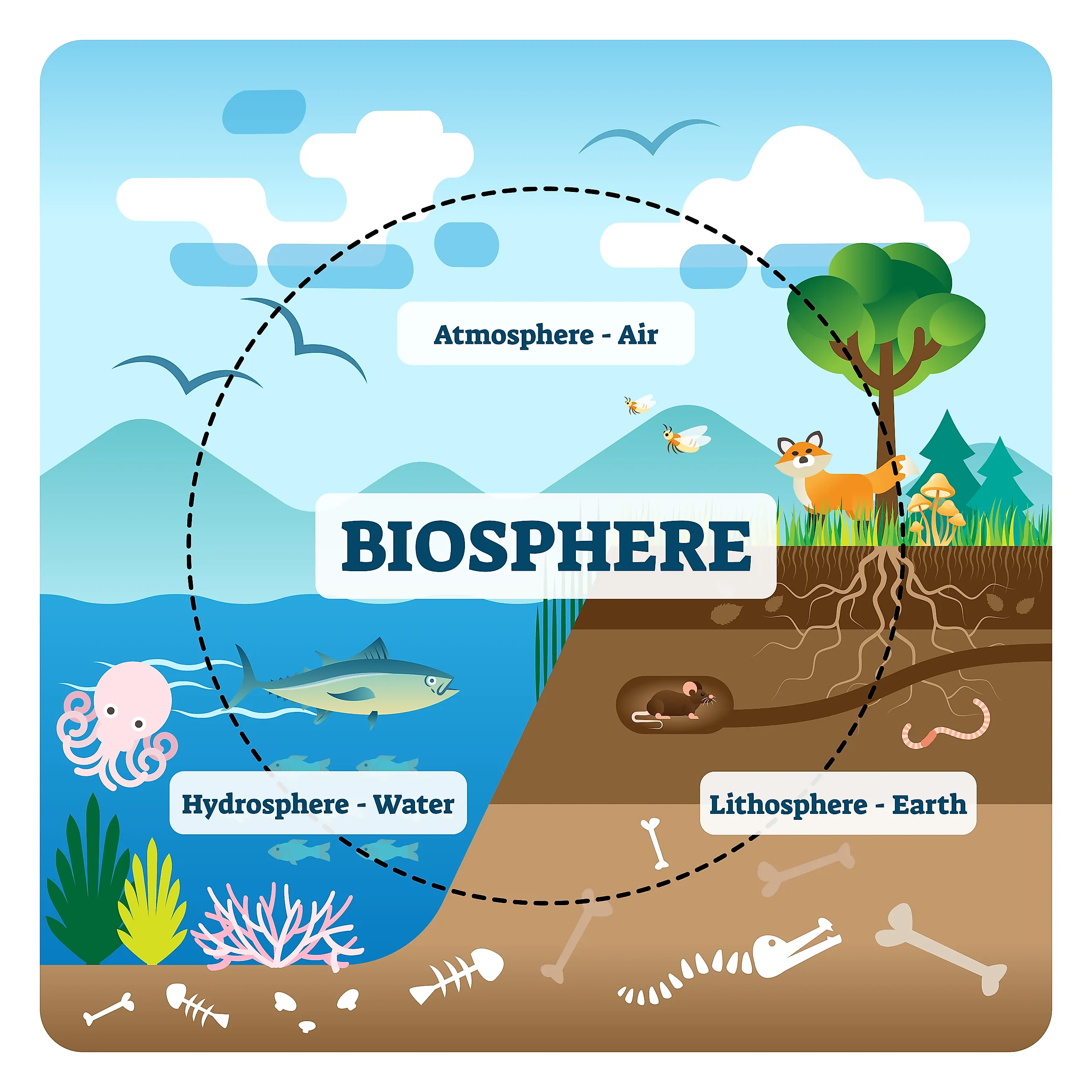
- The four spheres of the Earth are: the lithosphere, hydrosphere, biosphere, and atmosphere
- The biosphere includes all living life on Earth: animal, plant, fungi, protist and monera
- All four spheres must work in harmony to allow for the balance of life to succeed of Earth. Any threat to one sphere, will have drastic effects on the others.
Earth is conventionally described as four interconnected major subsystems: the lithosphere (the solid rocky outer Earth), the hydrosphere (all of the planet's water), the atmosphere (the gaseous envelope around the Earth), and the biosphere (all living organisms). The first three are abiotic, meaning non-living; the biosphere comprises everything from microbial life to plants, animals, and humans. Modern earth-system science also recognizes additional spheres that overlap with the original four: the cryosphere (the frozen portion of the hydrosphere, sometimes treated as a fifth sphere in its own right by NASA and the USGS), the pedosphere (soils, at the intersection of the lithosphere, biosphere, and hydrosphere), and the magnetosphere (the Earth's magnetic field, which shields the atmosphere from solar wind and is critical to maintaining surface habitability). The four-sphere framework remains the standard introductory model for how the planet works, and is the one used below.
Atmosphere

The atmosphere is a mixture of gases held to the planet by gravity. It forms a barrier between Earth's surface and the vacuum of space, blocks most of the Sun's ultraviolet radiation through its ozone layer, traps heat through the greenhouse effect (without which the planet's average surface temperature would be approximately minus 18 degrees Celsius rather than the actual approximately 15 degrees Celsius), and provides the oxygen on which essentially all complex life depends. The atmosphere extends from the surface upward, gradually thinning into space; about 75% of its mass sits within the lowest 11 kilometres.

The atmosphere is divided into five layers by altitude and temperature behaviour. The troposphere extends from the surface to approximately 8 to 15 kilometres (lower near the poles, higher at the equator), contains essentially all weather, and holds approximately 75% of the atmosphere's mass and almost all of its water vapour. The stratosphere extends from the top of the troposphere to about 50 kilometres and contains the ozone layer, which absorbs most ultraviolet-B and essentially all ultraviolet-C radiation from the Sun. The mesosphere extends from approximately 50 to 85 kilometres; most meteors burn up here. The thermosphere extends from approximately 85 to 600 kilometres and is where auroras occur and where the International Space Station orbits. The exosphere extends from about 600 kilometres upward and gradually merges with the solar wind.
By volume, dry air at sea level is approximately 78.08% nitrogen (N₂), 20.95% oxygen (O₂), and 0.93% argon, with the remaining approximately 0.04% made up of trace gases including carbon dioxide, neon, helium, methane, and others. Atmospheric carbon dioxide deserves specific attention: the May 2025 monthly average at Mauna Loa Observatory was 430.2 parts per million per Scripps Institution of Oceanography (430.5 ppm per NOAA), the first time in the instrumental record that the seasonal CO₂ peak exceeded 430 ppm, and the highest level in at least 2 million years based on isotope reconstructions from marine sediment cores. Pre-industrial CO₂ was approximately 280 ppm; the current annual rise is between 2 and 3 ppm per year and accelerating. Beyond the gaseous atmosphere itself, the Earth's magnetosphere (generated by the planet's molten iron outer core) extends about 65,000 kilometres outward on the side facing the Sun and millions of kilometres downwind. Without the magnetosphere, the atmosphere would have been stripped away by the solar wind long ago, as appears to have happened to Mars.
Hydrosphere
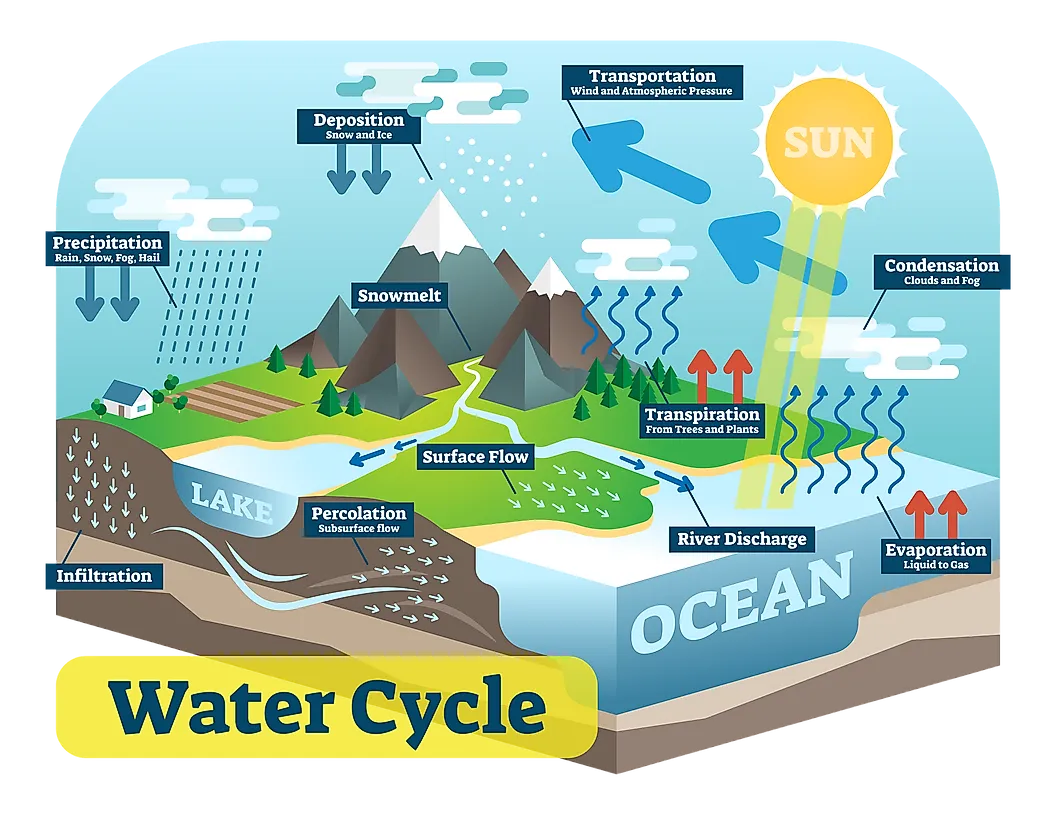
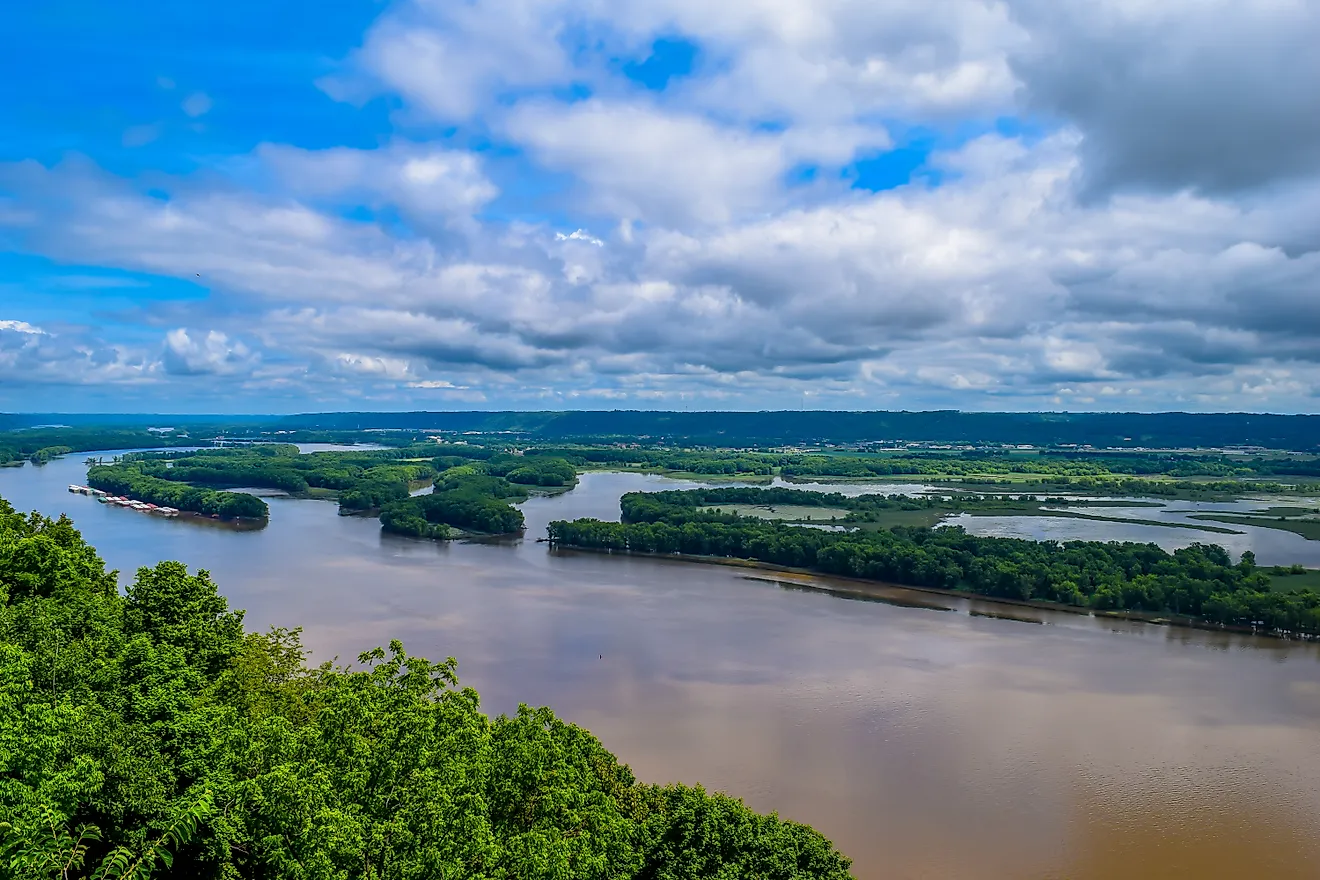
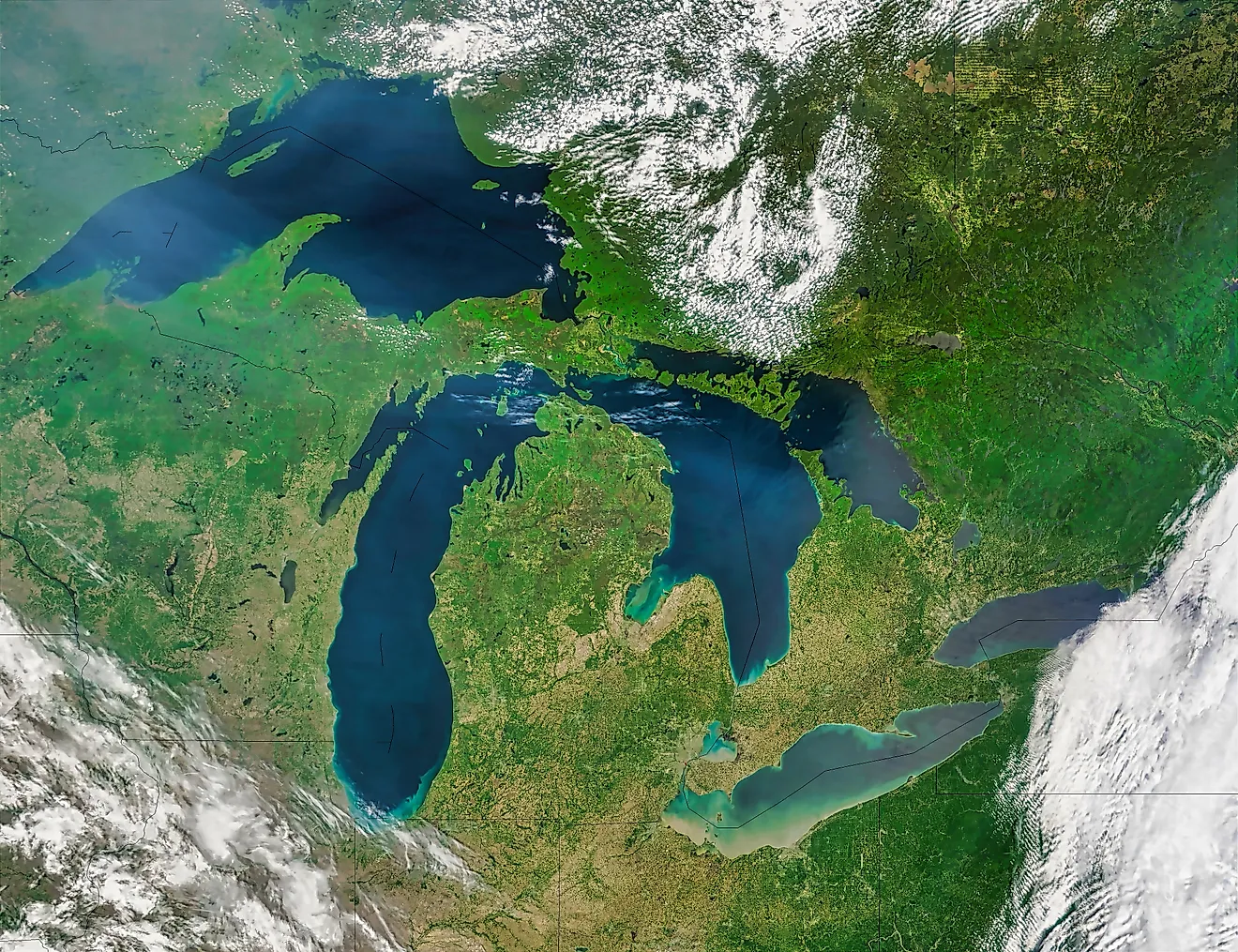
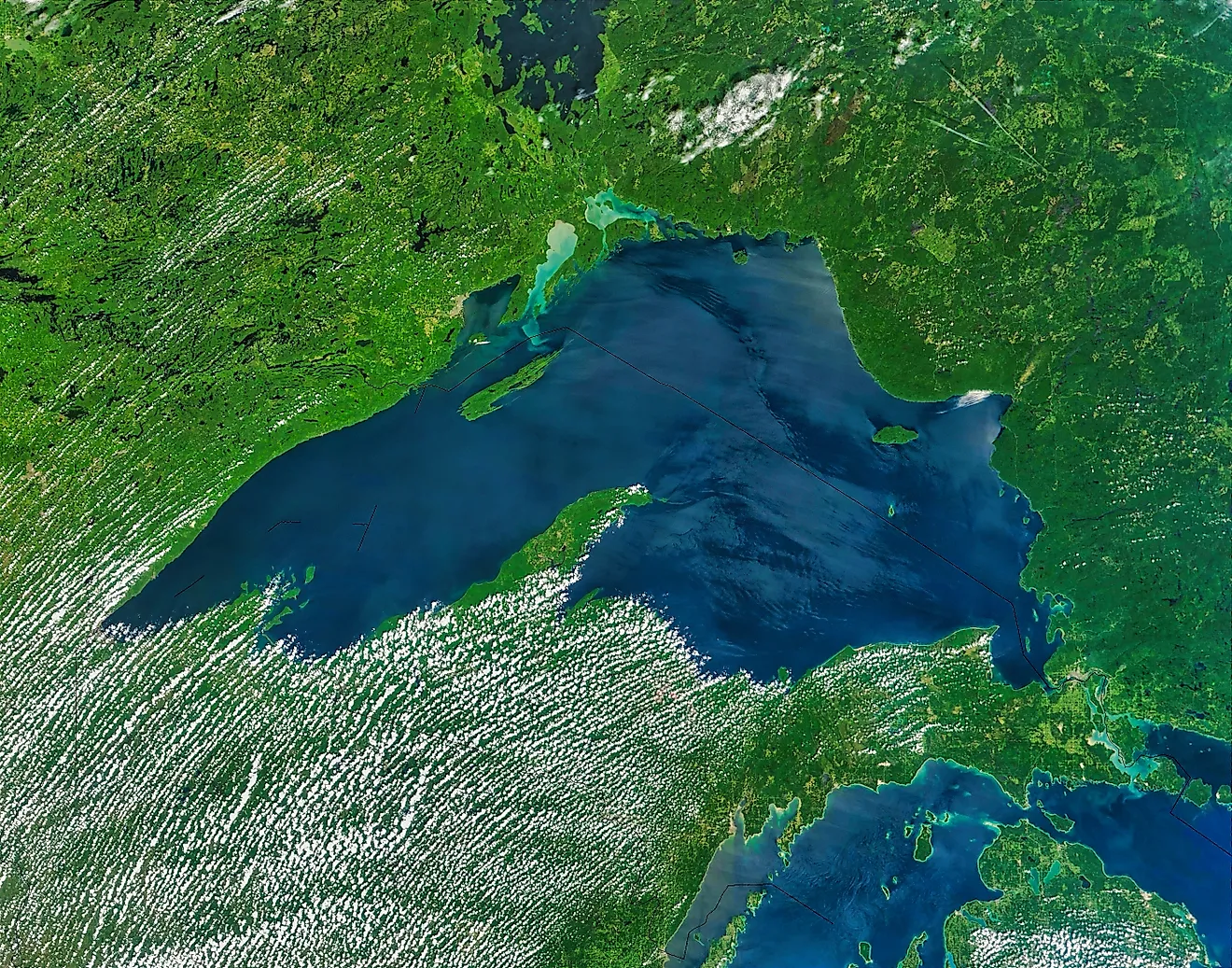
The hydrosphere is the sum total of water on Earth in all three of its physical states: liquid, vapour, and solid (ice). Total water volume on the planet is approximately 1.386 billion cubic kilometres. The distribution is heavily skewed: approximately 97% of all water is saltwater in the oceans, and only about 2.5% to 3% is freshwater. Within the freshwater pool, distribution is again skewed: approximately 68.7% is locked in glaciers and ice sheets, about 30.1% is groundwater, and only about 0.3% is in surface water (lakes, rivers, swamps, wetlands). The freshwater readily accessible at the surface that supports almost all terrestrial life thus constitutes less than 0.01% of the planet's total water.
Liquid

Liquid water is the most familiar form: oceans, seas, lakes, rivers, streams, and the connected subsurface system known as groundwater. Groundwater fills the pore spaces between sediment grains and the fractures in rock; the upper limit of fully saturated rock is called the water table, and a rock unit that holds and transmits significant groundwater is an aquifer. Approximately one third of the world's drinking water comes from groundwater, and groundwater also sustains many large trees and ecosystems during dry seasons by feeding springs and base flows in rivers. The Ogallala Aquifer in the central United States and the Guarani Aquifer beneath Brazil, Paraguay, Uruguay, and Argentina are two of the largest. Many of the world's aquifers, including the Ogallala, are being depleted faster than they can be recharged by precipitation, raising long-term concerns about food and water security in their regions.
Vapour
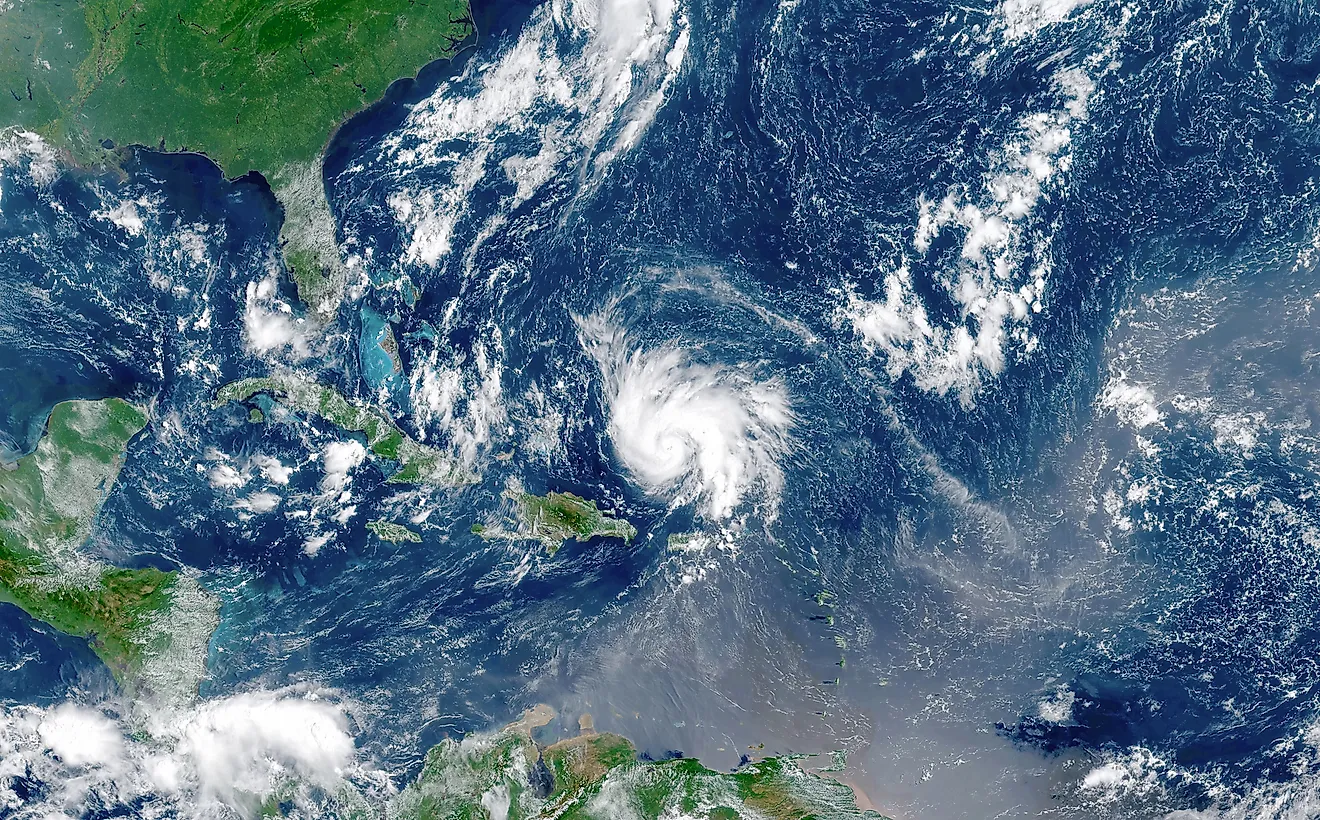
Water vapour is the gaseous form of water and constitutes a small but vital fraction of the atmosphere. Vapour drives the water cycle: when liquid water at the surface evaporates (or sublimates from ice), it enters the atmosphere, where it can travel long distances before condensing into cloud droplets and eventually returning to the surface as precipitation. Atmospheric water vapour is also the most important natural greenhouse gas; its concentration is regulated by temperature (warmer air holds more vapour, which is why a warming planet sees more intense storms and more extreme precipitation), giving it a positive feedback role in climate change rather than a forcing role.
Solid

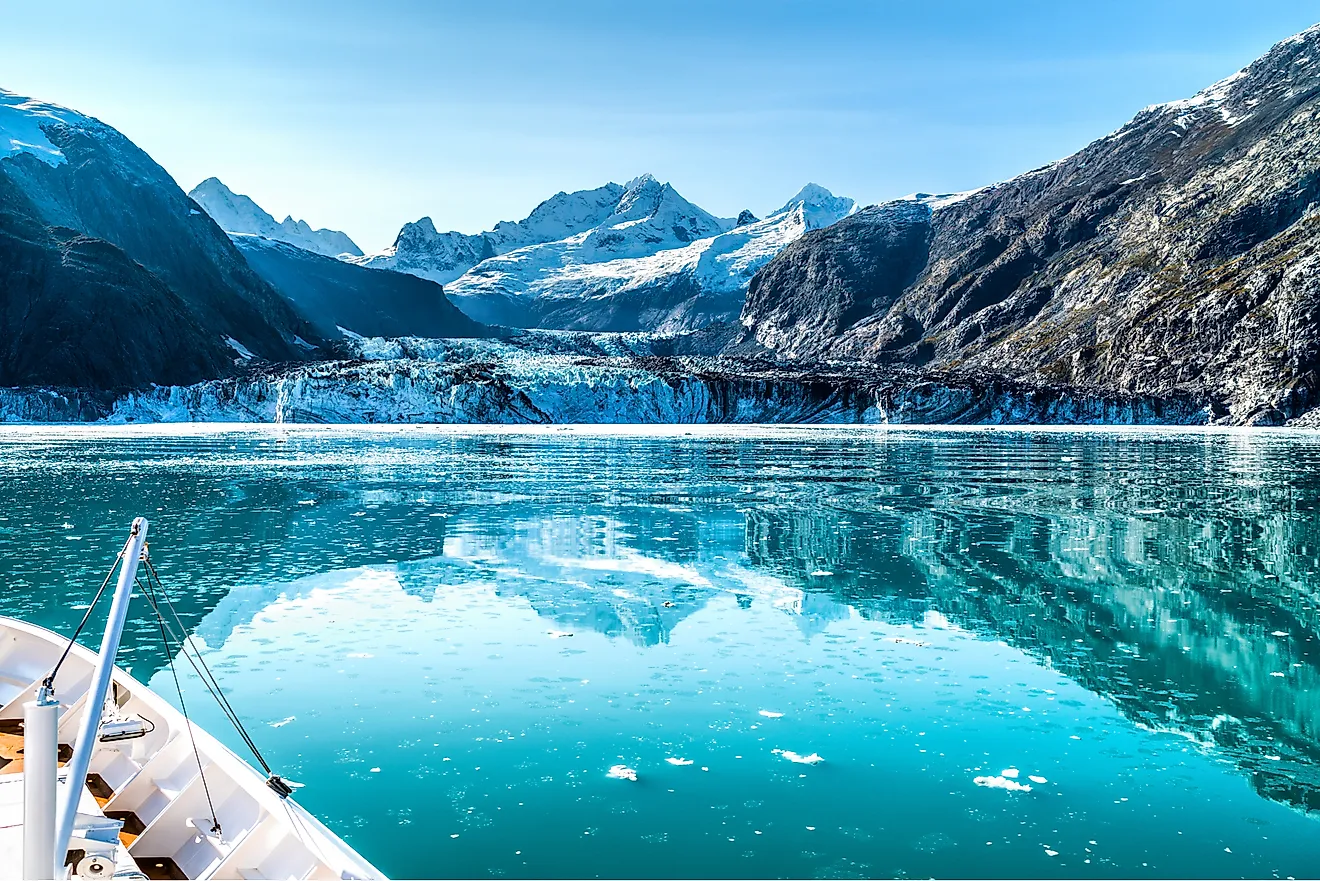
Water in its solid form constitutes the cryosphere: the polar ice caps, the Greenland and Antarctic ice sheets, alpine glaciers, sea ice, frozen lakes and rivers, permafrost, and seasonal snow. The cryosphere is sometimes treated as a fifth sphere in modern earth-system frameworks because it functions semi-independently of the rest of the hydrosphere on long timescales. Approximately 99% of Earth's freshwater ice is held in just two locations, the Antarctic ice sheet (90%) and the Greenland ice sheet (around 9%); their combined melt would raise global sea level by approximately 65 metres if it were to occur fully. Both ice sheets have been losing mass since approximately 1990, with Greenland losing approximately 270 billion tonnes per year and the Antarctic approximately 150 billion tonnes per year through the mid-2020s. The cryosphere also regulates climate through albedo, the fraction of sunlight reflected back to space; ice reflects about 80% of incoming sunlight, while open ocean reflects only about 6%. The loss of summer Arctic sea ice over the past 40 years has reduced the planet's overall albedo and is one of the larger feedbacks accelerating contemporary warming.
Lithosphere

The lithosphere is the rigid outer shell of the Earth, composed of the crust plus the uppermost (rigid) portion of the mantle. The continental lithosphere is approximately 150 to 200 kilometres thick, and the oceanic lithosphere is approximately 50 to 100 kilometres thick. The crust itself ranges from approximately 5 to 10 kilometres thick beneath the oceans to 30 to 70 kilometres beneath continents, reaching maximum thickness of about 70 kilometres beneath the Tibetan Plateau and the Himalayas where the Indian and Eurasian continental plates collide. Below the lithosphere lies the asthenosphere, a partly plastic layer of the upper mantle on which the rigid lithosphere effectively floats.
The single most consequential feature of the lithosphere is that it is fragmented into about a dozen major plates and several minor ones, which move relative to one another at rates of approximately 1 to 10 centimetres per year. Plate tectonics drives essentially all of the planet's large-scale geological activity: mountain building, volcanism, earthquakes, the opening and closing of oceans, and the long-term carbon cycle through subduction and arc volcanism. The current configuration of continents reflects approximately 200 million years of motion since the breakup of the supercontinent Pangaea began in the Mesozoic. The Atlantic Ocean continues to widen at approximately 2.5 centimetres per year while the Pacific is consumed at convergent boundaries around the Ring of Fire. The lithosphere is also the substrate on which the entire biosphere exists, supplying minerals, soils, and topography that shape every other system on the surface.
Biosphere

The biosphere is the sum of all living organisms on Earth and the parts of the planet they inhabit. Its physical extent runs from the deepest known life in the deep subsurface (microbial life has been documented at depths of more than 5 kilometres below the seabed and in oceanic crust pores at 122 degrees Celsius) up to the upper troposphere, where Rüppell's griffon vulture has been documented flying at 11,300 metres above sea level. In the deep ocean, the Mariana Trench at 10,994 metres below sea level hosts active microbial and metazoan communities (including the snailfish species Pseudoliparis swirei, the world's deepest-living fish, recorded at 8,178 metres). On land, springtails and certain spiders have been documented at elevations up to about 8,400 metres on Mount Everest. The total vertical range of the biosphere is therefore approximately 20 kilometres, although the great majority of biomass is concentrated in a much narrower band within a few hundred metres of sea level.
Biological classification has changed substantially since the mid-twentieth century. The system most older textbooks describe (the five-kingdom Whittaker system of 1969, with kingdoms Animalia, Plantae, Fungi, Protista, and Monera) was superseded by the three-domain system proposed by Carl Woese in 1990 on the basis of ribosomal RNA evidence. The current consensus framework recognizes three domains: Bacteria (single-celled prokaryotes including most familiar bacteria), Archaea (single-celled prokaryotes that look superficially like bacteria but are genetically and biochemically distinct, and include most known extremophiles), and Eukarya (all organisms with cell nuclei, including animals, plants, fungi, and the diverse single-celled protists). Within Eukarya, the traditional kingdoms Animalia, Plantae, and Fungi remain valid, while the old "Protista" has been recognized as a paraphyletic grouping and is now usually subdivided into several supergroups (Excavata, SAR, Archaeplastida, Amoebozoa, Opisthokonta). The old "Monera" kingdom has been abandoned entirely because it combined Bacteria and Archaea, which we now know are as different from one another as either is from us.
The full Linnaean classification hierarchy (extended for the domain concept) runs: Domain > Kingdom > Phylum > Class > Order > Family > Genus > Species. Humans, for example, are Eukarya > Animalia > Chordata > Mammalia > Primates > Hominidae > Homo > Homo sapiens. Below the species level, ecologists work with populations, communities, ecosystems, biomes, and finally the biosphere as a whole, each level adding spatial and ecological complexity. The biosphere is the only one of the four spheres that is composed of self-replicating, evolving entities, and the only one whose activity has, in geological history, repeatedly reshaped the other three (the oxygenation of the atmosphere by cyanobacteria approximately 2.4 billion years ago, the burial of vast amounts of carbon as fossil hydrocarbons during the Carboniferous, and the contemporary anthroposphere are all biosphere effects on the abiotic systems).
How The Four Spheres Connect
The boundaries between the four spheres are conceptual rather than physical. Almost every important earth-system process operates across multiple spheres simultaneously. Photosynthesis is a biosphere process that runs on hydrosphere water, atmospheric carbon dioxide, and lithosphere-derived mineral nutrients, and that returns oxygen to the atmosphere. Plate tectonics is a lithosphere process that drives the long-term carbon cycle by burying carbon at subduction zones and returning it to the atmosphere through arc volcanism. The water cycle moves hydrogen and oxygen continuously among all three abiotic spheres while sustaining the biosphere at every step. Climate change, the dominant earth-system challenge of the current century, involves all four spheres at once: rising CO₂ in the atmosphere (driven primarily by human combustion of lithosphere-derived fossil hydrocarbons) is warming the oceans (hydrosphere), melting the cryosphere, and altering the geographic range of the biosphere at a speed unprecedented in the geological record. The four-sphere framework is most useful not as a way of separating these systems but as a vocabulary for talking about how they are linked.