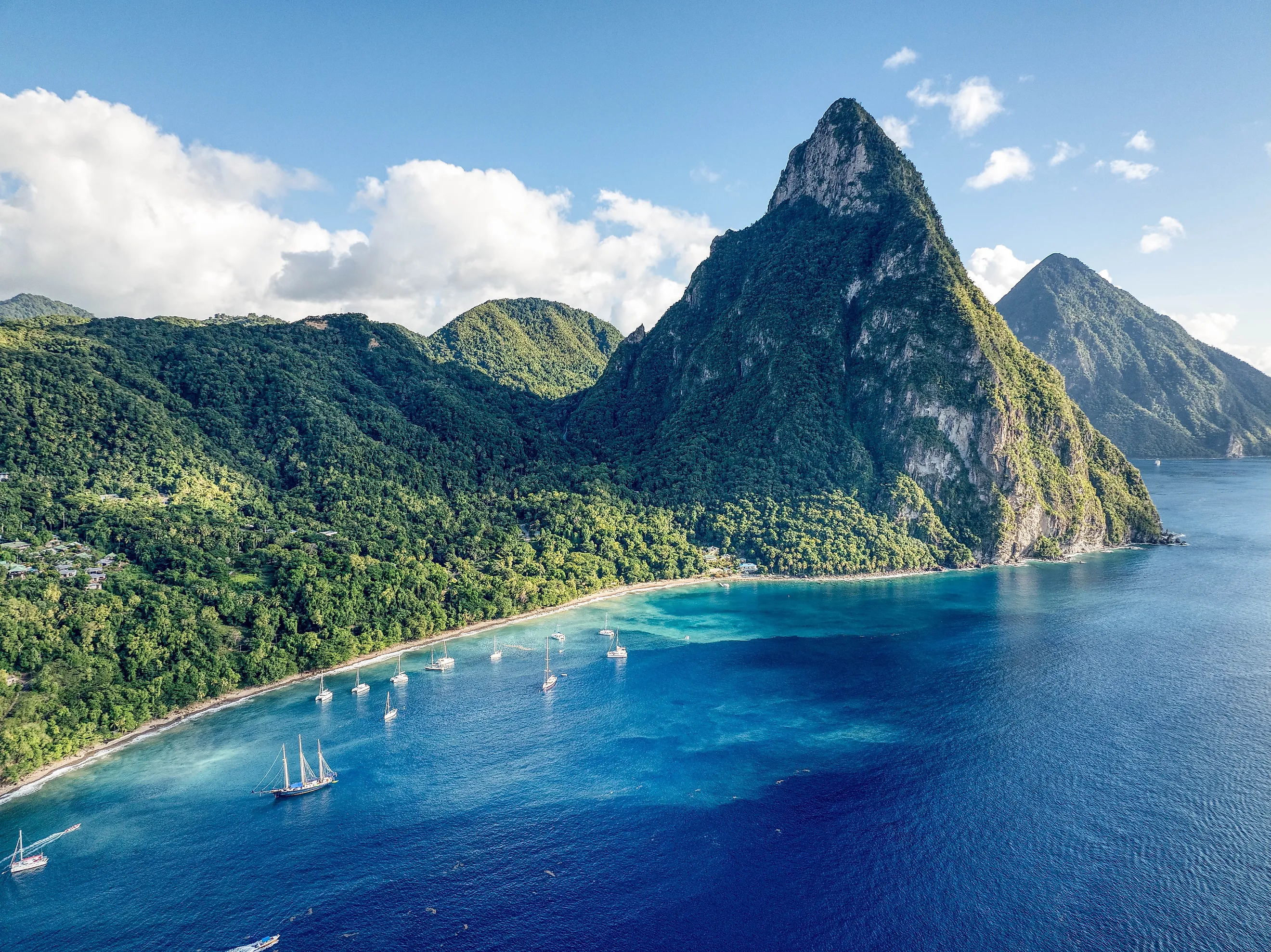
The Only Country in the World Named After a Woman
Saint Lucia is widely cited as the only sovereign state in the world named after a woman. The woman is Saint Lucy of Syracuse, a Sicilian Christian martyr of the early fourth century, and the name reached the Caribbean island by way of a French legend, a feast day, and centuries of contested colonization. The claim has one nuance worth noting up front: Ireland's name in Irish, Éire, derives from the goddess Ériu, so some scholars phrase the Saint Lucia distinction more precisely as the only country named after a historical woman. With that nuance set aside, Saint Lucia stands alone among the United Nations' 193 member states for carrying the name of a real person who was a woman.
Saint Lucy Of Syracuse
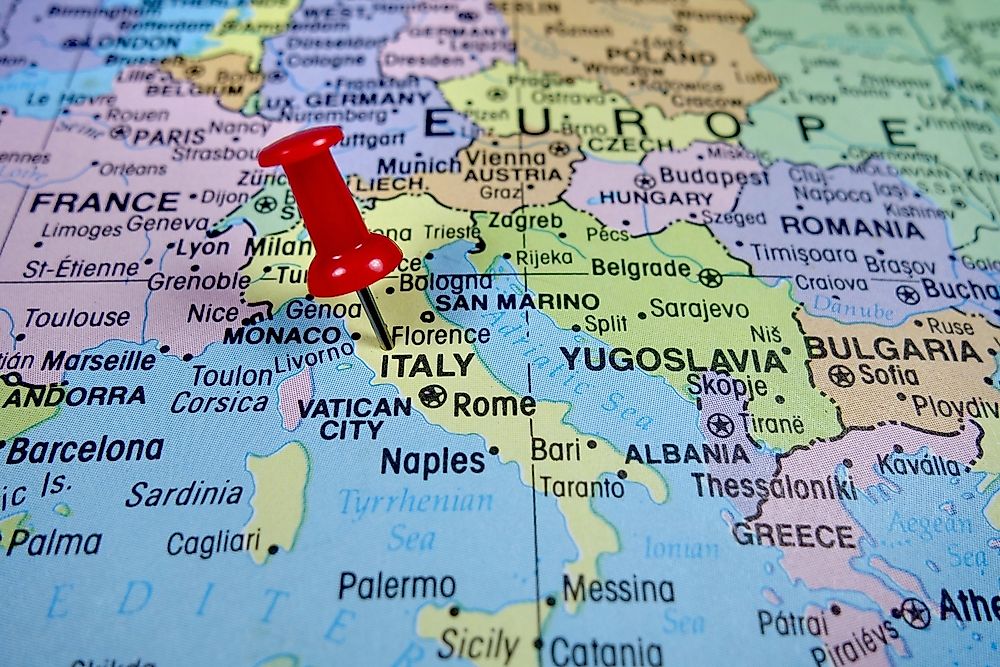
Lucia of Syracuse was born around 283 AD into a wealthy Sicilian family and was killed about 304 AD, in her early twenties, during the Diocletianic Persecution of Christians. Her name derives from the Latin lux, meaning light. The earliest surviving accounts of her martyrdom are the Greek and Latin Acts of Lucy, composed in Syracuse between the fifth and seventh centuries. The traditional story, drawn from those accounts, is that she vowed perpetual virginity and gave away her dowry to the poor, that she defied the Roman governor Paschasius by refusing to sacrifice to pagan gods, and that after several failed attempts at torture she was executed by sword on December 13. The dish-of-eyes imagery that recurs in Lucy's iconography comes from a medieval addition to the story in which her eyes are gouged out or self-removed; the Latin lux connection eventually made her the patron saint of the blind, of writers, and of those with eye troubles. She is one of only eight women named in the Roman Canon of the Mass, alongside the Virgin Mary, and is venerated in the Catholic, Eastern Orthodox, Oriental Orthodox, Anglican, and Lutheran traditions. December 13 remains her feast day across all of them.
How A Sicilian Saint's Name Reached A Caribbean Island
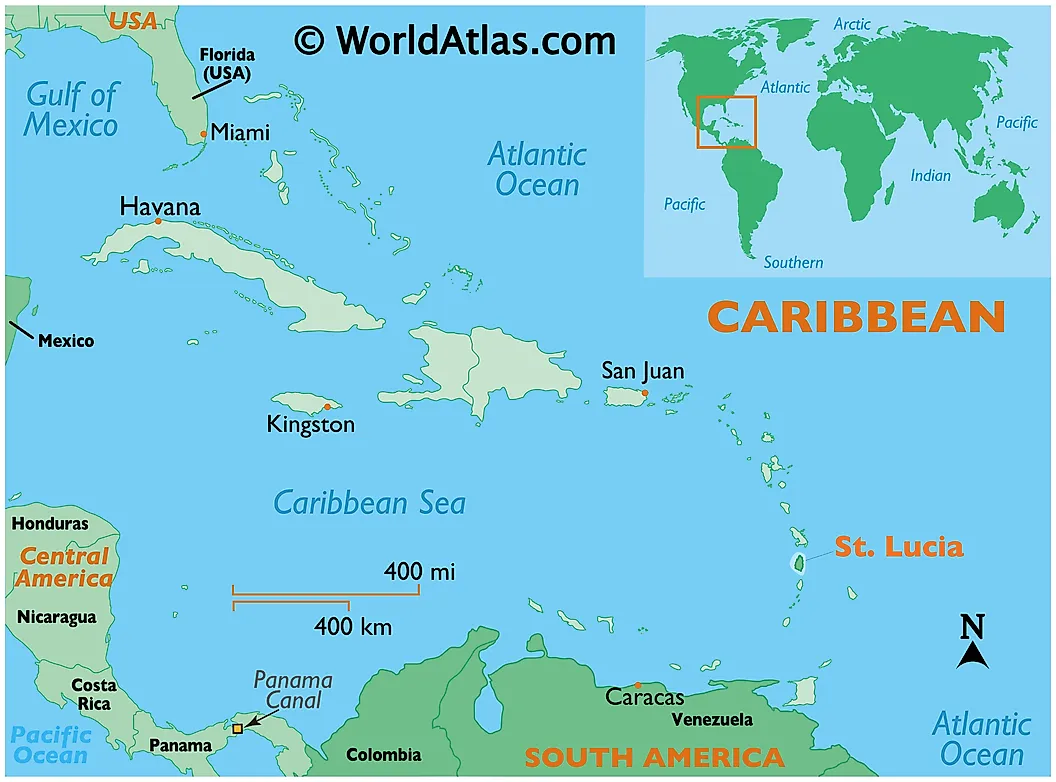
The naming has at least two competing traditions, both involving French sailors and Saint Lucy's December 13 feast day. The most widely repeated version is that a group of French sailors were shipwrecked on the island on December 13 sometime in the early or mid-1500s and named it Sainte-Lucie in gratitude for surviving. A second version, often associated with the French Caribbean colonist Pierre Belain d'Esnambuc and sometimes dated to December 13, 1502, claims the name was given on first sighting rather than after a shipwreck. Both versions are popular tradition rather than documented fact. The historical European record actually places the first European to set foot on the island at Juan de la Cosa, Columbus's former navigator, around 1499, with Columbus himself probably sighting it from a distance in 1502 without landing. Permanent French settlement did not begin until the mid-seventeenth century, after several failed English attempts (1605 and 1639) had been driven off by the resident Kalinago Caribs.
The name Sainte-Lucie was probably in established European use by the late sixteenth century, when the island appears on maps as "S. Lucia," "Sancta Lucia," or similar variants. By the time the French and English had begun their long contest over the island, the saint's name had attached itself permanently. When the British took final possession from the French in 1814, the island had changed hands fourteen times between the two powers. The constant tug-of-war is the source of Saint Lucia's other nickname, "Helen of the West Indies," after the Helen of Troy who was endlessly fought over. The British kept the name as Saint Lucia rather than translating it.
The Indigenous Names That Came First
The Sicilian saint was not the island's original namesake. Before any European saw the place, two successive indigenous peoples had named it after the local iguana population. The Arawak, who arrived from northern South America around 200 to 400 AD, called the island Iouanalao, derived from the Arawak word yuwána for iguana, with the meaning "land of the iguanas" or "where the iguana is found." The Kalinago Carib, who displaced the Arawak between roughly 800 and 1000 AD, kept essentially the same meaning under their own form of the name, Hewanorra. Both names were recorded by the seventeenth-century Dominican missionary Père Raymond Breton in his Carib-French dictionary, the primary surviving source for Kalinago vocabulary. The indigenous name has not entirely disappeared. Saint Lucia's main international airport, at Vieux Fort at the southern tip of the island, is named Hewanorra International Airport.
Is It Actually The Only Country Named After A Woman?
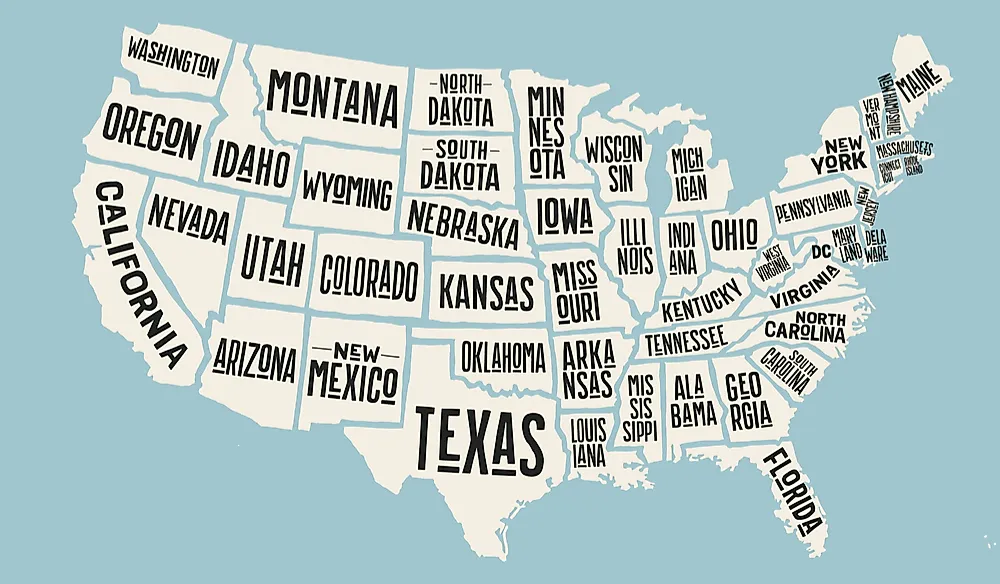
The claim shows up on lists of trivia almost every year, but the precise wording matters. The strictest version of the claim is that Saint Lucia is the only United Nations member state whose name comes from a single, real, historical woman. Under that wording, the claim holds. Ireland is the most commonly cited counterexample: the country's name in Irish, Éire, derives from the goddess Ériu in Gaelic mythology, but Ériu is a mythological figure rather than a documented historical person, and the English-language name Ireland is correspondingly derived. Other potential counterexamples are either subnational territories or are derived from male figures. The Virgin Islands, named after Saint Ursula and the legendary 11,000 virgin martyrs, are not sovereign. Maryland in the United States is named after Queen Henrietta Maria of France, but it is a state. Victoria in Australia is also a state, and the Northern Mariana Islands are a commonwealth of the United States. Among the sovereign states named after people, the ones that have such an origin all carry male names: Saudi Arabia from the House of Saud, Israel from the biblical patriarch Jacob, Bolivia from Simón Bolívar, Colombia from Christopher Columbus, and the Philippines from King Philip II of Spain. Saint Lucia is therefore the only single-historical-woman country, and Ireland the only counterexample if mythological figures count.
Geography
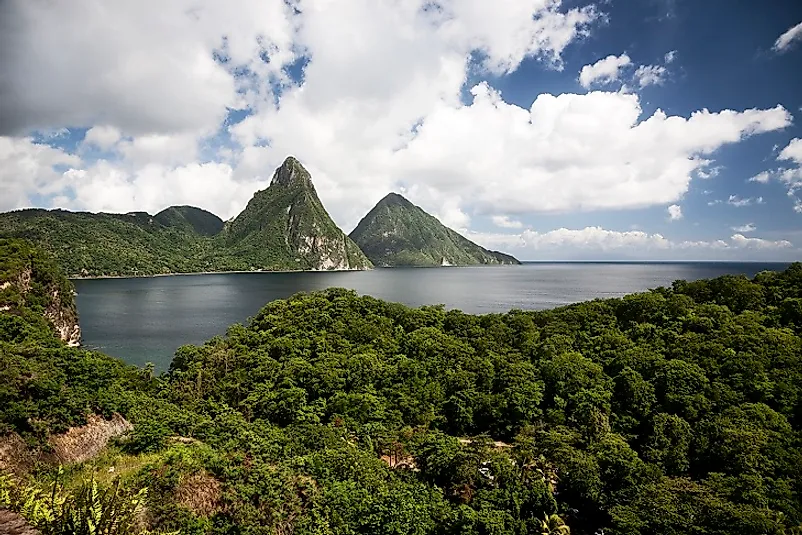
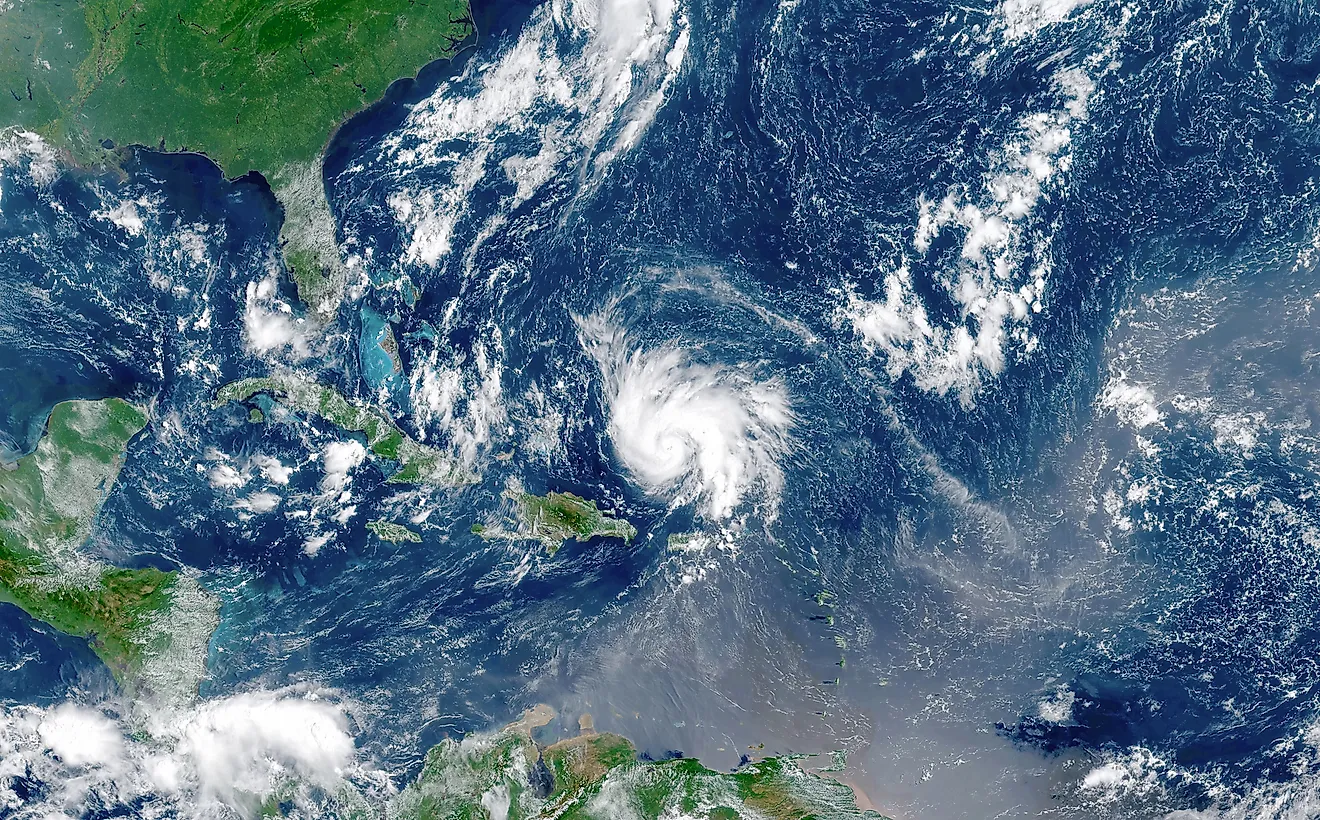
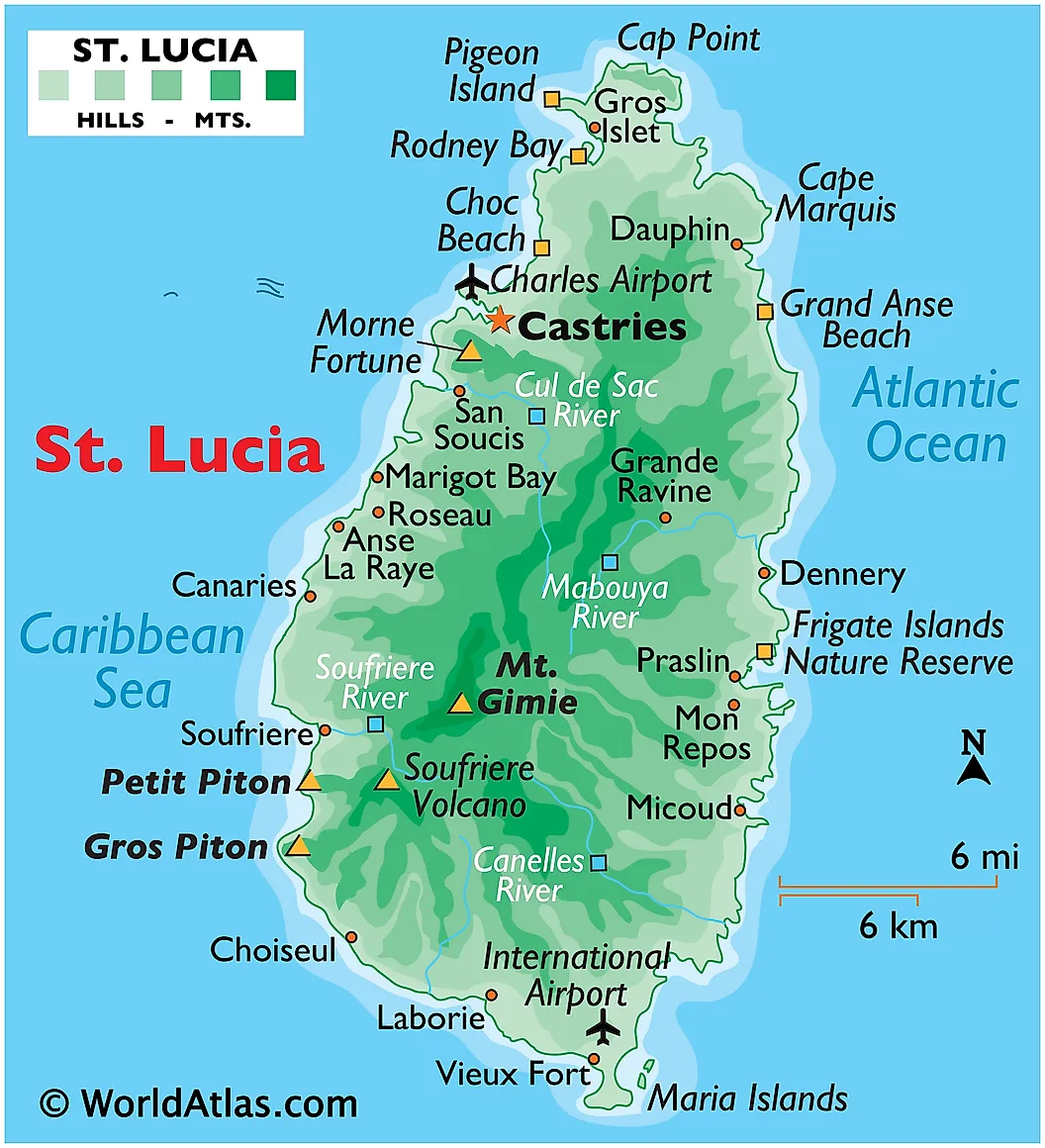
Saint Lucia lies in the eastern Caribbean Sea as part of the Lesser Antilles, with Martinique to the north, Saint Vincent to the southwest, and Barbados about 100 miles to the southeast. The island covers 238 square miles (about 617 square kilometers), making it among the smaller sovereign states by area. The interior is mountainous and volcanic, with a central wooded ridge running roughly north to south and Mount Gimie as the highest point at 3,145 feet (959 meters). The Pitons (Gros Piton at 2,619 feet and Petit Piton at 2,460 feet) are the most photographed feature: two near-vertical volcanic plugs rising sharply out of the sea near Soufrière on the west coast. UNESCO inscribed the Pitons Management Area as a World Heritage Site in 2004. Soufrière itself is also home to what is often described as the world's only drive-in volcano, the Sulphur Springs geothermal area, where a road descends directly into the volcanic crater. The current population is approximately 180,000, and Castries on the northwest coast is the capital and largest city. About a third of the population lives in the broader Castries district. The other principal towns are Vieux Fort, Gros Islet, and Soufrière.
Government
Saint Lucia became fully independent from the United Kingdom on February 22, 1979, and is a constitutional monarchy and a member of the Commonwealth of Nations. The head of state is King Charles III, who succeeded Queen Elizabeth II on her death on September 8, 2022. The monarch is represented locally by the Governor-General, currently Sir Errol Charles, who served as acting Governor-General from November 11, 2021 and was formally appointed on November 1, 2024. The head of government is the Prime Minister, currently Philip J. Pierre of the Saint Lucia Labour Party, who took office on July 28, 2021. The bicameral Parliament consists of the House of Assembly with seventeen elected members serving five-year terms, and an eleven-member Senate whose members are appointed: six on the advice of the Prime Minister, three on the advice of the Leader of the Opposition, and two on the advice of religious, economic, and social groups. The most recent general election was held on December 1, 2025.