What Would Happen If All The Forests Disappeared
The Earth has lost roughly 420 million hectares of forest since 1990, an area larger than India, according to the State of the World's Forests report from the United Nations' Food and Agriculture Organization. The pace has eased, and replanting now offsets some of the damage, but the world still runs a net loss of about 4.7 million hectares a year. What would this loss actually cost?
Forests shelter most of the planet's land animals, supply a real share of the food people eat, and hold soil and rainwater in place. They frame the timber that built human civilization and pull billions of tons of carbon out of the air. Strip them away, and each of those props gives out in turn, and the trouble starts long before the last tree falls.
Goodbye To Most Of The World's Land-Based Species

Forests cover about 30% of the planet's land and host more than 80% of its land-based species. The Amazon Rainforest alone holds at least 10% of the known species on Earth, plus many that live nowhere else and many more not yet described. One of them is the pygmy marmoset, the smallest monkey in the world, small enough to sit in a human palm. Lose that ecosystem and millions of mammals, insects, birds, reptiles, amphibians, and other wildlife lose their habitat at once. The collapse would start at the bottom. Without leaves, decaying wood, and cover, insect populations crash, and the amphibians, birds, mammals, and reptiles that eat them starve close behind. Birds lose their nesting sites, seasonal fruit, and insect supply and follow. Large predators like jaguars hang on longer, as long as their prey lasts and as long as hungry people are not hunting the same animals.
A few of the hardiest species might adjust to whatever comes next, probably a tropical savanna of open water, scattered trees, and grass. Fish and other aquatic animals would come under immediate pressure as one of the last abundant food sources left. Even then, the shortage of food and shelter would keep grinding forest-dependent wildlife toward endangerment and then extinction.
The same story would repeat in every major forest, including the Daintree, the boreal forest that ranks as the largest on Earth, the Congo Basin, and the rainforest of New Guinea. New Guinea is the third-largest rainforest in the world, and clearing it would erase an estimated 5 to 7% of global biodiversity, including more than 700 bird species with nowhere else to go.
A Major Food Source Vanishes

Most of what we eat now comes from farms and ranches, but forests still account for a large share of the human diet. Fruits, nuts, edible insects, mushrooms, game, roots, leaves, honey, and spices all thin out or disappear with the trees. The bigger blow lands on farms. A large portion of global crop production depends on pollination, and the pollinators that do that work, butterflies, bees, beetles, moths, birds, and bats, mostly depend on forests themselves. Take away the forests and you take away the pollinators, and crop yields fall right along with the wild harvest.
An Age Of Floods And Erosion, Worldwide

Forests are one of the reasons the ground stays where it is. Tree canopies blunt the force of heavy rain, absorb water, and release it slowly back into the air. Roots anchor the soil and slow runoff, which keeps erosion down and keeps rivers from spiking to dangerous levels after every storm. Even with 30% of the planet's land under forest today, record floods are common. Rising seas and poor drainage play a part, but stripping the forests would sharply raise the odds of whole cities and even countries flooding. Farmland would go under, roads would need boats to cross, and washed-out soil would pour into rivers and lakes, dragging down water quality along the way.
Goodbye To Wood

Wood has carried human civilization for as long as there has been human civilization. It goes into construction, medicine, furniture, paper, and packaging, and it is still the daily fuel for cooking and heating for more than 2.5 billion people, most of them in Africa and other developing regions, according to the FAO. Erase every forest, including the plantations that supply much of the world's timber, and the shortage would be immediate. Logging, sawmilling, transport, and furniture jobs would vanish by the millions. The people who burn wood to cook and stay warm would face hunger and cold-weather illness with no easy substitute. It would be the end of an era for anyone who works in wood, which for most of history has been nearly everyone.
Less Oxygen, More Carbon, And A Hotter Planet

The oxygen loss would be smaller than it sounds. Forests generate about 20% of the planet's oxygen through photosynthesis, but they consume nearly as much through wildfire, nighttime respiration, and the microbes that break down dead matter, so a forest's net contribution is close to zero. The ocean produces roughly half the world's oxygen anyway, and Scientific American notes the atmosphere already holds enough to last millions of years. Nobody would be left gasping. The real damage is on the carbon side.
Forests, like oceans, act as sinks that pull enormous quantities of carbon dioxide out of the air and slow its buildup. Photosynthesis is the mechanism: trees take in carbon dioxide and lock it into leaves, stems, and wood.
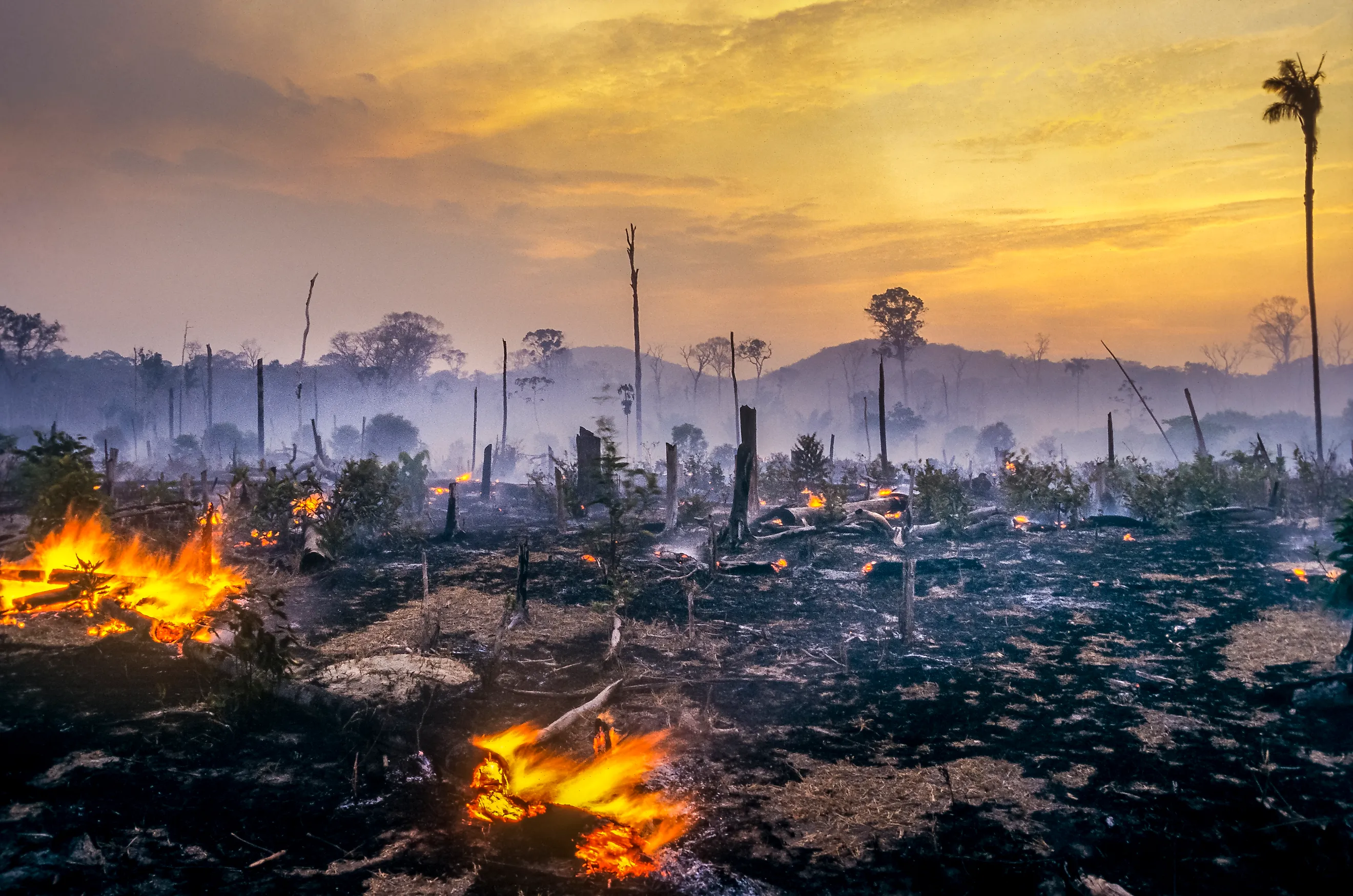
Human activity has already pushed atmospheric carbon dioxide more than 50% above its pre-industrial level, a figure NOAA reported in 2025. Wipe out the forests and the rate at which carbon accumulates in the air would jump. It gets worse if the forests burn on the way out, because the carbon stored in trees over centuries would go straight back into the atmosphere. Add continued fossil fuel combustion and the result is higher average temperatures and more droughts and wildfires.
Reversing The Course

The recent slowdown in deforestation and the uptick in replanting have started to turn things around. Even so, a net loss of nearly 5 million hectares a year is a trajectory that has to be reversed, or the future arrives on a harsher planet. Stopping deforestation overnight is not realistic, but other measures can help forests recover and tip the balance toward net gain. Farming and ranching drive much of the clearing, which makes agroforestry, the deliberate integration of trees and shrubs into farmland, one of the more promising fixes. Over time those trees give back to the crops and livestock around them, providing shade, cooling the ground, holding the soil, and slowing erosion.
Wildfire is another leading cause of forest loss, and most of it traces back to people. Human activity was responsible for 84% of wildfires in the United States between 1992 and 2012, according to a study in the Proceedings of the National Academy of Sciences. Unattended campfires, discarded cigarettes, sparks from railroads and power lines, and deliberate burns all feed the total. The countermeasures are unglamorous and effective: put campfires out completely, dispose of cigarettes properly, keep water and firefighting gear on hand, and watch any burn until it is dead. That matters most during fire season, when the weather turns hot and dry, usually in summer and fall.
Large restoration projects help too. Africa's Great Green Wall aims to restore 100 million hectares of degraded land across the Sahel by 2030, and tree-planting campaigns elsewhere add to the recovery. Governments at every level can do more than set land aside, funding the monitoring and care that let these ecosystems actually thrive. The through line is simple enough. A shrinking forest helps no one over the long run, a growing one makes for a healthier and more biodiverse planet, and getting there is a shared job.