The National Forests With The Most Rattlesnakes
Rattlesnake country gets especially interesting in the American Southwest, where one national forest can climb from hot desert to cool mountain woodland in a single afternoon. Arizona leads the nation with 13 rattlesnake species, according to the Arizona Game and Fish Department, and several of its national forests overlap the ranges of multiple species. The most varied forests have warm foothills below steep, rocky mountains, and a few contain habitat for rare mountain rattlers found in only a small corner of the United States. For hikers, that means a wide variety of rattlesnakes can turn up across these ten forests, especially between spring and early fall.
Coronado National Forest, Arizona And New Mexico

Coronado National Forest has the strongest case for the most varied rattlesnake community in the National Forest System. Forest Service research has documented an exceptional reptile assemblage across its Sky Island mountain ranges. Western diamondbacks occupy the warmer country, while Arizona black rattlesnakes reach cooler elevations. Tiger, black-tailed, rock, twin-spotted, and Arizona ridge-nosed rattlesnakes are also recorded in the region. The Forest Service has identified more than 46,000 acres of occupied twin-spotted rattlesnake habitat, giving that uncommon mountain species a substantial foothold here.

A hike can start among dry grass and agave, then climb into oak woodland or pine before lunch. That steep rise is exactly why so many rattlers overlap in one forest. The Arizona ridge-nosed rattlesnake is especially notable because its U.S. range is concentrated in southeastern Arizona. Coronado gives visitors a rare chance to explore desert and high-elevation rattlesnake habitat within the same mountain system.
Tonto National Forest, Arizona

Nearly 2.9 million acres of central Arizona put Tonto National Forest in a different league for sheer rattlesnake habitat. Western diamondbacks are at home in the lower Sonoran Desert, while black-tailed and Arizona black rattlesnakes occupy higher country. Arizona Game and Fish also documents tiger rattlesnakes in the McDowell-Superstitions-Mazatzal mountain complex. The forest begins around 1,300 feet and rises to nearly 8,000, so snake activity can change dramatically over a short drive.

Trails around the Superstition Mountains cross open, sun-baked ground where warm spring weather can bring rattlesnakes out early in the day. Higher elevations stay cooler much longer. Arizona Game and Fish generally places rattlesnake activity in the state's warm regions between March and October, which makes Tonto's lower trails especially active during the shoulder seasons. Few forests combine this much low-desert ground with so much rugged mountain terrain.
Prescott National Forest, Arizona

Prescott National Forest Hiking Trail.
Prescott National Forest may be better known for granite boulders and ponderosa pine, but its official wildlife records reveal a serious rattlesnake lineup. A Forest Service fauna appendix confirms western diamondback, speckled, black-tailed, and Mojave rattlesnakes within the forest.
The warmest habitat sits lower, especially toward the Verde Valley. Mojave rattlesnakes favor open dry country, while black-tailed rattlesnakes reach higher rocky slopes. Arizona black rattlesnakes are also documented across central Arizona's mountain belt, including the Prescott region.
That makes elevation part of the fun for hikers. A morning route can begin among hot granite and chaparral, then finish beneath much cooler pine cover. The Forest Service records are particularly useful because they confirm several rattlesnake species inside the management area rather than merely placing their statewide ranges nearby. Prescott's cooler reputation hides a surprisingly strong slice of central Arizona rattlesnake country.
Gila National Forest, New Mexico

Gila National Forest comes with unusually useful evidence. An official Forest Service wildlife checklist records western diamondback, black-tailed, prairie, and rock rattlesnakes. Even better, the checklist classifies western diamondback, black-tailed, and prairie rattlesnakes as common, while rock rattlesnakes are marked uncommon. That gives Gila something many forests lack, which is agency abundance categories rather than just a list of possible species.

The terrain lines up neatly with those records. Hot lower country suits western diamondbacks, while black-tailed rattlesnakes can turn up well above them in wooded mountains. Rock rattlesnakes favor broken, stony slopes where crevices offer shelter. Gila contains huge stretches of all three settings across southwestern New Mexico. A trail through warm canyon country can therefore feel very different from one several thousand feet higher, even within the same forest. For anyone interested in rattlesnake ecology, Gila offers unusually clear evidence of how species divide themselves across elevation.
Lincoln National Forest, New Mexico

Lincoln National Forest rises from dry southeastern New Mexico into mountain country above 11,000 feet, and its rattlesnake records change right along with the climb. The Forest Service lists western diamondback, black-tailed, rock, and prairie rattlesnakes. Western diamondbacks are associated with the hottest lower elevations, while black-tailed rattlesnakes move into cooler wooded slopes. Rock rattlesnakes occupy rugged mountain terrain and occur in both banded and mottled forms in the broader region, although those forms belong to the same species.

Lincoln covers roughly 1.1 million acres, so that elevation spread is not a minor feature. A drive toward Cloudcroft can leave desert heat behind quickly while climbing into cool forest. That short transition puts very different rattlesnake habitats close together and helps explain why four species are documented across the forest.
Kaibab National Forest, Arizona

Kaibab National Forest sits on high northern Arizona ground just beyond some of the Grand Canyon's most famous scenery. Forest Service planning material confirms Arizona black rattlesnakes in the forest, including in semi-desert grassland and Gambel oak habitat.
Prairie, Great Basin, and black-tailed rattlesnakes have also been documented across Kaibab lands and nearby landscapes, while western diamondbacks stay mostly in the lower, warmer country below the plateau. Northern Arizona taxonomy can get messy, though. Names such as Hopi rattlesnake and Grand Canyon rattlesnake have historically been applied to regional forms that modern classifications often place within broader species.

The conservative count is still impressive. Lower, drier sections near Grand Canyon country can support rattlers associated with open plateau habitat, while cooler ponderosa forest lies not far away. That makes Kaibab a reminder that Arizona rattlesnake country extends well beyond cactus desert. Visitors heading north for pine forest and canyon views are still traveling through a landscape where several rattlesnake species overlap.
Coconino National Forest, Arizona

Sedona and the country around the Mogollon Rim give Coconino National Forest two very different rattlesnake settings. Arizona black rattlesnakes are established through central Arizona's mountain belt, while black-tailed rattlesnakes occupy warmer rocky slopes. Prairie rattlesnakes also occur in parts of the surrounding plateau country.

The contrast becomes obvious on the road. Sedona's lower red-rock trails heat up far more quickly than the forests around Flagstaff, while the San Francisco Peaks rise high enough for cold conditions that sharply limit rattlesnake activity. One day can therefore include warm canyon habitat and much cooler upland forest without leaving Coconino. Arizona Game and Fish places the main activity season for rattlesnakes in warmer parts of the state from spring through early fall. Hikers on lower trails during that period have the best chance of encountering the species that give this forest its strong central Arizona showing.
Apache-Sitgreaves National Forests, Arizona

Apache-Sitgreaves stretches across more than two million acres of eastern Arizona, with elevations ranging from roughly 3,500 feet near Clifton to more than 11,000 feet around Mount Baldy. Arizona black rattlesnakes are documented in the White Mountains and Blue Range, while western diamondbacks occupy hotter lower country. Black-tailed rattlesnakes cover another broad band of rocky mountain habitat.

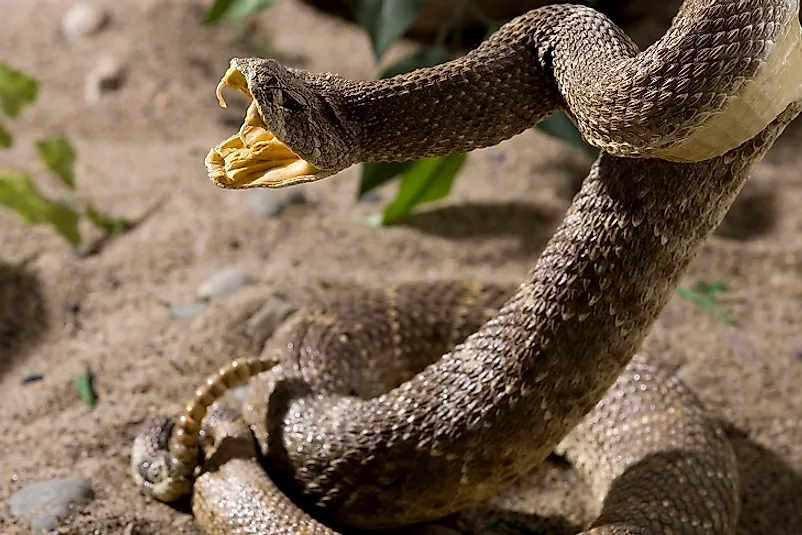
Arizona Black Rattlesnake, Crotalus cerberus.
The highest forests are too cold for much rattlesnake activity, so the action shifts downhill. That is what makes a drive through Apache-Sitgreaves so striking. Cool lakes and high pine forest can give way to dry canyon country in surprisingly little time. Forest Service elevation figures show just how extreme that transition is. For rattlesnakes, it creates a broad staircase of habitats, with different species appearing as temperatures rise toward the lower districts.
San Bernardino National Forest, California
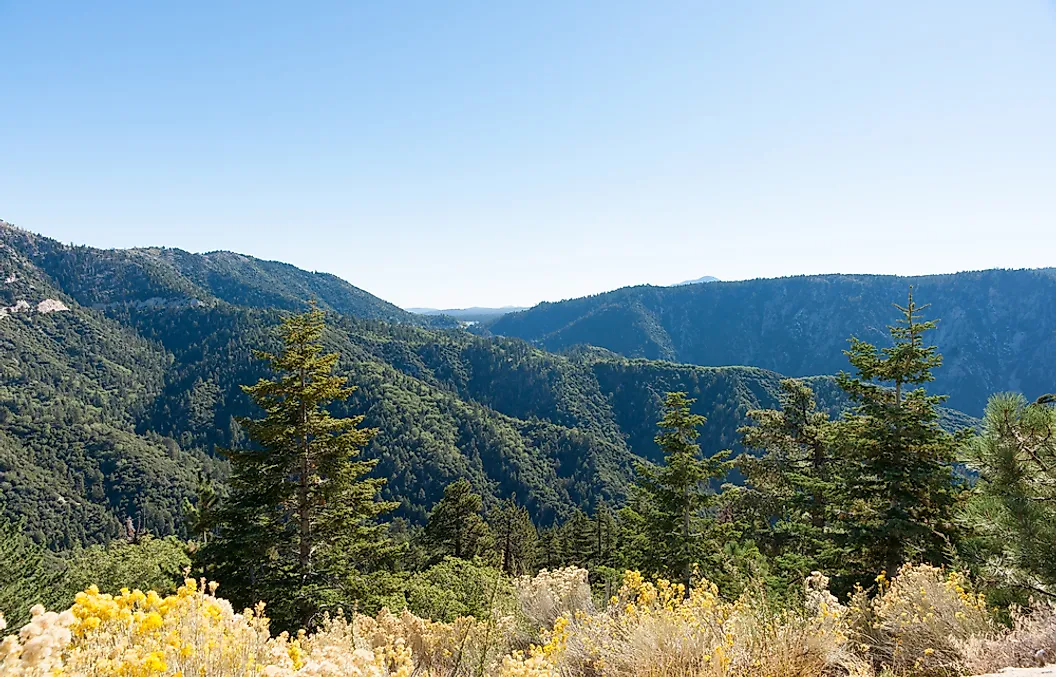
San Bernardino National Forest puts several Southern California rattlesnakes within easy reach of one another. Forest Service records document red diamond and southwestern speckled rattlesnakes, while agency safety guidance identifies the southern Pacific rattlesnake as the species visitors are most likely to encounter. Those records make this one of California's best-supported national forests for rattler diversity.

The mountains rise sharply above much hotter surrounding terrain. Red diamonds favor warmer parts of southwestern California, and speckled rattlesnakes are strongly associated with rocky dry slopes. Southern Pacific rattlesnakes occupy a wider stretch of coastal Southern California. The Forest Service has recorded speckled rattlesnakes across all three ranger districts, so their presence is not limited to one isolated pocket. Lower trails can warm quickly in spring while the highest ridges remain cool, giving hikers a clear demonstration of how elevation controls where rattlesnakes are most active.
Cleveland National Forest, California

Cleveland National Forest runs through the mountains of Orange, Riverside, and San Diego counties, putting three major Southern California rattlesnake ranges close together. Red diamond rattlesnakes are documented on forest lands, including habitat around Boulder Creek.
Southern Pacific rattlesnakes occur widely across the region, while southwestern speckled rattlesnakes turn up in the drier inland mountains. Recent observation records continue to place all three across the broader Cleveland landscape.

The setting changes quickly as travelers move inland. Some ridges still feel close to coastal Southern California, while hotter slopes farther east become much drier and rockier. That shift is exactly where the species mix becomes interesting. Red diamonds favor the warmer southwest, southern Pacific rattlesnakes have the broadest local presence, and speckled rattlesnakes take advantage of the driest rocky ground. California wildlife officials advise giving any rattlesnake plenty of room and allowing it to move away, especially on narrow trails where brush can hide a resting snake until hikers are fairly close.
Where Rattlesnake Country Reaches Its Peak
Coronado stands out for species diversity, while enormous forests such as Tonto and Gila offer miles of habitat where several rattlesnakes share the same broader landscape. What ties nearly every forest here together is elevation. Hot foothills support desert species, then cooler slopes open the door to rattlers adapted to woodland and mountain terrain. That is why Arizona and New Mexico dominate so strongly. The Southwest packs huge climatic changes into short distances, and rattlesnakes have filled those ecological niches with remarkable variety. For hikers, the safest approach is also the simplest. Stay alert on warm trails, give every snake plenty of space, and enjoy one of the wildest parts of the American landscape without disturbing the animals that live there.