The Best National Parks Near Los Angeles
Four national parks sit within a day's drive of downtown Los Angeles, and no two of them share a landscape. One is a high desert of wind-carved granite and spiked yuccas. Another is a chain of islands reachable only by boat, where animals evolved in isolation for thousands of years. A third holds the largest tree on the planet by volume. The fourth is the smallest park in California, built on the eroded bones of an ancient volcano. Angelenos can reach any of them between a weekend and a single long day, which is why the drive out of the city on a Friday afternoon is a regional ritual.
Joshua Tree National Park

The name almost went a different way. When the area was first proposed for protection in the 1930s, the suggested title was Desert Plants National Park, a nod to the more than 800 plant species that grow across this stretch of southeastern California. The Joshua tree won out, and the twisted, dagger-leaved yucca now stands as the park's signature against the sky. About 130 miles east of Los Angeles, roughly a two to two and a half hour drive, Joshua Tree National Park is where two desert ecosystems meet: the higher, cooler Mojave and the lower, hotter Colorado. The park stays open around the clock every day of the year. Spring and fall bring the mildest weather, while summer afternoons climb past 100 degrees Fahrenheit (38 degrees Celsius) and winter nights drop below freezing, with snow occasionally dusting the higher elevations. Hiking, rock climbing, horseback riding, cycling, and backcountry four-wheeling all draw visitors, but the dark skies are the reason many people stay past sundown and camp.
Channel Islands National Park

Reaching this park means leaving the mainland behind. A ferry from the Ventura or Oxnard harbors runs one to three hours out to Channel Islands National Park, a chain of five islands that have stood isolated for thousands of years, long enough for their wildlife to diverge from anything on the coast. The island fox, found nowhere else on Earth, is the best-known example, but the list runs long: salamanders, spotted skunks, big-eared bats, and tree frogs on land, and bald eagles, pelicans, cormorants, scrub-jays, and petrels overhead. Offshore, gray, humpback, and blue whales pass on migration, and dolphins, seals, and otters are common sights. The paleontological record is just as rich, and it includes the nearly complete skeleton of a pygmy mammoth pulled from the island soil. Snorkeling, kayaking, diving, whale watching, surfing, tide pooling, and camping are the usual reasons to make the crossing, and the solitude on these rugged coasts is part of the draw.
Sequoia and Kings Canyon National Parks

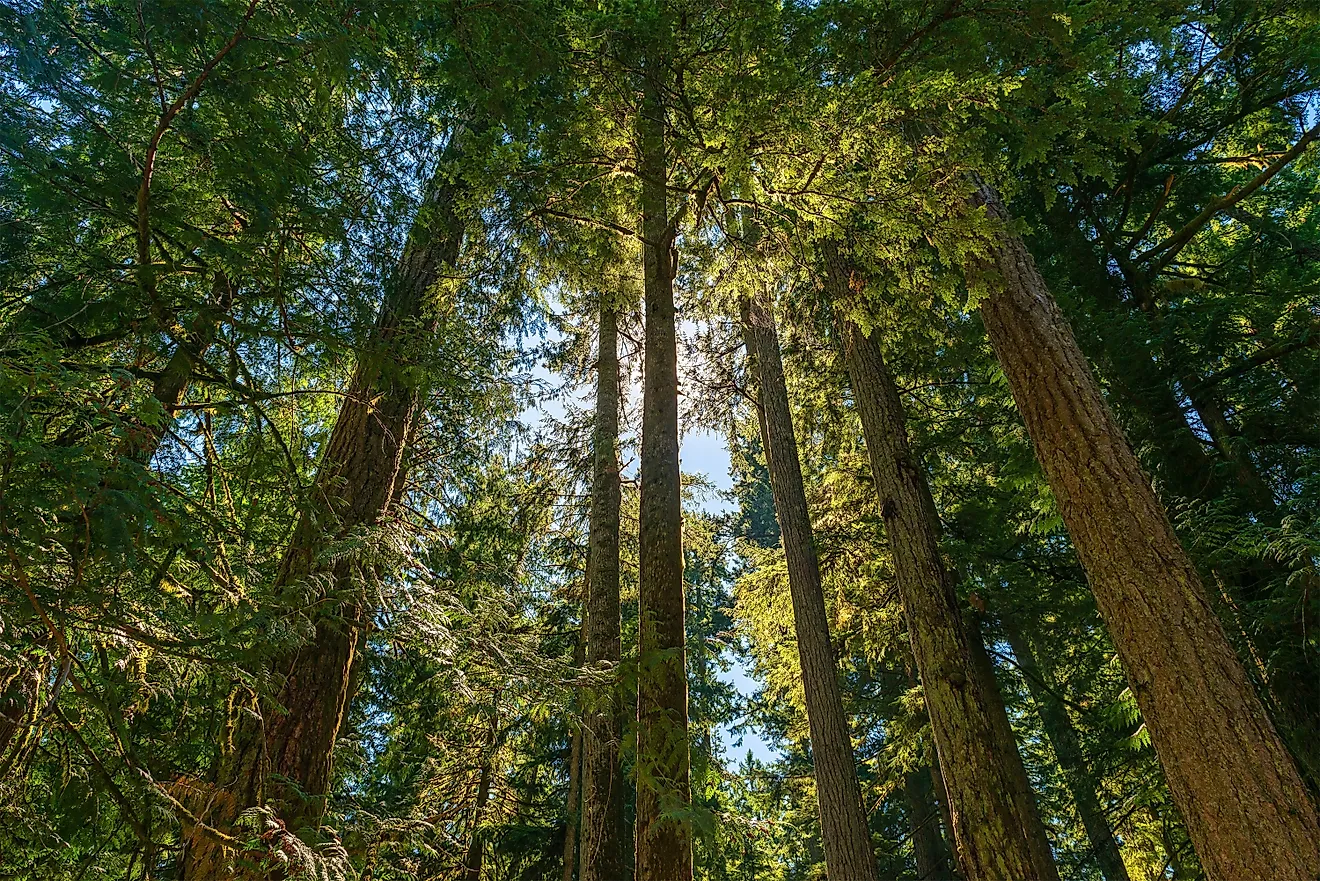
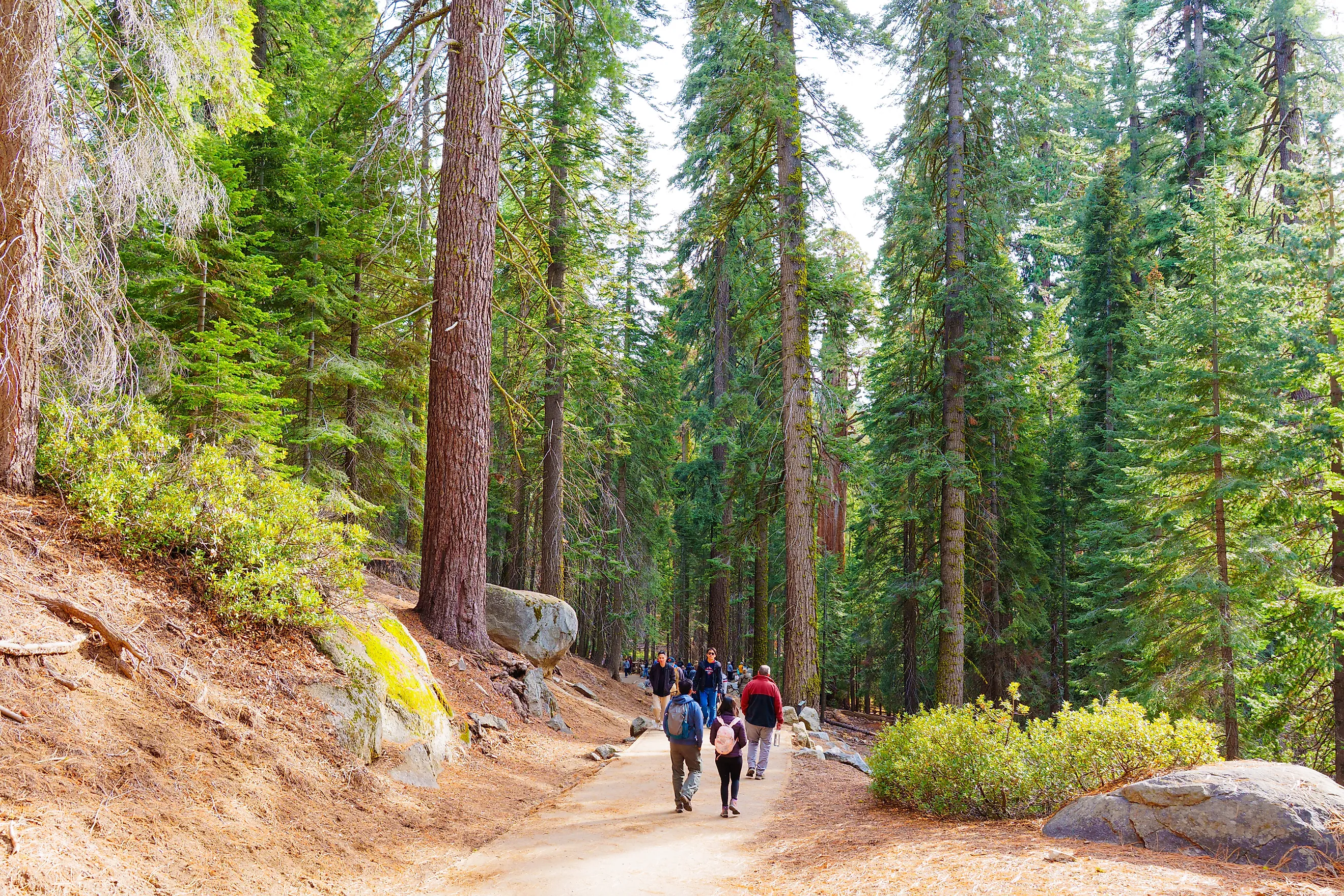
The largest tree on the planet by volume grows here. The General Sherman Tree holds an estimated 52,500 cubic feet of wood, a trunk that weighs close to 1,400 tons. The National Park Service offers a set of comparisons to make that number land: enough lumber to frame roughly 120 average houses, and a mass on the order of 15 adult blue whales or 25 battle tanks. Two adjacent parks, Sequoia and Kings Canyon, are managed together by the Park Service as a single unit, about 220 miles north of Los Angeles, or a four to five hour drive. A paved half-mile trail leads down to the General Sherman, with a seasonal shuttle running in the busy months. Beyond the giant sequoia groves, the two parks hold deep canyons, high wilderness, and granite cliffs comparable to the rock climbers seek at Yosemite. Fishing, horseback riding, and rock climbing round out the options, from short strolls to week-long backcountry routes.
Pinnacles National Park

Volcanoes built this landscape about 23 million years ago, and the San Andreas Fault has been carrying the wreckage northward ever since. What remains, some 270 miles from Los Angeles and a four and a half to five hour drive, is Pinnacles National Park, the smallest of California's national parks and one of its quietest. The eroded volcanic field left behind black monoliths and sheer canyon walls, along with two rare talus caves, formed not by water but by boulders wedged into a narrow canyon. Trails through those caves were cut in the 1930s so visitors could pass without ropes or ladders, and the cool, dark passages remain a favorite on a hot day. Pinnacles is also a stronghold for the California condor, one of the most endangered birds in North America. The Park Service has released captive-bred condors here since 2003, and with some patience a visitor can watch these enormous birds ride the thermals overhead.
Four Very Different Parks, One Short Drive
The range packed into a few hours of highway is what sets this cluster apart. A desert of yuccas and dark skies, a marine sanctuary of endemic foxes and passing whales, a forest holding the largest tree by volume anywhere, and a volcanic maze of caves and condors are not variations on a theme but four genuinely different places. For anyone based in Los Angeles, the hardest part is not the distance. It is choosing which one to see first.