Where People Are Moving To In New York In 2026
New York's growth in 2026 is running along the Hudson Valley and the Mohawk corridor where transit access and employer investment have kept specific towns competitive for new residents. GlobalFoundries' Fab 8 plant has anchored Malta's job market and Saratoga County has been gaining residents while much of upstate New York has not. Poughkeepsie is where Metro-North's Hudson Line ends and the train station gives it a transit connection that most cities farther up the valley lack. IRS migration data is reported by county so each section starts with the county picture before narrowing to a specific city or town. The seven places below show where the state's population is actually moving.
Poughkeepsie

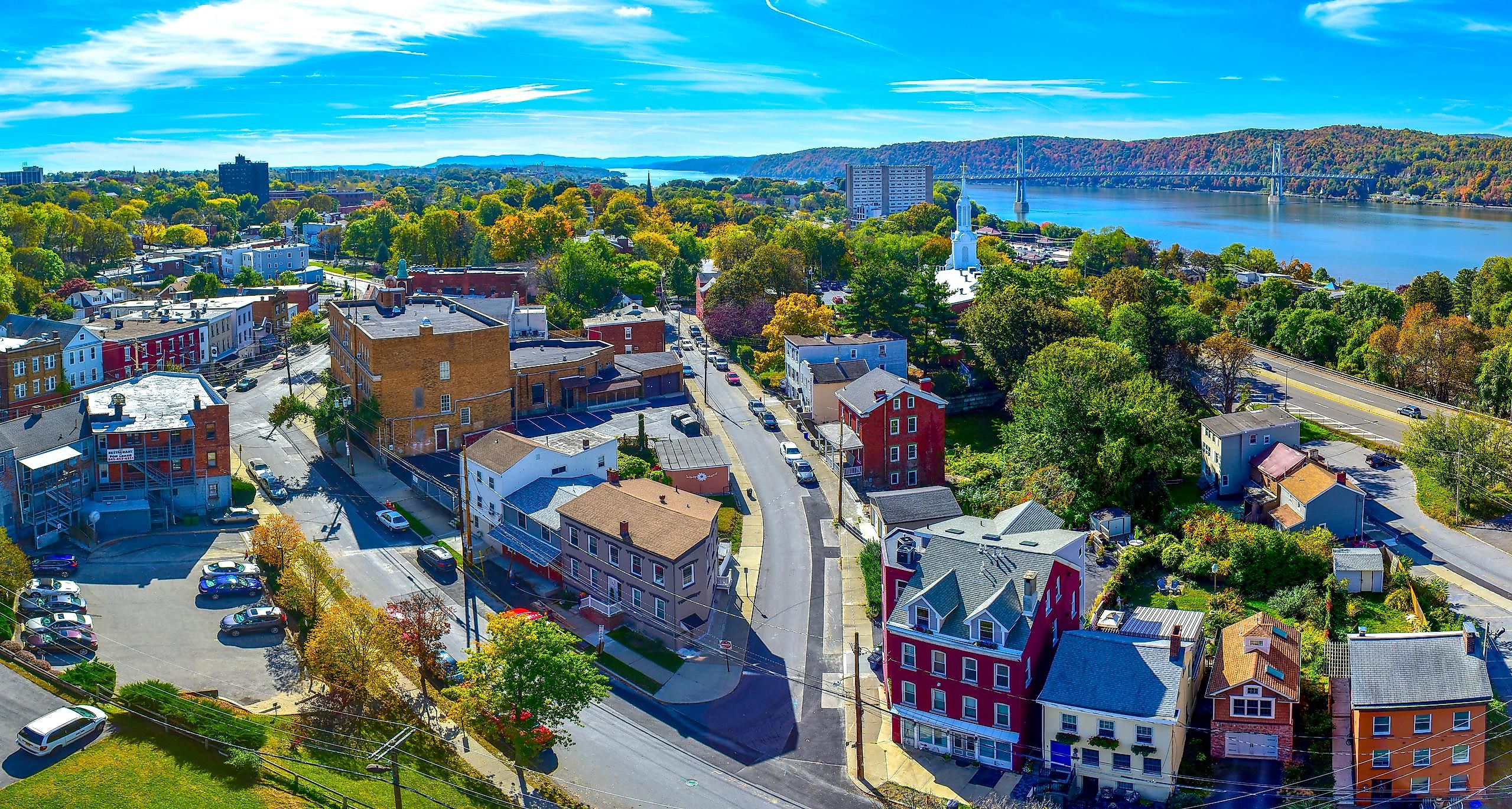
Poughkeepsie helps explain why Dutchess County keeps gaining residents, especially for those looking for Hudson Valley access without moving farther downstate. The city had an estimated population of 32,293 in 2024, while Dutchess County, where Poughkeepsie is located, grew from 299,256 residents in 2024 to 300,708 in 2025. Cornell's data also shows Dutchess County gaining residents through net migration between 2020 and 2025. Poughkeepsie's appeal goes beyond scenery. Its train station is the last stop on Metro-North's Hudson Line and also has Amtrak service, giving residents a transit link to New York City and the rest of the Hudson Valley. Poughkeepsie's downtown is also part of its appeal, with a $10 million state revitalization award to support new projects in the city center. The Walkway Over the Hudson adds a major pedestrian and cycling connection across the river, while the train station, Main Street, and nearby arts venues such as the Bardavon Opera House help keep the city's center active.
Schenectady

Schenectady has one of the clearest city-level growth numbers on this list. The city grew from a 2020 Census population of 67,047 to an estimated 69,495 in 2024, a 3.7% increase. Schenectady County also added residents, rising from 161,747 in 2024 to 162,581 in 2025.
Schenectady's growth has a clearer local explanation than simple spillover from the Capital Region. Downtown has become busier around State Street, where Proctors Theatre still brings regular foot traffic into a restored vaudeville-era space. Along the Mohawk River, Mohawk Harbor has turned a former industrial stretch into a mixed-use waterfront with housing, offices, restaurants, and public access. The Stockade District gives the city another anchor, with older streets and 18th and 19th-century buildings near the river. GE Vernova adds the employment piece, with at least $41 million planned for generator operations at its downtown Schenectady campus.
Malta

Malta is one of the clearest examples of recent growth at the town level in New York's Capital Region. The town grew from a 2020 estimate of 17,123 to an estimated 17,526 residents in 2024. That was a 2.4% increase. It sits inside Saratoga County, which itself grew from 239,834 residents in 2024 to 241,343 in 2025. Cornell's county data shows that Saratoga County gained residents through both total population growth and net domestic migration, making Malta a strong local example of the broader county trend.
Malta's growth is closely tied to its job base, especially GlobalFoundries' Fab 8 site, where long-term semiconductor investment has made the town a national leader in advanced manufacturing. The Luther Forest Technology Campus offers both education and employment opportunities. This, along with nearby housing and commercial growth along Route 9 and the Northway, helps explain why new residents continue landing here.
Amsterdam

Amsterdam is a central place to discuss Montgomery County's recent growth, though the city itself was slightly below its 2020 count. The city had an estimated population of 18,169 in 2024, just below its 2020 Census count of 18,219. However, Montgomery County had New York's strongest one-year county growth rate in Cornell's 2025 county highlights, rising from 49,580 in 2024 to 50,046 in 2025.
Amsterdam sits along the Mohawk River and the New York State Thruway, giving it direct access to one of upstate New York's major east-west corridors. This location supports warehousing, transportation, food processing, and light manufacturing, especially for employers that need road access between the Capital Region and the western Mohawk Valley. Amsterdam's recent housing projects make the county's growth story more concrete. Projects such as Veddersburg Apartments and Holland Circle Apartments have added affordable and supportive units in the area, giving the county more room to absorb new residents. Amsterdam's appeal is also tied to practical details that matter for movers, including lower housing costs than much of the Capital Region, a walkable riverfront, and access to the Mohawk Valley Gateway Overlook pedestrian bridge.
Oswego

Oswego brings a smaller Lake Ontario city into the article's growth pattern, with county-level migration support behind it. The city had an estimated population of 17,047 in 2024, up from the 2020 Census count of 16,921. Oswego County grew from 118,182 residents in 2024 to 118,569 in 2025, and Cornell's data shows the county gained 1,039 residents since 2020.
Oswego's growth story is tied to its position between Lake Ontario and the larger Central New York job market. The city sits about 35 miles northwest of Syracuse, giving it a connection to the region where Micron's planned semiconductor investment is expected to reshape housing and workforce demand across Central New York. SUNY Oswego also supports the city's population base and local economy, with a roughly 700-acre lakeside campus focused on students, adult learners, and career-focused programs. The Port of Oswego also gives the city a working waterfront, handling more than a million tons of cargo annually as the first US port of call on the Great Lakes from the St. Lawrence Seaway. Add in the Lake Ontario shoreline, downtown investment, and housing pressure across the county, and Oswego starts to look like one of the places absorbing that regional demand.
Colonie

Colonie is a clear example of steady population growth in the Capital Region. The town had an estimated population of 86,531 in 2024, up from its 2020 base of 85,582. That 1.1% increase is modest, but it stands out in a state where many municipalities are flat or declining. Colonie also sits inside Albany County, which added 1,523 residents from 2024 to 2025 and gained 6,385 residents since the 2020 Census.
Colonie's appeal is its practicality. It sits near Albany, Troy, and Schenectady, providing suburban housing while keeping major job centers close. A Times Union analysis also pointed to Colonie's location near those cities as a key reason people look there when leaving the urban core but staying near work. Wolf Road gives Colonie one of the Capital Region's busiest commercial corridors, with hotels, restaurants, offices, and shopping near Albany International Airport and major highways. Colonie Center features more than 100 stores and restaurants in a 1.3-million-square-foot enclosed mall. Altogether, Colonie has a strong commercial and transportation base, which helps explain why the town continues to attract residents.
Victor

Victor belongs on this list because it combines documented town growth with Ontario County's broader migration gains. The town grew from a 2020 Census population of 15,860 to an estimated 16,159 residents in 2024, a 1.9% increase. Ontario County also grew from 112,733 residents in 2024 to 113,130 in 2025, and Cornell's data shows the county gained residents through net migration from 2020 to 2025.
Victor's location helps explain why. It sits southeast of Rochester with direct access to the New York State Thruway and I-490, making it practical for people who work in the Rochester area but want a more suburban setting. Eastview Mall remains one of the town's major commercial centers, with national retailers, restaurants, and nearby hotels helping make Victor a regional shopping hub. Ganondagan State Historic Site serves as an important historical and cultural landmark, preserving the site of a 17th-century Seneca town and connecting Victor to Haudenosaunee history. Victor's growth is tied to location, housing, retail access, and its position between Rochester's job market and the Finger Lakes.
What New York's Population Shift Shows
New York's growth pattern is narrow but visible. The Capital Region, the Mid-Hudson Valley, and parts of upstate New York near job corridors are all gaining residents. The effects will likely be felt in housing demand, school districts, local roads, and town services that now have to keep pace with growth. Malta, Colonie, Poughkeepsie, Schenectady, Victor, Oswego, and Amsterdam do not tell the same story, but together they show where New York's population is shifting when people stay in the state and choose a different kind of place to live.