10 Best Places To Live In New Zealand
New Zealand consistently lands in the top tier of global quality-of-life rankings thanks to low crime rates, universal healthcare, and an outdoor-living culture that runs through both islands. Wanaka and Arrowtown anchor the alpine end of the spectrum in Central Otago. Oamaru and Waitara offer more affordable entry points along the coast. Te Anau sits at the gateway to Fiordland National Park. Each of the ten communities ahead has been weighed for a different balance of price and pace in 2026.
Wanaka

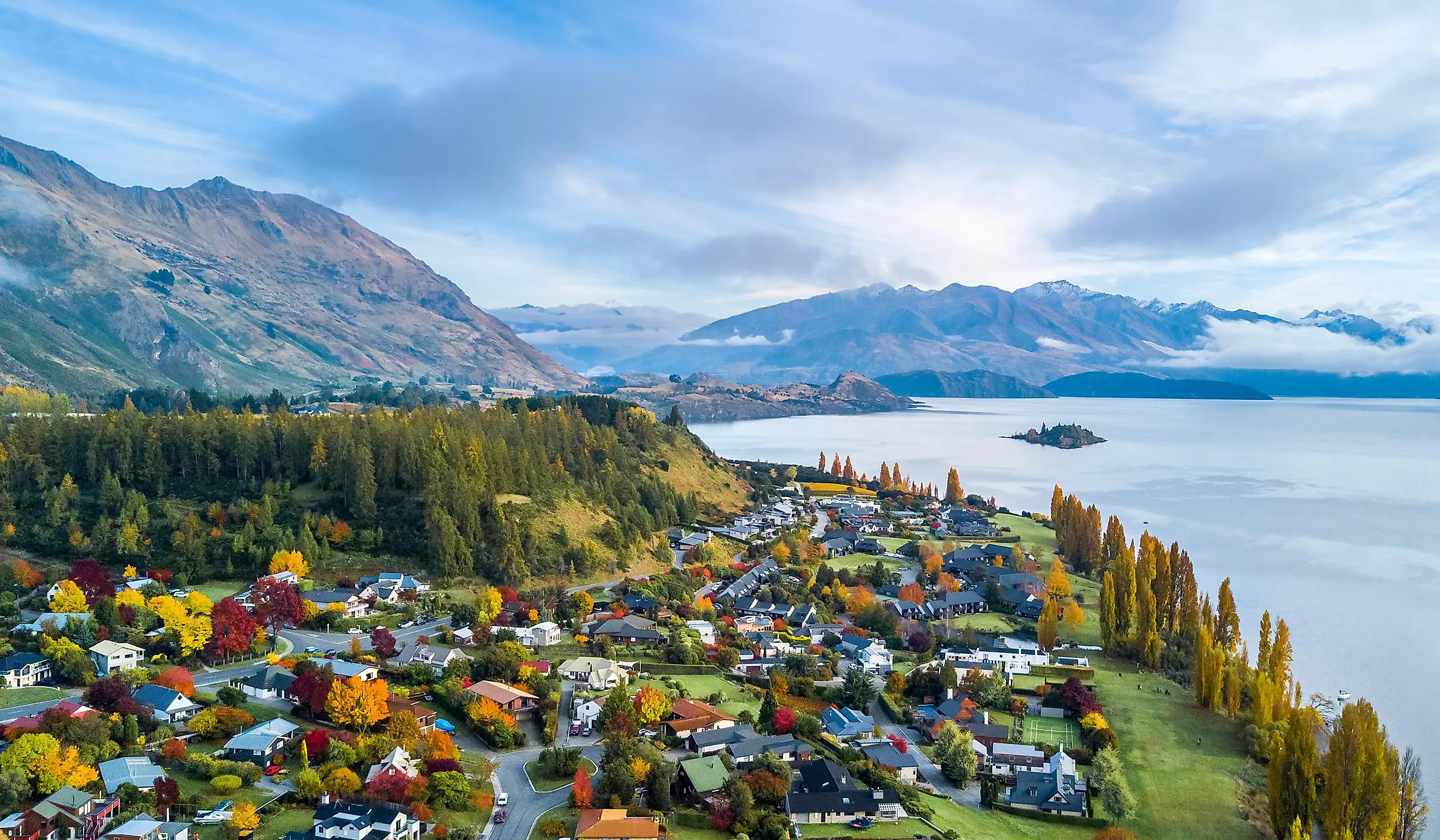
Wanaka sits on the southern shore of glacial Lake Wānaka with the Southern Alps directly above town. The South Island location supports skiing in winter at Cardrona and Treble Cone, paddleboarding and trail running in summer, and year-round access to Central Otago wineries. Tourism, hospitality, and a growing remote-work base support the local economy, drawing both professionals and lifestyle seekers.
The median home price runs around NZ$1.4 million, reflecting steady demand and constrained housing supply. Families have access to Wānaka Primary School and Mount Aspiring College, while the Wānaka Medical Centre handles primary care, with regional hospital services in Queenstown a 50-minute drive south.
Arrowtown

Arrowtown is a former Gold Rush settlement that has held onto most of its 19th-century streetscape, with restored timber and stone buildings lining Buckingham Street. Just 20 minutes from Queenstown, the town offers a quieter alternative to the resort scene next door.
The Lakes District Museum and Gallery covers the gold-mining history, while the Arrowtown Chinese Settlement preserves the housing and shop sites of 19th-century Cantonese miners who worked the Arrow River goldfields. Median home prices run around NZ$2.1 million, reflecting the town's exclusivity and limited inventory. Families have access to Arrowtown School with secondary options nearby, and healthcare is handled at Lakes District Hospital in Queenstown.
Waikanae

Waikanae sits along the Kāpiti Coast about an hour north of Wellington, with consistent sunshine and easy access to nature. The Nga Manu Nature Reserve protects native bird species and offers boardwalk trails through coastal wetland, while Hemi Matenga Memorial Park's forested tracks lead to viewpoints over the coast.
Median home prices run around NZ$800,000, substantially below Wellington proper, particularly for buyers wanting outdoor space. The local economy runs on small businesses, tourism, and remote work, with regular commuter rail service into the capital. Waikanae School and Kāpiti College handle education, and health needs go through Waikanae Health Centre and the larger Kāpiti Health Centre.
Te Anau

Te Anau sits on the eastern shore of Lake Te Anau at the gateway to Fiordland National Park, the UNESCO-listed wilderness that contains the Milford and Kepler Tracks. Daily life centers on the lake and on the seasonal flow of trampers passing through on multi-day hikes.
Median home prices run around NZ$639,000, offering good value for retirees and seasonal workers. The local economy is connected to hospitality, conservation, and part-time tourism work, with flexible schedules tied to the visitor seasons. Fiordland College and Te Anau Primary School cover education, and the Fiordland Medical Centre handles primary care, with the regional hospital in Invercargill about two hours south.
Oamaru

Oamaru on the South Island's east coast holds one of the best-preserved Victorian limestone streetscapes in the country, with the Victorian Precinct's cobbled streets fronting working artisan shops and galleries. Steampunk HQ, the local museum dedicated to the steampunk aesthetic, has helped anchor an annual Steampunk Festival that draws costumed visitors from around the country.
Median home prices run around NZ$455,000, making Oamaru one of the more budget-friendly places to live in the South Island. The local economy runs on heritage tourism, agriculture, and the arts, with remote work growing steadily. St Kevin's College and Waitaki Girls' High School handle secondary education, and Waitaki District Hospital covers local health needs.
Cromwell

Cromwell sits in Central Otago at the confluence of the Kawarau and Clutha Rivers, surrounded by golden hills, stone-fruit orchards, and vineyards. The town's sunny continental climate and easy access to Lake Dunstan have made it increasingly popular with both retirees and young families through the past several years. The Cromwell Heritage Precinct preserves the original 19th-century main street that was relocated when Lake Dunstan was created.
Median home prices run around NZ$835,000, offering steady value for a region seeing growth in demand. Agriculture, viticulture, and tourism anchor the local economy. Cromwell Primary School and Cromwell College cover education, and the Cromwell Medical Centre handles primary care.
Taupō

Taupō sits on the edge of the largest lake in New Zealand, formed by a volcanic eruption around 1,800 years ago, with the volcanoes of Tongariro National Park visible to the south. Huka Falls roars just upstream of town where the Waikato River squeezes through a narrow rock channel, and Craters of the Moon to the north covers a geothermal field of steam vents and bubbling craters.
Median home prices run around NZ$690,000, slightly above the national average but reasonable for the lifestyle access. The economy runs on tourism, geothermal energy, and outdoor recreation. Tauhara College and Taupō-nui-a-Tia College handle secondary education, with Taupō Hospital providing local health services.
Akaroa

Akaroa sits in the sheltered waters of Banks Peninsula, in a harbor that was once an extinct volcano crater. The town carries an unusual French heritage from a brief 19th-century settlement attempt, and the streets still carry French names alongside the English. Hector's dolphins, one of the smallest dolphin species in the world, inhabit the harbor year-round.
Median home prices run around NZ$850,000 for properties within an easy walk of the waterfront. Akaroa Area School covers local education, and the Akaroa Health Centre handles routine medical care, with larger hospitals 90 minutes away in Christchurch.
Waitara

Waitara is the largest settlement in North Taranaki and holds deep cultural significance as one of the first areas settled by Māori in the region. The location at the mouth of the Waitara River gives the community direct coastal access for surfing, fishing, and kayaking. Waitara Beach is the weekend draw, while Tikorangi Jury Garden offers a curated collection of native flora.
Median home prices run around NZ$478,000, making Waitara especially attractive to first-time buyers and retirees. Agriculture and manufacturing anchor the local economy, with growing interest in tourism and craft production. Waitara High School and Manukorihi Intermediate School cover education, and the Waitara Health Centre handles routine care.
Brighton

Brighton is a coastal village a short drive south of Dunedin, with sea breezes, wide ocean views, and a slower daily rhythm. Estuary kayaking and sunrise beach walks are weekday staples for locals.
Median home prices run around NZ$690,000, one of the more reasonable price points for seaside Dunedin-area communities. The town appeals to families, retirees, and creatives who want space without losing easy access to city amenities. Residents draw on Dunedin's schools, healthcare (including services at Dunedin Hospital), and job market while keeping the village pace at home.
What These New Zealand Communities Have in Common
The list spans the alpine South Island, the Central Otago wine country, the eastern coastal communities of both islands, and the Kāpiti Coast within commuting range of Wellington. Prices range from under NZ$500,000 in Oamaru and Waitara to over NZ$2 million in Arrowtown, with most middle-tier options in the NZ$600,000-900,000 band. Across the ten communities, the constant is direct access to nature, walkable downtowns, and a community-scale way of life that supports both retirement and earlier-career relocation.