9 Wyoming Towns With Unforgettable Main Streets
Dubois still walks on wooden sidewalks, and Thermopolis laid out its Broadway 150 feet wide to let 16-mule freight teams turn around. Wyoming's main streets were built for a different scale of traffic than what they handle today, and most of the towns ahead have leaned into preserving the architecture and detail from that earlier era. Sheridan keeps cattle-town brick storefronts that have lined Main since the late 1800s. Cody runs nightly summer rodeos in front of Buffalo Bill's Irma Hotel. Each of the nine main streets ahead carries its own piece of frontier history into the present.
Sheridan

Sheridan blends a working cattle-town identity with intact historic architecture and a direct line to the Bighorn Mountains rising right at the western edge of town. Main Street has held its brick, masonry, and iron-facade storefronts since the late 19th and early 20th centuries, with more than 30 historic structures still in active commercial use. The Sheridan County Courthouse, a Neo-Classical Revival and Beaux-Arts hybrid, joined the National Register of Historic Places in 1982.
The downtown lineup now runs to restaurants, shops, galleries, professional offices, and Western retailers. King's Saddlery is the must-stop, with the back-building museum holding one of the largest collections of cowboy gear in the country, including hundreds of saddles and bridles. The Cowboy Cafe down the street keeps the homemade-pie tradition going, and the Mint Bar a block away has been pouring drinks under the same neon since 1907.
Laramie

Laramie is Wyoming's only university town, with the University of Wyoming enrolling around 10,000 students across more than 190 degree programs. Main Street America named Laramie's Main Street Alliance one of the three winners of the 2022 Great American Main Street Award, recognizing its preservation-led commercial district revitalization. Downtown sits above 7,000 feet, with the high open skies you notice as soon as you step out of the car.
The downtown art scene has expanded substantially in the past decade, with murals on building sides and stylized bike racks at most intersections. The Sugar Mouse Cupcake House on Grand Avenue keeps a small but rotating menu. The Wyoming Women's History House covers the state's status as the first US territory to grant women the vote in 1869. For reclaimed-wood furniture and home goods, The Bent & Rusty stocks a deep inventory from regional makers.
Cody

Cody was founded in the 1890s by Colonel William F. "Buffalo Bill" Cody, the famous frontiersman, and laid out specifically to package the culture and feel of the Old West for visitors. Known as the "Rodeo Capital of the World," it runs the longest continuously operating nightly summer rodeo in the country at the Cody Nite Rodeo arena, with bull riding, bronc riding, and family-friendly events most evenings from June through August.
Gunfight reenactments stage in front of Buffalo Bill's Irma Hotel at sunset most evenings during summer, with crowds gathering on Sheridan Avenue to watch. Inside, the cherrywood bar was a gift from Queen Victoria. The Cody Dug Up Gun Museum displays firearms from various wars and eras, while live stage productions on the life of Buffalo Bill run at the Cody Theatre, a historic venue dating back to the 1930s.
Buffalo

Buffalo's downtown is shaded by aspens and cottonwoods, with murals reflecting local culture and history alongside notable sculptures including "Nate Champion's Last Run" by local artist D. Michael Thomas. The bronze stands in front of the Jim Gatchell Memorial Museum and depicts Champion at the KC Ranch on April 9, 1892, when he was besieged by 50 cattle-baron hired men and his cabin was set on fire during the Johnson County War. The museum itself is compact but well curated, with deep coverage of the war and the regional Native history that preceded it.
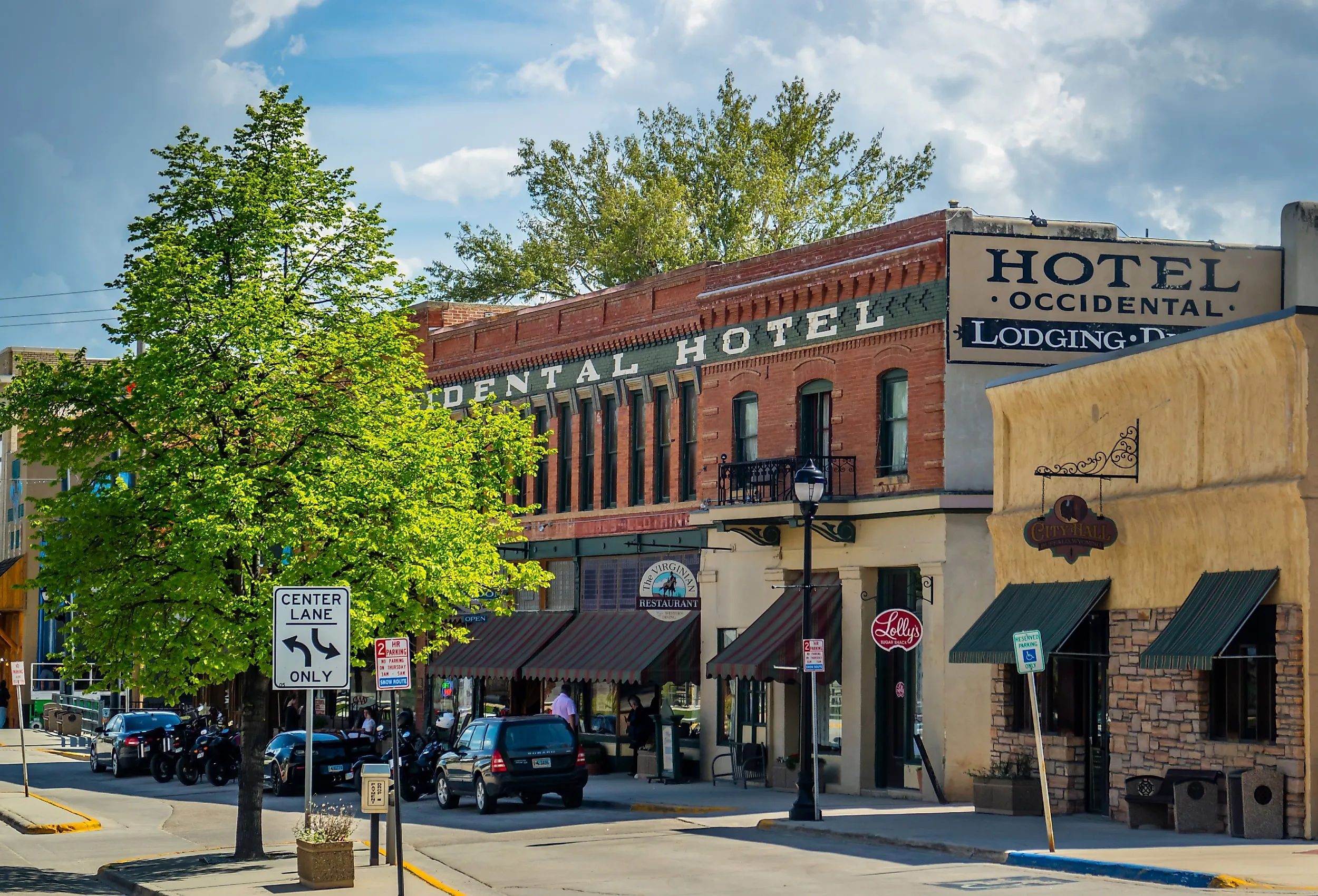
From there, the route along Main connects to the Historic Occidental Hotel, a working hotel that hosted Buffalo Bill Cody, Teddy Roosevelt, and Calamity Jane during the late 19th century. Calamity Jane drove freight wagons along the Bozeman Trail through this area, pulled by sinewy oxen. The Clear Creek Trail starts at the Main Street bridge and follows the creek through town toward the foothills of the Bighorns.
Rock Springs

The Rock Springs Main Street won the 2018 Great American Main Street Award from Main Street America, recognizing the transformation of a once-declining downtown district into an active commercial core. Success ran through historic preservation, community engagement, and targeted economic incentives.
Murals across building sides give the downtown its color, complementing an architectural mix that runs through brick, wood, and locally quarried sandstone. The Rock Springs Historical Museum, the place to go for stories about regional outlaws, is built from the same native sandstone. The Rock Springs Coal Welcome Sign sits at a vantage point where trains roll through, and Square State Brewing rounds out the downtown lineup as a community gathering spot.
Pinedale

Pinedale sits at the foot of the Wind River Range, the highest mountains in the Rocky Mountains outside of Colorado, with more than 40 named peaks rising above 13,000 feet. The Museum of the Mountain Man on Hennick Street covers the fur trade era with artifacts, rendezvous reenactments, and Native American collections drawn from across the Green River basin.
The Cowboy Bar was built by an outlaw who once rode with Butch Cassidy and was later owned by a Wyoming Cowboy Hall of Famer who won the bar in a card game. The prime rib sandwich at Heart & Soul Cafe holds up, especially on the outside patio. The Sublette County Visitors Center a block away handles trip planning for the Wind Rivers and the rest of the region.
Thermopolis

Thermopolis built its Broadway Street 150 feet wide to let 16-mule freight teams turn around in the late 19th century, and the unusual width is still the first thing visitors notice. Late-19th-century commercial architecture lines both sides. The saloons once frequented by outlaws like Butch Cassidy have given way to bakeries, breweries, coffee shops, and steakhouses, but the scale of the avenue keeps the original character intact.
The Wyoming Dinosaur Center sits on the main corridor and runs hands-on "Dig for a Day" experiences at a working paleontological site, with public dig opportunities running through the summer season. The Hot Springs County Museum holds two floors of regional exhibits plus a scavenger hunt aimed at younger visitors. One Eyed Buffalo Brewing Company handles the dinner lineup with prime ribs and buffalo burgers.
Dubois

Dubois is one of the few towns in the country that has kept its wooden boardwalks intact along the downtown commercial strip. The walk between storefronts is part of the experience, with stops at places like the Rustic Pine Tavern, which has held the same location since 1919.
One of the nation's largest herds of wild bighorn sheep ranges through the mountains around Dubois, and the National Bighorn Sheep Center on the edge of town runs interpretive exhibits and guided sheep-viewing tours from December through March. The Dubois Museum covers regional history and Native American art, with outdoor exhibits in restored period structures behind the main building.
Saratoga

Saratoga has the look of a hot springs resort town from the early 1900s that has not been substantially remodeled. The downtown buildings hold their Western character largely as the railroad era left them. Known locally as the place "where the trout leap in Main Street," Saratoga draws fly anglers to the North Platte River that runs right through town. The Hotel Wolf at the corner of State Highway 130 and Bridge Street is listed on the National Register of Historic Places as one of the state's most intact Victorian commercial buildings. Author C.J. Box has written portions of his Joe Pickett novels at the hotel, and the Joe Pickett Room is available to fans who want to stay in the setting.
Outdoor lovers have the North Platte for fishing and floating, while art lovers have Studio T Art Gallery as a stop for gifts and souvenirs. For pizza, the Grumpy Italian holds a steady reputation and works as a community gathering spot.
Beautiful Wyoming Main Streets
Wyoming's most memorable main streets blend frontier history, mountain scenery, and cowboy character in ways few other states can. Some carry wooden sidewalks. Others run impossibly wide avenues built for mule teams and cattle drives. Across the nine towns ahead, preserved brick hotels, vintage saloons, colorful murals, neon signs, and historic storefronts create the feeling of a living Western postcard. The backdrop matches the architecture. Towering mountain ranges, cottonwood-lined creeks, high-desert hills, and open skies that seem to run on forever surround every stop on this list.