7 Most Beautiful Historic Towns in the Rockies
Buffalo Bill Cody named a town in Wyoming after himself in 1896 and built it as the gateway to Yellowstone. The Taos people have been living in their multi-story adobe pueblo at the southern end of the Rocky Mountains for roughly a thousand years. Telluride and Breckenridge were silver-and-gold mining towns whose Victorian downtowns are now National Historic Landmarks. Ouray and Red Lodge developed around mining too but pivoted to tourism around their hot springs and Beartooth Highway access decades ago. Jackson runs as the southern gateway to the Tetons. The seven Rocky Mountain towns ahead each represent a different layer of how the American West actually got settled, and most of them still look like it.
Telluride, Colorado

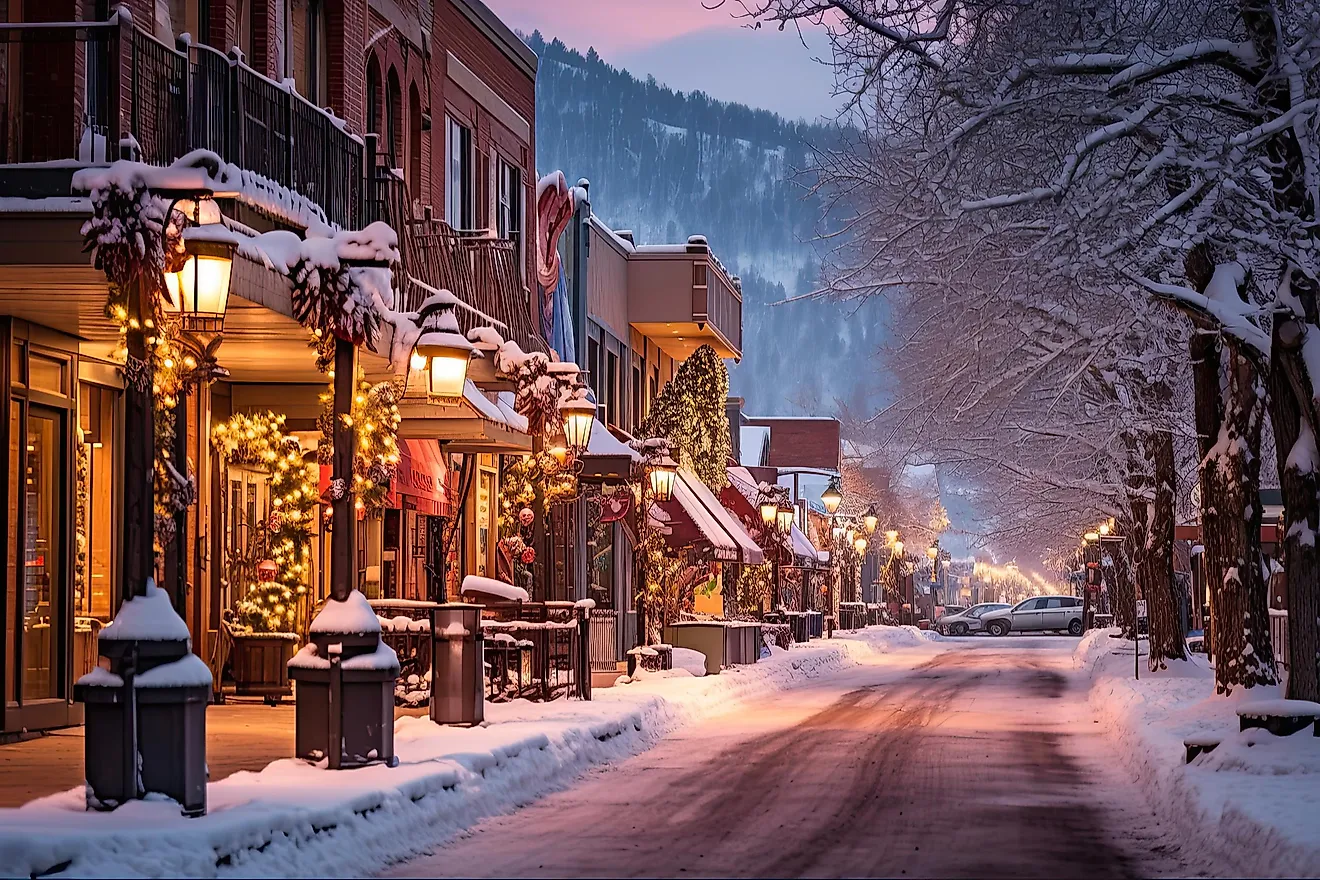
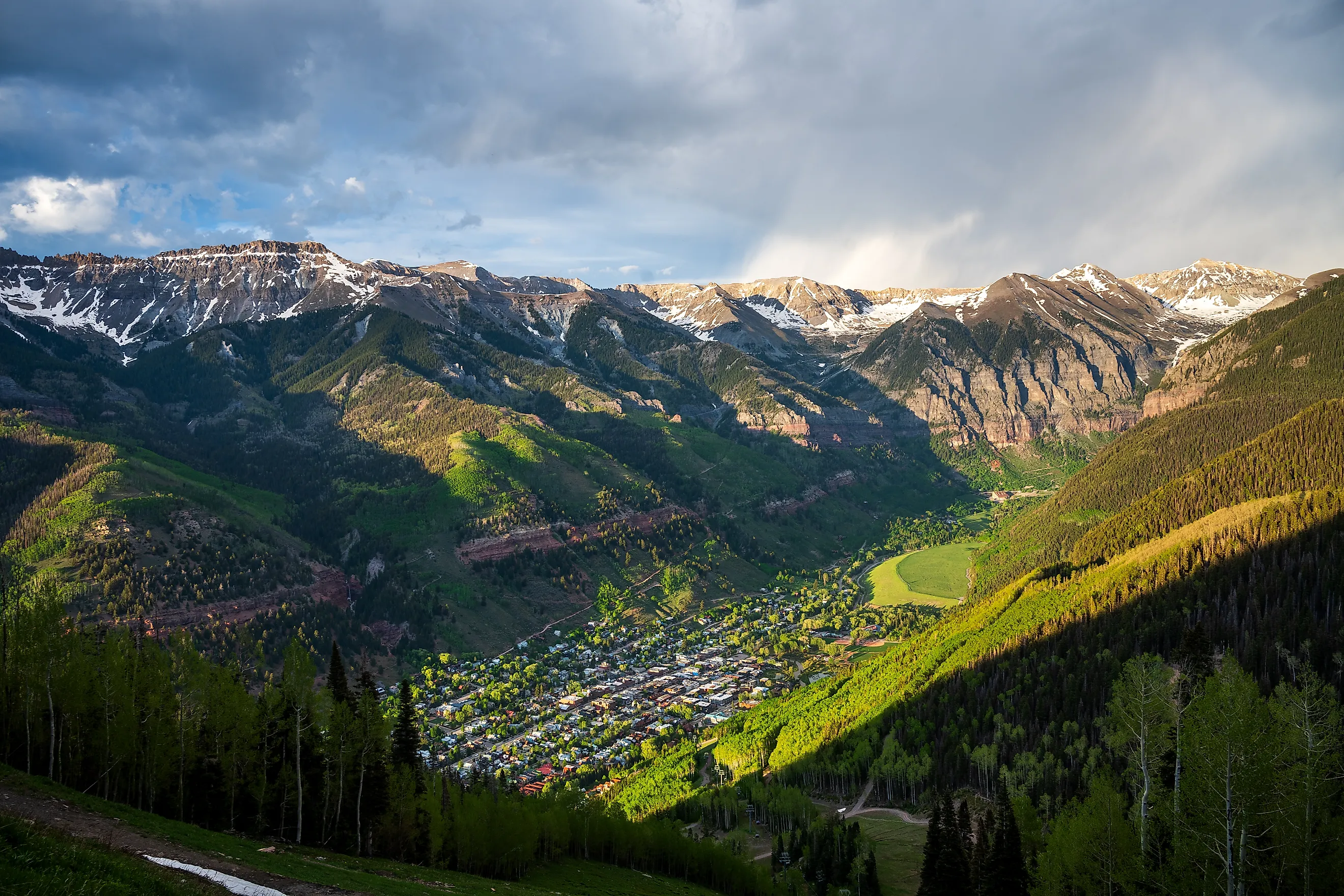
Telluride, Colorado, sits in the San Juan Mountains in a box canyon at 8,750 feet of elevation. Originally a silver-and-gold mining town founded in 1878, the entire downtown was designated a National Historic Landmark in 1964, with the Victorian-era commercial buildings and miners' housing preserved largely intact. The Telluride Historical Museum, housed in the former 1896 miners' hospital, covers the mining and skiing history. The Sheridan Opera House dates to 1913 and remains in regular use for the town's film, bluegrass, and jazz festivals. The Idarado Mine, which operated until 1978 and produced silver, gold, copper, lead, and zinc, is still visible above the town along Highway 145. The Telluride Ski Resort sits above town and is one of the more challenging in Colorado.
Breckenridge, Colorado

Breckenridge, Colorado, was founded in 1859 during the Colorado Gold Rush and became a hub for placer and hardrock miners working the Blue River drainage. The Breckenridge Historic District is a National Historic Landmark and contains more than 200 structures from the town's mining era. The Edwin Carter Discovery Center, in the former home of a 19th-century naturalist who collected one of the most extensive private wildlife specimen collections of his era, anchors the town's wildlife and preservation history. The Barney Ford House Museum honors the formerly enslaved African American entrepreneur who became one of the most successful businessmen in 19th-century Colorado. The Briggle House and the Country Boy Mine round out the town's restored historic sites. Beyond the museums, Main Street runs as a busy commercial strip and Peak 8 above town opens up the ski terrain.
Cody, Wyoming

Cody, Wyoming, has a population of approximately 10,400 and sits in the northwestern part of the state where the Rocky Mountains meet the high plains, near the Shoshone River. The town was founded in 1896 by William F. "Buffalo Bill" Cody and was developed in part as a tourism gateway to nearby Yellowstone. The Buffalo Bill Center of the West is the dominant cultural institution and houses five separate museums under one roof: the Buffalo Bill Museum, the Plains Indian Museum, the Cody Firearms Museum, the Whitney Western Art Museum, and the Draper Natural History Museum. Old Trail Town on the western edge of town reassembles 26 historic frontier buildings (including cabins associated with Butch Cassidy and the Sundance Kid) into a walk-through pioneer village. The Cody Dug Up Gun Museum and the historic Wynona Thompson Auditorium round out the cultural offerings.
Red Lodge, Montana

Red Lodge sits in south-central Montana with a population of approximately 2,300 and is the northern terminus of the Beartooth Highway, the 68-mile scenic route over the Beartooth Pass to Yellowstone National Park. The road climbs to nearly 11,000 feet and was called "the most beautiful drive in America" by Charles Kuralt. The Yellowstone Wildlife Sanctuary on the edge of town houses non-releasable wildlife from the surrounding ecosystem in large enclosures and runs interpretive programs about the region's predator-and-prey dynamics. The Carbon County Historical Society Museum covers the coal-mining history (Red Lodge was a major Finnish-immigrant coal town in the early 20th century, with seven different ethnic mining communities once living in town) and includes artifacts from the original Crow and Cheyenne inhabitants. Red Lodge Mountain Resort handles winter sports a few miles west of town.
Ouray, Colorado

Ouray sits at 7,792 feet in the San Juan Mountains of southwestern Colorado, with a population of about 900 and a setting that gave it the nickname "Switzerland of America." The town was founded in 1875 around silver and gold mining; the historic district preserves the Victorian-era downtown almost in full. The Ouray County Museum, housed in the 1887 Saint Joseph's Miners' Hospital building, covers the area's mining history and the cultures of the Ute people, on whose ancestral lands the town sits. The Ouray Alchemist Museum and Penthouse runs guided tours through an early-20th-century pharmacy collection, with original tinctures, mortar-and-pestles, and apothecary equipment still in place. The Box Canyon Falls Park is a short walk from downtown and contains a 285-foot waterfall accessible by suspended walkway. The Ouray Hot Springs Pool, fed by natural geothermal waters, is the town's other anchor draw.
Jackson, Wyoming

Jackson, Wyoming, sits near the Snake River at the southern end of Jackson Hole, the broad valley framed by the Teton Range to the west and the Gros Ventre Range to the east. The town serves as the southern gateway to Grand Teton National Park and is the main staging town for the southern entrance to Yellowstone National Park (the first national park in the United States, established in 1872). The summer Jackson Hole Rodeo on Wednesday and Saturday nights through July and August is a long-standing local tradition. The National Elk Refuge just north of town protects approximately 11,000 acres of winter habitat for the Jackson elk herd (the largest in North America), and the Greater Yellowstone Visitor Center covers the wider ecosystem in detail. The Town Square's four elk-antler arches, made of naturally shed antlers collected each spring, anchor the central park.
Taos, New Mexico

Taos, New Mexico, sits at the southern end of the Rocky Mountains' Sangre de Cristo Range and was first settled by the Spanish in 1615, making it one of the older European-established settlements in North America. The cultural anchor is Taos Pueblo, a multi-story adobe complex continuously inhabited since approximately 1000-1450 AD by the Taos people, who still maintain residences in the multi-story north and south structures. The Pueblo has been a UNESCO World Heritage Site since 1992 and is the only continuously inhabited Native American community on the World Heritage list in the United States. The Millicent Rogers Museum holds one of the best Native American art collections in the Southwest, with strong holdings of Pueblo and Navajo work. The Hacienda de los Martinez is a fully preserved late-Spanish-colonial-era hacienda that documents the layered Spanish-Pueblo culture of the upper Rio Grande. The historic downtown plaza is the social center, and the Alley Cantina (in a building dating to before 1615) is one of the older still-operating restaurants in the country.
The Wider Northern Picture
The seven towns above all sit in the Rocky Mountain band of the American West, where mining money, ranching, Pueblo culture, and the national-park system have built up centuries of layered history that small towns have managed to keep visible. The Rockies are not the only part of the northern United States that does this. The Pacific Northwest has its own version (Astoria, Sandpoint, Leavenworth), the Upper Midwest holds onto its lake-and-iron-range character, and the small towns of upper New England keep colonial-era street grids essentially intact. The Rocky Mountain towns above are a strong itinerary for one trip; they are not the only itinerary worth planning. What ties all of these together is that the smaller communities, in any of these regions, are usually where the original character is best preserved.