The Most Charming River Towns In Idaho
Idaho's best river towns put their character right at the water's edge. Wallace fits an entire Victorian downtown inside a narrow silver-mining canyon. Stanley holds barely a hundred residents under the Sawtooths, beneath some of the darkest skies in the country. Glenns Ferry wears its Oregon Trail history on wooden sidewalks above a famous Snake River ford. Salmon lines a Western Main Street with an engineered whitewater wave running in the channel beside it. What these eight towns share is a downtown you can walk end to end in a few minutes, with moving water always a block or two away.
Wallace

Walk through Wallace and you follow the South Fork of the Coeur d'Alene River into a downtown where the entire district is listed on the National Register of Historic Places. The commercial strip runs through a run of Victorian-era styles, Italianate, Queen Anne, Classical Revival, and Art Deco, all packed into a canyon so tight the streets feel enclosed. Brick and stone buildings rise three and four stories, their pressed-tin cornices and painted signage surviving from the silver-mining boom that built the town in the late 1800s.
That preservation runs right into the attractions. The Oasis Bordello Museum keeps a working brothel exactly as it stood when it closed in 1988, down to the personal belongings, and the tours thread the town's mining-camp history through the stories of the women who worked there. Around the corner, the Wallace District Mining Museum fills in the rest with interactive displays. For time in the fresh air, the Route of the Hiawatha starts a few miles out of town, turning a former rail line into a 15-mile ride through nine tunnels and across seven high trestles, with a gentle downhill grade that keeps your eyes on the scenery rather than your legs.
Bonners Ferry

A ferry crossing on the Kootenai River in the 1860s gave Bonners Ferry its name, and the water still sets the town's orientation. The river runs wide and steady past a downtown of brick storefronts and wooden porches, with the Selkirk Mountains standing behind as a constant backdrop. The scale stays small, the sidewalks uncrowded, and the riverbank is never far from the center.
The Kootenai Tribe has deep roots in this valley, and the Boundary County Museum sets the town's ferry-crossing and fur-trade past within that longer Indigenous story, with exhibits on the Kootenai people, early settlement, logging, and farming. On Saturdays, the Bonners Ferry Farmers Market fills downtown with produce, baked goods, plants, and artisan work. Just outside town, the Kootenai National Wildlife Refuge adds wetlands, mountain views, and birding roads, while the Pearl Theater brings concerts and community performances back to the center.
Ketchum

The Big Wood River runs through the valley at Ketchum, and the sidewalks give out onto sagebrush hillsides at the edge of town. Between them sits a downtown of Western storefronts with wooden awnings that now house contemporary art spaces like the Gail Severn Gallery, whose sculpture garden spills the art outdoors. Monthly gallery walks turn the whole district into a social art crawl, and the town's creative streak is a big part of why Ketchum punches well above its size.
Its literary claim comes from Ernest Hemingway, who made his final home in the Wood River Valley and is buried in Ketchum Cemetery. Visitors can stop at the Hemingway Memorial, a bronze bust and simple epitaph set near Trail Creek Road, before heading into town for a meal at the Pioneer Saloon, a watering hole for miners, writers, and travelers since the 1940s, its antlers, historic photographs, and heavy wood booths giving it a lived-in Western feel. For a waterside afternoon, the Wood River Trail follows the valley for walking and biking along the riparian corridor.
Stanley

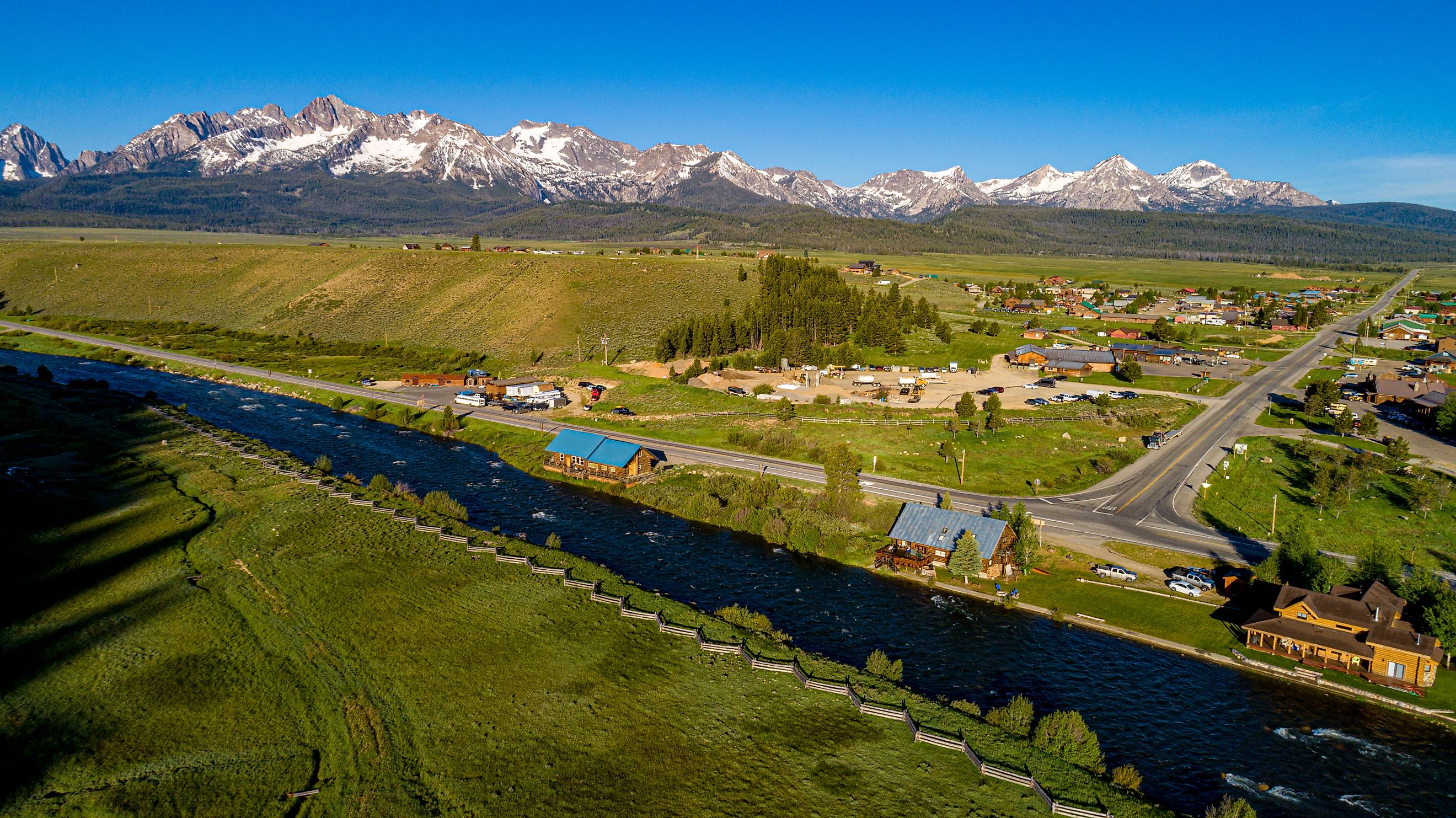
With just over a hundred residents in the town proper, Stanley feels like a camp that grew a few streets. The Salmon River runs past log-cabin lodges and rustic-wood storefronts while the Sawtooth Mountains ring the valley, their reflections sharp on the water at dawn and dusk. The town sits inside the Central Idaho Dark Sky Reserve, the first gold-tier dark sky reserve in the United States, so the Milky Way rises over the peaks with a clarity most city-dwellers have forgotten is possible.
Redfish Lake, a short drive from town, mirrors the Sawtooth peaks in water so clear the bottom is visible some thirty feet down, with mountain hikes, water sports, and a sandy beach at hand. Before heading out for the lake or the night sky, locals and backpackers pack into the Stanley Baking Co., which opens early and fills the town with the smell of sourdough pancakes and fresh coffee, everyone sharing long tables before long days outside.
Salmon

Downstream from Stanley, the Salmon River reaches the town that shares its name, where a Western Main Street of brick storefronts and wooden awnings looks like a movie set that never got struck. Jaxonbilt Hat Co., a custom hat shop, sits down the street from Odd Fellows Bakery, with local jewelers selling stones cut from area rock in between. Across the bridge, Island Park splits the river in two, with picnic shelters, a boat launch, and a dog park right on the water.
A few steps from Main Street and the footbridge is the Salmon Whitewater Park, an engineered wave in the river channel where kayakers and surfers take turns while spectators watch from a terraced shore, a distinctly modern feature in a town that otherwise trades on 19th-century history. For that history, the Sacajawea Interpretive, Educational and Cultural Center spreads across 71 acres on the edge of town, honoring the Lemhi Shoshone woman who guided Lewis and Clark through this valley, its exhibits and walking trails tying the river to a human story centuries deep.
Glenns Ferry

The Oregon Trail crossed the Snake River here, and Glenns Ferry still wears that history on its wooden sidewalks and brick storefronts. On the edge of town, Three Island Crossing State Park preserves the original wagon ruts and displays Conestoga replicas at the Oregon Trail History and Education Center, marking what pioneers considered the most difficult river crossing in Idaho. The ford that once tested the journey west now has a gentler stopover next door at the Y Knot Winery, one of Idaho's older wineries, pouring tastings near a riverbank where the water runs slower than it did when wagons forded it.
Back in town, the Glenns Ferry Historic Opera Theater, a 19th-century venue, still hosts performances beneath its pressed-tin ceiling. One block over, facing the railroad, is Beck's RailHouse, and behind the theater sits Hanson's Cafe Motel. Both have fed and housed travelers for generations, their facades little changed, still carrying the town's long habit of welcoming people passing through.
Orofino

The Spanish phrase "oro fino," often translated as "fine gold," gave Orofino its name, but it is the Clearwater River that sits at the center of the town's character. Orofino City Park stretches along the bank with shade trees, picnic lawns, and a bandstand that hosts the town's Fourth of July fireworks. On summer evenings, families spread blankets on the grass while the river throws back the bursts overhead.
The Clearwater Historical Museum traces the town's 1805 brush with the Lewis and Clark expedition alongside its gold-rush era. Downtown, independent boutiques and cafes fill the storefronts, their window displays turning over with the seasons. Come fall, the Lumberjack Days Festival celebrates Orofino's timber heritage with logging competitions and a parade that packs the main street.
Emmett

Emmett is orchard country, and its river-town character carries a farming accent. Cherry trees blossom across the surrounding valley, and every June the Emmett Cherry Festival turns the harvest into a week of carnival rides, parades, and community gatherings that pull families in from across the Treasure Valley.
The Payette River drives much of the town's outdoor appeal. The Gem Island Sports Complex sits near the river corridor with greenbelt trails, ball fields, picnic shelters, and open space that serve as a community backyard most of the year. Main Street supplies the small-town stops, with bars, ice cream shops, and cafes clustered near the center, and the Frontier Cinema, showing films since 1949, keeps a piece of neon Americana lit under its old-fashioned marquee. For a parting view, travelers can pull off at the Freezeout Hill Monument on Highway 16, where the overlook takes in the whole Emmett Valley and the orchards that shaped it.
Where the River Meets Main Street
What these eight towns have in common is how close the water sits to the front door. Wallace tucks a full Victorian district into its canyon; Stanley keeps barely a hundred residents beneath the Sawtooths and the clearest skies in the Lower 48; Salmon runs a movie-set Main Street a few steps from a whitewater wave. The sidewalks stay short, the storefronts stay old, and the river stays within a block or two of the center. That is the appeal of an Idaho river town: everything worth seeing is within a walk, and the water is always part of the view.