The Most Beautiful Desert Towns In Texas
The arid region of Far West Texas encompasses the eastern reaches of the Chihuahuan Desert, which is filled with mountains, mesas, and terraces. This open, instantly recognizable landscape dictates how communities build and live. Towns like Marfa, which sits high, and others like Presidio, which sits low, are also great examples of how people adapt to the desert terrain. They are surrounded by either dramatic river basins or yellow-grass plateaus. The character of each town listed below is defined by mountain ranges that seem to rise out of nowhere (or from flat plains), strange volcanic rock formations, and limestone bluffs. These are Texas's most beautiful desert towns.
Terlingua

Limestone ridges with creosote bushes and cactus envelop the historic ghost town of Terlingua in the central Chihuahuan Desert. The ruins of adobe walls and abandoned mine shafts sit against a gravel backdrop, while to the east the 7,000-foot volcanic peaks of the Chisos Mountains rise from the ground. This desert town's beauty is amplified overhead at night. Since it is part of the Greater Big Bend International Dark Sky Reserve, the night skies are truly something to observe. The stars often shine brightly over the local Starlight Theatre Restaurant and Saloon, a building that fits in nicely with its natural surroundings and offers fine dining. In the afternoon, before the stargazers get out their equipment, people gather on the porch of the historic Terlingua Trading Company general store, as the setting sun turns the nearby rocks to a deep ochre. Terlingua also sits just seven miles from the Big Bend National Park. Here, the desert landscape includes hiking trails, canyons, and Terlingua Creek.
Marfa

Mysterious Marfa will probably always be famous for the spooky Marfa Lights that appear in the desert just outside the town limits. But this desert town is also one of the most visually stunning places in Texas. It sits in the high-desert Trans-Pecos region of the Chihuahuan Desert, in a grassland basin flanked by distant mountain ranges. The Davis Mountains rise to the north and the Chinati Mountains to the southwest. The Chisos Mountains sit to the southeast. Most of the surrounding terrain is flat, with yellow blue grama grass and yucca plants as far as the eye can see all the way to the rim of the basin. Many of Marfa's buildings are whitewashed, square or rectangular, with flat roofs, and do not detract from the surrounding views. When the sun sets, the mountains turn a deep shade of gray or blue, standing out starkly against the sky's intense yellow. From time to time, a tumbleweed or two might roll down the sidewalk as people watch the sunset and get ready to settle in for the evening. Before retiring, however, there are earthy Texas-native spirits to try at Marfa Spirit Co., where sotol is as popular as tequila.
Presidio

The landscape goes from high to low in the sixty miles it takes to get from Marfa to Presidio. This small town sits along the Rio Grande's floodplains in a low river valley of the southern Chihuahuan Desert. Besides its vistas, this area is best known for its hot, arid climate. As such, there are mudflats and arroyos everywhere. Volcanic walls sit to the north, and the river basin is filled with mesquite and cottonwood. Presidio's homes are adobe-style, and some of its buildings are concrete blocks. They fit in well with the dry region, and those who want to see something a bit different can head out on the River Road that cuts through the volcanic canyons and basalt cliffs. Presidio is also an international crossing point into Mexico, allowing people to enjoy the unique desert views before heading to the coast.
Fort Davis

The Davis Mountains are home to Fort Davis, which sits in an elevated canyon within the Chihuahuan Desert. This part of Texas sports desert grassland, juniper trees, montane oak, and pinyon pine. The main streets of the town lie in the shadow of volcanic cliffs consisting of basalt and rhyolite. The canyon wall's columnar joints trap shadows throughout the day while protecting the buildings and houses from the strong winds that come from the plains. The views change from desert scrub to green mountain slopes, giving Fort Davis a lusher setting than towns at lower altitudes. The Fort Davis Historic Site still looks like a scene straight from the 19th century and is framed by the mountains' Sleeping Lion formation and shrubbery on the east side of the mountains. Fort Davis grew around this military post with houses still incorporating wood frames, tin roofs, and stone masonry. Those who want to see the town and the skies from a different vantage point can head up to the McDonald Observatory atop Mount Locke and Mount Fowlkes. At an elevation of more than 6,000 feet, visitors can attend Star Parties and see the Hobby-Eberly Telescope up close.
Marathon

Marathon is an hour's drive from Fort Davis and grew around the 1927 Gage Hotel. The hotel was constructed using stucco, brick, and ponderosa pine and commands the center of a group of adobe buildings and art spaces. Everything in Marathon lies within the Marathon Basin on the eastern side of the Chihuahuan Desert, where giant dagger yucca and prickly pear cacti are common. Marathon is bounded by the Glass Mountains and the hills of the Haymond Formation, and it stretches along the historic route of the Southern Pacific Railroad. Outdoor lighting guidelines protect the town's night skies because the town falls within the Greater Big Bend International Dark Sky Reserve. Thanks to these guidelines, the Milky Way can be seen from the town itself. Those who want to see more of the surrounding region can take U.S. Route 385 to Big Bend National Park.
Alpine

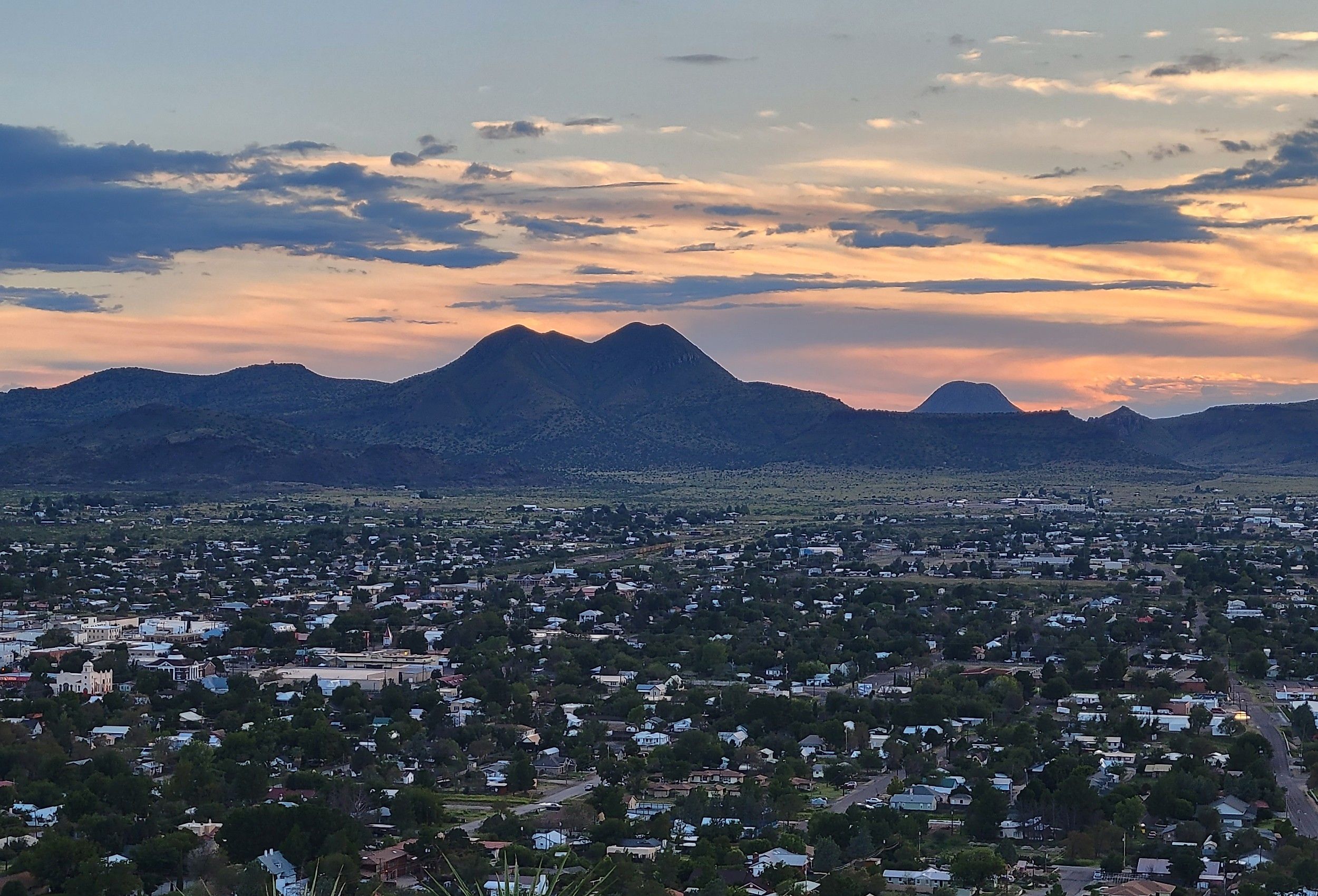
In the Alpine Valley, the volcanic peaks of Twin Peaks and Hancock Hill flank the desert town of Alpine on the north side of the Chihuahuan Desert. Alpine sits at a height of over 4,400 feet, where creosote bush in the valley gives way to maple and oak trees on the slopes. The layout of the town follows the contours of the valley and runs along the rail line that cuts through downtown. Most of the buildings in town are built of local red brick and sandstone, and some line the area's natural wonders. The red-brick Sul Ross State University is spread out at the foot of Hancock Hill, and there is a trail behind Mountainside Hall that leads up the hill. At the top is an old desk with a notebook for visitors to leave messages. Alpine is also close to Big Bend National Park, where 150 miles of trails and camping space await.
Exploring Texas's Desert Treasures
Texas may have only one desert region, but its towns showcase both sides of the Chihuahuan Desert. In Terlingua, the sunset turns the mountains orange over the desert landscape, while Marfa offers high-desert views. Alpine and Fort Davis each have their own appealing characteristics. Whether you prefer mountain canyons, volcanic peaks, river crossings, or national parks, these desert treasures have it all.