The 6 Best Coastal Towns to Retire In Texas
Texas' portion of the Gulf Coast has more retirement options than its abundance of youth-driven beach destinations suggests. Smaller communities along the Gulf and its numerous bays provide different styles of coastal living depending on your wants and needs, including fishing-oriented towns such as Palacios and Port Lavaca as well as resort communities such as South Padre Island. Cost of living, healthcare, exposure to the elements, local amenities, and proximity to larger cities also vary considerably. With that, the places we will be highlighting today show off some top options where you can settle near the water and be outside of the major cities, too, where expenses can often be more manageable, and privacy is easier to obtain.
Rockport

Rockport sits around the middle of the Texan coast along Aransas Bay, with a slower pace than nearby Corpus Christi and direct access to some of the state's best coastal recreation. This spot is especially well suited to retirees who enjoy fishing, boating, birding, and beach days without having to live in a busy resort city.
Rockport Beach has calm bay waters and a designated Blue Wave Beach, while nearby Goose Island State Park provides fishing piers, launches for kayakers, campgrounds, and the ability to see the famous Big Tree, a massive live oak estimated to be more than 1,000 years old. Winters are quite mild, too, but summer heat and humidity are significant considerations for prospective retirees.
The Fulton Mansion State Historic Site then adds a cultural stop just north of town. The broader Rockport-Fulton area has a strong concentration of local art galleries and small museums as well, with the Rockport Center for the Arts being a particularly important draw.
In terms of practical amenities, medical care, groceries, restaurants, and everyday services are available in town, while Corpus Christi is roughly 30 miles away for additional shopping, healthcare, and other big-city services.
Port Aransas

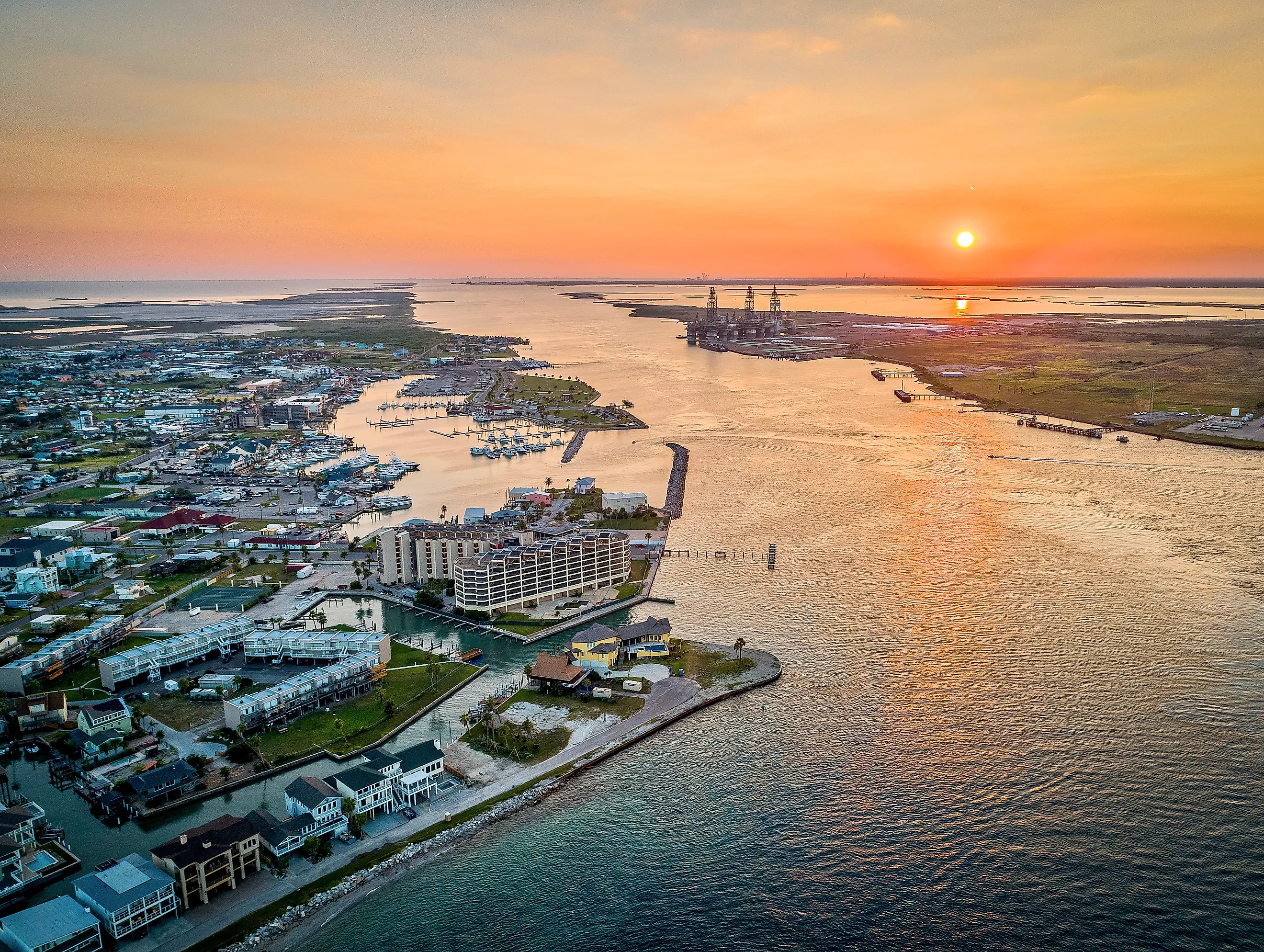
Just south of Rockport, Port Aransas occupies Mustang Island on the Gulf of Mexico (Gulf of America) and is another one of Texas's most established small seaside communities. Its location makes it particularly suitable for retirees who, again, want easy access to fishing and boating. With more than 6 miles of public beach, it is simply a great spot for all sorts of outdoor recreation, while for the true nature lovers out there, the nearby Leonabelle Turnbull Birding Center protects wetland habitat and attracts a wide range of coastal birds. Furthermore, Mustang Island State Park lies just south of town, with more spots for beach access, paddling, fishing, and campsites near the water.
Port Aransas also has a very walkable concentration of restaurants, galleries, shops, and local services in its downtown core, although the population and pace of the town change considerably during peak vacation periods. Some limited medical care is available locally, too, with larger healthcare facilities across the ship channel in Corpus Christi.
Reaching Port Aransas requires crossing by ferry or using the Port Aransas ferry system, depending on the approach. Retirees should also consider the location's hurricane exposure, summer heat, and seasonal tourism when evaluating the town for year-round living.
Port Lavaca

Port Lavaca is a working town on Lavaca Bay, where everyone, not just retirees, revolves around a quieter day-to-day pace. Rather than relying heavily on beach tourism, this locale has long been tied to the bay itself, with shrimping and other maritime industries taking the forefront.
It still has its charms, especially for someone who does not want to experience an influx of summer tourists every year. Lighthouse Beach Park is a focal point, with a sandy shoreline, fishing pier, birding areas, and great views across Lavaca Bay. Port Lavaca also sits near the Matagorda Island National Wildlife Refuge, although entry to the refuge requires a boat. The nearby Calhoun County Birding Center is another pleasant stop, particularly during spring and fall migration. The town's history is unusually accessible as well, with the Calhoun County Museum covering the area's Native American, Spanish, Mexican, and early Texas history.
Note that while housing and everyday expenses in Port Lavaca can be lower than in larger Texas coastal destinations, hurricane risk, heat, and limited specialized healthcare remain important considerations for anyone planning to settle here. That being said, Victoria is roughly 30 miles northwest, giving residents access to a larger selection of medical providers, shopping, and services.
Matagorda

Matagorda is a very small unincorporated coastal community at the mouth of the Colorado River, and with a population of only a couple hundred, it is a distinctly quieter choice for Texan retirees. It is far less developed than Port Aransas or Galveston, with the appeal centered on its clean beaches and deeply rural setting rather than a busy tourist district.
Matagorda Bay Nature Park sits exactly where the Colorado River meets the Gulf and has a fishing pier, boat ramp, boat rentals, nature trails, and campsites. The nearby Matagorda Beach then stretches for miles and is accessible by road, giving residents a convenient way to explore undeveloped shoreline where solitude is easy to find. Birdwatching is also a worthwhile hobby in the area, particularly around the bay and river wetlands, which attract shorebirds and migratory species.
Daily conveniences are limited, however, so Matagorda is better suited to retirees comfortable with driving for groceries, healthcare, and other services. Though, Bay City is only about 20 miles inland and provides a broader selection of necessities.
Palacios

Palacios on Tres Palacios Bay is also within Matagorda County, about 110 miles southwest of Houston. It has long-standing connections to commercial and recreational fishing, being widely considered the "Shrimp Capital of Texas." The surrounding bays are also known for their redfish, speckled trout, flounder, and other Gulf Coast species.
With that, Palacios also has several waterfront parks, including East Bay Park and the Palacios Recreation Center, while nearby Matagorda Peninsula provides entry to expansive beaches and other coastal wilderness areas.
Everyday services are limited but include your average grocery stores, a mix of mom-and-pop and chain restaurants, pharmacies, and a small healthcare clinic. Again, Bay City is close by, while Houston sits a bit of a longer drive away but boasts world-class amenities of all kinds should you make the afternoon-long journey up.
South Padre Island

South Padre Island is one of the few Texan Gulf communities where retirees can have genuine island living without giving up a substantial range of modern amenities. Resting on a barrier island close to the Mexican border, it has a permanent population of only about 2,000, but it becomes considerably busier during spring break and summer, boasting the numerous hotels, restaurants, and other accommodations its tourists and residents alike may need.
Retirees can spend their time fishing offshore, walking the beach, paddling around the Laguna Madre, or visiting Sea Turtle Inc., a nonprofit sea turtle rescue and rehabilitation center. The South Padre Island Birding, Nature Center & Alligator Sanctuary is another year-round attraction for those who love the outdoors, with plenty of boardwalks through wetlands and habitat for coastal wildlife. To top it off, the island's flat terrain also makes many everyday activities relatively easy, without making you deal with any steep roads or hills throughout.
Brownsville is about 25 miles away, allowing convenient access to larger hospitals, shopping centers, and an international airport if needed. The trade-offs, like many destinations on this list, include hurricane exposure, high summer temperatures, and the sizable seasonal influx of visitors that can significantly change traffic and noise levels.
Find Your Ideal Retirement Spot on Texas' Gulf Coast Today
Retiring on the Texas Gulf Coast, and away from any of the large cities, often means choosing between quiet bay towns, fishing communities, and lively resort destinations. Each has different pros and cons involving healthcare, environmental risks, housing availability, and everyday conveniences. However, the small communities we picked out can deliver a slower pace without sacrificing the convenience of nearby cities and essential services, should you be okay with making the occasional drive or ferry ride out. Overall, the right choice ultimately depends on your budget and how much activity you want to experience on a daily basis.