Portugal's 11 Best Retirement Towns Ranked
Plenty of American retirees have swapped the suburbs for cobblestones and a sea breeze in Portugal. The pull is easy to understand. Winters stay mild and the public hospitals rank among Europe's most respected. Your money simply lasts longer here. The welcome feels genuine too. Locals tend to treat newcomers like neighbors rather than passing tourists. Living costs have climbed lately and the country is no longer the bargain it once was. A residence visa is still required and some citizenship rules are shifting. Call your nearest Portuguese consulate before you start packing.
Healthcare in Portugal is available through both public and private systems, and many services help seniors remain at home, including visiting nurses, day facilities, and community care. Residential care is also available, and platforms such as Lares Online or Via Senior can help compare senior residences, day centers, home care, and continuing-care options. Read on to discover the top spots in Portugal to retire in 2026 and what makes each stand out.
Tavira

The Algarve region, at the southernmost end of Portugal, draws retirees with its temperate climate, turquoise-water beaches, and established expat communities. Some Algarve towns are expensive, but Tavira remains one of the region's more affordable coastal options. The town has retained its historic charm through cobblestone streets, Moorish-influenced architecture, and a walkable center. The soft-sanded beaches of Ilha da Tavira or Praia do Barril are a short ferry ride away.
The Gilão River runs through the town and is crossed by the pedestrian bridge known as the Ponte Romana, an example of the Moorish-influenced architecture found throughout Tavira. The expat community here is active, with walking groups, language classes, and social events. The pace is slower than in nearby Faro, the Algarve's main city to the west. For day-to-day care, Tavira has its own public health center, and the Hospital de Loulé group runs an outpatient clinic in town at the Tavira Gran Plaza. For hospital-level and emergency care, the major public and private hospitals in Faro are about a 40-minute drive away.
Tomar

The Castle of Tomar was the historical headquarters of the Knights Templar in Portugal and one of the order's most important sites. The Convent of Christ, part of that legacy and founded in 1160, is a UNESCO World Heritage Site, and several nearby sites also connect to the Templar story. The town is known for convent sweets and pastries that are now famous across Portugal.
This medieval Ribatejo town sits beside the Nabão River and is the most affordable inland option on this list. Here, residents can enjoy music festivals, boating, fishing in the nearby Castelo do Bode reservoir, and senior programs. Healthcare is excellent, with both public options at the Hospital de Nossa Senhora da Graça and private clinics like Clínica Affidea Tomar. Tomar also benefits from its central location and easy rail connections to Portugal's major cities.
Caldas da Rainha

Caldas da Rainha has a small-town feeling and suits people who want a working town with fewer tourists. Located north of Lisbon on the Silver Coast, it is best known as a spa town. The name Caldas da Rainha translates to the "Queen's Hot Springs," and the town is known for its historic thermal hospital. It also has a strong art scene and is often referred to as the "Creative City." Art museums such as the Jose Malhoa Museum and Art Nouveau architecture further support that reputation, where workshops and art classes are available to seniors.
The Praça da Fruta is the only daily open-air market remaining in Portugal. Open every day, it's the perfect place to shop for fresh produce and seafood. For added peace of mind, this town has the best healthcare of the locations we suggest in this article. Aside from the thermal hospital, the city is serviced by the Unidade Local de Saúde do Oeste alongside numerous modern private clinics.
Estremoz

Estremoz is known as the "White City," due to the white marble used on many local facades. Key examples include Castelo de Estremoz (Estremoz Castle) and Torre das Três Coroas (Tower of the Three Crowns). The 28-meter-tall keep of the castle, once tied to three different Portuguese kings, still rises above the town. For retirees, the castle area makes for an easy cultural outing, with its medieval walls, gates, the upper-town palace area, and broad views over the Alentejo plain.
The climate here is temperate and dry, well-suited to grapes, olive trees, and cork. In fact, some of Portugal's best wines come from this area, including those produced by João Portugal Ramos, just on the edge of town. Cellar tours, tastings, and cooking classes make wine culture easy to enjoy. Historic homes here often cost far less than similar properties along the coast. For daily errands, one of the most famous markets in Portugal, Rossio Marquês de Pombal, brings produce, meats, and antiques into the town center.
Ponte de Lima

Ponte de Lima is often called one of the prettiest villages in Portugal. It sits north of Porto, in the lush Minho region, where vineyards, rolling countryside, and the Lima River shape the landscape. This town is a top choice for people who want a feel for traditional Portuguese culture. Walking paths along the Avenida dos Plátanos, riverside strolls, village squares, and antique shops give residents plenty to do.
Founded in 1125 as Portugal's oldest chartered town, Ponte de Lima is filled with medieval architecture, such as a magnificent Roman and medieval bridge that crosses the river. This is also the center of the Vinho Verde grape-growing region. Visits to wineries that produce the iconic fizzy white wine are a highlight. The town has both expats and Portuguese residents, making it a good fit for retirees who want local culture with some English-speaking neighbors nearby.
Lagos

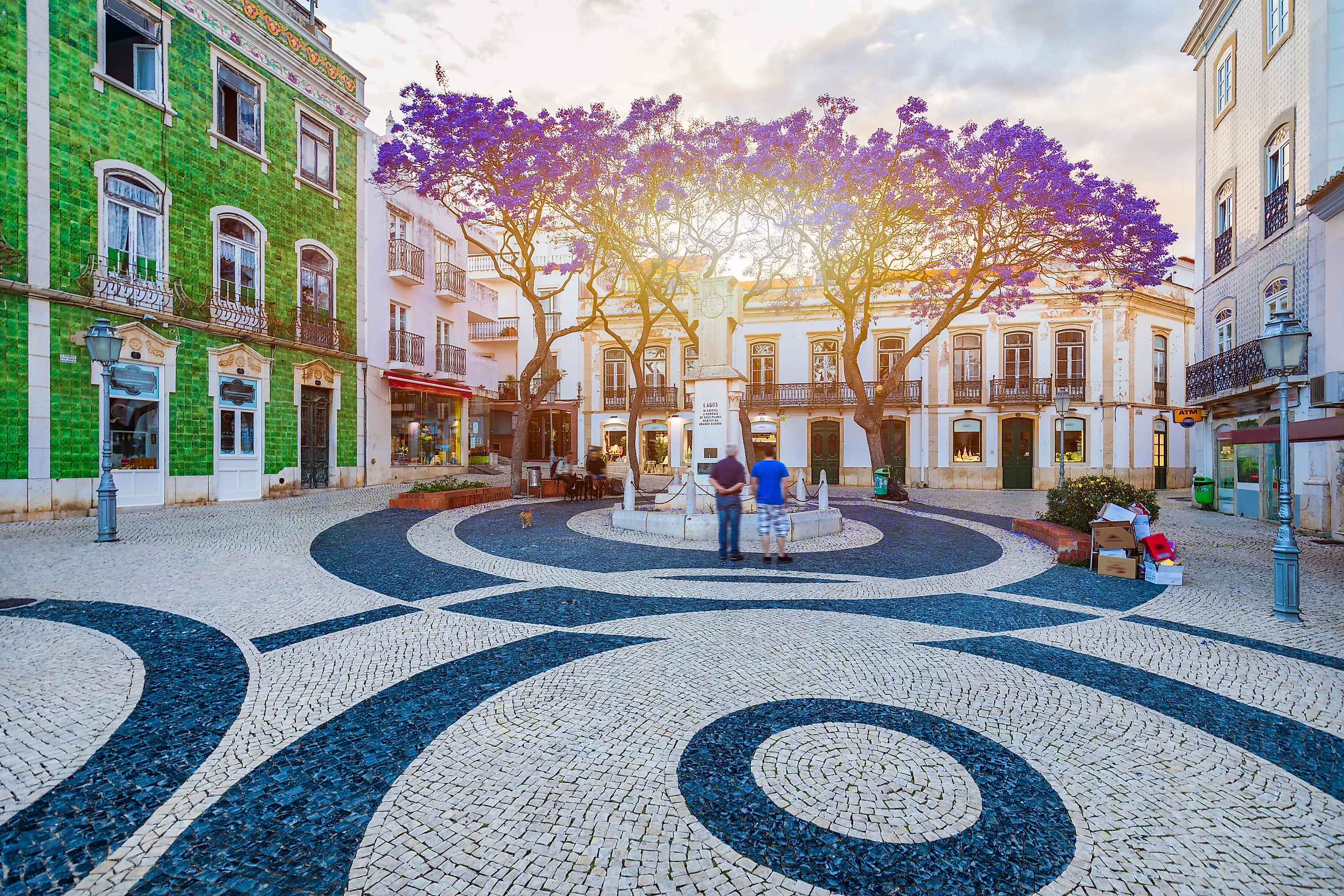
Another popular retirement haven in the Algarve is Lagos, a coastal town that tends to feel less crowded than Faro, which is farther east. Lagos sits on dramatic cliffs overlooking the Atlantic Ocean, and an active international community helps newcomers settle in. Ponta da Piedade is a headland honeycombed with sea caves and natural arches, while Praia do Camilo and Meia Praia offer beaches, surfing, and dolphin watching. Meanwhile, foodies will find fresh seafood restaurants and the popular bakery Padaria Central.
The sheltered harbor of Lagos once housed Henry the Navigator's naval yard. Today, the marina and waterfront give retirees an easier way to enjoy the coast, with flat harbor walks, cafes, restaurants, and boat trips to the nearby grottoes. For a small town, local healthcare is excellent, but the major hospitals of Faro are also nearby for advanced care.
Lousã

Lousã sits southeast of Coimbra, the largest city in the region, where residents can access major hospitals and the ancient University of Coimbra, founded in 1290. This budget-friendly town suits retirees who want mountain scenery, outdoor adventure, and a nature-focused lifestyle. Retirees can join hiking clubs and cultural associations while enjoying a slower pace of life.
Hiking in the foothills of the Serra da Lousã, swimming in river beaches, and mountain biking are local staples. For history buffs, nearby "Schist Villages," restored centuries-old stone villages such as Gondramaz, are a signature feature of the area. Quelho da Lena Restaurante is located in one of them, Talasnal, and serves traditional dishes made with local goat meat and cod.
São Brás de Alportel

Set in the eastern Algarve hills and north of Faro, this inland town has a quieter feel than the coastal resort communities. Whitewashed homes, winding cobblestone streets, and traditional Algarve architecture define the town center. São Brás de Alportel was once the cork capital of Portugal, and ornate mansions built by wealthy cork merchants still stand. You can learn more about this history at the Municipal Museum of São Brás.
A strong expat community supports art events, language classes, and volunteer organizations. Away from the coast, local menus lean toward game meats and stews. Restaurant dining is inexpensive, and Churrasqueira Paraíso "Luís dos Frangos" is a barbecue-style establishment known for grilled chicken. For day trips and quick escapes, the coast and beaches are an easy drive from town.
Peniche

Peniche is a working-class fishing town with a dramatic setting on a rocky peninsula. It is famous as a surfing destination, with Supertubos Beach, nicknamed the "European Pipeline" for its fast, barreling waves. Seafood is fresh and plentiful here, and dishes such as caldeirada, a traditional fish stew, freshly caught barnacles, and sardines appear at affordable, casual restaurants like Abrigo do Pescador. The town has fewer fancy boutiques and less tourist gloss than many coastal destinations, but walking groups, senior clubs, and excursions to the nearby Berlangas Archipelago for bird watching give retirees plenty to explore.
Monchique

Monchique is another inland option in the popular Algarve region, with cooler temperatures and a mountain village setting. Just south of town is Caldas de Monchique, a spa village that has existed since Roman times. Monchique has kept much of its old-world Portuguese character, including its regional food traditions. Try local stews, porco preto (black pork), and medronho, a brandy-style drink made from local fruit trees.
Hiking and mountain biking are major draws in the surrounding hills, particularly on Mount Fóia, the highest peak in the region. Life in Monchique does require a car, and having one makes day trips to the beaches near Lagos possible. In town, the Clínica Particular Medchique is part of Grupo HPA Saúde, which has major regional hospitals in the Algarve.
Vila Real

Vila Real is a gateway to Portugal's green Douro Valley wine country. It is the largest town on this list, but it still has a tranquil atmosphere, and the cost of living is significantly lower than in many coastal towns. Retirees have access to practical amenities, including larger grocery stores, a mall, and gyms. There is also a major regional hospital, Centro Hospitalar de Trás-os-Montes e Alto Douro, which has multiple specialty clinics and 24-hour emergency services. There is not a large expat community here, so a basic grasp of Portuguese will help with making friends among the locals.
Vila Real is also the gateway to Alvão Natural Park and the Serra do Marão mountains, making it ideal for active retirees who love hiking and bird watching. An unusual feature in Vila Real is the world-famous Vila Real International Circuit. Since the 1930s, this three-mile auto racing circuit has drawn an international crowd as it winds right through town on public streets.
Choosing Your Town
Each town on this list strikes a different balance of scenery, healthcare access, community life, and cost. A coastal base in the Algarve trades higher prices for beaches and big expat networks, while inland options like Tomar or Vila Real stretch a budget further. Spend real time in your top picks, weigh practical needs like transportation and medical care, and choose the place that fits your pace of life.