Where People Are Moving To In North Dakota In 2026
North Dakota just hit a record. The state reached 799,358 residents in 2025 and likely crossed 800,000 soon after, a gain of more than 20,000 since the 2020 census. Almost all of it is concentrated in a few places. The Fargo metro leads, with more growth around Bismarck-Mandan and renewed gains in the Bakken oil region. Some rural counties keep losing people while cities with jobs and housing keep adding them. The 2026 story is less one boom than a handful of places built to keep growing.
Horace

Horace has grown faster than anywhere else in North Dakota. The city more than doubled, from about 3,200 residents in 2020 to roughly 7,000 in 2025, a 118% jump that puts it in a category by itself. It sits just south of West Fargo and close to Fargo's job market, but with far more room for new subdivisions and family housing. Current projects include the Sparks, Oak Valley, and Deer Creek additions, along with the infrastructure to support them. The new Horace High School opened with room for up to 1,000 students and space to expand to 1,500. Horace grows because families can find new homes near the Fargo metro without moving into Fargo itself.
Fargo

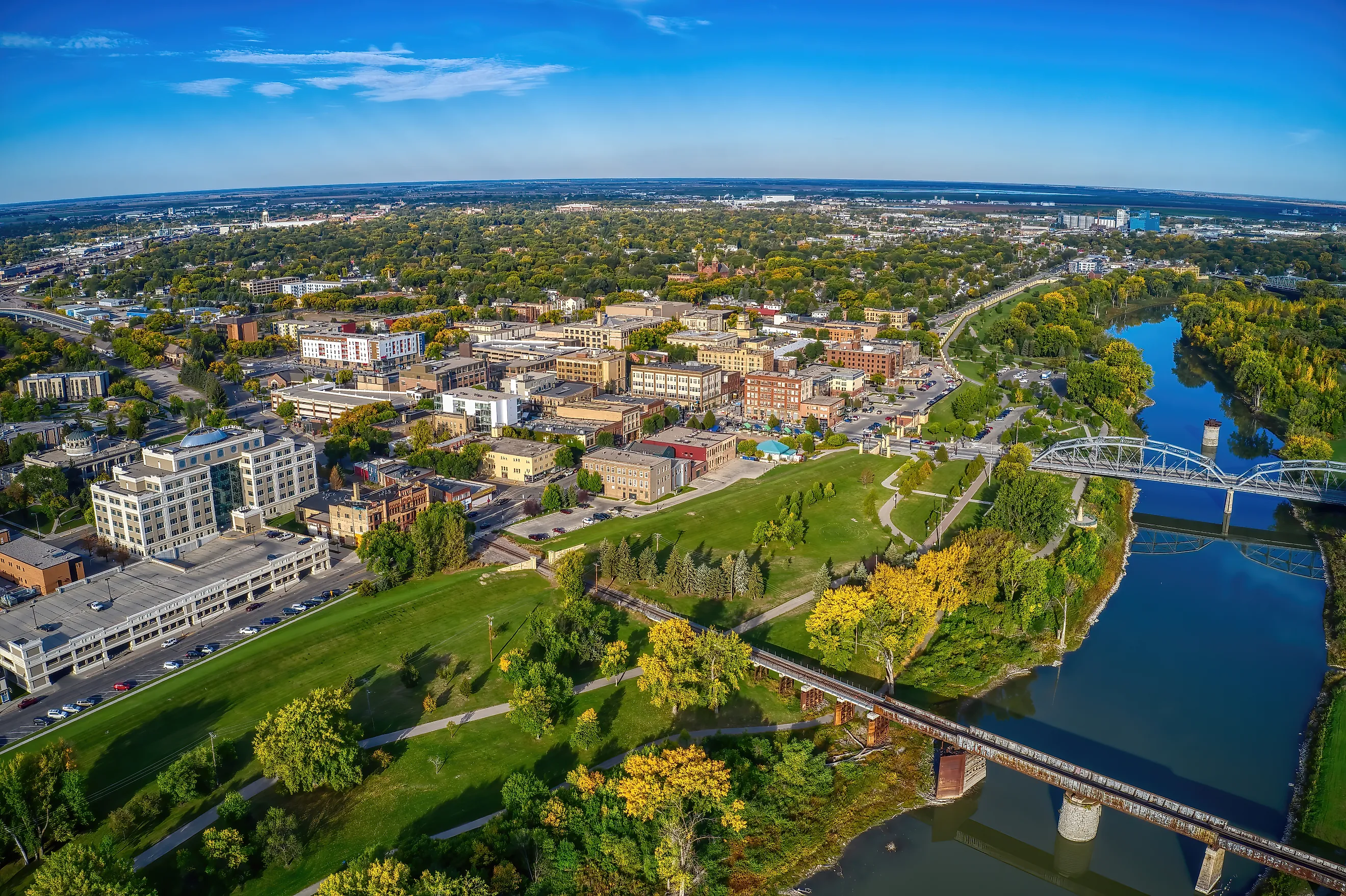
Fargo is still the state's main population magnet. The city reached about 136,300 residents in 2025, a gain of more than 10,000 since 2020, and the pull comes from the size and variety of its economy. North Dakota State University, Sanford Health, Essentia Health, downtown employers, industrial parks, and the I-29 and I-94 crossroads all work in its favor. The wider Fargo-Moorhead region grew nearly 18% between 2010 and 2020 and could add close to 44,000 households over the next three decades. On the ground that shows up as downtown apartments, south-side subdivisions, and development along the main corridors. Fargo keeps adding residents because it offers jobs, services, and housing in the same regional hub.
West Fargo

West Fargo's growth is steadier than Horace's but still substantial. The city reached about 41,200 residents in 2025, up roughly 7% since 2020, keeping it one of the main landing spots in the Fargo metro. The appeal is housing and schools as much as the commute. West Fargo has newer subdivisions, commercial growth along the main roads, and direct access to Fargo's job market, plus its own identity through places like The Lights, Sheyenne Street, and Veterans Memorial Arena. This is not just spillover. Households stay close to metro jobs while finding newer housing and local services, which is why the population keeps rising even as Horace grabs the flashier numbers.
Bismarck

Bismarck's growth is quieter than Fargo's, but it is one of the safest bets on the state's map. The city reached about 78,000 residents in 2025, up close to 6% since 2020, on the strength of stability rather than any single boom. State government, healthcare, education, retail, and a large regional trade area anchor it, and the Bismarck-Mandan metro is projected to keep growing through 2030. New residents land here for jobs at the Capitol, Sanford Health, CHI St. Alexius, the University of Mary, and the wider service economy. Growth shows up in north Bismarck subdivisions and along the State Street commercial corridors. Bismarck adds people because it offers central North Dakota's most durable job base.
Mandan

Mandan gives the Bismarck metro a west-side growth story of its own. The city reached about 25,000 residents in 2025, up roughly 4% since 2020, tied to metro growth rather than one employer. It sits across the Missouri River from Bismarck, with access to I-94, rail, healthcare, state-government jobs, and regional retail. Mandan offers households a different housing and daily-life option from Bismarck while keeping them in the same labor market. Downtown Mandan, Dykshoorn Park, the Starion Sports Complex, and newer residential areas show how the city builds around both community life and the commute. Its growth proves the Bismarck metro is not expanding in only one direction.
Grand Forks

Grand Forks has returned to growth in the latest estimates. The city reached about 60,400 residents in 2025, up about 2% since 2020, with the 2024-to-2025 gain of roughly 600 residents showing fresher momentum. The economy leans on education, healthcare, defense, and regional services. The University of North Dakota is the major institution, with Grand Forks Air Force Base, Altru Health System, the airport, and food-processing employers broadening the base. The city tracks its own housing supply through a permit-and-vacancy dashboard, a sign of growth watched through real numbers rather than optimism. Grand Forks grows because its economy has several anchors instead of one.
Williston

Williston has shifted from explosive boom to managed growth. The city reached about 29,500 residents in 2025, only a little above its 2020 count, but it added roughly 700 people between 2024 and 2025, which makes the recent gain more noticeable. Energy is still the reason it belongs here. The city sits in the Bakken, where oil, logistics, construction, aviation, and related services keep shaping the local economy, with the Williston Basin International Airport part of the current picture. Housing is part of the pressure too, and the city has been working to add development, including single-family construction across several areas. Williston gains residents because the regional economy keeps producing work.
Watford City

Watford City shows how the Bakken keeps shaping western North Dakota. The city reached about 6,400 residents in 2025, up from roughly 6,200 in 2020, with a 2024-to-2025 gain of about 150 that shows growth has not stopped. The city points to a growing school system, strong regional healthcare, a busy business climate, and access to the outdoors. It also works through the Long X Development Loft on business support, workforce attraction, and arts and community development. Main Street, the Rough Rider Center, McKenzie County Healthcare Systems, and nearby Theodore Roosevelt National Park give it more daily structure than many small energy towns. Watford City still grows because it turned oil-era expansion into a more complete community.
Where North Dakota's Growth Is Heading
North Dakota's gains are concentrating in two patterns. The Fargo metro is absorbing family and suburban growth through Fargo, West Fargo, and Horace, while Bismarck-Mandan keeps adding residents through government, healthcare, and regional services. Western oil cities like Williston and Watford City are still gaining as energy, construction, and local services hold up the job base. The practical effects will show in housing, schools, roads, and infrastructure in the few places growing much faster than the rest of the state.