Which US City Is Home To America's Oldest Public City Park?
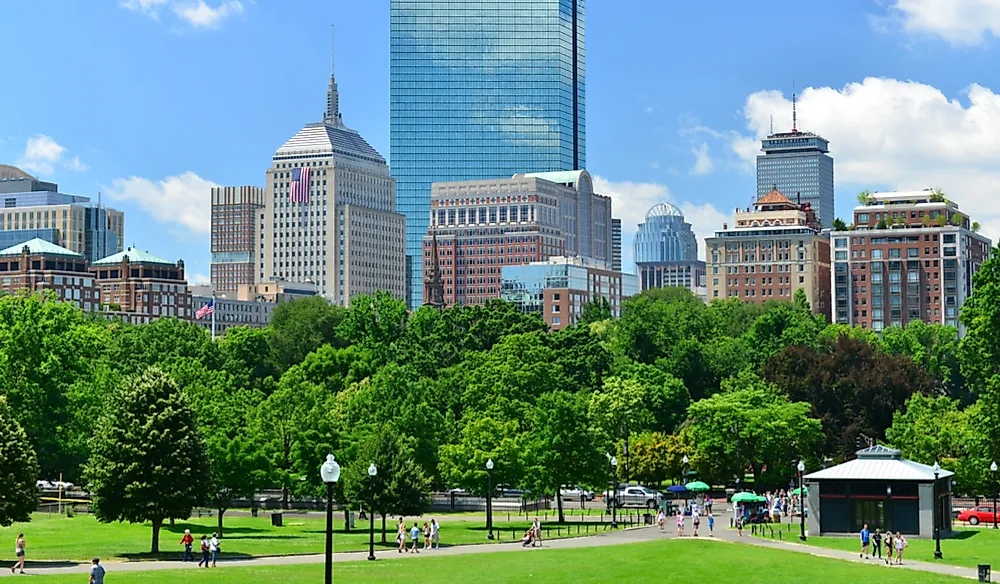
The answer is Boston. Boston Common opened in 1634, just four years after Puritan colonists founded the city, and it has been the oldest public park in the United States ever since. Over almost four centuries it has served as a cow pasture, a hanging ground, a British army camp, and a stage for popes and protesters, all on the same 50 acres in the heart of downtown. Today it marks the start of the Freedom Trail and ranks as the most visited outdoor space in the city. Here is how a colonial cattle field became America's original public park, plus a look at the older-than-you-think parks that came close.
How a Cow Pasture Became a Park

Long before it was a park, the land belonged to William Blackstone, the reclusive first European settler on the Boston peninsula. In 1634 he sold most of it to the colonists who had already founded the Massachusetts Bay Colony four years earlier, and the town set the tract aside as shared pasture. That is where the name comes from: a common, open to every household's livestock. The arrangement worked until it did not. Wealthy families ran such large herds that overgrazing wrecked the turf, and in 1646 the town capped the green at 70 cows at a time. Grazing hung on for nearly two more centuries, until Mayor Harrison Gray Otis banned cows outright in 1830 and the pasture began its slow turn into a proper park.
The Common's early history is not all bucolic. For decades it doubled as Massachusetts's execution ground, where the town hanged pirates, thieves, and religious dissenters from a towering tree known as the Great Elm. Its best-remembered victims were the Boston Martyrs, four Quakers put to death between 1659 and 1661 for defying a Puritan ban on their faith, among them Mary Dyer. A century later the park went to war. By 1775 the British army had turned it into a fortified camp of roughly 1,750 troops, and it was from the Common that the Redcoats set out toward Lexington and Concord to open the Revolutionary War.
What Stands on the Common Today

The modern Common packs a lot into a short walk. The Frog Pond draws ice skaters in winter and cools off children in summer, and the ballfields in the southwest corner sit on the very spot where, in 1862, the Oneida Football Club played what is often called the first organized football in the United States. Monuments crowd the lawns. The Robert Gould Shaw Memorial, sculpted by Augustus Saint-Gaudens, honors the Black soldiers of the 54th Massachusetts Regiment; a separate memorial remembers the victims of the Boston Massacre; and the Blackstone tablet marks the 1634 purchase that started it all. A gray granite slab near the parking garage recalls October 1, 1979, when Pope John Paul II celebrated his first American Mass here before a rain-soaked crowd of more than 400,000. And a piece of transit history runs right underneath: the Common's edge carried the nation's first subway when it opened in 1897.
America's Other Historical Parks

Boston Common wins the title, but it is not the only old-timer, and the runners-up trace how public space took shape in early America. Down the coast in Connecticut, the New Haven Green was laid out in the late 1630s as the centerpiece of the town's original nine-square grid, and three historic churches still stand on it. William Penn built five open squares into his 1682 plan for Philadelphia, the ancestors of today's Rittenhouse, Washington, Logan, Franklin, and Centre squares. Spanish colonists were shaping public land too: San Pedro Springs Park in San Antonio traces to a 1729 royal grant, ranking it among the oldest in the country. New York's Bowling Green, leased to the public in 1733 for the token rent of one peppercorn a year, later held a gilded statue of King George III that a patriot mob toppled and melted into musket balls in 1776. New Orleans, meanwhile, laid out its Place d'Armes, now Jackson Square, around 1721. Which one counts as oldest depends on how you define a park, but by the plain measure of a green set aside for the whole town, Boston got there first.
Why Boston Holds the Title
Strip away the debates over plazas and greens and the record is clear: since 1634, Boston Common has been open ground held in common for the public, and nothing older in the country can say the same. It has outlasted cows, gallows, redcoats, and four centuries of Boston weather, and it is still where the city gathers to skate, protest, picnic, and begin the walk into its own history. For the oldest public park in America, that is a remarkably active retirement.