Towns Built on Dried-Up Lake Beds
Most towns are built next to water on purpose. The places on this list did the reverse. Each one sits on ground that used to be the bottom of a lake, either because the water was drained, diverted, or left to evaporate while people moved in and started paving. A dry lakebed looks like reasonable real estate. It is flat, it is often fertile, and the view runs for miles. The catch is that a lakebed remembers what it used to be. A few of these towns are sinking. Others are choking on dust, and at least one keeps waiting for its lake to return. Every so often, it does.
Mexico City, Mexico

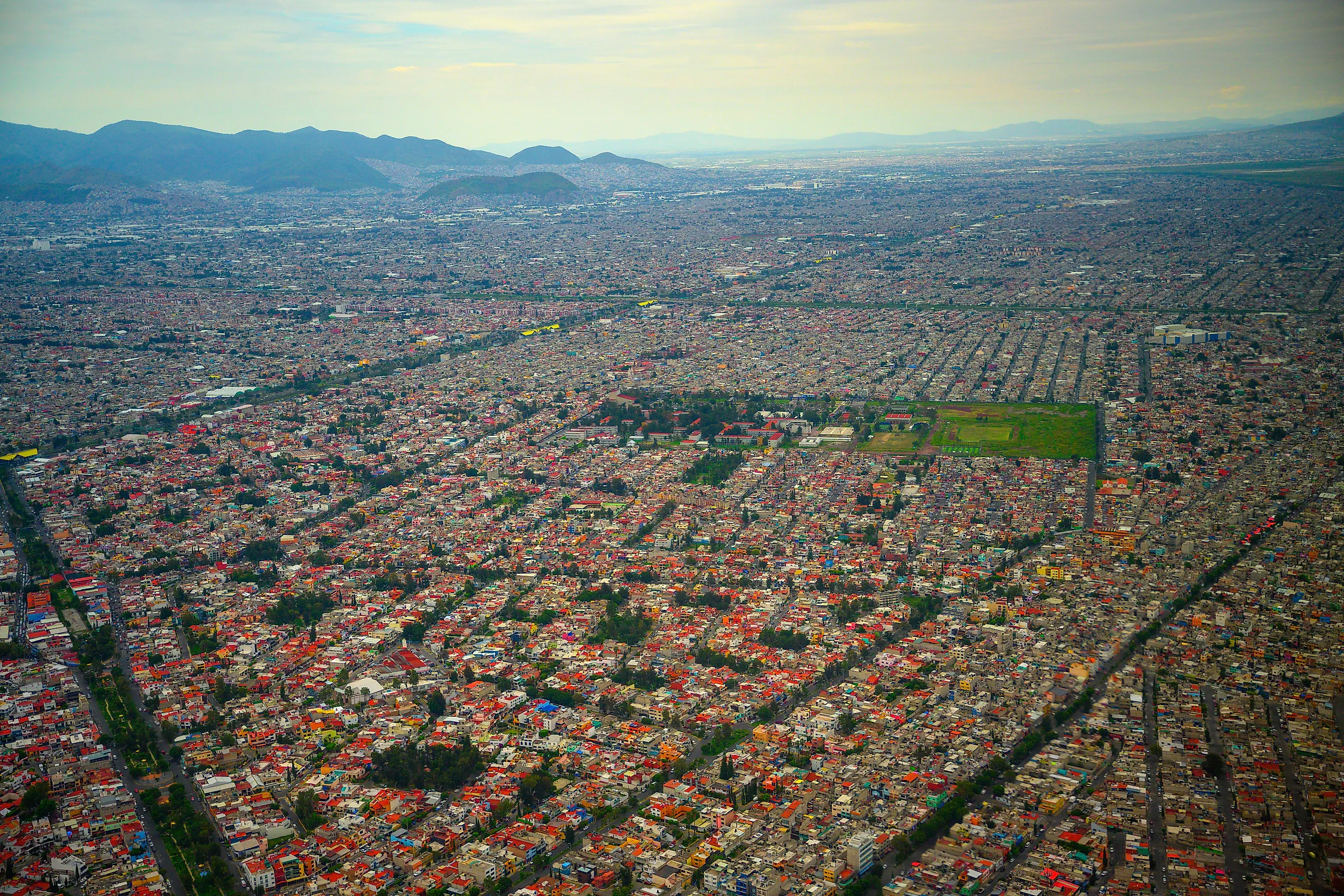
The Aztecs founded Tenochtitlan around 1325 on islands in Lake Texcoco, a sensible spot for a city that got around by canoe. After the Spanish took the city in 1521, they drained the lake and built on the mud. Modern Mexico City, home to more than 20 million people, now sits on that old lakebed, and the lakebed is not enjoying the weight.
As groundwater is pumped out from underneath, the ancient clay keeps compacting, and the city sinks along with it. In the worst-affected districts the ground drops by as much as 20 inches a year, and parts of the center have sunk roughly 30 feet over the past century. The sinking is uneven. That is why old churches lean at odd angles and the great cathedral has needed decades of engineering just to keep its floor near level. Researchers say most of this is now irreversible. The lake, in its slow way, is still winning.
Corcoran, California

Tulare Lake was once the largest freshwater lake west of the Mississippi. In the late 1800s, farmers diverted the rivers that fed it, the lake dried up, and its bed became some of the richest farmland in California, planted with cotton, tomatoes, and almonds. The town of Corcoran, population around 22,000, went up right in the middle of it, along with a state prison.
The problem is that Tulare Lake never fully agreed to leave. Locals call it a ghost lake, because in very wet years it comes back. In the spring of 2023, a run of atmospheric rivers refilled the basin until it was roughly the size of Lake Tahoe, drowning fields and lapping at the edge of the prison. The town keeps having to raise the levee that stands between it and the water that is not supposed to be there anymore.
Keeler, California

Owens Lake sat at the bottom of the Owens Valley for hundreds of thousands of years, and in the 1870s the town of Keeler grew up on its eastern shore as a mining port. Steamboats hauled silver across the lake from the Cerro Gordo mines. Keeler had a long pier, two hotels, a few thousand residents at its peak, and a public swimming pool.
Then Los Angeles arrived. Starting in 1913, the city's new aqueduct diverted the Owens River more than 200 miles south, and by the mid-1920s the lake was gone. What replaced it was a dry, dusty flat that became one of the worst sources of airborne dust in the country. Keeler is still there, sort of, with a population of around 50. Its old pier now looks out over a plain of dust, which is a hard thing for a pier to do.
Moynaq, Uzbekistan

The Aral Sea was once the fourth largest lake on Earth, and Moynaq was one of its busiest fishing ports, with a cannery, a fishing fleet, and beaches where Soviet holidaymakers came to swim. In the 1960s, planners diverted the two rivers feeding the sea to irrigate cotton fields. The Aral Sea began to disappear, and it took Moynaq's entire reason for existing with it.

Today the shoreline is about 90 miles away. The old fishing boats never left. They sit rusting on the sand where the water used to be, in what everyone now calls the ship graveyard. The strangest part is the afterlife. Since 2018, Moynaq has hosted the biggest electronic music festival in Central Asia, staged out among the shipwrecks, so the dead sea now gets an annual rave.
Almere and Lelystad, Netherlands

Everywhere else on this list lost a lake by accident or by theft. The Dutch removed one on purpose. The Zuiderzee was an arm of the North Sea until 1932, when a huge dam sealed it off and it slowly became a freshwater lake called the IJsselmeer. Engineers then pumped whole sections of that lake dry to make new land.
On the reclaimed bottom they built cities. Lelystad came first, in the 1960s. Almere followed in the 1970s and has since grown to more than 220,000 people, which makes a former lakebed one of the fastest-growing places in the country. The city sits several feet below sea level and stays dry only because the pumps never stop. Its name is the final touch. Almere is named after the medieval lake that used to cover the same spot, so the Dutch drained a lake and then named the city after it.
Winnipeg, Fargo, and Grand Forks

This one is older than all the rest by a wide margin. At the end of the last ice age, a meltwater lake called Lake Agassiz covered much of central North America. It was so large that its leftovers still rank among the biggest lakes on the continent. When it drained about 12,000 years ago, it left behind the Red River Valley, a plain so level it is often described as one of the flattest places on Earth.
Winnipeg, Fargo, and Grand Forks all sit on that old lakebed. The trouble with building on the floor of a lake this flat is that floodwater has nowhere to go but everywhere. The Red River flows north into still-frozen ground each spring. Ice jams the flow, the valley floods, and the plain briefly turns back into a shallow lake. Winnipeg's answer was to dig an enormous floodway around the city to send the water past it, which is a very expensive way to tell a lake no.
The Lake Usually Gets a Say
A dried-up lake bed behaves less like empty land and more like a lake on pause. The clay keeps compacting, the dust keeps blowing, and the old basin acts like a basin no matter what gets built on top of it. The towns here run from a near-empty ghost town to a metropolis of millions, and they all answer to the same quiet landlord. Sooner or later, the water sends a reminder.