Germany's 8 Most Laid-Back Towns
Some places are best explored with a packed itinerary, but Germany's most laid-back towns reward travelers who slow their pace. On the North Sea, car-free islands replace traffic with bicycles and horse-drawn carriages, while the Spreewald's traditional punts glide through narrow waterways beneath the trees. Farther south, lakeside promenades, passenger boats, spa gardens, and Black Forest trails provide equally unhurried ways to fill a day. These eight towns offer plenty to see and do without making visitors feel as though they need to rush between attractions.
Juist

Daily life slows down almost as soon as visitors arrive on Juist, a long, narrow East Frisian island in the North Sea. Ordinary automobile traffic is absent, so people primarily travel around on foot, by bicycle, or aboard horse-drawn carriages that still carry passengers and goods across the island. Rent a bicycle for an easy ride between the village and dunes, or let someone else do the work on a carriage excursion toward the island's quieter western end.
Juist's broad North Sea beach provides an even simpler way to spend the day. Walk the sand, find a sheltered spot among the dunes, or watch the tide transform the shoreline. Juist also lies within the Wadden Sea, whose enormous tidal flats reveal an entirely different landscape at low tide. Guided mudflat walks introduce visitors to its birds, marine life, and unusual tidal ecosystem. With no need to navigate traffic between activities, even getting around Juist becomes part of the island's laid-back appeal.
Plau am See

Water sets the pace in Plau am See, a small Mecklenburg town on the western shore of Lake Plau. Begin at the waterfront, where boats fill the marina and paths follow the shoreline past places to sit beside the water. From there, board a passenger boat for a leisurely trip across Lake Plau, trading the town's red roofs and church tower for open water and the wooded Mecklenburg landscape.
Back on land, the town remains easy to explore without an itinerary. The historic lifting bridge spans the Elde near the harbor and still opens to allow boats to pass between waterways. From the bridge, continue into the Old Town, where brick buildings, cafés, and quiet streets provide a change from the lakefront. Visitors who want to cover more ground can rent a bicycle and follow routes beside the water, but there is little reason to hurry. In Plau am See, watching boats pass beneath the bridge can be an activity in itself.
Lübbenau

One of Germany's most relaxing forms of transportation awaits in Lübbenau, the gateway to the Spreewald. Instead of boarding a tour bus, step into a traditional Spreewald punt, where a boatman uses a long pole to propel the flat-bottomed vessel through a network of narrow, tree-lined waterways. Excursions range between shorter circuits and longer trips that pass locks, meadows, wooden bridges, and waterside homes.
Many punts continue to Lehde, a small Spreewald village whose traditional farmsteads stand among the canals. The Open-Air Museum Lehde preserves historic buildings and introduces visitors to the customs and everyday life that developed within this unusual watery landscape. Back in Lübbenau, explore the compact historic center or swap the boat for a bicycle. Flat cycling routes follow waterways and country lanes through the surrounding Spreewald, making it easy to travel farther without turning the day into a strenuous outing.
Worpswede

Worpswede offers a slower pace through art and the unusual landscape of northern Germany's Teufelsmoor. The village became an artists' colony in the late 19th century, and that legacy remains visible at the Barkenhoff, the former home and studio of artist Heinrich Vogeler. Today, visitors can explore exhibitions there before continuing to other galleries and museums scattered around the village.
There is little need for a car between stops. Rent a bicycle and follow quiet roads and paths between studios, gardens, and distinctive buildings such as the Käseglocke, a round Expressionist house completed in 1926. Beyond the village, trails lead into the Teufelsmoor, where wetlands, canals, meadows, and broad skies inspired generations of Worpswede artists. Guided walks offer a closer look at the moor's natural and cultural history, but simply cycling into the countryside provides an equally fitting way to understand why artists have spent more than a century finding inspiration here.
Bad Pyrmont

Bad Pyrmont was built for taking things slowly. Mineral springs have attracted visitors to the town for centuries, and the Kurpark remains the centerpiece of its spa tradition. Broad avenues, flower beds, fountains, and lawns encourage unhurried walks, while the park's Palm Garden creates the unexpected sight of palms and other subtropical plants in northern Germany.
The relaxation can continue at Hufeland Therme, where indoor and outdoor saltwater pools accompany a large sauna and wellness area. Visitors interested in the history behind Bad Pyrmont's reputation can walk along the Hauptallee through the historic spa district, passing buildings associated with generations of health seekers who came here for extended stays. Nearby Pyrmont Castle adds another option without requiring a packed schedule. Its museum traces local history, including the mineral springs that helped transform the town into a prominent European health resort. Bad Pyrmont's gardens, baths, and promenades still make doing very little feel like the point of visiting.
Murnau am Staffelsee

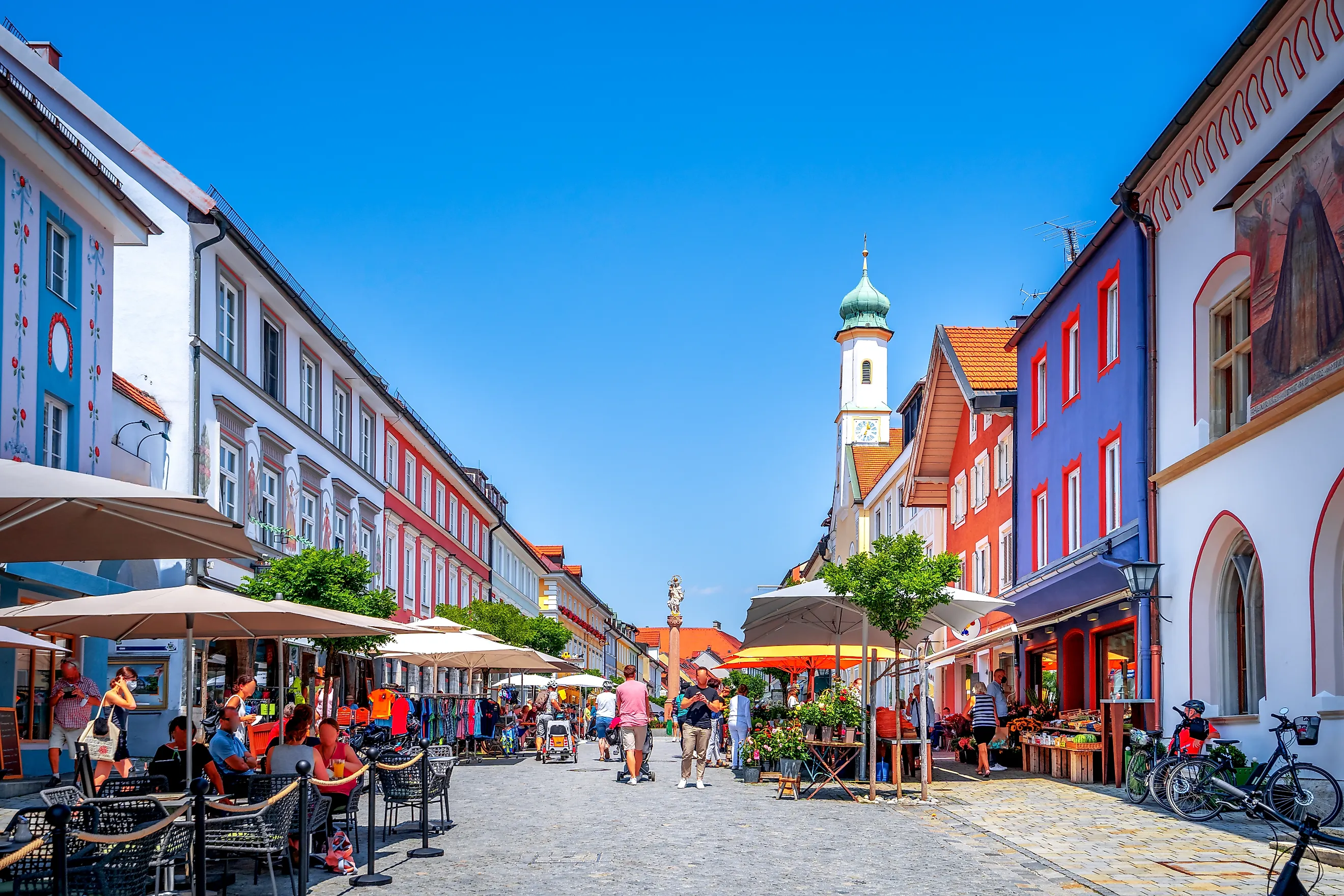
Murnau am Staffelsee combines lakeside leisure with an artistic heritage shaped by the surrounding Upper Bavarian landscape. Start in the colorful pedestrian center, where cafés and traditional buildings make it easy to linger before exploring the town's connection to Expressionism. At the Münter House, Gabriele Münter and Wassily Kandinsky lived and worked together during the years before World War I, when Murnau became closely associated with artists of the Blue Rider movement.
Afterward, trade galleries for open water on Staffelsee. Passenger boats make leisurely trips around the lake and its seven islands, with Alpine foothills rising beyond the shoreline. Visitors can also swim during warmer months or simply spend an afternoon beside the water. South of town, Murnauer Moos provides another quiet escape. Walking and cycling routes cross an expansive landscape of wetlands, meadows, streams, and peatland beneath the Alps, allowing visitors to experience scenery that inspired Murnau's artists without having to venture onto a demanding mountain trail.
Herrsching am Ammersee

Herrsching am Ammersee demonstrates how little a town needs when its waterfront is good enough. Its long Ammersee promenade follows the lakeshore past lawns, cafés, docks, and places to sit beneath mature trees. During warmer weather, visitors can swim directly from the shore or settle into a beer garden while sailboats move across the lake.
Passenger boats provide an effortless way to explore farther. A Lake Ammersee cruise links Herrsching with other communities around the water, with views extending toward the Alps on clear days. Those who eventually want to stretch their legs can follow the well-known walking route from Herrsching through the wooded countryside toward Andechs Monastery. The Benedictine complex stands on a hill several miles from town and provides a rewarding destination before the return journey to the lake. Whether visitors spend the day walking, swimming, cruising, or simply sitting beside the water, Herrsching rarely requires them to keep an eye on the clock.
Schluchsee

Surrounded by dense forest at roughly 3,050 feet above sea level, Schluchsee offers a particularly easygoing introduction to the Black Forest. The centerpiece is Lake Schluchsee, where visitors can swim, sail, paddle, or find a quiet stretch of shoreline during the warmer months. Forest reaches almost to the water in places, giving the lake a more secluded atmosphere than many busier German resort destinations.
For an even easier outing, board the MS Schluchsee for an approximately one-hour circuit of the lake. The boat makes several stops along the way, so passengers can get off, walk part of the shoreline, and catch a later sailing rather than completing the entire route on foot. The lake circuit passes through forest and beside small beaches, viewpoints, and picnic areas, making frequent stops as appealing as reaching the end. Longer trails disappear into the surrounding Black Forest, but Schluchsee never demands an ambitious hike. A boat ride, short walk, and afternoon beside the water can comfortably fill the day.
Slowing Down In Germany
Germany's laid-back side looks different in each region. On Juist, cars give way to bicycles and horse-drawn carriages, while Lübbenau's traditional punts replace roads with the waterways of the Spreewald. Worpswede and Murnau pair unhurried outdoor exploration with artistic traditions, and Bad Pyrmont has spent centuries perfecting the slower rhythms of spa life. Whether beside the waterfronts of Plau am See and Herrsching or in the forests surrounding Schluchsee, these small towns prove that a memorable German getaway does not need a crowded itinerary.