Florida's 13 Coolest Small Towns For A Summer Vacation
Cedar Key is the kind of town that does not have to try to be cool: golf carts outnumber cars, the clam chowder has won a national title, and the whole island drifts to the waterfront at sunset. Florida's other small towns trade on the same easy, lived-in character, the sort you will not find in a resort tower or a theme-park queue. Cape Canaveral lets you watch a rocket clear the Atlantic right from the sand; Amelia Island has flown eight different national flags; and Apalachicola, a fishing town of about 2,300, gave the world the ice machine behind modern air conditioning. These 13 small towns each pack a lot of character into a small footprint, and most of them stay refreshingly uncrowded. Pick a coast, or skip the coast entirely for a lake town up in the hills, and you have the makings of one of the more easygoing summer trips in the US, no theme-park ticket required.
Amelia Island

Amelia Island anchors the northeast corner of Florida, part of the chain known as the Sea Islands. Its main town, Fernandina Beach, is the northernmost on the state's Atlantic coast, and it holds an unusual distinction: eight different national flags have flown over Amelia Island, a history the town celebrates each spring at the Isle of Eight Flags Shrimp Festival. The beaches stay uncrowded, with about three miles of sand at Main Beach and room to ride horseback along the shore.
Inland, the roughly 200-acre Amelia Island State Park and the paved Amelia Island Trail cover the quieter, undeveloped south end, while Fort Clinch State Park guards the north with a brick fort that saw Civil War service. The compact downtown historic district in Fernandina Beach runs about 50 blocks of restaurants, shops, and 19th-century storefronts, with the Amelia Island Museum of History filling in the backstory from inside the old county jail. It is a town built for walking, and an easy place to lose an afternoon.
Anna Maria Island

Anna Maria sits at the north end of a seven-mile barrier island on Florida's Gulf Coast, and it has stayed deliberately low-key, with a 35 mph speed limit and no high-rises. Getting around is half the fun. A free trolley runs the length of the island, and the tip-supported Monkey Bus will pick you up almost anywhere you happen to be standing.
Bean Point, at the island's northern tip, is the standout beach, made of quartz sand that stays cool underfoot even in July, while Coquina Beach at the south end has the shade, the parking, and the shelling. Offshore, snorkelers and divers head for the shipwreck off Bradenton Beach, and the surrounding water turns up dolphins, manatees, and sea turtles. When you want a little more activity, Bridge Street in neighboring Bradenton Beach has the livelier scene, and Beer Can Island is a short boat ride away.
Apalachicola

Apalachicola sits on the Panhandle's Forgotten Coast, a working fishing town of about 2,300 people where shrimp boats still tie up along the river. It built its name on oysters. The bay's wild harvest closed in 2020 to let the depleted reefs recover and reopened in 2025, and you can still order them fresh, raw or chargrilled, at riverfront spots like Up the Creek Raw Bar.
The compact downtown is one of the best-preserved in the state, lined with hundreds of 19th-century buildings, the 1907 Gibson Inn at its heart, and Oyster City Brewing pouring a few blocks away. There is a genuine claim to fame here, too: local doctor John Gorrie built an ice-making machine in the 1840s to cool fever patients, the invention behind modern refrigeration and air conditioning, and the John Gorrie Museum State Park tells the story. For beach time, the undeveloped sand of St. George Island State Park is about a 20-minute drive across the bay.
Cape Canaveral

Cape Canaveral gets skipped on a lot of Florida itineraries, which is part of its appeal. The town sits next to the Kennedy Space Center, and on launch days you can watch rockets from NASA and SpaceX climb out over the Atlantic, often from the sand itself. Checking a launch schedule before you book is the move.
Those beaches stay relatively quiet the rest of the time, and just up the coast the Canaveral National Seashore protects 24 miles of undeveloped shoreline. Port Canaveral, one of the busiest cruise ports in the country, sits right here too. When you want a bigger crowd and a longer night out, Cocoa Beach is a short drive south, home to the round-the-clock Ron Jon Surf Shop and some of the best surf on the Atlantic coast.
Captiva

Captiva lies just north of Sanibel in the Gulf of Mexico, a narrow island of pastel cottages where the sunsets do most of the heavy lifting. There are no traffic lights, which tells you most of what you need to know about the pace. A bike is the natural way to cover the whole island.
The South Seas resort takes up much of the north end with a long private beach, and the water fills the rest of an itinerary, with parasailing, sailing, and fishing on the menu. Dinner belongs at the Bubble Room, a many-roomed restaurant packed with vintage decor and known as much for its towering cakes as its kitsch. For a sunset drink, the beachfront Mucky Duck has been a Captiva institution for decades.
Cedar Key

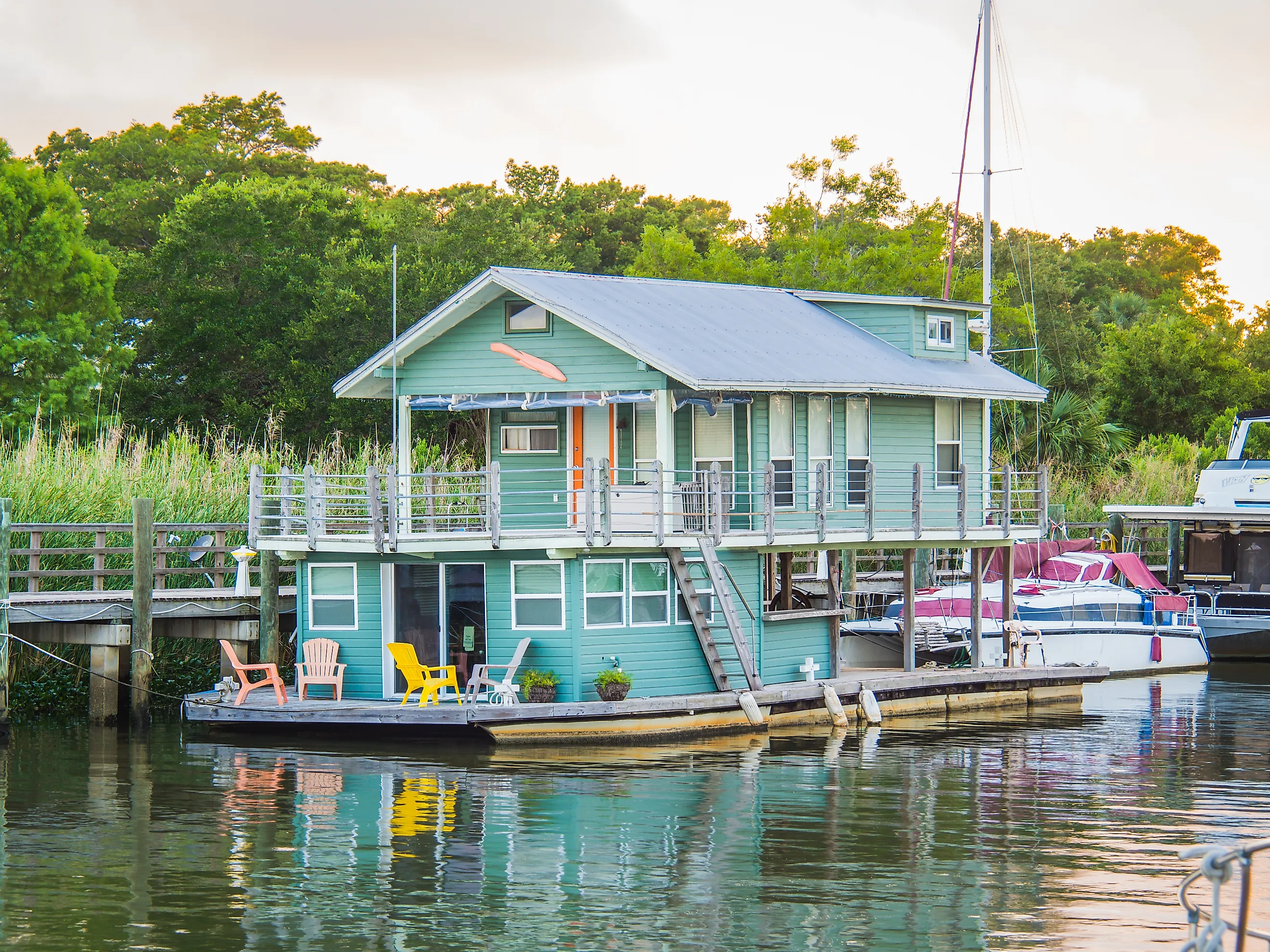
Cedar Key feels like a piece of Old Florida that never got paved over. About 800 people live on this Gulf island at the end of a long two-lane road, where golf carts outnumber cars and the whole town drifts to the waterfront at sunset. It is the heart of the state's clam farming, producing the bulk of Florida's farm-raised clams, and you can taste the result at Tony's, a small main-street spot that has won the national clam chowder championship more than once.
History runs deep for such a small place. The Island Hotel began as a general store built around 1860 with thick tabby walls, and the town was once the western end of Florida's first cross-state railroad, later a hub for the cedar mills that supplied pencil makers. Paddlers can kayak out to Atsena Otie Key, an empty island with an old cemetery, while the surrounding Cedar Keys National Wildlife Refuge scatters 13 islands across the shallows for birding by boat. The town has taken hard hits from recent hurricanes and keeps rebuilding, but its draw, quiet water and unhurried days, has not changed.
Everglades City

Everglades City bills itself as the "Gateway to the 10,000 Islands," and it earns the title. Sitting at one end of the Wilderness Waterway, it is one of the best launch points in the state for paddleboarding, kayaking, and canoeing through mangrove tunnels and open bay. Guided trips are easy to arrange for anyone who would rather not navigate the maze alone.
On land, the pace stays just as outdoorsy, with airboat rides along the Barron River, swamp buggy tours, cycling, and some of the best birding in South Florida. The town also serves as a quiet back-door entrance to Everglades National Park, far from the tour-bus crowds. Anglers do well here too, with a long list of species moving through the rich estuary.
Islamorada

Known as the "Village of Islands," Islamorada strings together several islands in the Florida Keys and has built its identity around the water. It is a serious fishing town, host to tournaments through the year and known for backcountry bonefishing and offshore sailfishing. Charter captains here have been working the same flats for generations.
The seafood comes straight off the boats, and plenty of waterfront restaurants will cook your own catch for a small fee. Between trips, the calm, shallow water is ideal for snorkeling, and the reefs and historic shipwrecks offshore draw divers down for a closer look. Add a front-row seat for sunset over the Gulf, and a budget-friendly Keys trip comes together easily.
Mount Dora

About 30 miles northwest of Orlando, Mount Dora trades beaches for a hilly lakefront and a downtown that has earned the nickname "New England of the South." The town sits above Lake Dora, part of the Harris Chain of Lakes, and its 35-foot lighthouse at Grantham Point, built in 1988, is the only inland freshwater lighthouse in Florida. It is a favorite photo stop at sunset, when the light goes gold over the water.
Boat tours leave from the lakefront and slip into the Dora Canal, a shaded cypress tunnel that ranks among the prettiest stretches of water in the state. The walkable downtown runs on independent shops, art galleries, and antiques, anchored by Renninger's, the largest antique market in Florida, and the lakefront Lakeside Inn, open since 1883. Time a visit to one of the town's many festivals, or just claim a rocking chair on the inn's verandah and watch the boats come in.
Palm Beach

Palm Beach packs its grandeur onto a barrier island of about 10 square miles. The Breakers sets the tone, a vast oceanfront hotel that ranks among the oldest luxury resorts in the country, and the Lake Trail makes it easy to bike past the multimillion-dollar estates lining the water. Even a window-shopping afternoon here feels like an event.
Worth Avenue handles the shopping, a run of designer boutiques and art galleries under Mediterranean arcades, while the Henry Morrison Flagler Museum supplies the history. Built by railroad magnate Henry Flagler as a wedding present for his third wife, Mary Lily, the Gilded Age mansion known as Whitehall is now open to the public. It is a reminder that this stretch of sand has been Florida's address for the wealthy since the early 1900s.
Sanibel

Sanibel runs east to west instead of north to south, and that quirk of geography is why its beaches rank among the best in the country for shelling, catching shells off the Gulf rather than letting them slide past. Collectors fill bags at Lighthouse Beach and Bowman's Beach, often bent into the low-tide crouch locals call the "Sanibel stoop." The 1884 lighthouse still stands at the east end; it lost a leg to Hurricane Ian in 2022 but was repaired and relit, a fitting symbol for an island that has spent the years since rebuilding.
Beyond the beaches, the J.N. "Ding" Darling National Wildlife Refuge protects a large share of the island for birds, manatees, and dolphins, with a drive-and-walk loop through the mangroves. Chain restaurants are banned here, so meals come from locally owned kitchens, and a 25-mile network of paved paths makes a bike the easiest way to get around. The sunsets off the west end close the day.
Stuart

On Florida's Treasure Coast, Stuart goes by the "Sailfish Capital of the World," and the fishing and seafood live up to the billing. The walkable downtown sits close to the beaches, with watersports filling the gaps between meals. It is the kind of place where the catch on your plate was likely swimming that morning.
History buffs have two good stops in the Stuart Heritage Museum and the Road to Victory Military Museum, both within the compact downtown. On weekends, the town hosts a green market with live music near city hall on Sunday mornings. Bathtub Reef Beach, a short drive out on Hutchinson Island, has a calm, kid-friendly lagoon protected by a natural worm-rock reef.
Vero Beach

Vero Beach holds down a quieter stretch of the Treasure Coast, a barrier island town that has used strict zoning and building-height limits to keep its low-key feel. The coastline draws divers and beachcombers: the 1894 wreck of the S.S. Breconshire lies just offshore from the Ocean Grill, partly visible at low tide, and the reefs that sank ships in the age of sail now make for good snorkeling. Miles of uncrowded sand give you room to spread out.
On the mainland, the McKee Botanical Garden winds through an 18-acre hammock of waterlilies, towering palms, and historic stonework, with an interactive children's garden set inside. The Vero Beach Museum of Art adds a cultural stop, and the surrounding blocks fill out with farm-to-table restaurants. For a bit of natural history, Pelican Island National Wildlife Refuge, the first refuge in the country, sits just up the Indian River Lagoon.
Thirteen towns, thirteen versions of a Florida summer. Each one trades the crowds for something more specific, and that is what makes them worth the drive.