10 Small Towns In Arkansas With Big Charm
Arkansas small towns were drawing visitors well before statehood. Hot Springs has attracted travellers to its thermal springs since the Gilded Age. El Dorado reinvented itself after the 1920s oil boom collapsed and now anchors its identity in a performing arts complex that books national touring acts. Mountain View calls itself the Folk Music Capital of the World, with musicians still gathering on the courthouse lawn most weekends. The ten towns below show why Arkansas's small-town pedigree is more varied than its reputation suggests.
Eureka Springs

Built along the steep hillsides of the Ozarks, Eureka Springs has a layout where every street sits at a different level than the one next to it, a result of the town being built around natural springs on difficult terrain. The entire downtown is a National Historic District. The 1886 Crescent Hotel, a Victorian-era resort marketed as America's Most Haunted Hotel, is the best-known building in town and offers both fine dining and nightly ghost tours. Beyond the architecture, Turpentine Creek Wildlife Refuge on 459 acres houses rescued big cats, bears, and exotic animals, and the Eureka Springs and North Arkansas Railway runs heritage excursions through the Ozark country on restored mid-20th-century equipment.
Mountain View

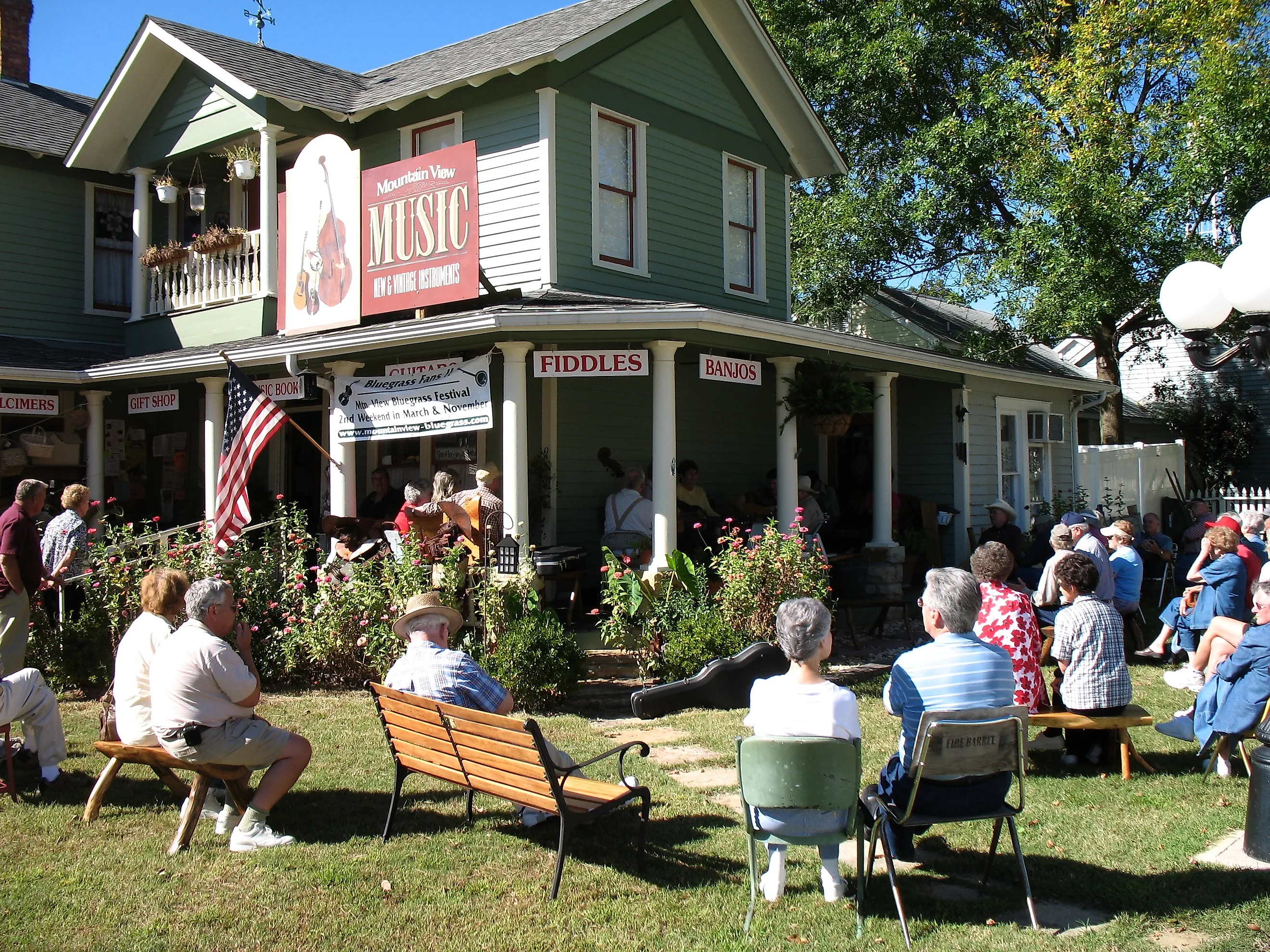
Mountain View calls itself the Folk Music Capital of the World, and the town backs up the claim. The Ozark Folk Center State Park is the only state park in Arkansas dedicated to preserving Southern mountain folkways and traditions, and on most weekends of the year, musicians gather on the courthouse square outside the Stone County Courthouse to play bluegrass and folk tunes. The town sits between the White River and the Buffalo National River, with top-tier canoeing, kayaking, and fishing on both. Nearby, Blanchard Springs Caverns is run by the U.S. Forest Service and offers three different guided tours ranging from easy lighted walks to the more strenuous Wild Cave tour.
Hot Springs

Hot Springs has been a resort town since the Gilded Age, centred on the thermal springs that gave the community its name. Bathhouse Row on Central Avenue preserves eight bathhouses from the early 20th century, with Fordyce Bathhouse operating as the national park visitor centre and museum. Hot Springs National Park sits inside the city limits and protects the only non-volcanic geothermal springs in the National Park System. Beyond the historic centre, Garvan Woodland Gardens covers 210 acres of landscaped grounds along Lake Hamilton, and Oaklawn Racing Casino Resort has been running since 1904, with live thoroughbred racing from January through May.
Jasper

In Newton County, Jasper is one of the smallest county seats in the country but one of the state's busiest gateways to the Buffalo National River country. Elk, reintroduced to the area in 1981 after being extirpated from Arkansas in the late 1800s, are often visible in the valley meadows near town, particularly at dawn and dusk. Big Bluff, sometimes called the Arkansas Grand Canyon, is a 350-foot sheer cliff accessed via the Goat Trail, a narrow ledge route hiked along the cliff face. Hawksbill Crag, one of the most photographed natural formations in Arkansas, sits at the end of a three-mile round-trip hike through the Upper Buffalo Wilderness.
Altus

With about 800 residents in the Arkansas River Valley, Altus is the centre of Arkansas wine country. Post Winery has been family-owned and operated since the 1880s and offers tours and tastings of its grape varieties. Nearby Wiederkehr Wine Cellars features a hand-dug wine cellar that now serves as the dining room for the Weinkeller Restaurant. The annual Altus Grape Festival at the end of July draws crowds for tastings, food, live music, and artisan goods, with attendees coming from well outside Franklin County.
Van Buren

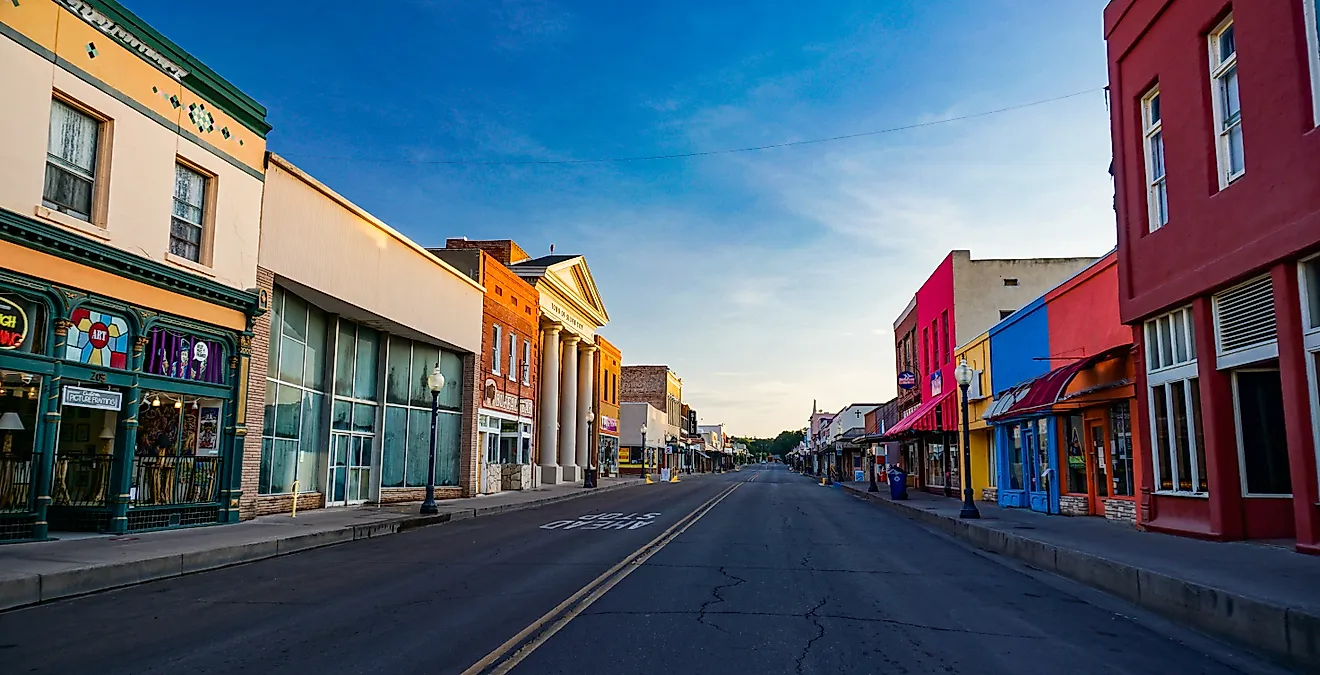
Along the Arkansas River in the western part of the state, Van Buren preserves a remarkable six-block Main Street Historic District of more than 100 buildings, most dating to the 1800s. The Crawford County Courthouse, built in 1842, is billed as the oldest active courthouse west of the Mississippi River. The 1891 King Opera House on Main Street still hosts live performances today, more than 130 years after opening. The district also hosts the annual Fall Festival, which draws thousands to the historic storefronts each autumn.
El Dorado

In southern Arkansas, El Dorado rebuilt its identity around arts and culture after the 1920s oil boom faded. The Murphy Arts District is the centrepiece, a 126,000-square-foot complex with a festival amphitheatre, a music hall, a cabaret stage, and several restaurants that books major national touring acts. The South Arkansas Arts Centre handles rotating exhibits and live performances at a smaller scale. For more conventional park space, the South Arkansas Arboretum State Park covers 12 acres of native Gulf Coast plant life on paved walking trails, and Oil Heritage Park displays historic oil equipment with signage covering the town's boomtown years.
Heber Springs

Heber Springs sits on the shore of Greers Ferry Lake, a 31,500-acre Army Corps of Engineers reservoir known for exceptionally clear water. The Little Red River below Greers Ferry Dam is one of the best trout fisheries in the country, and it produced the world record brown trout (40 lb. 4 oz.) in 1992, a record that stood for over a decade. The Sugarloaf Mountain Trail climbs an island mountain rising from the lake and ends with a full 360-degree view of Greers Ferry and the Ozark hills beyond. Bridal Veil Falls, a secluded drop north of town, is a popular photography destination.
Batesville

On the White River in northeast Arkansas, Batesville has been continuously settled since the early 1800s and has grown into a town of over 10,000. The Main Street district preserves its original brick facades from the late 19th century, with the Old Independence Regional Museum as the centrepiece. The restored 1936 Melba Theater is one of the most intact vintage movie houses in the state. Lyon College, founded in 1872 by Scottish Presbyterians as Arkansas College, gives the town its Scottish Festival each April, with Highland games, bagpipe competitions, and traditional food and music.
Calico Rock

In Izard County along the White River, Calico Rock takes its name from the multi-coloured Calico Bluffs that rise above the water at the edge of town. The White River here is top trout fishing country, drawing anglers from across North America for rainbow and brown trout. The Calico Rock Museum and Visitor Centre spans four buildings and over 20,000 square feet of exhibits covering local history. Just east of the current town centre, Peppersauce Ghost Town is a preserved six-block section of the original 1830s settlement, open for self-guided walking and brought to life once a year by historical reenactors.
Ten Towns, Ten Identities
Each of these Arkansas towns has a distinct reason for existing. Calico Rock and Heber Springs are built around water and stone formations. El Dorado and Van Buren rebuilt themselves around arts and preserved architecture. Hot Springs and Mountain View have long traditions tied to natural phenomena and folk music respectively. Eureka Springs, Jasper, Altus, and Batesville all offer their own specific combinations of history, geography, and community. The list is a starting point for a state whose small-town variety gets overshadowed by its better-known Ozark scenery.