9 Safest Towns In England For Senior Living
Safety considerations in retirement include low recorded crime rates, easy access to medical care, dependable emergency response, and active community programs for older adults. Across the UK, CrimeRate compiles police-recorded offense data at the town level. This resource is particularly valuable because, unlike the FBI's Crime Data Explorer for US cities, England lacks a single searchable crime tool for individual towns. According to CrimeRate, England stands at 68 recorded crimes per 1,000 people as of April 2026, and each entry here comes in well under that mark. As an added bonus, each town has an active University of the Third Age (U3A) branch to help aging residents stay connected and engaged. These nine sweet spots also come with a market square, a historic landmark, or a riverside walk within an easy stroll.
Woodstock, Oxfordshire

Woodstock's crime rate runs to about 31 per 1,000 people, less than half the nationwide figure. The town sits at the gates of Blenheim Palace, the UNESCO World Heritage Site built for the 1st Duke of Marlborough. Its parkland paths make for flat, scenic daily walks without ever needing a car. In the town centre, Woodstock Town Hall, built in 1766 to a design by Sir William Chambers, presides over the Market Place, while the Church of St Mary Magdalene maintains its Norman doorway and a working turret clock made in 1792. It's also notably the birthplace of Prime Minister Winston Churchill. Retirees have a GP practice in town at Woodstock Surgery, with Oxford's John Radcliffe Hospital a short drive away for anything beyond routine care. A branch of the University of the Third Age, Woodstock and District U3A, runs a full slate of interest groups and talks for retirees who want to stay social without leaving town.
Wallingford, Oxfordshire

A short drive down the Thames from Woodstock, Wallingford logs a crime rate of about 39 per 1,000 people, again well under the England average. The ruins of Wallingford Castle, once one of the most powerful royal castles in 12th and 13th-century England, before Oliver Cromwell's forces demolished most of it in 1652, sit in a public park at the edge of town. The medieval Wallingford Bridge still carries traffic over the Thames on sturdy arches dating to the 13th century. Dating back even further, St Mary-le-More Church, first recorded in 1077, dominates the market square with a tower later rebuilt using stone salvaged from the demolished castle. Agatha Christie lived just outside town at Winterbrook House from 1934 until her death in 1976, and a bronze memorial to the author was unveiled in the town centre in 2023. For healthcare, Wallingford Community Hospital operates directly in town, and Thameside (Wallingford) U3A gives retirees a ready-made social calendar of walks, talks, and interest groups.
Petersfield, Hampshire

South of Wallingford in Hampshire, Petersfield records a crime rate of about 48 per 1,000 people. St Peter's Church, with Norman origins, commands The Square at the heart of town. An 18th-century equestrian statue of King William III stands watch over a market held in The Square every Wednesday and Saturday. The Petersfield Physic Garden, a recreation of a 17th-century herb garden on the High Street, stays open to the public nearly year-round, and Petersfield Museum, housed in the town's former courthouse and police station, explores local history alongside the Edward Thomas literary collection. Petersfield Hospital operates directly in town, run by Hampshire and Isle of Wight Healthcare NHS Foundation Trust, with an urgent treatment centre for care that doesn't require a full emergency department. Petersfield U3A keeps a busy roster of walking, gardening, and discussion groups running throughout the year.
Tetbury, Gloucestershire

West into the Cotswolds, Tetbury posts one of the lowest crime rates on this list at about 30 per 1,000 people. The Market House, raised on stone pillars in 1655 and restored in 1817, once traded the town's wool and yarn and is still the core of the historic centre. The Church of St Mary the Virgin and St Mary Magdalene, a Gothic Revival building from the late 18th century, sits just off the main square, and King Charles III's own Highgrove House, with a shop in town selling goods from its organic gardens, gives Tetbury a genuinely royal neighbour. For healthcare, Tetbury Hospital runs a Minor Injuries Unit directly in town, with full accident and emergency care a longer drive away at Gloucestershire Royal Hospital in Gloucester. Tetbury and District U3A rounds out the picture with a regular social calendar geared for retirees.
Oakham, Rutland

Heading into the Midlands, Oakham, the county town of England's smallest county, records a crime rate of about 47 per 1,000 people, still well under the national figure. Oakham Castle, a Norman great hall dating to around 1180, features carved Romanesque doorways and houses a collection of over 200 ceremonial horseshoes presented by visiting royalty and nobility over five centuries, a tradition still observed today.
All Saints' Church, with a 14th-century spire visible for miles across the flat Rutland countryside, and the Buttercross, an octagonal-roofed market cross with its original wooden stocks, both dominate the town's rural skyline. The Rutland County Museum, housed in a former riding school from the 1790s, showcases the county's rural and social history. Rutland Memorial Hospital provides outpatient and community healthcare directly in Oakham, and Rutland U3A runs a full program of clubs and talks for retirees.
Bakewell, Derbyshire

A drive north into the Peak District, Bakewell records a crime rate of about 47 per 1,000 people, on par with Oakham. Foodies will appreciate that the town is the home of the Bakewell pudding, born from a kitchen mistake in the 1820s at what's now the Rutland Arms Hotel. The Old Original Bakewell Pudding Shop, a Grade II listed 17th-century building on Rutland Square, has sold the dessert from the same spot since the mid-1800s and still bakes it to a closely guarded recipe.
The Bakewell Bridge, a 13th-century crossing over the River Wye, and All Saints' Church, founded around 920 with two Saxon crosses still standing in its churchyard, round out the historic centre. Chatsworth House and Haddon Hall, two of the Peak District's grandest estates, sit only a few miles away for an easy afternoon out. Newholme Health Centre provides community and outpatient services in town, with day-to-day GP care at Bakewell Medical Centre, and Bakewell's own U3A branch keeps retirees connected through walking groups and regular talks.
Clitheroe, Lancashire

Further north in the Ribble Valley, Clitheroe's crime rate runs to about 42 per 1,000 people, again well under the England-wide figure. Clitheroe Castle, a Norman keep perched on a limestone outcrop above the town, still bears a hole in its wall from Parliamentarian cannon fire during the Civil War, and its grounds now double as a museum and park. St Mary's Church and the Old Town Hall frame the historic centre, both within easy walking distance of the castle. For healthcare, Clitheroe Community Hospital operates in town under East Lancashire Hospitals NHS Trust, alongside the Pendleside Medical Practice and Castle Medical Group for day-to-day GP care. Clitheroe U3A, based out of the town's St Mary's Center, runs a regular program of groups and talks for retirees.
Aylsham, Norfolk

East across the country in Norfolk, Aylsham records a crime rate of about 33 per 1,000 people, comfortably below the national average. The Church of St Michael, a Gothic building from the 14th and 15th centuries with a 98-foot tower visible across the marketplace, overlooks a town centre that still holds a weekly market under rights dating back to medieval times.
The Bure Valley Railway, a narrow-gauge heritage line running nine miles to Wroxham, gives retirees an easy day trip, and the National Trust's Blickling Estate sits just outside town for longer garden walks. Local healthcare runs through Reepham and Aylsham Medical Practice, with Cromer Hospital's outpatient and minor injuries services a short drive away. Aylsham and District U3A keeps a full calendar of interest groups running throughout the year.
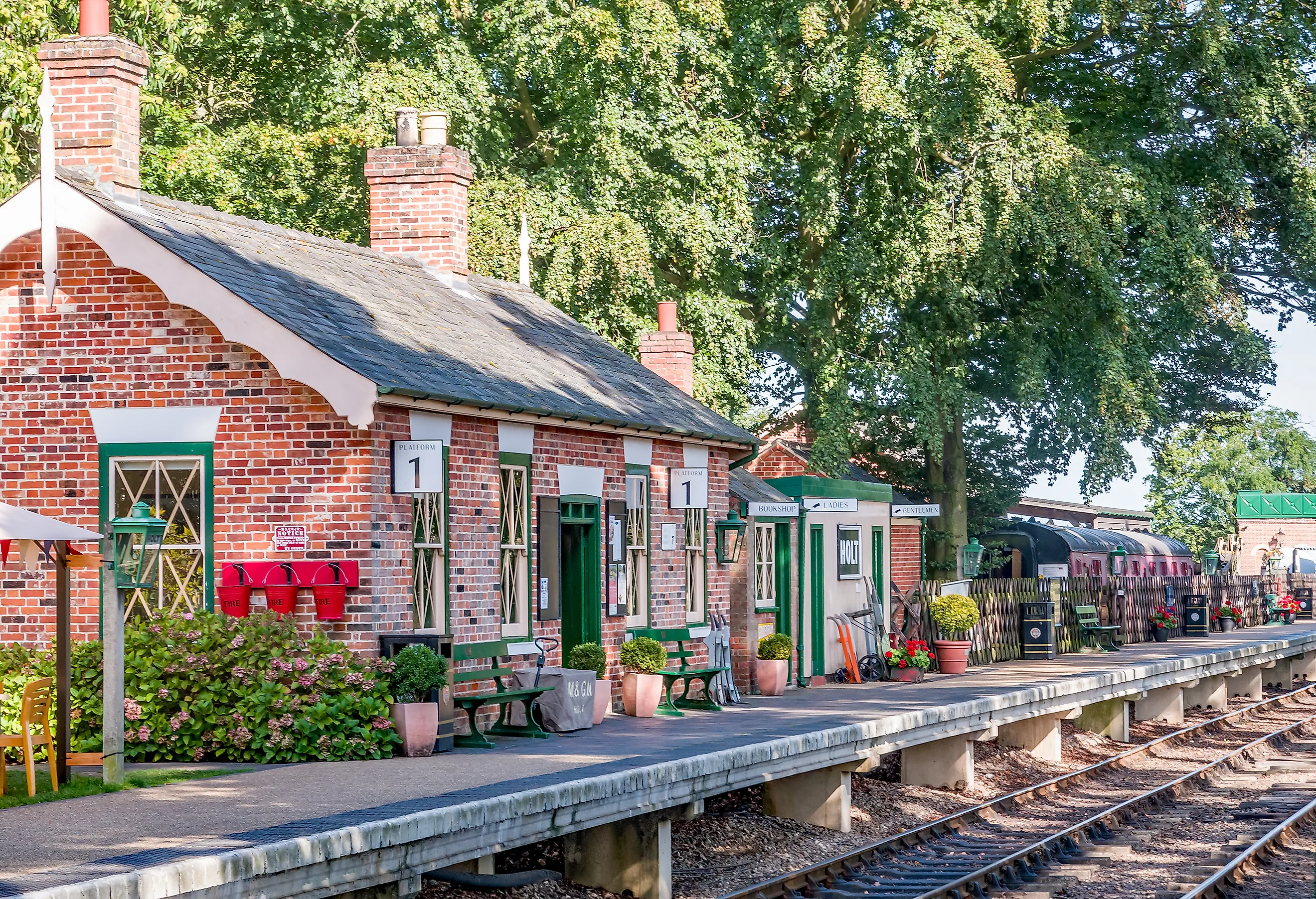
Holt, Norfolk

Just up the road from Aylsham, Holt has a crime rate of about 47 per 1,000 people, similar to Bakewell's. Rebuilt largely in Georgian style after a fire swept through the town in 1708, Holt's streets carry an unusual architectural consistency. St Andrew's Church, with late Saxon origins and a 14th-century Decorated Gothic rebuild, sits at the top of the town, and Gresham's School, founded in 1555 and now coeducational, has operated on the north side of Holt for more than four and a half centuries. Local healthcare is offered through Holt Medical Practice, with Cromer Hospital, the same outpatient and minor injuries facility serving Aylsham, a short drive east. North Norfolk U3A extends its programming to Holt's retirees, alongside the town's own long-running community groups.
Peace Of Mind In England
From a UNESCO palace town in Oxfordshire to a Peak District market town within sight of Chatsworth, these nine towns show that a safe English retirement doesn't require sacrificing history, scenery, or company. Each one posted a crime rate meaningfully below England's overall rate, and each one keeps a GP surgery, community hospital, or full hospital within easy reach. Whether the backdrop is a castle keep in Lancashire, a royal garden shop in the Cotswolds, or a heritage railway in Norfolk, there's a version of small-town England built for exactly this kind of retirement.