9 England Towns Where Time Stands Still
It is a unique circumstance for a place to survive history, but it is another entirely for it to be able to keep living in it. England's small towns are some of the most prominent places in the world that keep doing so. Castle Combe, for example, seems frozen in the Medieval-era. A stroll through the storybook town reveals centuries old monuments, a 14th century luxury estate, and the picturesque Bybrook River. Clovelly is a historic maritime town with steep, cobblestoned streets that descend to a harbor with a 14th-century stone boat quay. Near the Exmoor National Park, Dunster also offers a glimpse into England's past, with an impressive hilltop castle and a distinctive 17th-century octagonal marketplace at its center. These nine towns transport visitors to a bygone era, introducing them to the enduring atmosphere of medieval England.
Castle Combe, Wiltshire

Often known as the most beautiful village in England, Castle Combe remains faithful to its 15th-century heritage. During the Middle Ages, it became one of the wealthiest towns, despite its small population. This is largely because it is located next to the Bybrook River, which powered the cloth mills. This also made it easy for the wool trade to thrive and flourish.
Walking through this town is like stepping through a portal back in time, and it has become a popular spot for photography. There are many things to see and take photos of; however, the residents kindly ask that visitors remember to respect that it still remains an active residential community.
A popular place to visit is the Market Cross, which is a 14th-century monument in the town square. This is where residents would hold their weekly markets. The Bybrook River is an especially beautiful location to see and take photos at. There is a stone bridge that leads to a view of all of the houses from afar, making it feel like visitors are trapped in a postcard. One of the most famous and oldest estates to visit is The Manor House, a stunning 14th-century luxury estate with beautiful grounds to walk along.
Rye, East Sussex

Walking through the town of Rye, East Sussex, feels like navigating an endless, enchanting medieval maze. This small town sits on a hill that overlooks salt marshes, crooked timber houses, steep cobbled lanes, and historic inns. Once a smuggler's paradise, Rye played an important role as a "Cinque Port" during the Medieval times. Later, it was also responsible for defending the English Coast in the 18th century. Its maze-like layout was infamous for smuggling routes.
Mermaid Inn is a well-known inn from the 15th century that welcomes the public for visits. Walking along the narrow, uneven roads of Mermaid Street to reach it transports visitors back to the medieval era. Step inside the Mermaid Inn to explore its winding, timber-framed structure and see if any secret passageways can be found.
For those who want to go even further back in time, St. Mary's Church dates to the 12th century. Inside, there is a historic bell tower that can be climbed. At the top, there is a stunning view of Rye from above, along with miles of red-roofed buildings and marshlands beyond. It's a perfect spot for a memorable photo. For nature lovers, take a trip to Rye Harbour Nature Reserve. It’s the ideal place to walk through the historic coastal wetlands, enjoy the fresh sea air, and indulge in local bird watching.
Lavenham, Suffolk

Lavenham is well-known as one of the best-preserved villages in all of England. Since the 15th century, 300 of its buildings still stand in crooked angles. In the 15th century, Lavenham was one of the wealthiest towns in England because of its once booming blue-cloth industry. However, as fashions started to change, the town went bankrupt. This left the town frozen in time, making it a must-see historic place to visit in 2026.
The Lavenham Guildhall is a building that was once used to help its members create savings funds so that when they died, they could pay for prayers for their souls while they were in “purgatory”. The building is striking with its whitewashed wooden beams that now stand as a museum dedicated to its haunting history.
The Crooked House is a historic building that was built in the 14th century. Its odd structure was caused by coal mining subsidence, which caused one side to sink lower than the other, creating optical illusions like marbles appearing to roll uphill along the bar. The most popular house in this town is the De Vere House. Its medieval architecture made it one of the filming locations for Harry Potter's birthplace. This is a must-see location for fans of Harry Potter.
Clovelly, Devon

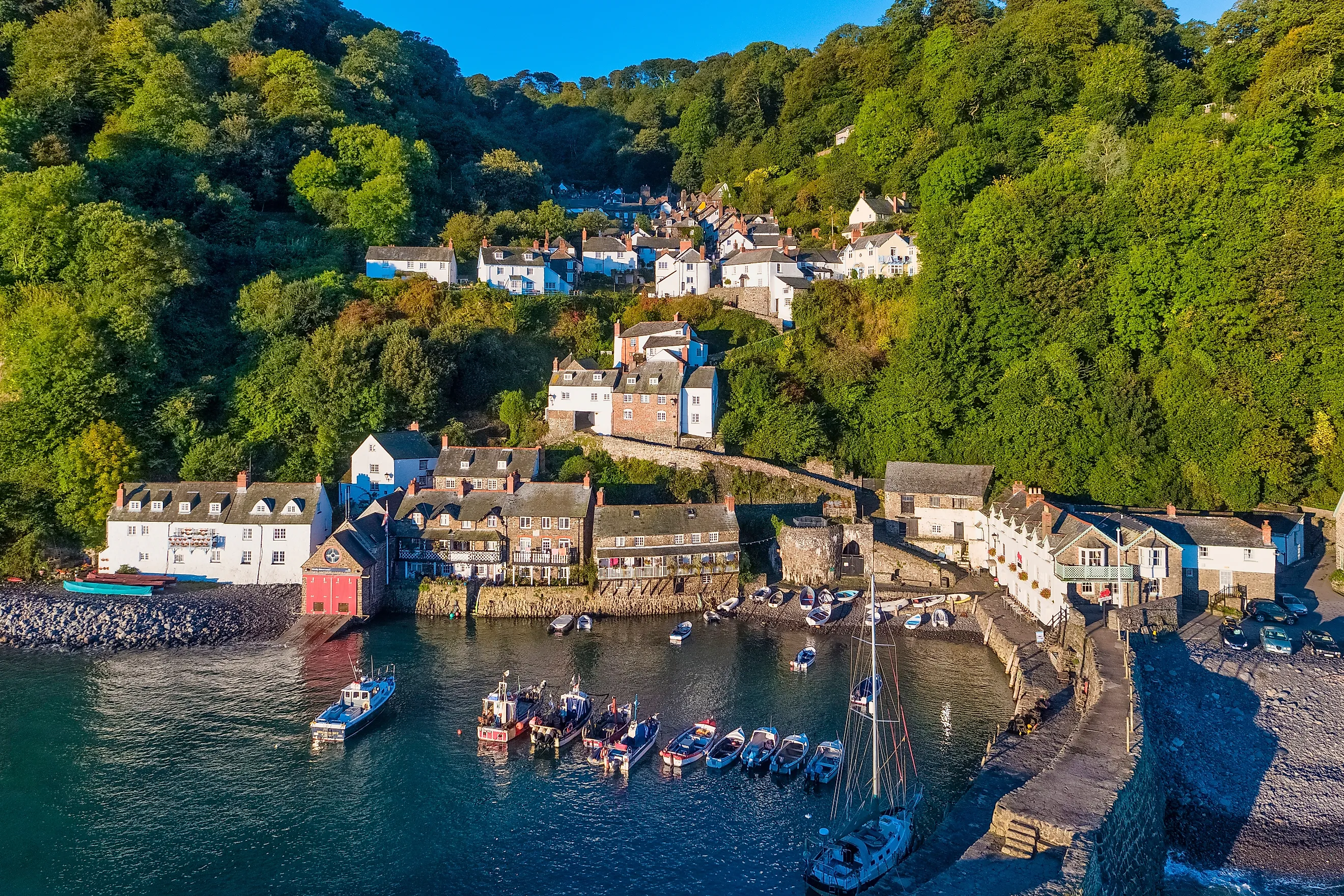
Clovelly, Devon, is a small maritime village that is nestled along the edge of a four-hundred-foot cliff on the North Devon Coast. For visitors wanting to go somewhere peaceful and quiet, this is the perfect private getaway. The streets are steep and made of cobblestone, and are closed off to motor vehicles. Clovelly was once owned by the Royal Family until the 13th century, when it transitioned into a fishing community that transported goods by donkey sledge.
This town is still preserved from its time of sledge and donkey carriers today, and visitors can experience this by walking its steep main path they once used to get to the fishing docks. To this day, the High Street Cobbles are still used for deliveries. Visitors can stop by the Clovelly Harbour & Pier to watch fishing boats pass by and explore the 14th-century stone boat quay. There are also guided tours that provide more history on its transformation. For more history, The Fisherman’s Cottage Museum is a historic home that offers visitors deeper insight into how the local fishing families lived in that time period.
Robin Hood's Bay, North Yorkshire

Robin Hood's Bay is just as magical as the name sounds. This red-roofed small village is tucked away between the towering cliffs of the North Sea and was used as another smuggling hub during the 18th century. It also has a variety of underground passages that link to the cellars of the houses. This town stands still in its historical time and is yet another portal to the past for its visitors.
Most visitors enjoy exploring its shoreline at the famous beach rock pools. This area can only be explored when the tide is low, since the tide is usually too high and dangerous at most times. When possible, fossils and other marine life can be discovered.
The Quarterdeck is a popular scenic lookout spot that gives visitors sweeping views of the bay and entire Yorkshire coast. A perfect place for photos and to take in the sea air and enjoy being high up above the coastal grounds.
The Robin Hood's Bay Museum is a great place to learn more about the town's history of smuggling and its foundation. The coroner's courtroom of the museum provides everything that visitors want to know about its fishing history and how smugglers came and went.
Shaftesbury, Dorset

Located in the South of England, the small town of Shaftesbury sits perched on a hill overlooking the countryside. It is most famous for its steep stone lanes. This town is one of the oldest, as it was founded back in 888 by King Alfred the Great, which also made it one of the wealthiest during that time. Gold Hill is not only the most popular street to walk down, but it is also one of the steepest in all of England. The streets are lined with thatched cottages and cobblestone gravel paths, and it has been featured in many British films and television shows.
Shaftesbury Abbey Ruins remain stagnant in their historical time period and give visitors a peaceful experience as they stroll through the high-walled gardens where the foundations of the ancient Anglo-Saxon abbey still stand. At the top of the hill, there is The Gold Hill Museum. In this cottage, visitors can learn more about the history behind the traditional Dorset button-making industry that thrived in its time, and what life was like living in the cottages.
Dunster, Somerset

On the edge of Exmoor National Park, the small medieval town of Dunster remains a remarkably intact medieval village. It is also dominated by a towering hilltop castle. This town was once an important Saxon stronghold, and was later transformed into a medieval market town centered around the timber trade, yarn market, and weaving. Dunster Castle is a famous estate from the medieval era that still stands tall while remaining open for visitors. This ancient fortress is managed by the National Trust and is surrounded by subtropical terraced gardens.
The Yarn Market is a historical landmark from the early 17th century. Located right in the middle of the high street, the unusual, octagonal wooden structure still stands. Visitors can learn about the history of the cloth trade and how it all began. Conygar Tower is another historical spot to check out in Dunster. Visitors can walk along the perimeter of the tower and enjoy views of the wooded hills in the surroundings.
Chipping Campden, Gloucestershire

Chipping Campden is a market town built of golden limestone architecture that stands as a representation of the Northern Cotswolds. This town stood as the international focal point for the medieval wool trade, which attracted wealthy merchants from all across Europe who funded its grand style.
In 1627, The Market Hall was built to provide shelter for local butter and poultry traders; To this day, it remains the architectural centerpiece of the town and attracts visitors from all over the world. Even though the hall is no longer a bustling dairy market, the sheltered area is still run by local traders and is a staple stop on town walking tours for visitors.
One of the region's most famous "wool churches" is the St. James’ Church. It got its name because if it weren't for the wool market and its merchants funding its construction, it would not have been built. It is still open to visitors and houses many historic artifacts, including the tomb of one of the wealthiest silk merchants, Sir Baptist Hicks. The Campden House & Gardens is a wonderful place to explore historic ruins of a Jacobean manor house. The gardens are full of beautifully restored fruit orchards and walking paths that visitors can explore.
Hawkshead, Cumbria

Hawkshead is a village with a beautiful puzzle of whitewashed cottages, hidden archways, and flagstone courtyards located in the heart of the Lake District. This village was once owned by monks, including the monks of Furness Abbey in the 12th century. Today, it has evolved into a thriving market town that continues to inspire prominent literary figures. The Hawkshead Grammar School Museum is a 16th-century school house where the famous poet William Wordsworth was educated as a boy. Today, visitors can check it out and experience what it was like to be a student during that time.
The Beatrix Potter Gallery is a fun, educational historic place for families to visit. Located in a 17th-century building, this cottage displays the original sketches and watercolors by the beloved children's author, Beatrix Potter. Just a short walk south of the village center, visitors can take a perfect walk for a quiet afternoon stroll to Esthwaite Water. This lake is one of the quietest and most serene landscapes that gives visitors a sense of peace while feeling as though they escaped to a fairytale place.
Where Will You Choose To Go Back In Time?
These places aren't perfect, frozen time capsules, and that’s exactly why they are special. They are living, breathing neighborhoods where real people wake up every morning, open their windows to the same views people saw five hundred years ago, and navigate the 2026 realities of living in houses with crooked floors and thick stone walls. It’s a powerful reminder that history isn’t just something found in heavy textbooks or behind museum ropes. It’s woven into the creak of an old pub floorboard, the worn-down curve of a cobblestone street, and the steady, unhurried pace of a community that simply chose not to rush. Walking through them doesn't just feel like looking at the past—it feels like a breath of fresh air.