9 Offbeat Maine Towns To Visit In 2026
Maine's best small towns love showing off their quirks, starting with the easternmost town in the country and its lighthouse painted like a candy cane. The old slate-quarry town fills its downtown buildings with art now. Pluto waits in a glass case at the end of a forty-mile solar system. Lobster harbors share the coast with chamber-music festivals. More strange towns turn up inland and up north.
Monson

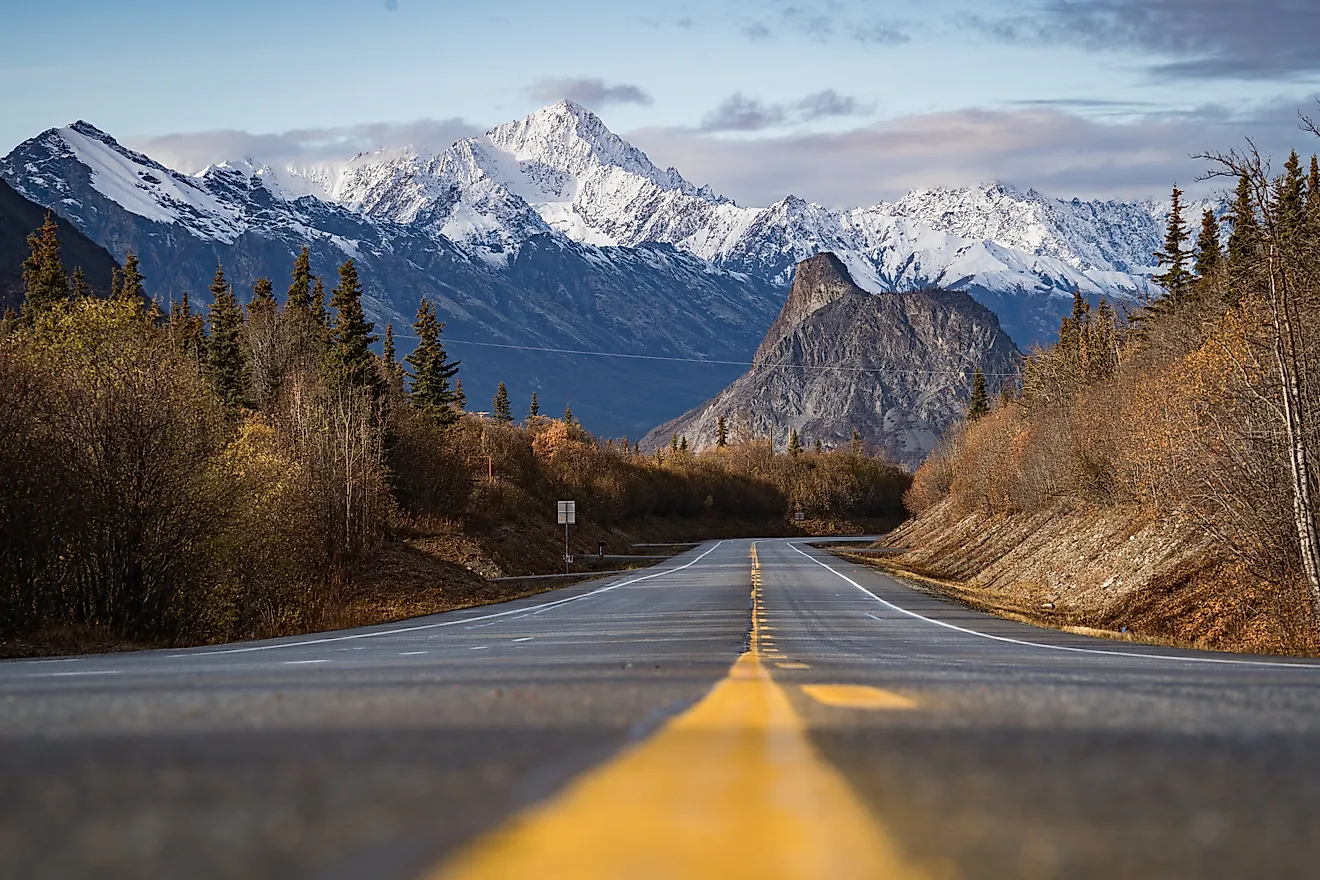
Monson marks the southern edge of the Hundred Mile Wilderness, the last town hikers reach before one of the Appalachian Trail's most remote stretches. Thru-hikers stock up here before a hundred trail miles with no store in sight. Slate quarrying drove the local economy for more than a century. Photographer Berenice Abbott spent her later years here. The town has since grown into a working arts colony.
Monson Arts opened in 2018 as a residency and workshop program backed by the Libra Foundation. It hosts exhibitions and community events. Its renovated Main Street buildings hold artist studios and galleries.
Hikers stepping off the trail can kayak, canoe, or fish before pushing north. Just 609 people call Monson home.
Lubec

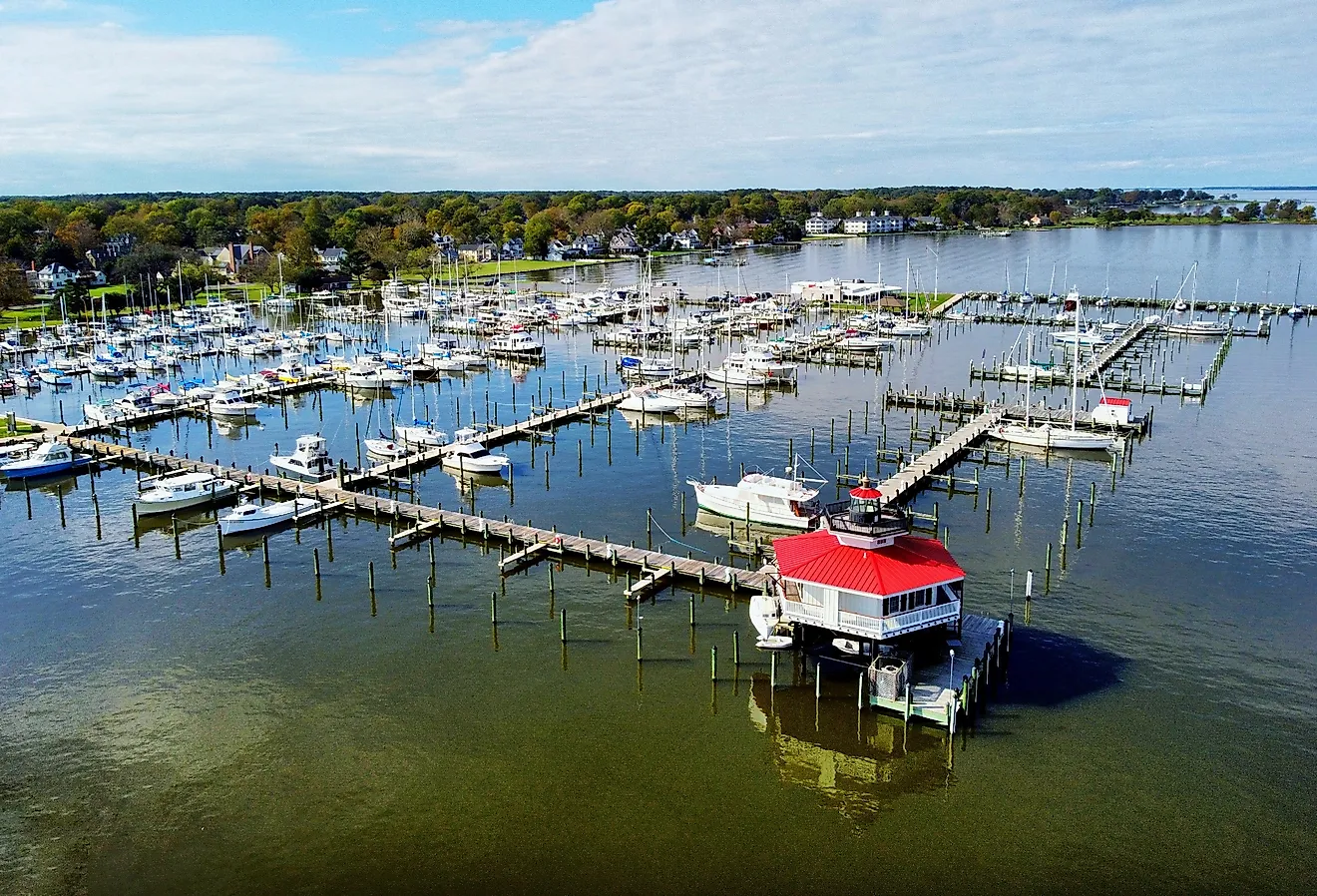
Lubec is the easternmost town in the United States. The red-and-white striped West Quoddy Head Light marks this off-the-grid town. The 49-foot tower has guided ships since 1858. The candy stripes make it the only tower of its kind in the country. Its light today comes from a Sealite LED beacon. The lamp once burned sperm whale oil.
Quoddy Head State Park wraps the light in cliffside hiking trails. Whales and seabirds work the coastline offshore.
Damariscotta

The underrated town of Damariscotta is Maine's oyster capital. Along the banks of the Damariscotta River are ancient oyster shell middens left by the Wawenock Abenaki more than 2,000 years ago. The Whaleback Shell Midden State Historic Site preserves the heaps. Local restaurants serve the day's oysters. The downtown joins neighboring Newcastle, and boats and kayaks share the river.
Narrated river cruises pass the working oyster farms and the harbor seals that gather along the shore. Each October, the town hollows out giant pumpkins and races them down the river.
Stonington

At the southern tip of Deer Isle, Stonington is a working fishing village where lobster boats still dominate the waterfront. The harbor fills with buoys and traps, not yachts. The town is the launching point for Merchant Row, an archipelago of small islands just offshore.
Catch a performance at the Opera House Arts theater, take a ferry to Isle au Haut, or watch the bustle of one of Maine's busiest lobster ports. Stonington lands more lobster by value than any other port in Maine.
Castine

Castine occupies a peninsula overlooking Penobscot Bay. French, Dutch, English, and American forces each took control at different points. That contested past left a dense stock of colonial-era homes and fort sites. Paul Revere helped lead a failed 1779 assault on the British garrison here.
Explore the earthworks of old forts, stroll streets lined with colonial-era homes, or visit the campus of Maine Maritime Academy. The academy's training ship State of Maine is usually moored at the town wharf.
Greenville

Greenville lies on the southern shore of Moosehead Lake, the largest lake in Maine. The 1914 steamboat Katahdin still tours the lake, moose browse the surrounding forests, and seaplanes take off and land on the water.
Greenville's downtown reflects its long connection to Maine's logging and sporting traditions.
Fort Kent

Fort Kent stands at Maine's northern tip, where the Fish and St. John rivers meet. US Route 1 ends in town, 2,400 miles from its other end in Key West. Canada lies across the river, and French is still widely spoken in the town's Acadian community. The Fort Kent Blockhouse is the only surviving fortification from the 1839 Aroostook War. Local trails draw cyclists and hikers, and the Can-Am Crown sled dog races begin in early March.
Blue Hill

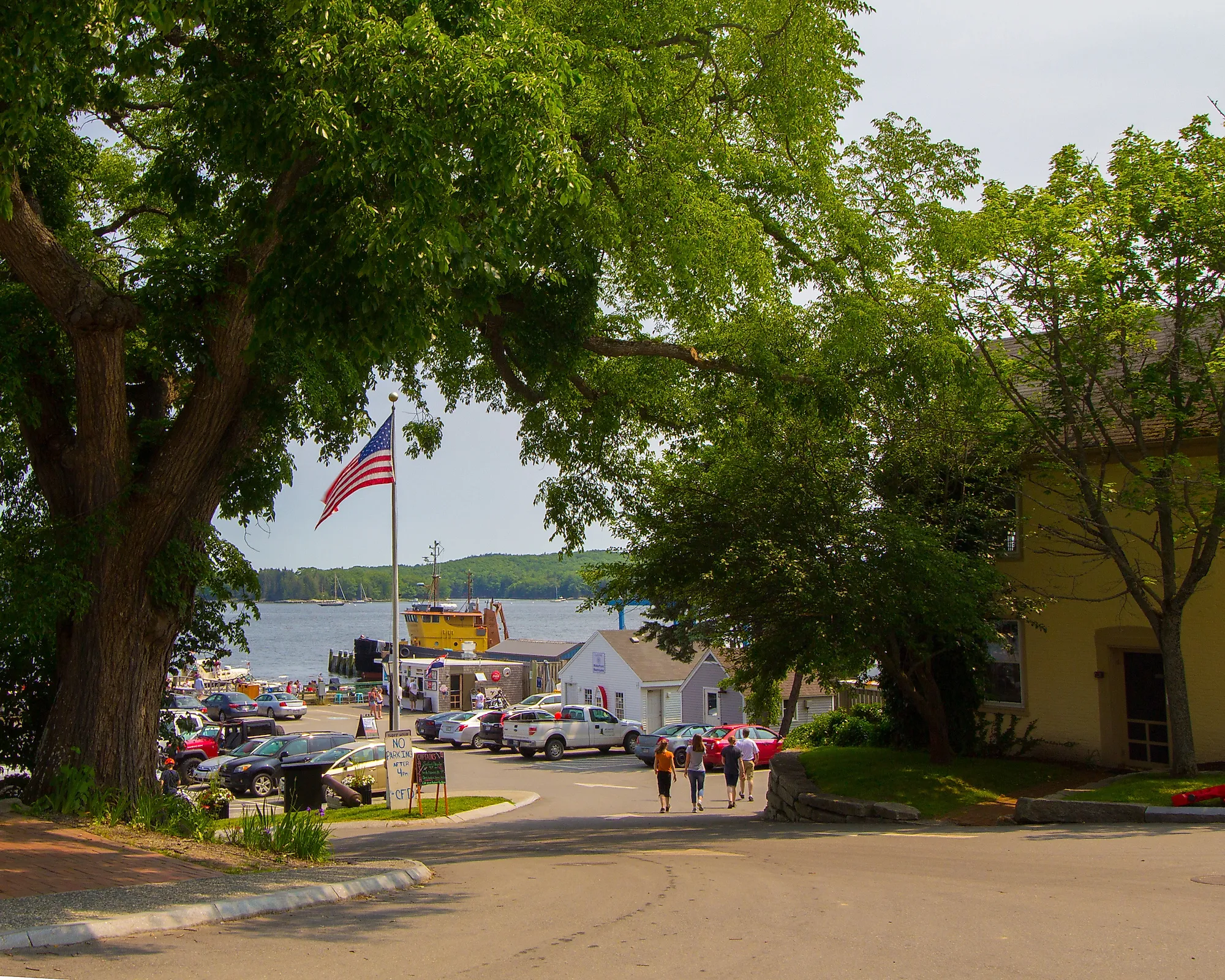
Blue Hill lies between Blue Hill Mountain and Blue Hill Bay. Its harbor once worked in shipbuilding, lumber, and granite. Settled in the 1760s, the town shipped that granite to building projects across the country.
Kneisel Hall has drawn chamber musicians to Blue Hill for over a century. Painters, potters, and summer residents fill out the rest of its arts scene.
Trails climb Blue Hill Mountain to wide views over the peninsula. Galleries and shops line the historic waterfront downtown. The Blue Hill Fair fills the fairgrounds each September. It is often called the model for the fair in E.B. White's "Charlotte's Web."
Houlton

The Meduxnekeag River in Houlton, Maine.
Houlton lies along Maine's northern border with Canada. The town grew on agriculture and cross-border trade. Historic buildings ring Market Square downtown, including the Temple Theatre. The 1919 cinema still shows films today.
Houlton holds the Pluto stop on the largest scale model of the solar system in the western hemisphere. Pluto here is a one-inch ball in the visitor center. The other planets stretch 40 miles north toward Presque Isle. The Southern Bangor and Aroostook Trail offers hiking, biking, and snowmobiling nearby.
Maine's Weird Streak
Strange holds up across the whole state. Damariscotta has oyster shell heaps that predate the United States by two thousand years. Castine changed flags four times and gave Paul Revere one of the worst days of his career. Greenville still sails a steamboat from 1914. In Fort Kent, US Route 1 quits after 2,400 miles and hands the rest to Canada. Put together, they make the rest of the state look almost normal.