9 Nicest Small Towns In France
France’s small towns reflect the country’s regional variety, from Normandy harbors and Alsace vineyards to limestone hill towns in the south. Harbor towns like Honfleur were shaped by trade routes, while wine-producing towns like Saint-Émilion and Riquewihr grew out of long agricultural traditions. Medieval trading towns like Dinan and Sarlat still preserve architecture tied to historic markets and regional commerce. Together, these nine small towns show how local history and natural setting come together in some of France’s most beautiful places.
Dinan, Brittany

The town of Dinan rises above the River Rance in northern Brittany, about 30 miles from the Channel coast. A large part of the stone wall circuit remains, and it is possible to walk along parts of the walls while taking in views of the rooftops and surrounding countryside. Inside the walls, the streets are narrow and lined with wooden-framed houses and small squares. One of the most famous streets in Dinan is Rue du Jerzual, a very steep cobblestone street that descends to the river. This street has long been the route by which the town’s artisans led their goods down to the harbor. At the bottom of the street is the Port of Dinan, where boats are moored along the peaceful riverbanks and cafes line the water. Nearby is the Château de Dinan, or Ducal Castle of Brittany, whose thick walls protected the town from invaders during the Middle Ages. These sites together demonstrate the town’s history as a fortified trading center.
Honfleur, Normandy

The town of Honfleur sits at the mouth of the Seine River on France’s Normandy coast, and its historic harbor has defined the town for the last several centuries. The historic harbor, known as Vieux Bassin, is the heart of the town, surrounded by high slate-roofed buildings whose reflections ripple in the water of the harbor alongside fishing boats and small yachts. The town’s streets lead deeper into the land towards Saint Catherine’s Church, a peculiar wooden church constructed in the 15th century by local shipbuilders as a means of thanking God for their survival during the Hundred Years’ War. The interior of the church features a vaulted ceiling that resembles the reverse of a ship’s hull, a nod to the town’s rich maritime history. Above the harbor is the Notre-Dame-de-Grâce Chapel, which looks out over the Seine estuary and the Normandy coast. From this spot, the role of the river valley in linking overland trade routes to the ocean can be appreciated. Returning to the town, the Eugène Boudin Museum holds paintings by artists who responded to the light of the region’s coasts, including artists who worked with early Impressionists. The harbor, old church, and artistic tradition of Honfleur continue to shape the town today.
Riquewihr, Alsace

Situated along the Alsace Wine Route, Riquewihr is encircled by vineyards that spread through the foothills of the Vosges Mountains. Within the town walls, the village’s streets are lined with colorful half-timbered houses from the 16th century. Painted facades, wooden signs, and flower boxes give the village its unique look. At the entrance to the old town is the Dolder Tower, a fortified gateway that protected the town in the past. For those who climb the tower, they will be treated to a view of vineyards that spread through the hills surrounding the village. Wine-making is still an important part of the village’s culture, and wine tastings of regional varieties such as Riesling and Gewürztraminer are available at local wineries. Vineyard trails connect Riquewihr to other villages along the wine route, illustrating the close relationship between the village and its agricultural landscape.
Saint-Émilion, Nouvelle-Aquitaine

Located east of Bordeaux, the hilltop village of Saint-Émilion is surrounded by vineyards that have been cultivated for centuries. The village is situated inside the UNESCO Saint-Émilion wine landscape, which is a historic site for its role in wine-making. One of the most fascinating sites in the village is the Monolithic Church, which is dug directly into the limestone bedrock beneath the streets above. Visitors can tour the underground church before climbing the bell tower for a panoramic view of the vineyards surrounding the village. Wineries in the area offer tours that describe the soil and climate conditions that affect the wines made in the region. Inside the village, the narrow streets lead to bakeries, wine shops, and terraces overlooking the valley.
Sarlat-la-Canéda, Dordogne

Sarlat-la-Canéda is situated in the Dordogne Valley and is famous for its well-preserved medieval architecture. The old town is constructed almost entirely from honey-colored limestone, with many buildings dating back to the 14th and 15th centuries. Market days see farmers and producers from surrounding villages gather in the town squares. Local produce like walnuts, cheese, and duck products reflects the region’s rich agricultural heritage. The Saint-Sacerdos Cathedral looms above the town center, with its bell tower peering out above the rooftops. Nearby is the Lanterne des Morts, a thin tower whose original use has long been the subject of historical debate. Sarlat-la-Canéda’s well-preserved streets and bustling market scene ensure the historic district is alive with activity all year round.
Rocamadour, Occitanie

Few French towns have a location as spectacular as Rocamadour, perched on the side of a limestone cliff above the Alzou Valley. Buildings are stacked in layers from the valley floor to a sanctuary complex partway up the face of the cliff. Tourists usually enter the town via the lower town before making their way up the 216-step Grand Staircase towards the Sanctuary of Rocamadour, which houses several chapels, including the Chapel of Notre-Dame. Inside is the Black Madonna, a statue that has long been the focus of pilgrims’ devotion. From the platforms above the sanctuary, the wooded valley stretches out into the distance below the cliffs. Rocamadour’s vertical design is a reflection of both its geographical position and its long history as a place of pilgrimage.
Gordes, Provence

Gordes is situated high above the Luberon Valley in Provence, constructed from pale local stone that blends seamlessly into the surrounding hillside. Buildings line the hillside, leading up to the central square where the Château de Gordes, a Renaissance-era fortress, towers above. Just beyond the village is the Village des Bories, a group of dry-stone houses built without mortar. These houses were once home to farmers who cultivated the land in the surrounding countryside. Gordes is also home to a weekly market where olives, cheeses, honey, and vegetables characteristic of Provence are sold. From vantage points around the edge of the village, the agricultural land of the Luberon stretches out across the valley below.
Cassis, Provence-Alpes-Côte d’Azur

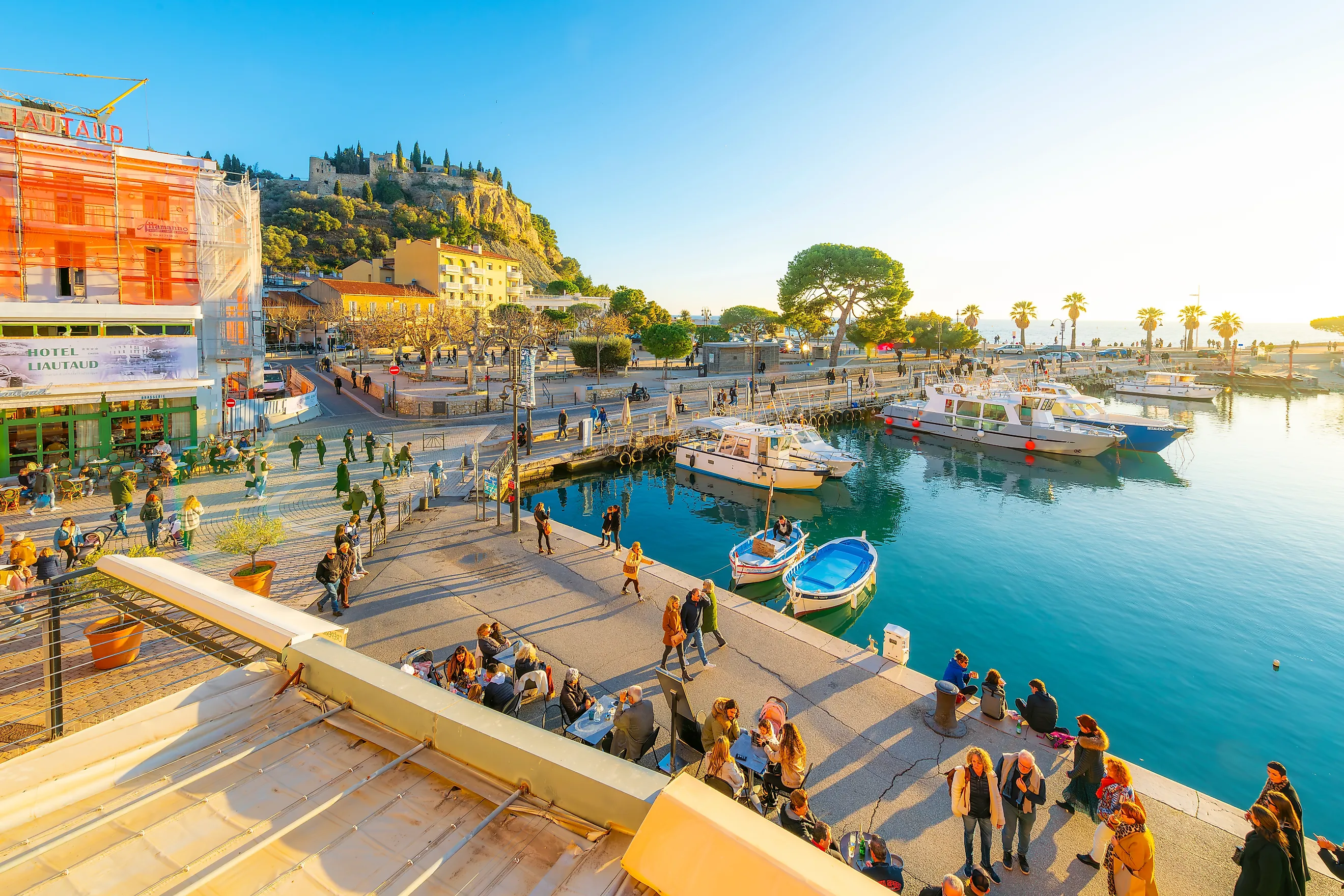
Cassis is a Mediterranean coastal town east of Marseille and revolves around a harbor filled with fishing boats and fishing-related buildings. The harbor front is busy all day long as fishermen bring in their daily catch and tourists line up at outdoor cafes. Just beyond the town is the Calanques National Park, a protected area of coastline where limestone cliffs create narrow inlets along the shore. One of the nearest is Calanque de Port-Miou, a deep inlet that has been converted into a marina. Hiking trails lead along the cliffs to other calanques where white rock meets blue Mediterranean water. In town, the harbor is a peaceful place to sit and watch boats navigate the protected bay.
Menton, French Riviera

Menton, situated near the Italian border, is nestled in a protected bay on the eastern side of the French Riviera. The historic district climbs up from the bay in tiers of pastel-colored buildings to the Basilica of Saint-Michel Archange. From the church’s terrace, one can view the coastline extending to the Italian hills just beyond. Menton’s subtropical climate fosters the existence of many botanical gardens, among them the Serre de la Madone Garden, which houses exotic plant species from across the world. Along the harbor, walking paths trace the bay’s curve, lined with palm trees. Every year, the town celebrates the Fête du Citron, or Lemon Festival, where sculptures crafted from lemons and oranges line the town square.
The nicest small towns in France demonstrate how closely the country’s landscapes and history are still entwined with the daily lives of the French people. In areas such as Normandy, Brittany, Alsace, Provence, and the Dordogne Valley, many towns with populations of less than 50,000 people have managed to preserve their historic streets, vineyard landscapes, harbor towns, and ancient landmarks that continue to shape their identity. For visitors who are looking to discover France beyond the popular tourist spots, these smaller towns offer the best insight into the regional culture, architecture, and landscapes.