9 Little-Known Towns In Florida
Most Floridians can't pronounce Matlacha, and plenty have never heard of it. The same goes for Steinhatchee, a Big Bend fishing town of a few hundred people that lives for scallop season, or Cedar Key, the clam-farming islands at the dead end of State Road 24. All of them hide behind Florida's beaches and theme parks, off the standard vacation map. Off Sebastian, a boardwalk looks out at Pelican Island, where Theodore Roosevelt created the country's first national wildlife refuge in 1903. Inland near Brooksville, the mermaids of Weeki Wachee have been performing underwater since 1947. These nine are the state's best-kept secrets, and they would just as soon stay that way.
St. George Island

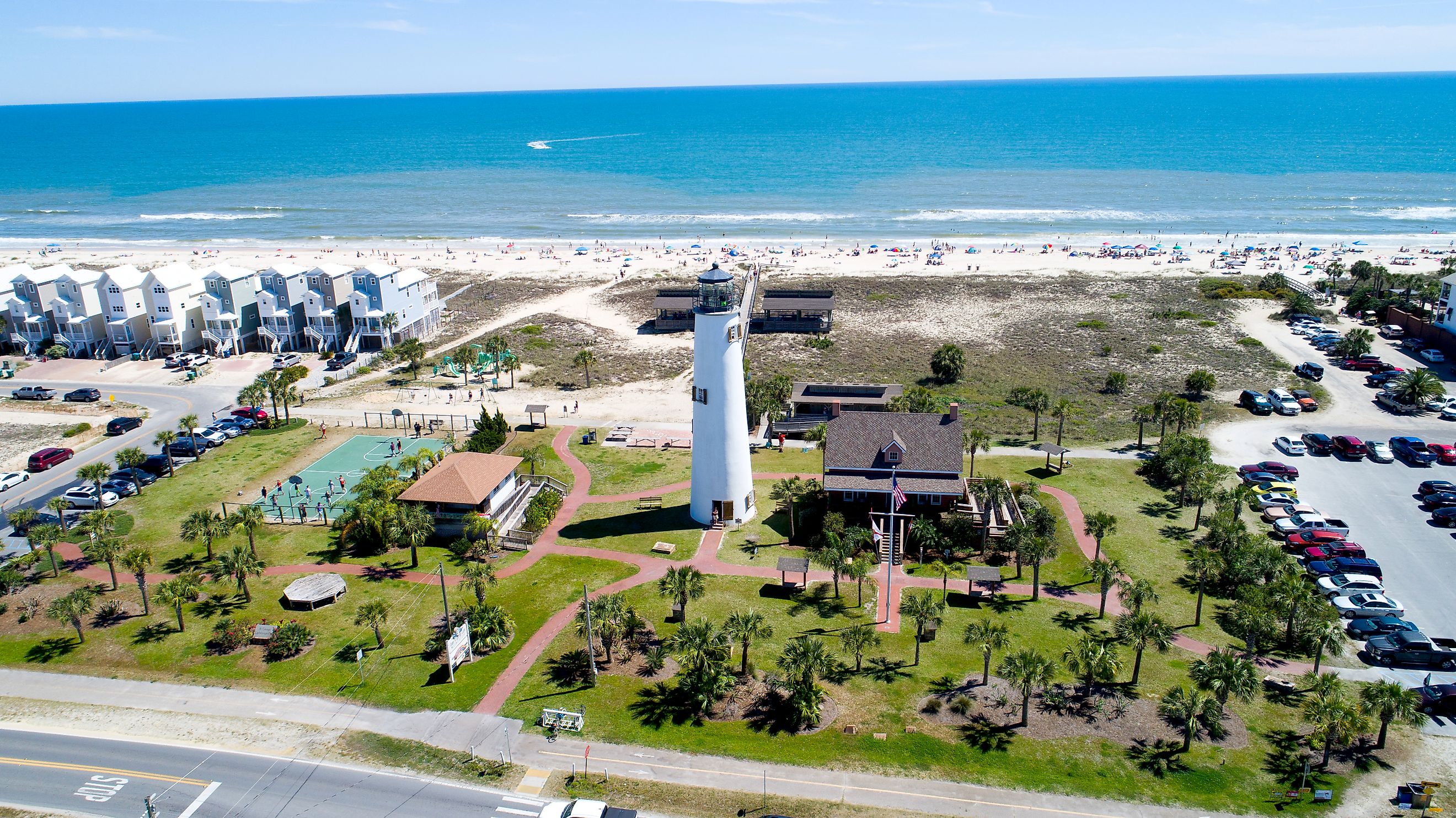
St. George Island is 22 miles of barrier island off the Florida Panhandle, out on the Gulf Coast and linked to the mainland by one four-mile bridge from Eastpoint. No high-rises, no stoplights, barely any traffic. The beaches are the kind that win awards, and in 2023 Dr. Beach ranked the shoreline at Dr. Julian G. Bruce St. George Island State Park the best in the country. Its nine miles of empty sand belong to swimmers, anglers, and a serious population of wading birds out on the bay marshes.
At the island's center, the reconstructed Cape St. George Light has lived several lives. The first tower went up in 1833, the structure collapsed in 2005, and the current lighthouse was rebuilt on the island in 2008, with a little museum and gift shop at its base. The rest of a day here is seafood and slow water, a basket at the Blue Parrot Oceanfront Cafe and a kayak out into the marsh.
Steinhatchee

Steinhatchee is a few hundred people, a fishing fleet, and a tea-colored river, out on the Big Bend where the Panhandle starts curving into the peninsula. Locals have called it one of Florida's best-kept secrets for years, and they happily trade beaches for blackwater. The tannic river pours into the Gulf, and come summer the whole town goes scalloping, then turns to redfish and trout once the season ends.
Upstream, Steinhatchee Falls fans out about 200 feet across a low limestone ledge, which makes it, improbably, the widest waterfall in the state. The town caught a hard one from Hurricane Helene in 2024, the last of three storms in barely over a year, and the waterfront has been rebuilding ever since, the way Steinhatchee always does.
Brooksville

An hour north of Tampa, Brooksville turns unexpectedly hilly, all rolling green that looks nothing like the flat Florida of the postcards. It is the way into the Withlacoochee State Forest, where the Withlacoochee State Trail follows an old rail bed for miles and a canoe trail traces one of the longest rivers in Florida.
The real showstopper is a few minutes down the road. Weeki Wachee Springs has been staging genuine underwater mermaid shows since 1947, performers and all, in a theater built into the side of a spring. That same spring feeds Buccaneer Bay for swimming, and the river it sends downstream is a favorite lazy paddle.
Matlacha

Matlacha (pronounced matt-luh-SHAY) is half a mile of cottages painted every color in the box, on a skinny island between Cape Coral and Pine Island with water on both sides and fewer than 700 people. It started life as an Old Florida net-fishing village. When the 1995 state net ban shut down commercial mullet fishing, the fishermen's shacks turned into art studios, and the place reinvented itself as one of the Gulf Coast's most gleefully oddball artist colonies. Leoma Lovegrove's gallery and sculpture garden is the headliner, with a string of smaller galleries down the one road through town.
The bridge into town goes by the nickname Fishingest Bridge in the World, earned by the anglers who line its rails at all hours. The shallow, mangrove-lined water of Matlacha Pass is built for kayaks and tarpon, not beaches, of which there are exactly none. Hurricane Ian leveled much of this in 2022, and the village has mostly rebuilt, every bit as colorful as before.
DeLand

DeLand goes by the Athens of Florida, a name it earned by betting on books and the arts, not beaches. Stetson University, the oldest private university in the state, sets the tone with old brick buildings under big live oaks downtown. The rest of downtown follows suit, with the restored Athens Theatre, the Museum of Art-DeLand, and block after block of galleries and old storefronts worth a slow afternoon.
More history turns up at the Stetson Mansion and the DeLand House Museum, and the town's Sculpture Walk and Mural Walk push the art out onto the streets. A few miles off, Blue Spring State Park turns into one of Florida's most dependable manatee hangouts every winter, when hundreds pile into its clear 72-degree run to escape the cold St. Johns River.
Sebastian

Sebastian Inlet in Sebastian, Florida, at sunset.
Sebastian is an easygoing town on the Atlantic side of the state, on the Indian River Lagoon along the stretch Florida bills as the Treasure Coast. The name is no exaggeration. A 1715 Spanish treasure fleet went down offshore here, and storms still cough up gold coins for beachcombers. The McLarty Treasure Museum lays out the whole shipwreck saga a few miles south of town, but the quietest thing in Sebastian is also its biggest claim to fame.
Just offshore lies Pelican Island, which Theodore Roosevelt set aside in 1903 as the first national wildlife refuge in the country. It started as a three-acre pelican rookery that a local boatbuilder named Paul Kroegel defended from plume hunters, more or less single-handedly, before it grew into a refuge that now protects more than 5,000 acres of lagoon and islands. A boardwalk and observation tower on the barrier island look out at the little island where the whole national refuge system got its start, and the calm water around it is made for kayaking and birding.
Cocoa Village

Most everyone racing to the Space Coast for a rocket launch blows right past Cocoa, which is their loss. On the mainland side, a couple of bridges back from the Cape Canaveral beaches, the town wraps around a historic riverfront village settled in the 1860s along the Indian River. Downtown Cocoa Village is a few walkable blocks of brick streets and old storefronts under big oaks, full of locally owned shops, galleries, and restaurants and refreshingly short on chains.
The Historic Cocoa Village Playhouse has been at it since 1924, when it opened as a silent-movie house, and it still puts on musicals under the banner "Broadway on Brevard." The 1916 Porcher House, built by a citrus-pioneer family, stands a block off the water, and a run of riverfront parks handles the boat launches, picnics, and sunsets. As for the name, local lore credits a riverside woman who handed out hot cocoa to passing sailors, though nobody can quite prove it.
Navarre

Navarre lines up along Santa Rosa Island in the western Panhandle, the rare Emerald Coast town that never seems to get loud. The sand is just as white and the Gulf just as clear as the water near Destin and Pensacola, minus the wall of resort towers. Its showpiece is the Navarre Beach Fishing Pier, which reaches 1,545 feet out over the Gulf, the longest pier in Florida and the entire Gulf of Mexico, standing about 30 feet above the water.
Almost the whole coastline here belongs to Navarre Beach Marine Park, around 150 acres of beach and sound with artificial reefs just offshore for snorkelers and divers. The park is also home to a Sea Turtle Conservation Center, with exhibits on the loggerheads and other turtles that come ashore to nest along this beach.
Cedar Key

Cedar Key is where State Road 24 quits, a knot of low islands in the Gulf about an hour southwest of Gainesville on the Nature Coast. No traffic lights, no chain hotels, just a road that dead-ends at a working waterfront of stilt houses and seafood docks. It was a cedar and pencil town once. After the 1995 net ban it pivoted to clams, and today it grows close to 90% of Florida's farmed clams, which is why the seafood here is about as fresh as the Gulf allows.
Tony's Seafood made its name on that chowder, which won the Great Chowder Cook-Off up in Newport, Rhode Island, three years straight. A quick boat or kayak ride reaches Atsena Otie Key, the original townsite everyone abandoned after an 1896 hurricane, where a pencil-mill ruin and an old cemetery still stand in the woods. The Cedar Key National Wildlife Refuge wraps the whole place in marsh and islands made for paddling, and just about every day ends the same way, on Dock Street watching the sun go down.
Florida With The Volume Turned Down
None of these towns is trying very hard to be found. St. George Island is 22 empty miles of award-winning sand, DeLand spends its evenings on theater and gallery openings, and Navarre has the longest pier on the Gulf almost to itself. Not one of them leans on a marquee attraction, and not one of them seems to mind. For Floridians who love the state but could do without the lines, the good stuff is usually a few exits past where everyone else gets off.