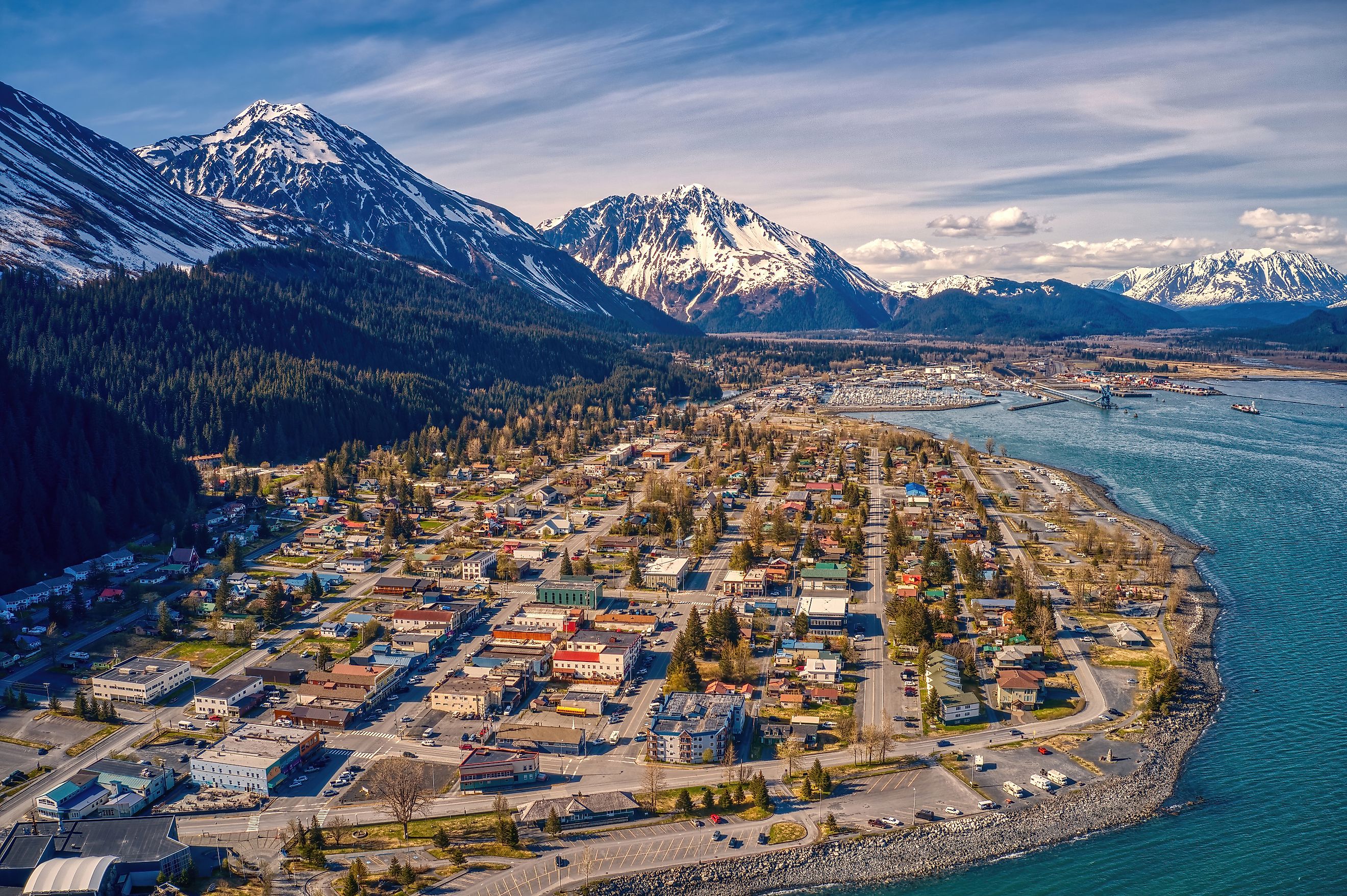
9 Idyllic Small Towns In Alaska To Visit In 2026
Alaska is a state with deep roots in both industry and culture. In Sitka, Russian traders and the Tlingit met on Baranof Island in 1741, and the flag that came down here in 1867 handed Alaska to the United States. That same braid of Indigenous and newcomer history runs through the small towns strung along the coast and the rivers. Skagway still runs the White Pass & Yukon Route Railway that miners built in 1898, and Talkeetna sits at the foot of Denali, the 20,310-foot peak that draws climbers north. Petersburg keeps its Norwegian rosemaling and its "Little Norway" name. Fjords, salmon runs, and glaciers still influence how each community lives and remembers its complex, layered heritage, and they are the reason these small towns draw so many visitors to this remote corner of the country.
Sitka

Visitors en route to the town of Sitka are surrounded by history that was shaped by the natural landscape of Baranof Island. Townspeople continue to celebrate the unique combination of Russian and Indigenous Tlingit culture that began with an expedition to the area by Russian travelers in 1741. The totem poles at the Sitka National Historical Park are one of the park's main attractions. Visitors walking the trails will come across various types of poles created by members of the Indigenous community, each one carved intricately and colored with its own special meaning.
Diving deeper into the native culture, the Sheet'ka Rainforest Park offers guests a chance to take part in the Sheet'ka Salmon Tales experience along with its treetop obstacle course. Visitors eat locally caught salmon while listening to Indigenous stories. On October 18, 1867, Alaska was officially transferred from Russia to the United States in a ceremony that took place in Sitka. The annual Alaska Day Festival marks the occasion every October. The whole community comes together to celebrate the day with a reenactment of the event, as well as a period costume ball and parade.
Haines

Much like Sitka, Haines also has a reputation as an important center of Indigenous culture between the Chilkoot and Chilkat Rivers. The Haines Sheldon Museum & Cultural Center traces the history of Haines from the art and culture of the thriving native populations through to the arrival of Presbyterian missionaries, the rise of logging and mining industries, and its military legacy. Guests can explore the work of local artists and absorb records preserved in the center's research archives in the building that overlooks the 90-mile-long fjord known as the Lynn Canal.
Another highlight is the local wildlife. At Chilkoot Lake State Recreation Site, fishermen can catch a bounty of pink and sockeye salmon through the summer and into October, but local animal life also feeds from the river. Brown bear mothers and cubs catching their prey can be observed by visitors and photographers during the day and evening, making for an unforgettable view of the landscape. Alaska also offers the unique opportunity to get close not only to the animals that roam the ground, but also to the birds that command the sky. The American Bald Eagle Foundation opened its doors to the public in 1984 and continues to educate guests on the species. A flock of raptors, including eagles, resides at the Foundation, and a tour of the museum invites guests to observe over 200 specimens.
Skagway

A ferry ride across the Lynn Canal transports visitors in Haines to Skagway, a town established during the Klondike Gold Rush of 1896 to 1900. The brief boom sent miners flocking to the Yukon Territory. While the initial fervor over the gold rush quieted in the early 20th century, visitors can experience the legacy miners left on the region at the Klondike Gold Rush National Historical Park. Among the landscape of deep valleys and streams, hikers walking the 33-mile Chilkoot Trail will come across the remnants of the campsites of gold seekers. The Dyea Townsite is an artifact of the gold rush that now serves as a place where sightseers can enjoy the view of wildlife, including bald eagles.
Another remnant of the Klondike Gold Rush is still active today. For over 120 years, the White Pass & Yukon Route Railway has been a staple of the Skagway area after being constructed in 1898. In 1988, the railroad began service as a tourist railway and has earned the nickname "The Scenic Railway of the World" since visitors can see natural formations, including glaciers and mountains, out of the window of a vintage train car heading toward Carcross.
Talkeetna

Talkeetna offers not only a train ride through the natural landscapes and wildlife but also a unique vantage point of one of the tallest mountain peaks in North America. The town is situated at the base of Denali, also called Mount McKinley, and has been an entry point for adventurers. To see the snow-capped tops of the 20,310-foot mountain, local services like Talkeetna Air Taxi have been transporting climbers to Denali since 1947. Visitors who come to town in all seasons can book a Talkeetna flightseeing tour to get a bird's-eye view. Aircraft can bring passengers to the mountain summit, loop around the mountain, or embark on a trip living up to the company's reputation as "The Glacier Landing Company."
Back on the ground, there are natural wonders to be explored in the dense forests and wildlife-packed parks. Talkeetna Lakes Park offers a much less strenuous adventure, with the 3-mile walking trail known as X Lake Loop being an easy path to follow. In the fall, the area becomes an optimal spot for picking blueberries. Around the park, visitors will find animals like otters, moose, and loons. While the Hurricane Turn Train functions as a passenger train for local Alaskans, it also serves as a way for visitors exploring Alaska to see the landscape unimpeded by roads. The train passes through trees and mountains on the way over to Hurricane Gulch.
Seward

Seward's rocky mountains and fjords have been home to the native Alutiiq people for generations. More than a century after the city was founded in 1903, it has evolved into a thriving community of artists. In 2008, the city was appointed the "Mural Capital of Alaska" by the state governor following the completion of its 12th mural, all of which are intended to capture the history and atmosphere of the small town, including pieces like 2006's "Welcome to Seward" in the Alaska Railroad Building and 2001's "Wildflower Quilt" near the waterfront.
Even indoors, where guests can grab coffee and treats at local businesses like Resurrect Art Coffee House & Gallery, art is an integral part of the scenery. The coffee house functions as a multi-use space that preserves an original 1916-1917 building for patrons to relax with a drink and showcases local painters and artists. Nature in Seward is just as inspirational as its paintings. A trek through Kenai Fjords National Park is a must. As birds fly overhead and aquatic life swims down below, visitors can enjoy the park year-round through activities like kayaking or completing the 8-mile hike around the Harding Icefield Trail.
Homer

Homer is another place where visitors can expect to have fun in the water, or at least as they walk the waterfront by Kachemak Bay. The town is known as the Halibut Fishing Capital of the World. The Homer Spit is a narrow piece of land surrounded by the waters of Kachemak Bay and has become well-known for recreation spots and the small businesses that line the protruding land. The Nick Dudiak Fishing Lagoon is locally referred to as the "Fishing Hole" for its stock of silver and king (or chinook) salmon, making it an ideal spot for sport fishing.
Afterward, visitors should take time to explore the local businesses in the area, including the old-fashioned candy store Sea Sweets. Another welcome sight for visitors in Homer is the Pratt Museum. The institution has the distinction of being the sole interdisciplinary museum on the Kenai Peninsula and has been operating since 1968. The museum offers guests a full range of experiences to learn more about culture, from indoor art and natural history exhibits to outdoor gardens and a trail system.
Petersburg

Like other Alaskan towns, Petersburg has also embraced a mix of the Indigenous and European, in this case Norwegian, cultures that exist in the area. The town's nickname is "Little Norway," from the fishermen who arrived in the area and helped establish the distinct Norwegian rosemaling (rose painting) in town. Along Sing Lee Alley, visitors will come across the Bojer Wikan Fisherman's Memorial Park, which features a nine-foot statue immortalizing Bojer Wikan, a fisherman who was lost at sea with his crew. Here, a replica Viking ship named Valhalla, constructed in 1976, is also on display to honor the legacy of sea life. At Sandy Beach Park, visitors can observe the ancient petroglyphs created by Indigenous populations, as well as fish traps that are thousands of years old.
Both of these cultures are preserved at the Clausen Memorial Museum, which was established in 1967. A collection of over 3,000 artifacts, including Tlingit tools and over 9,000 photographs, tells the story of how various groups of outdoorsmen shaped Southeast Alaska. The center allows visitors to hear how the local community decides to tell its stories and keep them alive for future generations, including the growing collection of regional artwork.
Valdez

Valdez has five major glaciers nearby and many opportunities for guests to see them with their own eyes. Embarking on a cruise down the Prince William Sound with a company such as Stan Stephens Glacier & Wildlife Cruises is a chance to sail by icebergs. The family operation started in 1971, with cruise passengers and those heading out for fishing trips able to spot creatures like sea otters, humpback whales, and birds like horned puffins. A little further from the downtown area is Valdez Glacier Lake. In the lake, most of the ice in the water has broken off from the larger Valdez Glacier. In winter, the lake becomes a natural skating rink and a popular spot for snowshoeing and even snowmobiling once the water has frozen solid.
Travelers may be surprised to discover that the city of Valdez moved 5 miles away from its original location due to an earthquake in 1964, but this history is preserved in the Valdez Museum & Historical Archive. In 1999, the museum annex opened to the public with a scale model of Old Town Valdez pre-earthquake as its centerpiece. The rest of the museum is just as painstakingly dedicated to collecting the town's past, with a collection of artifacts throughout history on display, as well as lectures and presentations.
Cordova

By boarding a ferry or local air taxi, travelers can go from Valdez to nearby Cordova to experience more of the state's vast terrain and culture. The Native Village of Eyak operates the Ilanka Cultural Center & Museum located on the city's waterfront, where exhibits showcase their crafting practices and environmental wisdom passed down through generations of inhabitants of the Copper River Delta and Prince William Sound. The Cordova History Museum houses exhibits of the pioneer and Indigenous legacies. Local artists and artifacts provided by the Cordova Historical Society tell the story of the ancient heritage as well as overcoming modern challenges, including the 1964 earthquake and oil spills.
Like other Alaskan towns, appreciating and protecting the natural landscape is a key way for visitors to understand the regional culture. In the Chugach National Forest, over 500 miles of trails for hikers to conquer and miles of shoreline to wander down reveal the wetlands, wildlife, and natural glacial formations that have directly inspired annual events. In September, the Cordova Fungus Festival is a weekend full of events like expert lectures, guided trips into the forest, and the Wild Harvest Fungus Feast that features local cuisines.
A Can't-Miss Natural Landscape
There is an undeniable way that nature influences the mix of cultures in Alaska. Through museums and cultural sites, visitors can trace the way its influence has evolved through history. Wildlife that roam the dense forests shape the heritage of native cultures, appearing in everything from their art to their cuisine. The plentiful sea life helped pioneers and fishermen establish their own thriving towns that protect the historic structures and legacies that were established generations ago. Even in the modern age, natural sights bring communities together in celebrations like the Cordova Fungus Festival.