9 Best Places To Live In The Pacific Northwest In 2026
The Pacific Northwest sells the same dream at nine very different prices. A software job in Seattle comes with an $879,000 median home. Three hours east in Spokane, that money buys a house and a yard with cash to spare. Boise fills up with people who got priced out somewhere bigger. Bend runs pricey because people will pay to live minutes from the ski lifts and the river. Victoria trades a fast career for a quiet harbor and a government paycheck. The right choice depends entirely on what you do for work and what you refuse to give up.
Seattle, Washington

The cranes over South Lake Union tell you most of what you need to know about Seattle. Amazon built a campus there, the University of Washington feeds a steady stream of researchers and healthcare workers into the surrounding blocks, and the technology and medical salaries that follow have pushed the median home sale price to roughly $879,000 by spring 2026. That number is the entry fee, and it sorts the city by who can pay it. Capitol Hill and Queen Anne hold their value because they sit close to the job centers and the light rail.
What the paycheck buys back is a city that stays busy after work. Capitol Hill keeps its restaurants and cafés full, and a venue like Neumos books bands most nights of the week. Pike Place Market is not a tourist stop for the people who live nearby; it is where they buy fish and flowers on the way home. When the office empties out, Gas Works Park and the Lake Washington shoreline fill with runners and dog walkers right through the long summer evenings.
Tacoma, Washington

Forty miles south, Tacoma is where a lot of those Seattle paychecks go to find a cheaper bed. The median sale price sat near $500,000 in spring 2026, a serious figure on its own but a clear discount against the city up the interstate. Plenty of residents make that trade on purpose, living in North Tacoma or the Stadium District and commuting north. The work that stays local leans on the port logistics, the hospitals, and the University of Washington Tacoma, which has pulled new life into downtown.
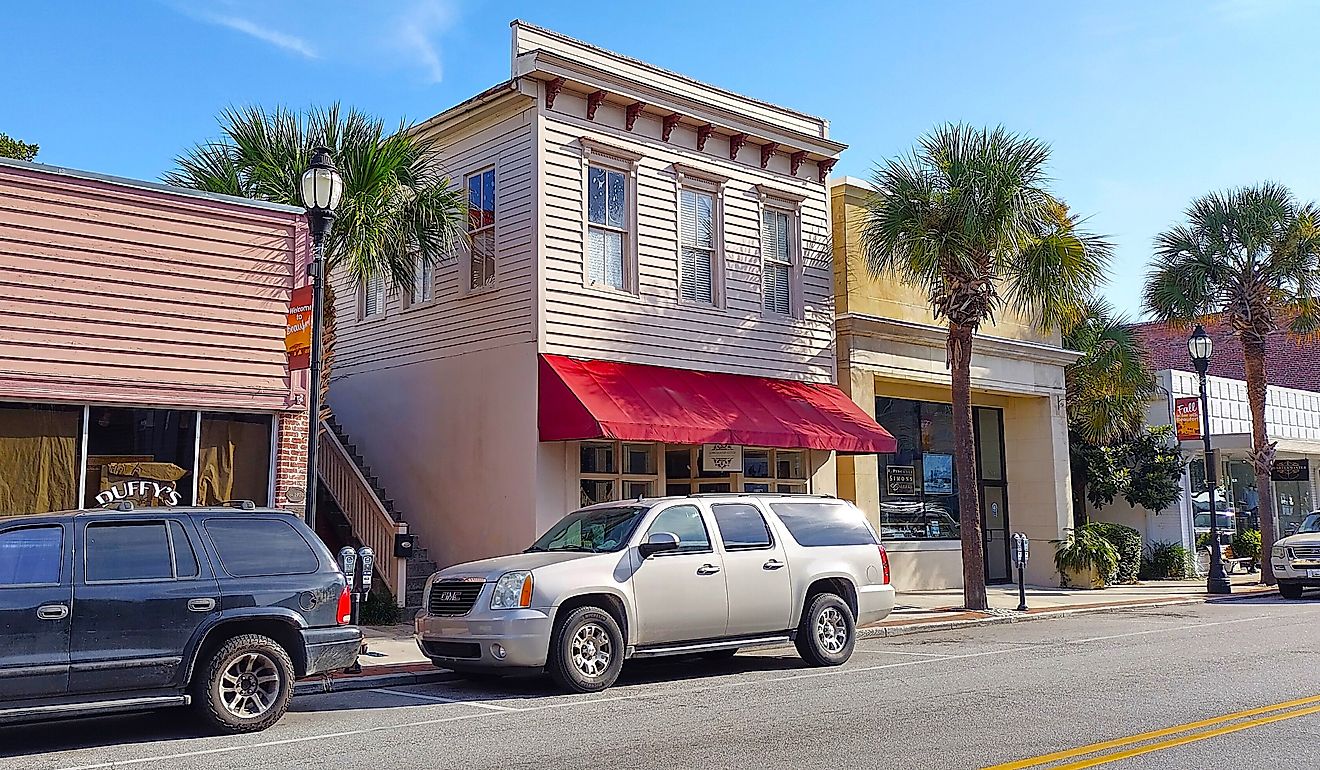
Downtown is the part of Tacoma that has changed the most. Pacific Avenue carries the restaurants and the old buildings turned into apartments, and the Museum of Glass holds down a stretch of waterfront where you can watch artists work the furnaces. The Chihuly Bridge of Glass walks you over the freeway to the Tacoma Art Museum, turning a downtown errand into something closer to a stroll. North Tacoma stays quieter, with the 1923 Blue Mouse Theatre, the oldest continuously running movie house in the state, and a Saturday farmers market giving the neighborhood a center of its own.
Vancouver, Washington

Cross the Columbia River from Portland and you land in Vancouver, where a good share of the population sleeps in Washington and earns its living in Oregon. The Interstate Bridge is the spine of that arrangement, and the daily crossing is simply part of the deal. The reward is a spring 2026 median sale price near $490,000, lower than most of the bigger job centers nearby. Work that stays on the Washington side clusters around PeaceHealth Southwest Medical Center and a handful of smaller employers.
For all the cross-river commuting, Vancouver keeps its own ground. Main Street holds the cafés and restaurants, and a spot like The Grocery Cocktail & Social stands in for a nightlife that runs modest by design. Waterfront Park opened up the riverbank for evening walks and summer events, and Fort Vancouver National Historic Site keeps a reconstructed Hudson's Bay fur post in the middle of the city, with costumed smiths still working the blacksmith shop.
Portland, Oregon

Portland is the bigger half of that river arrangement, and it costs less than Seattle while asking more of your neighborhood judgment. The median sale price landed around $535,000 in spring 2026, with the rest of the equation hinging on which street you pick. Oregon Health & Science University holds down the west-side job base, while downtown and the east side mix offices and apartments. The Pearl District and Hawthorne stay in demand because they put work, housing, and transit on the same map.
The thing Portlanders actually live on is the commercial street near the house. Hawthorne Boulevard and Division Street run on independent shops and kitchens, and Salt & Straw grew from one neighborhood ice cream counter into a weekly habit for half the city. Pioneer Courthouse Square gathers the downtown crowd where the transit lines meet, and Washington Park climbs straight from the Oregon Zoo into the forest trails of the West Hills a short ride from the center.
Eugene, Oregon

Follow the Willamette south and the University of Oregon comes into view, which is the simplest way to understand Eugene. The campus drives the housing, the faculty homes, and the services that ring them, and the median sale price held near $500,000 in spring 2026. The University District stays full because it sits a walk from both campus and downtown. Beyond the school, healthcare steadies the economy, with the region's major hospital now at PeaceHealth Sacred Heart at RiverBend in neighboring Springfield.
Student life sets the tempo, but the city has its own long-running habits. East 13th Avenue ties the campus to the cafés and apartments around it, and Smith Family Bookstore has kept its independent shelves going, now out of the Market District on Willamette Street. The Hult Center handles the big touring shows downtown while WOW Hall in the Whiteaker neighborhood keeps the smaller, louder nights alive. The Willamette River and Alton Baker Park lay a green seam through the middle of town, carrying Pre's Trail, the wood-chip running path named for Steve Prefontaine and still busy every morning.
Bend, Oregon

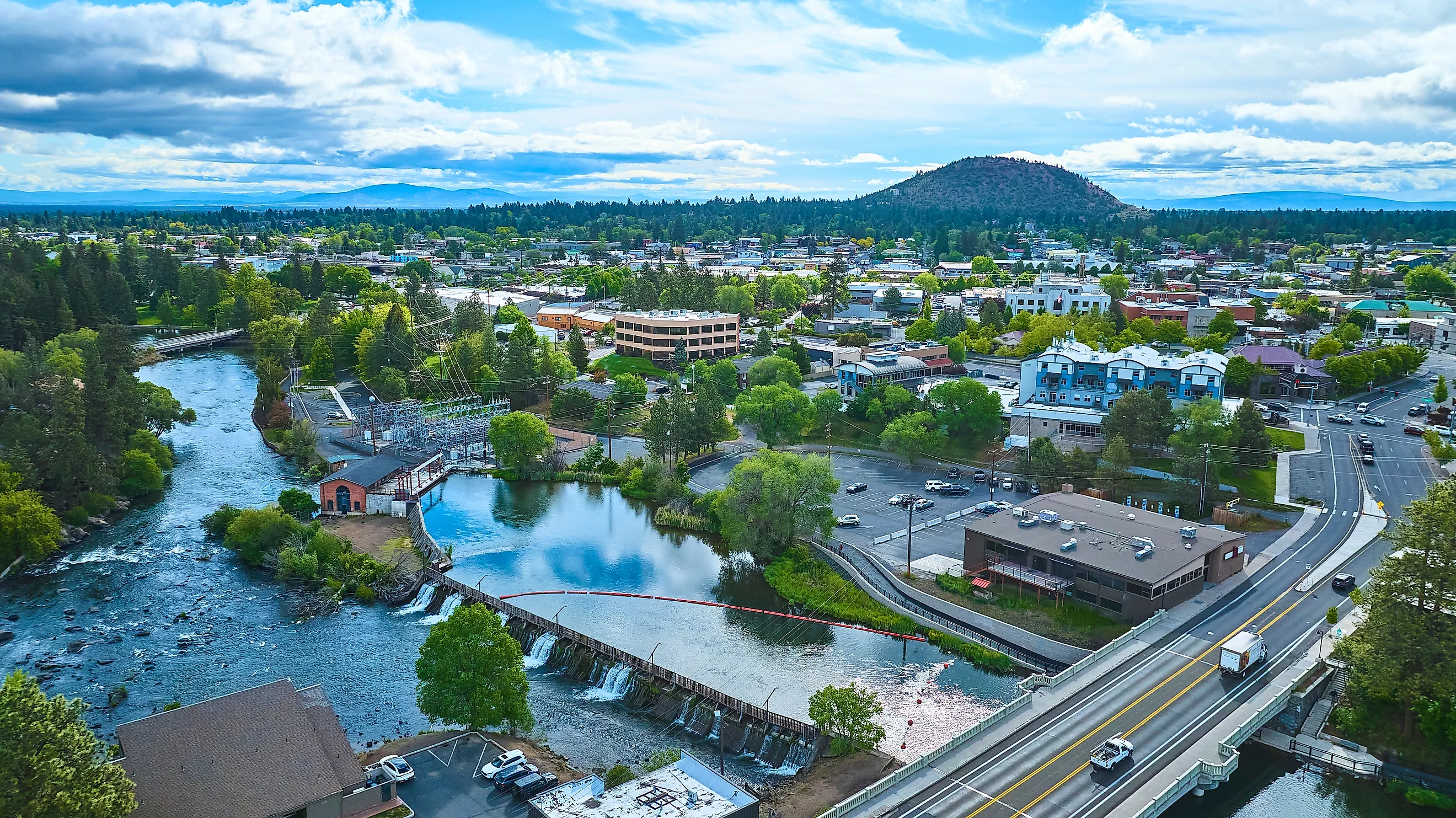
Cross the Cascades and the reason people move to Bend is waiting on the edge of town. Most residents came for the mountains and the Deschutes River and built a working life around them afterward, in tourism, healthcare, or a laptop job. That demand pushed the spring 2026 median sale price to about $704,000, the steepest tradeoff on this list relative to local wages. The pressure runs hottest along the river corridor and downtown, where the services and the recreation sit on top of each other.
Recreation here is not a weekend trip; it starts a few blocks from the porch. The Old Mill District turned a stretch of riverside industry into shops and the Hayden Homes Amphitheater, where summer concerts run with the water as a backdrop. Downtown around Wall Street fills its cafés and taprooms, and Deschutes Brewery doubles as the town's living room. The neighborhoods climb toward quieter ground at Awbrey Butte, where bigger lots trade the downtown walk for a view back across the Cascades.
Spokane, Washington

Spokane sits far enough inland to escape the coastal price spiral, and the median sale price near $369,000 in spring 2026 is the clearest bargain here. The economy leans on healthcare, education, and manufacturing, with Providence Sacred Heart Medical Center and Gonzaga University among the biggest names on the payroll. Downtown offices and public-sector jobs steady the rest. South Hill and the Logan District stay in demand for the simple reason that they sit close to the hospitals, the campus, and the core.
The city changes character in the space of a few minutes' drive. Riverfront Park wraps around Spokane Falls right inside the downtown grid, so the water is part of the commute rather than a destination. Gonzaga keeps the Logan neighborhood full of students and the cafés that feed them, Boots Bakery & Lounge among them. South Hill trades that energy for quieter streets and Manito Park, where the Japanese garden and the public conservatory draw steady weekend crowds.
Boise, Idaho

Boise spent the last decade absorbing everyone priced out of the bigger western cities, and the math still shows it. Remote workers and people in healthcare, tech, and state government keep arriving, and the median sale price climbed to roughly $525,000 by spring 2026, which counts as a relative deal next to the coast. The jobs cluster downtown and around Boise State University, a base steady enough to keep the city from outrunning itself. The most wanted addresses hug the Boise River Greenbelt, where work and recreation share the same corridor.
Daily life in Boise stays close and uncomplicated, with work and home and dinner often inside the same few blocks. Eighth Street and Capitol Boulevard hold the restaurants and civic buildings, and a place like Fork puts locally sourced Northwest cooking in the middle of the downtown lunch crowd. The Boise River Greenbelt threads a continuous ribbon of path through the city for the cyclists and walkers. Julia Davis Park stacks the Boise Art Museum and Zoo Boise into one green block beside the river.
Victoria, British Columbia

Cross the water to Vancouver Island and the pace drops by design in Victoria, where the provincial government is the quiet engine under everything. The Legislative Assembly and the offices around it keep a stable public-sector payroll on the books, and Royal Jubilee Hospital and the University of Victoria fill in the rest. None of it comes cheap. The May 2026 median sold price ran about C$725,000, a reminder that a calm, government-town economy still prices its homes for the view.
A week in Victoria orbits the Inner Harbor, where the British Columbia Parliament Buildings double as a workplace and a gathering spot on the water. The residential life happens out in Cook Street Village and Fernwood, where Moka House Coffee and the Fernwood General Store handle the everyday within a short walk of the door. The Royal BC Museum sits near the harbor, and on summer evenings the buskers and the float-plane traffic turn the Inner Harbor causeway into the city's front porch.
Picking Your Spot On The Map
The choice tends to come down to what you are willing to pay and what you refuse to give up. Seattle and Portland hand you the deepest job markets and the cultural calendar to match, and they charge for it at the closing table. Spokane, Boise, and Tacoma keep the door open for buyers who want a real city and a payment they can live with. Bend and Victoria run expensive for what are, on paper, smaller economies, because people will pay a premium to wake up next to a river or a harbor.
Read the list by what pulls you. Careers point toward Seattle, Portland, Tacoma, Boise, and Vancouver. Public paychecks and campuses steady Eugene, Spokane, and Victoria. The water and the trails run through all nine, and Bend makes the case most plainly, a town that built its whole economy on the Deschutes and the mountains behind it.