8 Wales Towns Where Time Stands Still
Wales is chock-full of timeless historic landmarks and captivating stories, whether it's Arthurian legends found in the Ammanford hills, the Norman and Roman structures of Caernarfon, or the gut-wrenching grief of the Aberfan mining disaster. These areas are all in beautiful locations close to natural scenery like the Bannau Brycheiniog National Park in mid-Wales or the central Welsh coast of Cardigan Bay. Many also offer art galleries and markets as breaks from exploring the historical attractions. Each of these places holds a significant historical marker in Wales' tumultuous past.
Brecon

This historic market town is most known for the mountains as part of Bannau Brycheiniog National Park. However, Brecon also holds a rich background in the Iron Age, the Romans, the Tudor period, and the Elizabethan age, as well as the architecture and military influence from those times.
Built in 1093, Brecon Cathedral on the River Honddu is now an epicenter of music, community, and faith. Live music and regular church services remain the two main events held at this ancient priory. Along the other river in town, the River Usk, is The Gurkha Path, a relatively easy and accessible path that usually takes a little over half an hour to complete. For female empowerment, visit the Boadicea and her Daughters statue at Y Gaer, an all-in-one library, art gallery, and museum for learning more about Brecon's history, situated by the River Usk.
Ammanford

Like many of the locations in this list, Ammanford was once a renowned coal mining hub in Wales. The town also has a local Arthurian legend, telling a tale of a wild boar hunt that may have taken place in the Amman Valley, where Ammanford is.
Betws Mountain Observation Point provides spectacular panoramic views of the Amman Valley, where hikers can picnic after a good climb. Allt Nant-y-Ci Recreation Park is another place for a great trek when the conditions are fit for an hour to an hour and a half walk, taking in the greenery of the former mining locale. Just down the road in Tycroes is a small Mining and Agriculture Memorial, paying tribute to the region's roots that fueled the Welsh economy. Back in town, the Ammanford Antiques Centre has plenty of jewelry, furniture, clothing, and random knick-knacks from times gone by to peruse.
Caernarfon

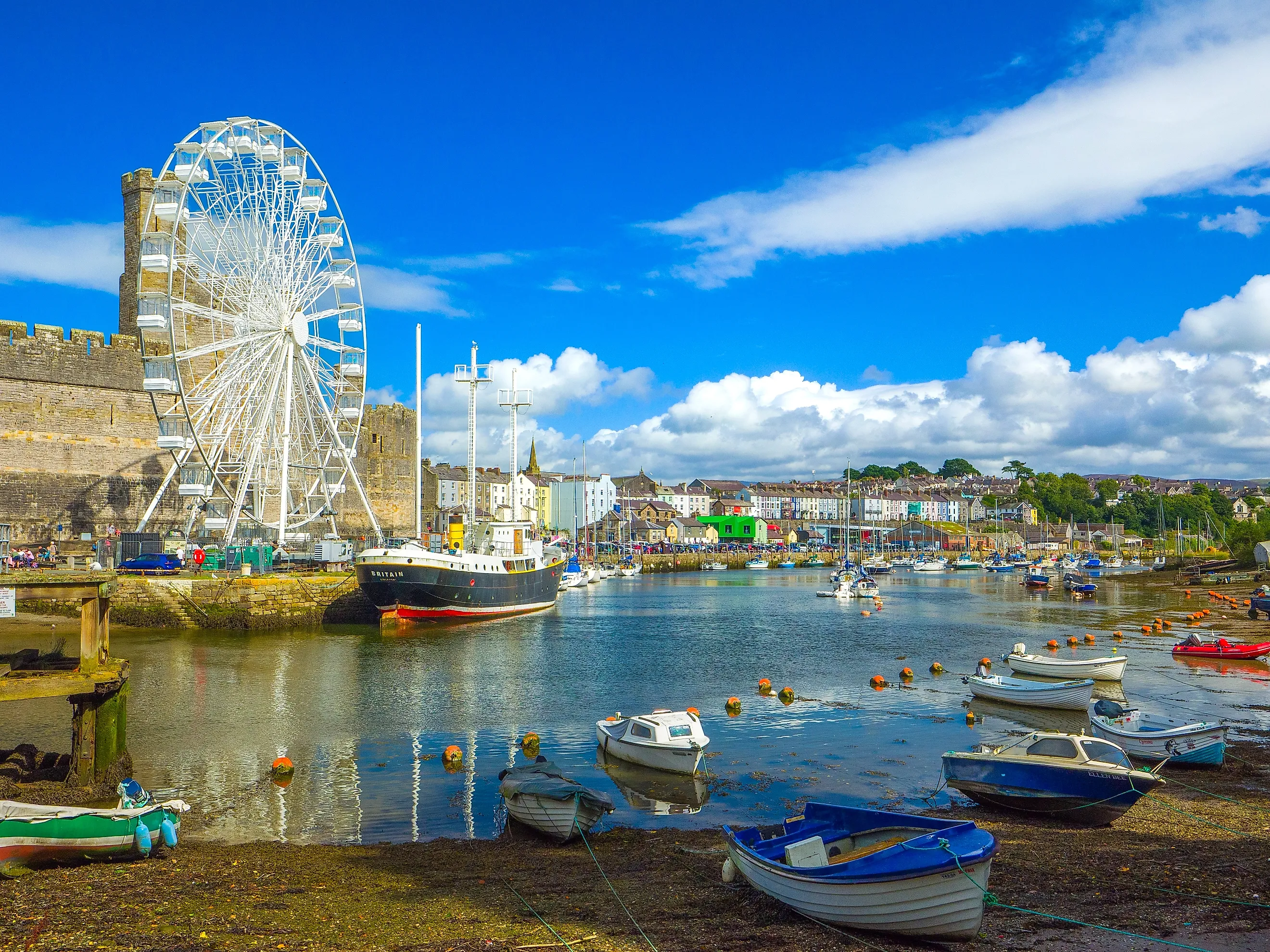
This north Wales town, built by King Edward I, was inspired by Roman fort-building and Norman architectural influence, including the time the king had spent in France. Caernarfon is certainly rich in its ancient past, situated on the Menai Strait, going out to the Caernarfon Bay.
The piece of architecture that deeply inspired King Edward I is the Segontium Roman Fort, still toward the back of town on Constantine Road, its foundation standing over a thousand years later. Dogs are allowed there, and limited parking is available. The most recognized town relic will be Caernarfon Castle, right on the water, once again heavily inspired by Roman architecture and its sturdy structure, built with conflicts in mind. Scenic spot Lôn Eifion overlooks the Menai Strait and has a pleasant accompanying path for walkers and cyclists. Caernarfon is most certainly a town steeped in intense history, with its town center on the serene Menai Strait.
Aberfan

Aberfan's mining disaster is one of the most significant tragedies in the more recent history of Wales and the United Kingdom. On October 21, 1966, 144 people were killed in the infamous mining accident, most of whom were schoolchildren, impacting the Welsh village with this grief and loss for decades to come.
One of the trailheads of the Taff Trail, a 55-mile pedestrian and cycle path between Cardiff and Brecon, is located in Aberfan, right by a rather heartbreaking Garden of Remembrance dedicated to the children who lost their lives in 1966. A little further away is Twyn Brynbychan, a moderately difficult circular hiking trail. Across the town, closer to Merthyr Vale, is an interesting Standing Stone way up on one of the many dramatic hills in Wales, offering beautiful views of the surrounding area. Despite Aberfan being known for a rather depressing chapter of Welsh history, the village is in proximity to scenic green hills for hiking, biking, and Instagram-worthy photos.
Cardigan

A seaside town with a significant Norman past, near its namesake Cardigan Bay and on the River Teifi, Cardigan has always been a town of creativity and community. Turning into a port town for materials like bark and ale in the 16th century, and later on, an immigration port to relatively well-established America, Cardigan has never lost its hustle and bustle.
Cardigan Castle, constructed by Norman inhabitants in 1093, hosted the first national Eisteddfod, a celebration filled with music, poetry, and other forms of art. Since then, the town now holds a lively market open six days a week at the Cardigan Guildhall Market. Next door is the Corn Exchange Gallery in a Gothic building, with changing art exhibitions every couple of months, keeping true to Cardigan's artistic roots. Across the Pont Y Priordy Priory Bridge is Teifi Marshes Nature Reserve, where walkers can watch starling birds on the accessible marsh trails. Cardigan remains a cultural symbol of Wales' heritage, a place for gatherings and communities to flourish by the water.
Hay-on-Wye

Formerly split as a half-English, half-Welsh Norman town, Hay-on-Wye is still on the border of England and Wales today. The town has been through quite a bit of ruin and rebuilding, later becoming a place for coal transportation, bookselling, and markets.
The Hay Festival attracts folks from all over, featuring prolific political and literary speakers. Hay Castle, supposedly built around the late 12th century, although its origins are questionable and interwoven with legend, offers tours every day of the week, and minors are admitted for free. Hay Markets on Thursdays and Saturdays, with occasional one-offs, give tourists space to peruse the artisan goods and fresh produce from the relatively rural region. Across the River Wye, where the English-Welsh border lies, are local campgrounds and swimming spots like Radnors End Campsite. Hay-on-Wye is a town drenched in historical and literary significance, a great fit for creative individuals who like sleeping under the stars at night.
St. Davids

On the Pembrokeshire coast of Wales is St Davids, a place of medieval Christian pilgrimage, honoring the monastic Saint David.
The magnificent 12th-century St Davids Cathedral by the River Alun is home to an ancient shrine and also supposedly where Saint David and Saint Justinian are buried. Not to mention St Non's Chapel and Well to the south by the sea, where peace and prayer abound in beautiful blue St. Brides Bay, as well as a retreat for those seeking quiet and contemplation in a deeply religious and spiritual setting. And, every spring, there is the St Davids Cathedral Music Festival with a wide selection of performing musical talent for churchgoers and music lovers alike. Last but not least, St Davids is completely surrounded by Pembrokeshire Coast National Park, providing visitors with an abundance of nature, wildlife, and outdoor activities.
Taff's Well

A village of only about 3,500, north of Wales' capital city, Cardiff, Taff's Well is a former Welsh railway connector. Taff's Well has the only thermal spring in all of Wales, being over 5,000 years old and supposedly acclaimed for its mineral healing properties, now providing heating to the town's buildings.
The thermal spring is now locked up at Taff's Well Park with its tennis court, walking path, and memorial to World War I. On the peaceful River Taff stands the interesting red-bricked Walnut Tree Viaduct Jubilee Pillar, commemorating former Queen Elizabeth II's Silver Jubilee in 1977. Down the A470 is Castell Coch, the English translation being Red Castle, a 13th-century ruin transformed into a more modern structure, where craftsmanship and creative artistry from another time can be admired. Taff's Well, although not usually on one's radar, has unique sights to see and will appeal to those seeking a quieter place to explore.
Be Immersed In Welsh History
Take a look at this list and find your next trip for archeological, historical, and natural exploration in Wales today. Maybe even a spiritual pilgrimage to a place like St Davids in the scenic and vast Pembrokeshire Coast National Park is in the cards. One thing is for certain, these villages and towns all possess a marked cultural or ancient sense of importance. The Celtic land of Wales will be waiting for newcomers to be intrigued by the stories and legends this land has held for centuries. Choose a place from this series and learn about Wales' history through its Roman, Elizabethan, and later chapters.