This Is The Finger Lakes' Quirkiest Little Town
Drive through the Finger Lakes long enough, and the villages start to blur together. Another lake view, another row of wineries, another tidy main street. Naples, New York, is not one of those. Tucked near the southern tip of Canandaigua Lake in Ontario County, it has only about 2,400 residents, but it has spent those small numbers on character rather than polish.
And none of that character feels staged for visitors. This is a town with a church shaped like a grape leaf, a pie deeply associated with Naples, and a waterfall you reach by wading up a creek. Naples figured out what makes it intriguingly odd and decided to embrace it more.
A Tiny Town With a Big Grape-Pie Obsession

Nothing captures that better than the town's devotion to grape pie. Not apple, not cherry, not blueberry. Grape. Naples is widely called the grape pie capital of the world, and while that sounds like a slogan dreamed up for a festival banner, the locals mean it. The tradition grew out of the area's long history of grape growing. The hills above Canandaigua Lake have supported vineyards for generations, and local families eventually turned that harvest into something unmistakably regional. The pie itself is rich, sweet, and slightly tart. It's the kind of dessert that's rare to find anywhere else, which is precisely why it became so central to how Naples sees itself.

Every September, the Naples Grape Festival celebrates all of it with food, crafts, music, local vendors, and, naturally, plenty of pie. It's one of the biggest events on the calendar, pulling in visitors eager to taste the dessert the town is known for. For many people, the trip isn't complete without a slice picked up from a local bakery or market.

Plenty of towns have a local specialty, but few build an entire personality around a single dessert. Here, grape pie is more than something to eat. It's heritage, livelihood, community pride, and a conversation starter all rolled into one.
Historic Streets, a Grape-Leaf Church, and Small-Town Character

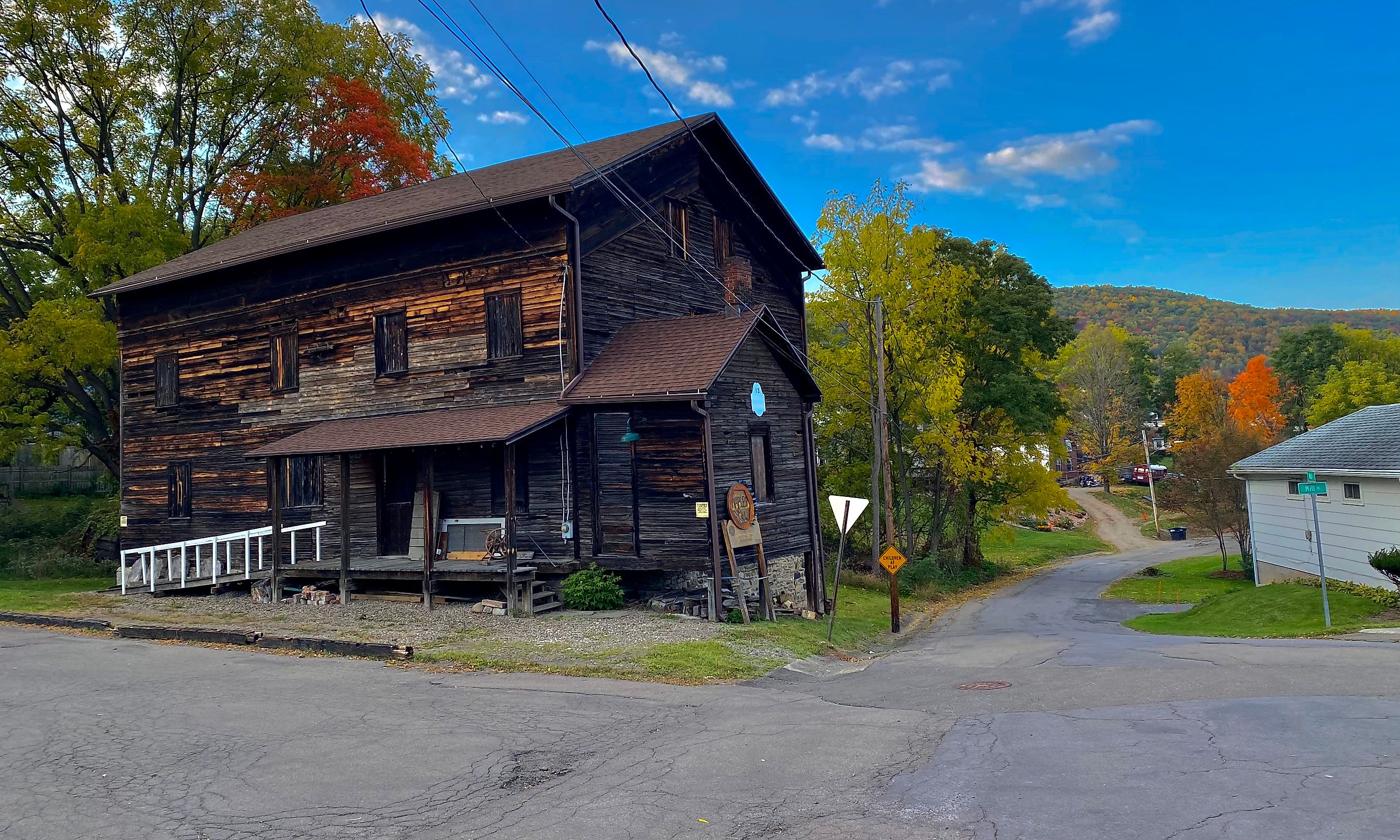
The town's roots reach back to the late 18th century. It was founded in 1789 on land tied to the Seneca village of Nundawao, and before settling on its current name, it was known as Watkinstown and Middletown. The name Naples arrived in 1808, a surprisingly grand, Old World title for a modest village in western New York. That history still shows in the village streets, the aging homes, the churches, and the civic buildings. One of the most notable is the Cleveland House Museum, run by the Naples Historical Society. Built in the 1790s, it keeps the story of the town's early settlement alive and adds depth to the area, going well beyond food festivals and pretty scenery.
The strangest of these, though, may be St. Januarius Church, sometimes called the “Grape Church.” Designed by architect James H. Johnson, its floor plan was modeled on a grape leaf, a detail that feels almost too on-the-nose. In a town built around vineyards and pie, even the architecture gets in on it. And yet the church is unusual without tipping into gimmick. It reflects the way Naples turns its agricultural heritage into something visual and permanent. The grape leaf isn't a mere decoration; it stands in for the land, the local economy, and the community itself.

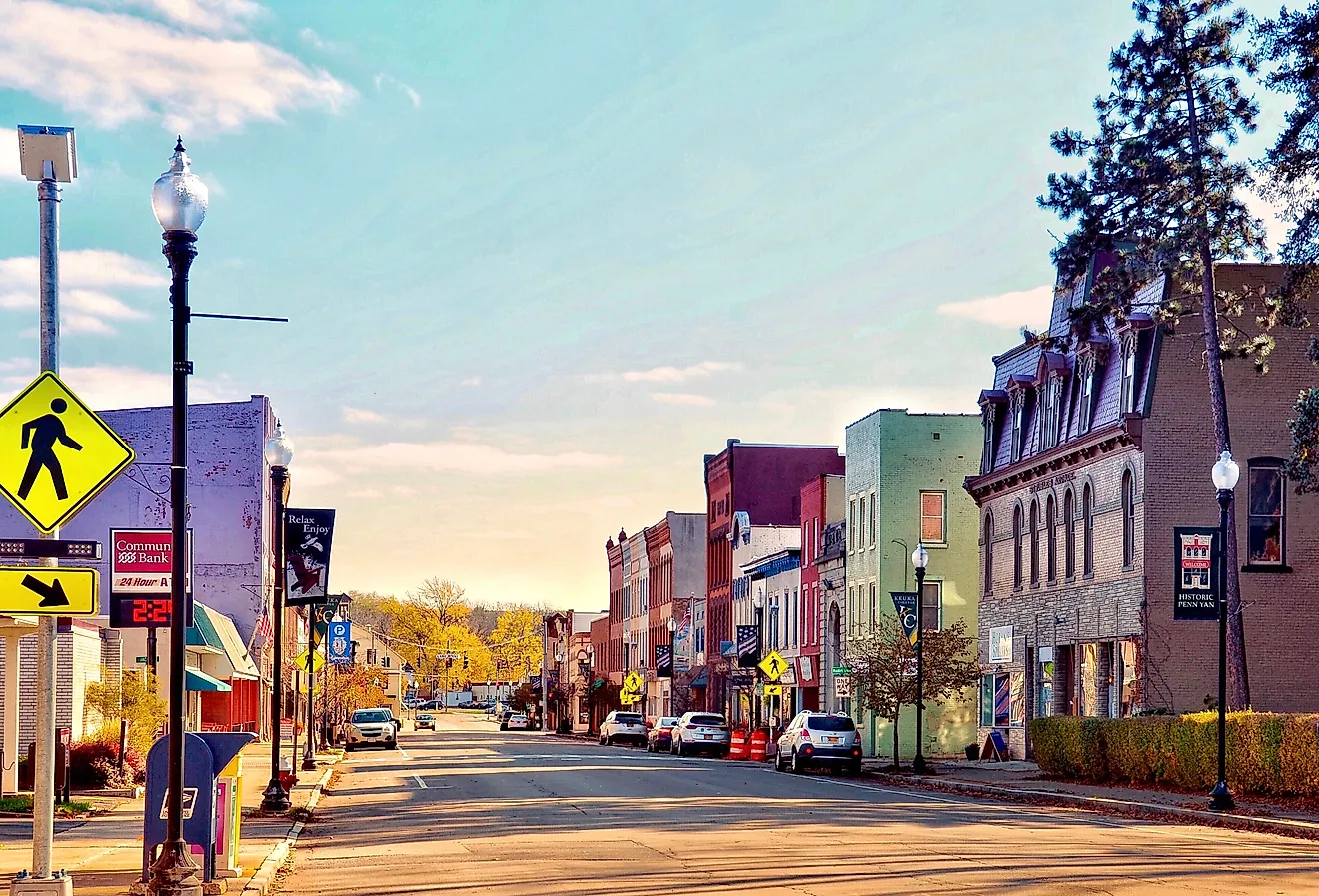
Downtown carries the same charm, with small businesses, cafes, galleries, and independent shops that haven't been polished into sameness. It keeps the slightly eccentric texture of a real village: practical, creative, old-fashioned, and welcoming all at once. That blend is what sets the place apart from the more predictable Finger Lakes stops.
Waterfalls, Trout, Markets, Wineries, and the Wild Edge of Naples

Part of the appeal is how closely nature presses against the village. Grimes Glen Park, a gorge of waterfalls, creek walks, and dramatic rock walls, sits close enough to downtown that you can finish a slice of pie and be hiking toward a waterfall minutes later. The glen is best known for its two large falls, each roughly 60 feet high. The trail tends to be wet and rugged, which only adds to the adventure. This isn't a scenic overlook so much as a place where you wade through the creek itself, which makes it far more immersive than the usual roadside viewpoint. There's a geological footnote, too. Fossil discoveries in Grimes Glen during the 19th century tied the area to a much older natural history, proof that this small town sits on a landscape with a story stretching back millions of years.

Naples Creek adds another distinctive note. Known for its rainbow trout, the creek hosts an annual sampling run by state fisheries staff that has become a minor public spectacle. Crowds gather to watch, turning routine fish management into a seasonal community ritual. It's exactly the sort of odd, hyper-local tradition that defines the town. The surrounding countryside opens onto the High Tor Wildlife Management Area, a sprawling expanse of wooded hills, wetlands, gullies, and steep terrain. It lends the area a wildness most villages this size never have. Naples isn't only charming and historic; it's genuinely rugged.

Local businesses round things out. Joseph's Wayside Market is a much-loved open-air farm stand stocked with produce, baked goods, flowers, and regional products. At the same time, Monica's Pies is an essential stop for anyone chasing that signature dessert. Nearby wineries, including Hazlitt Red Cat Cellars and Arbor Hill Grapery & Winery, connect the town to the wider Finger Lakes wine scene without losing its local flavor.
Then there's Bristol Valley Theater, a professional company that brings live performance to the village. For a community of a few thousand, that kind of arts presence is striking, and it adds another layer to the place: not just rural and scenic, but also creative.
All of this is why Naples earns its reputation as the quirkiest corner of the Finger Lakes. It has the natural beauty you'd expect of the region, but it pairs that beauty with something stranger and harder to forget. The traditions are specific, the history runs deep, and the local economy still feels genuinely local. Naples is the rare place that proves a town of a few thousand can hold a personality many times its size.