8 Of The Most Welcoming Towns In The Northern United States
Bar Harbor sits at the doorstep of Acadia National Park on Maine's Mount Desert Island, where locals still drop the r in "lobster." Cape May guards roughly 600 preserved Victorians at the southern tip of New Jersey. Decorah keeps the country's deepest trove of Norwegian-American history in northeastern Iowa, and New Glarus wears its Swiss roots on every storefront in southern Wisconsin. What ties these eight towns together is less geography than welcome: each one runs on a strong local identity and an easy way with visitors.
Bar Harbor, Maine

Incorporated as Eden in 1796, Bar Harbor anchors Mount Desert Island at the edge of Acadia National Park. The town leans into its Down East maritime character, a phrase that traces back to the age of sail, when ships traveled downwind and to the east to reach the Maine coast from Boston and other ports to the southwest. Home to just over 5,000 people who turn "lobster" into "lob-stuh," it makes an easy base for the park.
Acadia is the main event. You can work the tide pools, walk the coastal paths, bike the carriage roads, kayak the shoreline, or catch live music back in town, then close out with a fresh Maine lobster dinner. History boat tours and the working harbor fill in the rest.
Cannon Beach, Oregon

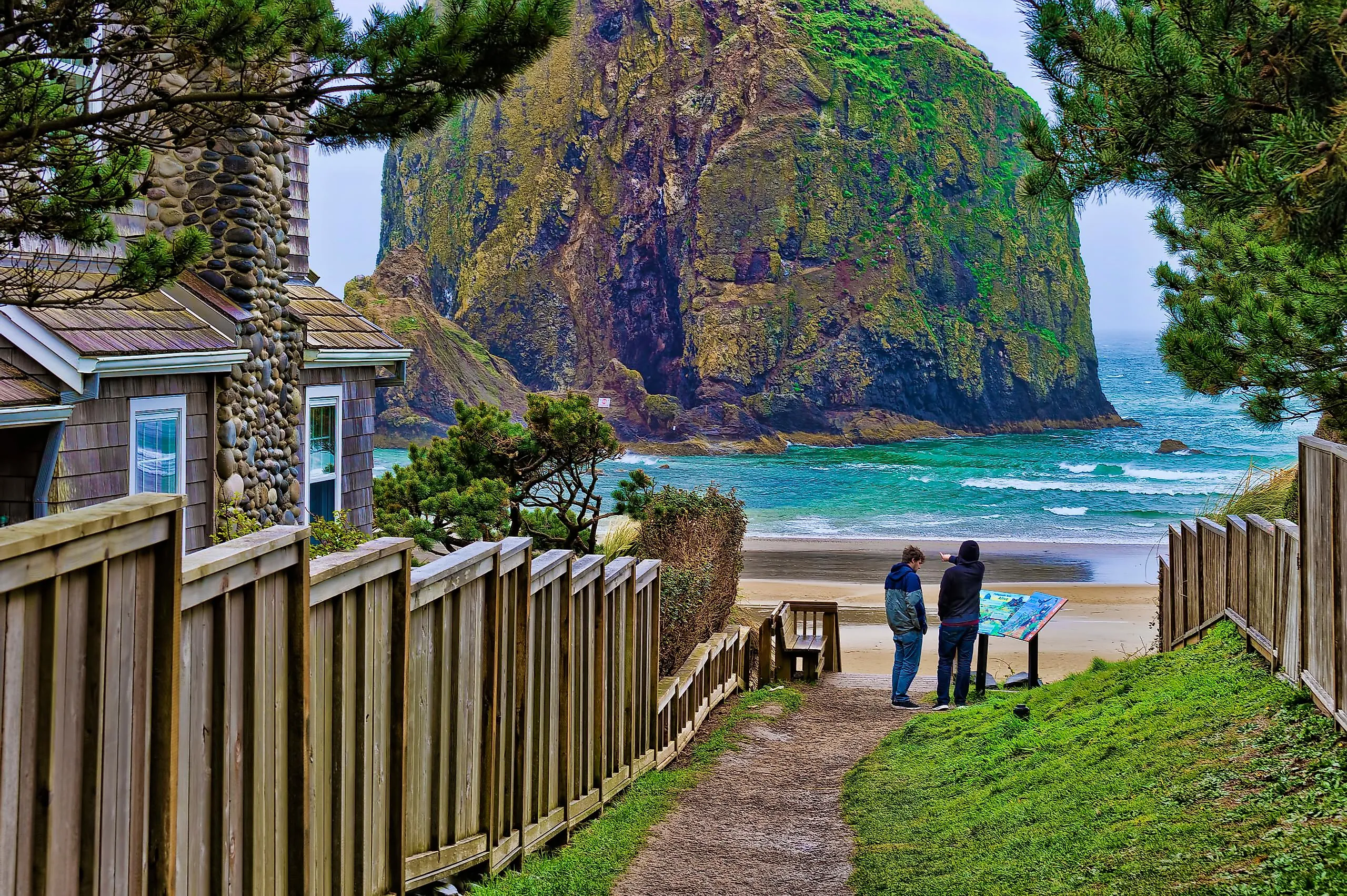
Cannon Beach took its name from a naval cannon that washed ashore from an 1846 shipwreck, and it has held onto its art-colony identity ever since. The landmark is Haystack Rock, a 235-foot sea stack standing just off the sand, ringed by tide pools and smaller rock "needles" where tufted puffins nest from roughly April through July.
The 4-mile beach has taken repeat honors as Oregon's best, and the summer sandcastle contest turns the sand into a gallery. In town, expect artist studios, glassblowers, galleries, specialty shops, and a year-round run of live theater. Just north, Ecola State Park caps the headland with coastal overlooks, picnic spots, and trails for every level.
Cape May, New Jersey

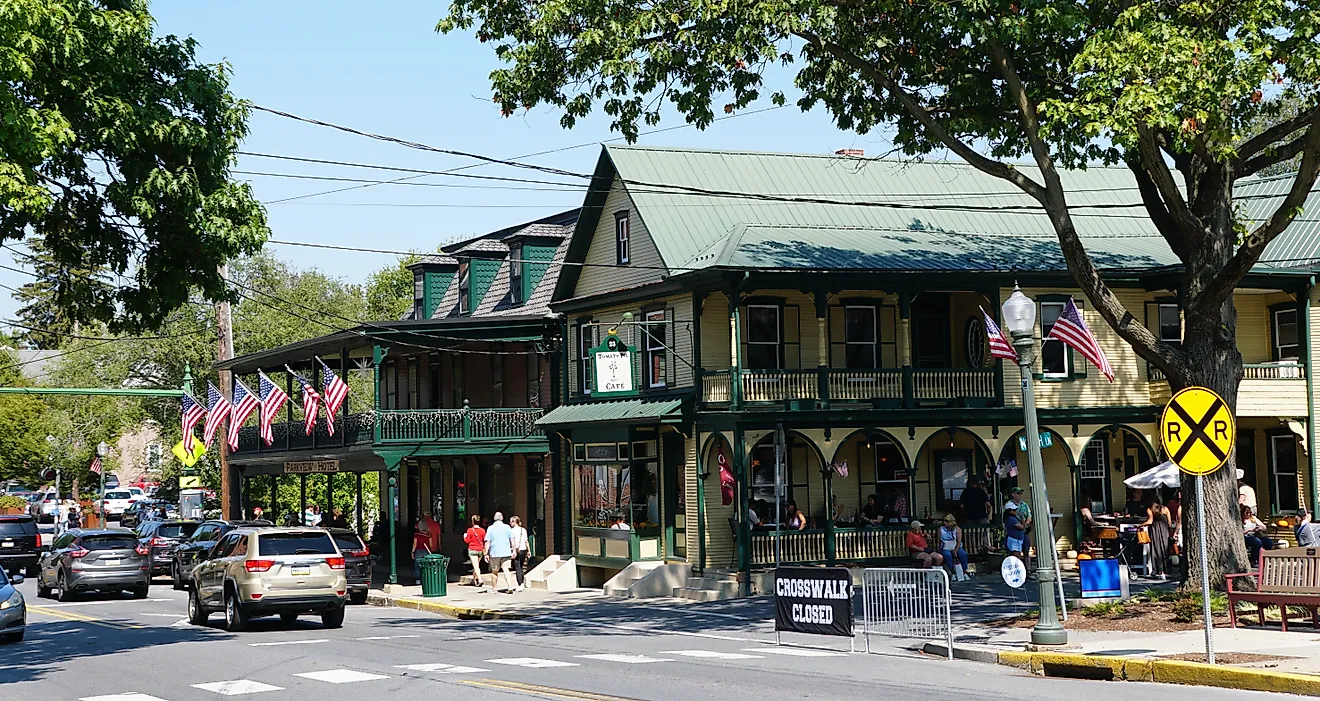
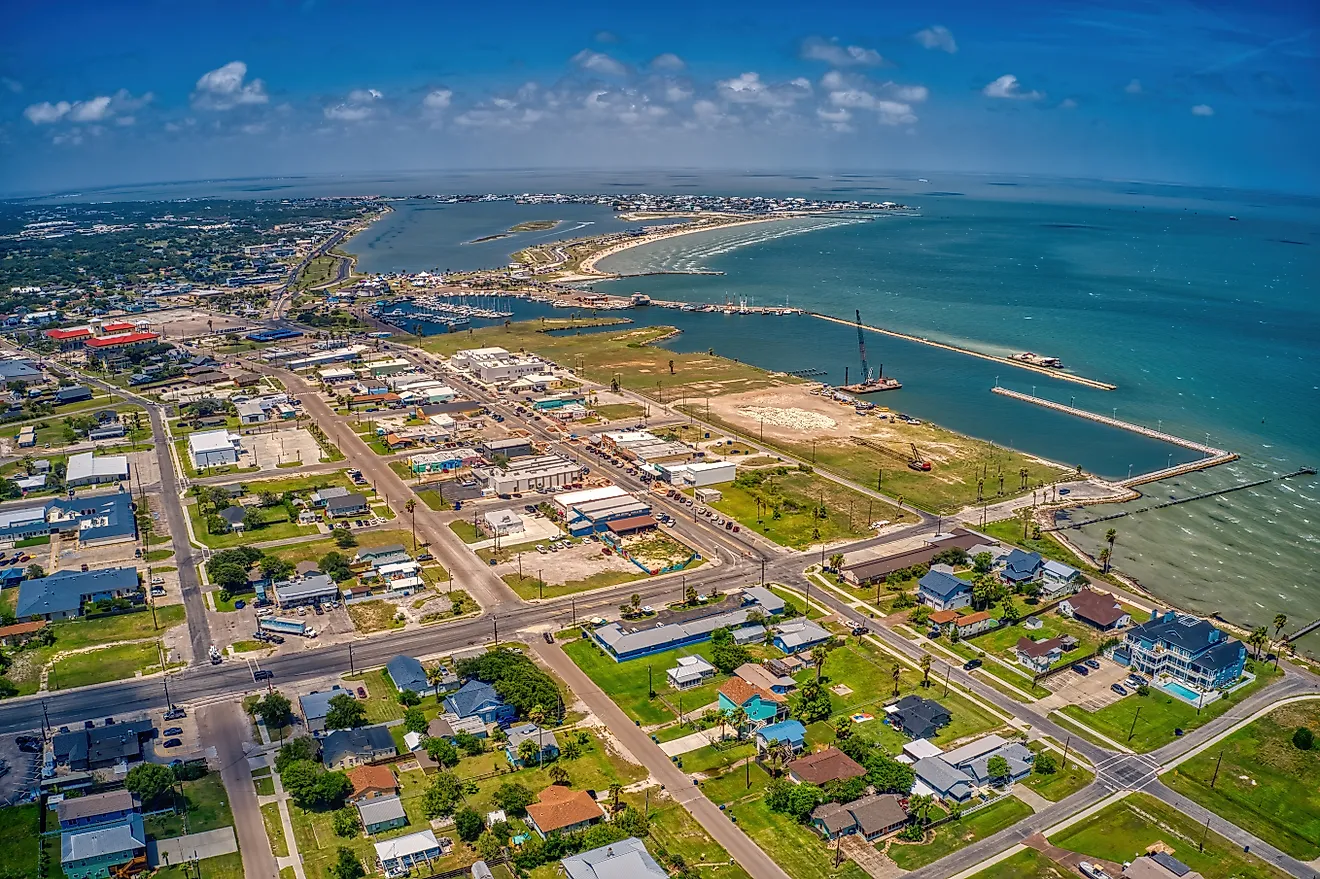
Home to around 2,800 residents, Cape May calls itself America's original seaside resort and sits about 45 miles south of Atlantic City at the very bottom of New Jersey. Its calling card is roughly 600 preserved Victorian buildings, a density of 19th-century architecture matched almost nowhere else, plus bed-and-breakfasts that trade on the period look. The long south-facing beach runs right up to Cape May Point State Park.
The town's military past is literal and still standing: Battery 223, a Fort Miles coastal-defense bunker completed in 1943, sits on the beach at Cape May Point, stranded closer to the water each year by erosion. Cape May is also one of the East Coast's premier birding spots, with nearby wineries, oceanfront stays like the Angel of the Sea, and dinner at the Mad Batter or the Rusty Nail.
Decorah, Iowa

Decorah sits on the Upper Iowa River in northeastern Iowa and carries one of the country's deepest pockets of Scandinavian heritage. The Vesterheim holds the most extensive collection of Norwegian-American artifacts anywhere, and the museum roster fills out with the Seed Savers Exchange and its heirloom gardens and the historic Porter House.
The river runs clear enough for canoeing, kayaking, and fishing, and the Trout Run Trail loops about 11 miles past the Decorah Fish Hatchery. The park system is the local pride: Dunning's Spring Park drops a waterfall of around 200 feet, with Ice Cave, Phelps, Palisades, and Van Peenen parks rounding it out. Breweries like Toppling Goliath and Pulpit Rock anchor the drinks scene.
New Glarus, Wisconsin

New Glarus bills itself as America's Little Switzerland, and the Swiss styling is everywhere: the bank carries the emblem of Saint Fridolin, and the town hall reads like a ski chalet. The town was founded in 1845 by emigrants from the Swiss canton of Glarus, sent across by an emigration society as the hand-textile trade collapsed and crops failed back home.
Roughly 2,250 people live here now, in a town that turned its heritage into a destination of festivals, boutiques, and restaurants. The other draw needs no translation: the New Glarus Brewing Company, whose beer is famously sold only within Wisconsin. Set in the rolling hills of the state's south, it pairs Swiss-inspired architecture and food with a steady festival calendar, Oktoberfest included.
Saranac Lake, New York

Saranac Lake spreads across three Adirondack towns around Lake Flower, with Lake Colby and the larger Lower Saranac Lake close by, and it has long worn the nickname Capital of the Adirondacks. The town first made its name over a century ago as a tuberculosis-cure center, when Dr. Edward Trudeau's sanatorium and rows of "cure cottages" drew patients to the cold mountain air, and that history still marks the downtown.
Today the draw is the outdoors in every season. Winter brings cross-country skiing, snowshoeing, snowmobiling across frozen lakes, and low-key downhill at the Mount Pisgah Recreation Center, while the warmer months string the three connected Saranac lakes into one of the classic Adirondack paddles. Downtown carries galleries, antique shops, year-round live music, and the Adirondack Carousel.
Steamboat Springs, Colorado

Steamboat Springs takes its name not from the ski resort but from the hot springs that early trappers thought sounded like a chugging steamboat. The skiing came later and made the town famous, trademarked as Ski Town, U.S.A., with about 3,000 acres of terrain that runs cheaper than Aspen or Vail.
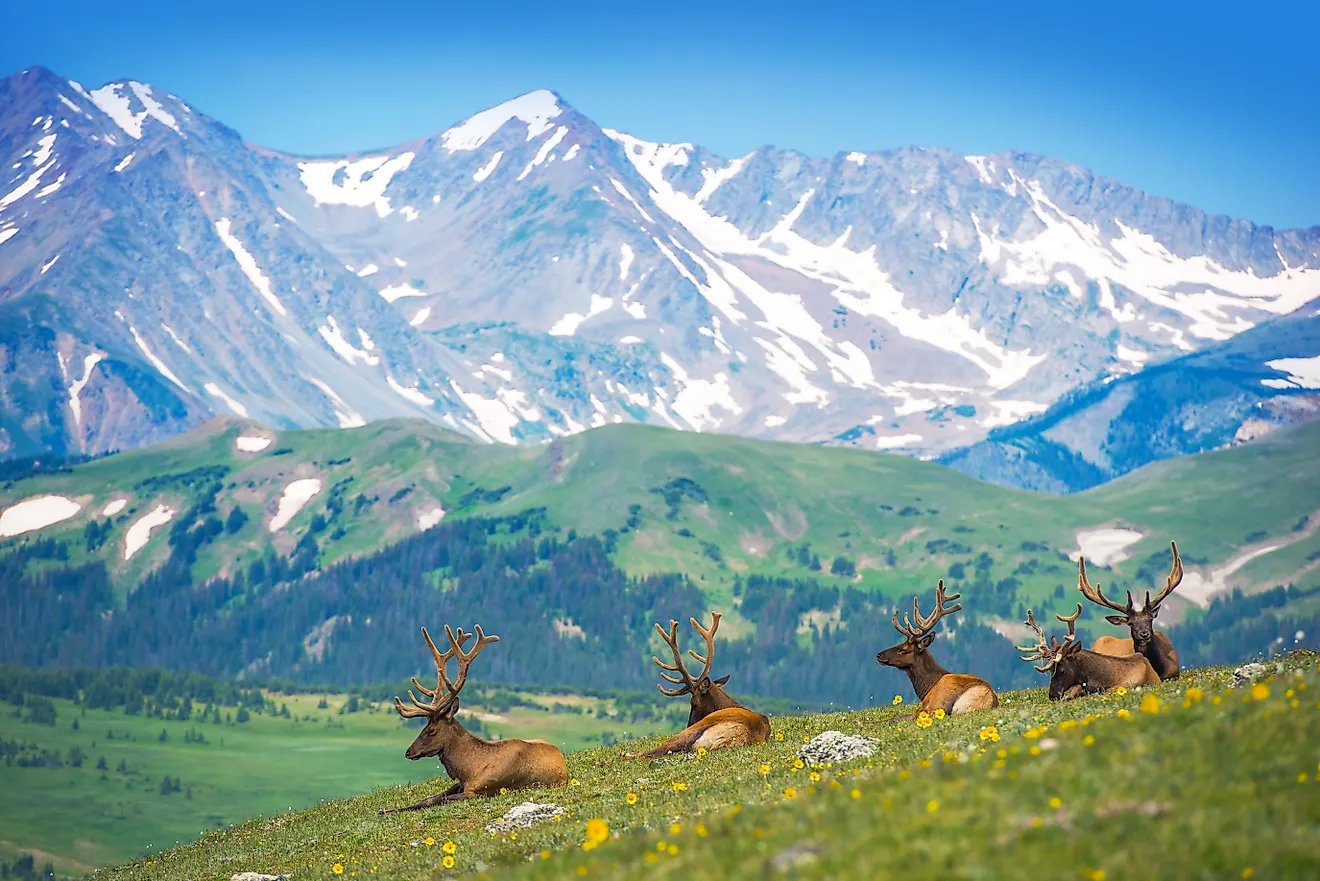
Summer fills with fishing, camping, ranch visits, the hike to Fish Creek Falls, and the Yampa River Core Trail, while the mineral pools at Strawberry Park Hot Springs stay busy year-round. Winter adds snowshoeing, snowmobile tours, and the Steamboat Gondola. Downtown packs in more than 100 bars, restaurants, and galleries, with the Tread of Pioneers Museum and the Howelsen Ice Arena rounding out the calendar.
Stowe, Vermont

Stowe sits between Putnam State Forest and the Green Mountains, with Mount Mansfield, Vermont's highest peak, rising over the village, the kind of setting that earns the Alps comparison. The classic New England core handles shopping, mountain cooking, and farm-to-table dining from the surrounding valleys, and the town photographs well in every season, with church steeples poking out of foliage, snow, or summer green.
The headline is the mountain: skiing and snowboarding off Mansfield by way of Stowe Mountain Resort's gondolas, plus sledding, sleigh rides, and cross-country trails through the forest. The most storied stay is the Trapp Family Lodge, built by the von Trapp family of "The Sound of Music" because the setting reminded them of Austria.
The Northern States Roll Out The Welcome
Eight towns, eight versions of the same idea. Decorah and New Glarus turned immigrant roots, Norwegian and Swiss, into living identities. Bar Harbor, Cannon Beach, and Cape May built their welcome around the water and the parks at their doorsteps. Saranac Lake, Steamboat Springs, and Stowe run on mountains and four full seasons of them. What they share is a strong sense of self and an easy door for visitors, which is most of what makes a small town worth knowing.