8 Of The Most Walkable Towns In The Pacific Northwest
Some trips work better on foot. Across the Pacific Northwest, towns with five-or-six-block centers make car keys mostly optional. The eight towns below pack cafes, bookstores, and waterfront access into walking distance. Each leans on a different angle. Astoria has its 1880s commercial district above the Columbia River. Leavenworth runs full Bavarian while Port Townsend keeps its Victorian seaport intact.
Astoria, Oregon

Astoria's downtown drops six blocks down the bluff to the Columbia River, and you can walk the entire commercial district in twenty minutes. Victorian-era houses crowd the slopes above, including the 1885 Flavel House that the Clatsop County Historical Society operates as a museum. The Columbia River Maritime Museum at 17th Street holds one of the country's strongest collections of Pacific shipwreck artifacts and the lightship Columbia moored alongside. Astoria Brewing Company pours pints a block off the river, and Bridgewater Bistro has window seats over the water for seafood. The Hanthorn Cannery on Pier 39 has packed salmon since 1875 as the oldest cannery building still standing on the lower Columbia, and now operates as a small museum alongside a working brewery.
Moscow, Idaho

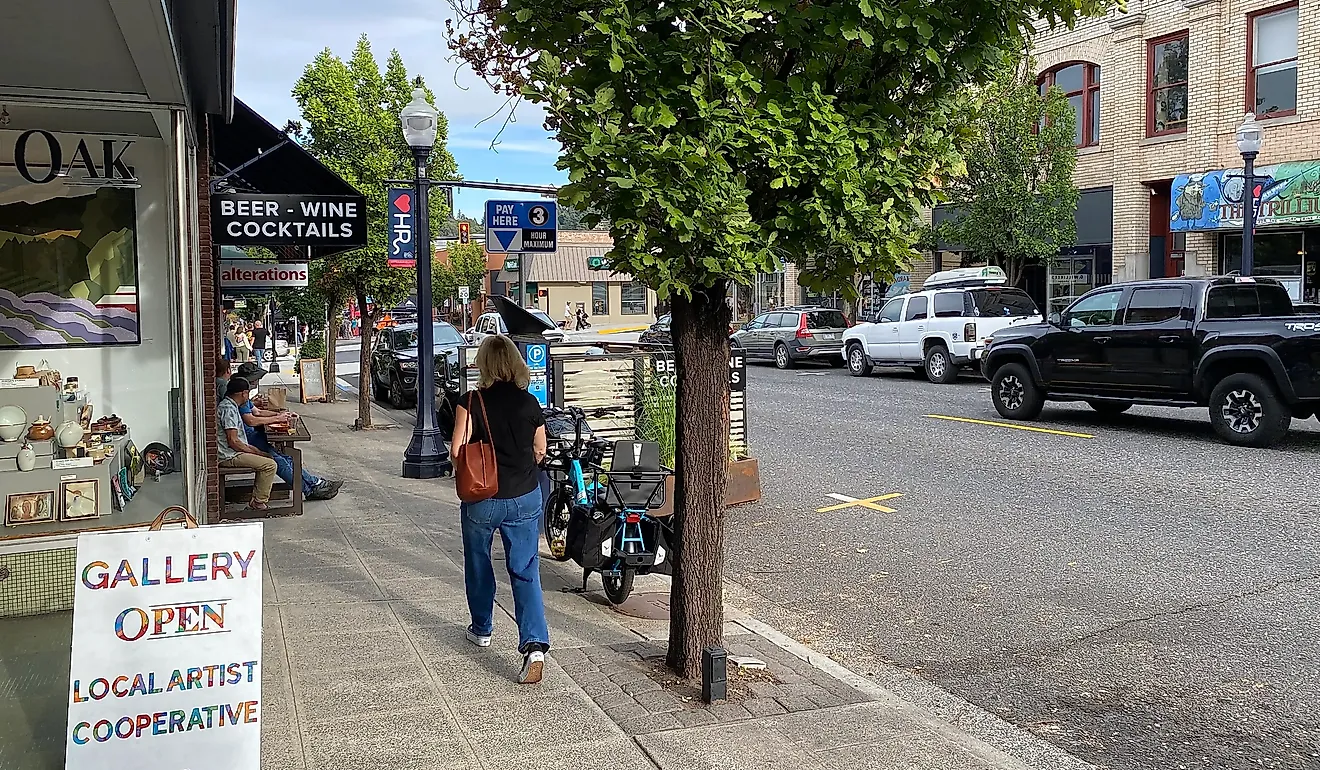
Moscow, Idaho was originally named Hog Heaven, which the town discreetly changed for obvious reasons. The University of Idaho occupies most of the south end of town, and downtown sits a five-block walk north of campus. Wide tree-lined sidewalks connect the two through a steady grid of restaurants, bookstores, and bike-rental shops. Nectar Restaurant serves the city's most ambitious dinner menu with a tasting room next door. The University of Idaho Arboretum and Botanical Garden covers the slope behind the administration building with paths through duck ponds and conifer collections. The Paradise Path winds along Paradise Creek through campus, downtown, and the south-side parks for several miles of mostly flat walking.
Leavenworth, Washington

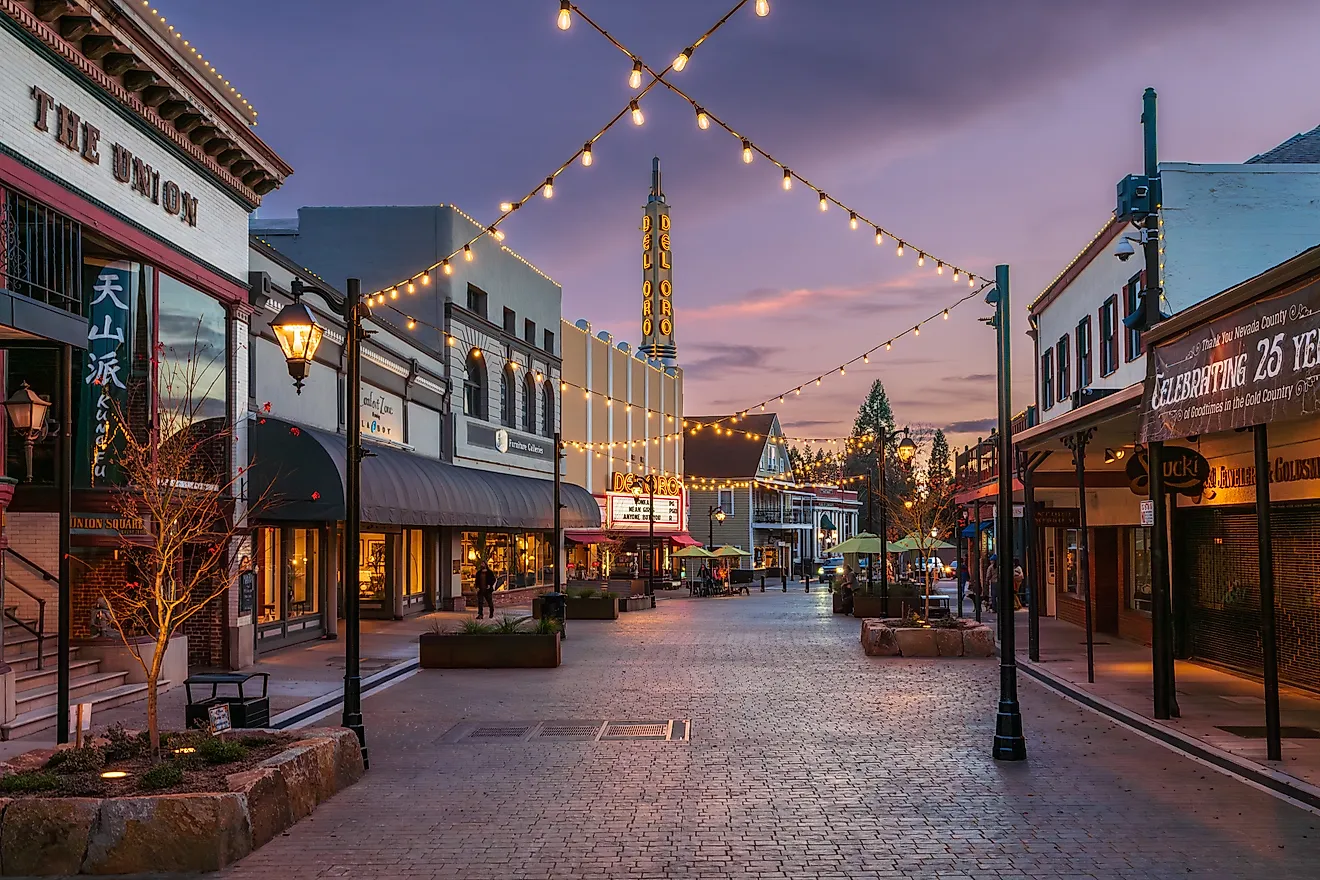
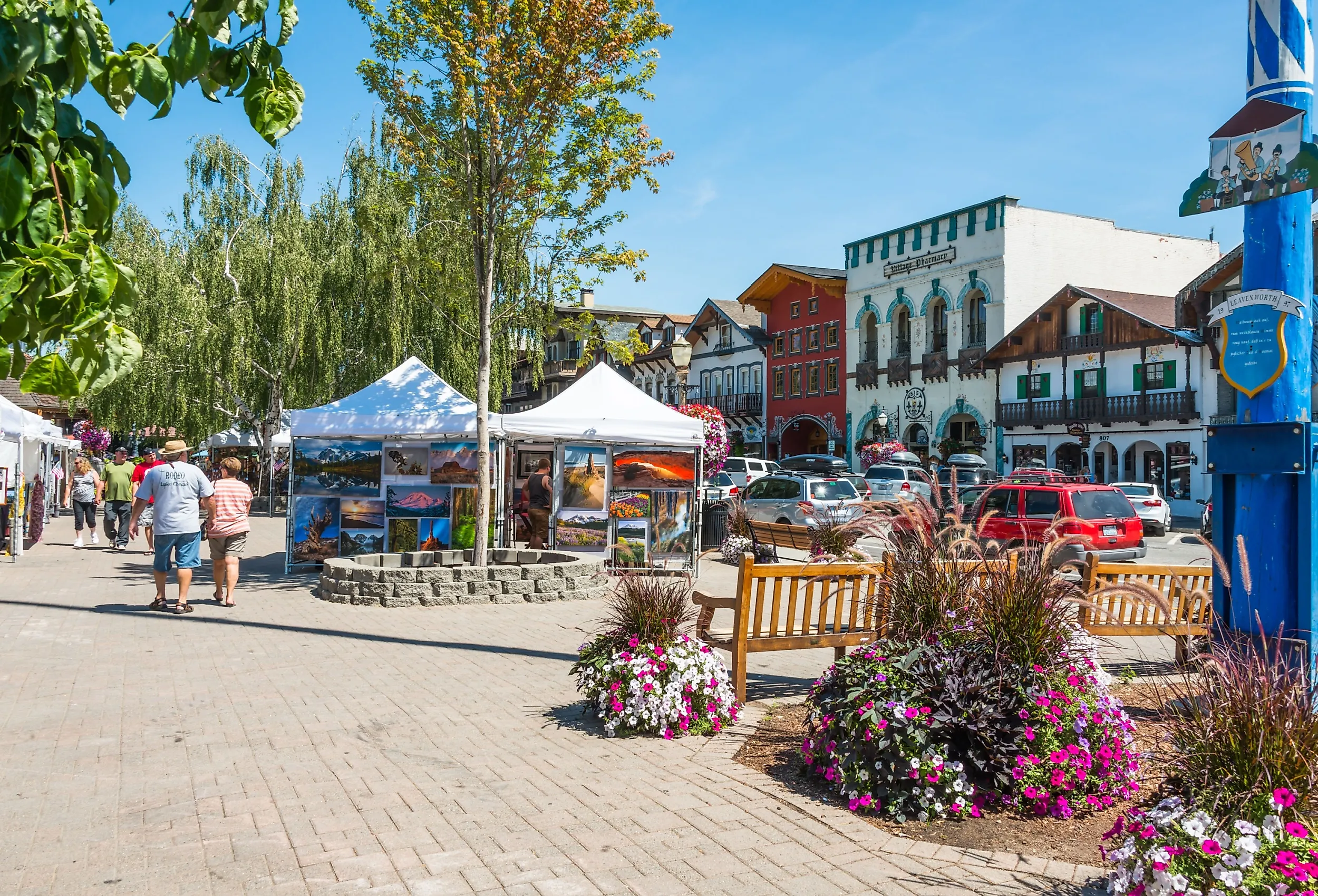
Leavenworth is the full Bavarian commitment. The downtown buildings carry mandated alpine-style facades following a 1960s economic-rescue plan that converted the dying logging town into a destination. The result reads as theme park at first glance and then settles into something more functional: schnitzel and bratwurst at München Haus, the Nutcracker Museum on Front Street, an Oktoberfest each fall, and a Christkindlmarkt with hundreds of thousands of lights in December. The Wenatchee River runs along the south edge of town with Waterfront Park and a paved trail. The Alpine Coaster runs a two-track sled down a forested mountainside east of downtown. North of town, the Icicle Gorge trails connect into the Wenatchee National Forest.
Friday Harbor, Washington

Friday Harbor sits at the ferry landing on San Juan Island, and the crossing from Anacortes effectively eliminates cars for the duration of the visit. The walk from the ferry terminal up Spring Street covers two blocks to downtown, where antique shops, bookstores, and restaurants line both sides. The Whale Museum opened in 1979 as the first museum in the United States dedicated to a single wild species (Southern Resident orcas). San Juan Vineyards pours tastings on a sunny terrace fifteen minutes' walk south of downtown. Shark Reef Sanctuary on the southwest corner of the island offers a half-mile trail to seal-haul-out rocks. The San Juan Islands National Monument spreads across multiple islands and headlands, with its visitor presence in town.
Ashland, Oregon

Ashland is built around the Oregon Shakespeare Festival, which runs from spring through fall and explains why the town has more restaurants and wine bars per capita than its 21,000 residents would otherwise support. The downtown sits in a narrow valley along Ashland Creek with Lithia Park flanking the south side. Lithia covers 93 acres of streamside walks, two duck ponds, a Japanese garden, and a rose garden. Mix Bakeshop pulls early-morning pastries and good coffee one block off the plaza. Southern Oregon University sits at the north edge of town with a free arboretum and walking trails into the surrounding hills. The Historic Railroad District covers a couple of blocks of restored late-1800s structures north of downtown.
Yachats, Oregon

Yachats covers about a half-mile of central Oregon coastline, with the entire commercial strip facing west toward the Pacific. Earthworks Gallery anchors the south end of town with regional ceramics and watercolors. Topper's Ice Cream covers the dessert end at the north. Three miles north, Heceta Head Lighthouse runs daytime tours and stays open for full-moon viewings during summer. Three miles south, Devil's Churn drops the incoming tide into a narrow basalt slot with a viewpoint platform built directly above. The Yachats 804 Trail follows the coastline north of town through tide pools and basalt benches for a couple of miles.
Cannon Beach, Oregon

Cannon Beach's downtown runs three blocks parallel to the beach, with Hemlock Street holding the bulk of the galleries, restaurants, and coffee shops. Haystack Rock rises 235 feet from the sand at the south end of town. Tufted puffins nest on its upper ledges in spring and summer, and the tide pools at its base hold sea stars, anemones, and small octopuses during low tides. Sleepy Monk roasts coffee on Hemlock Street and gets a line by mid-morning. Ecola State Park sits a couple of miles north of town with views back to Haystack and trails along the headland. Bald eagles and the occasional elk show up on the bluffs above the surf.
Port Townsend, Washington

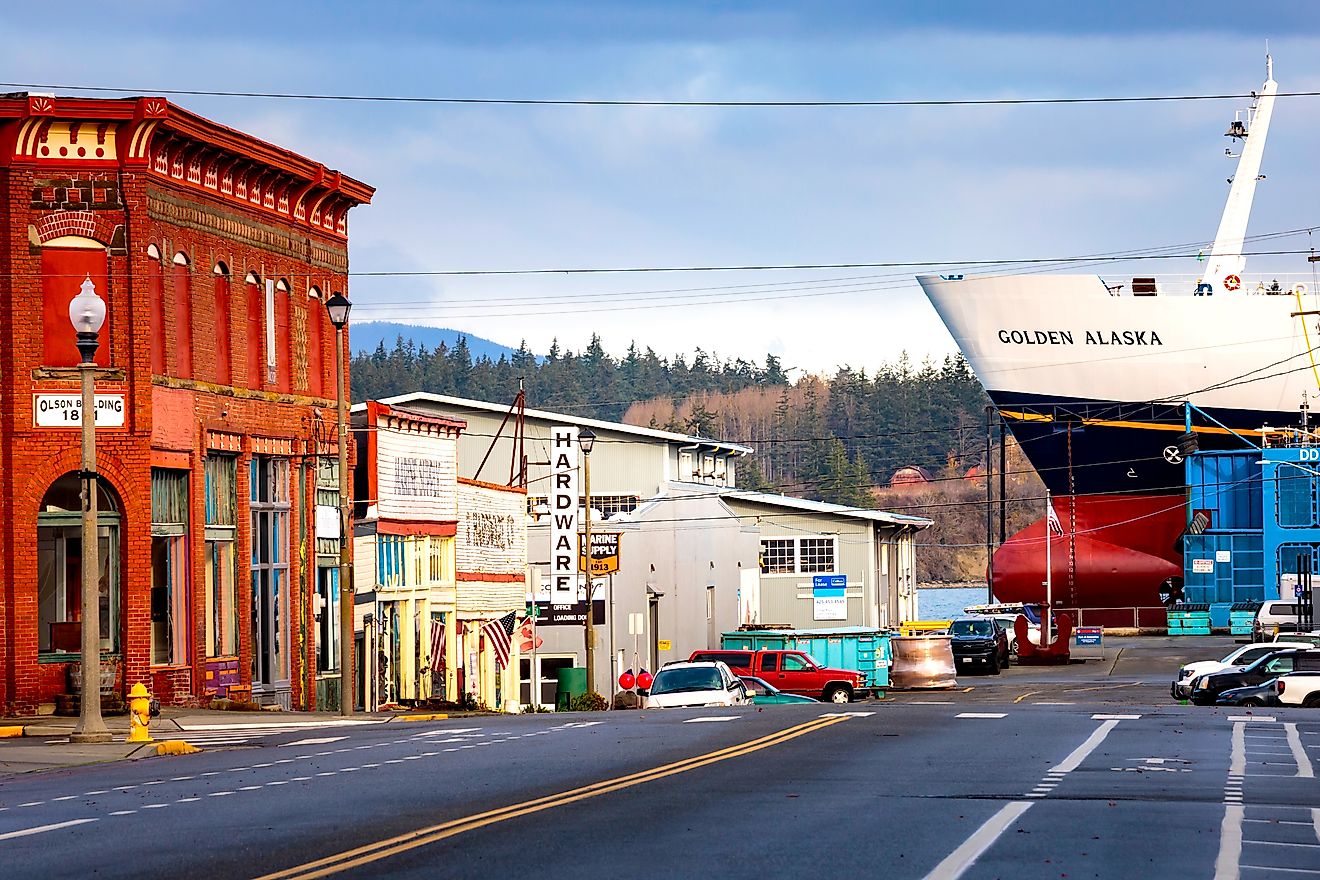
Port Townsend's downtown sits at the northeast tip of the Olympic Peninsula above a working harbor that runs commercial fishing and hosts the Wooden Boat Festival each September. The Historic Landmark District covers about thirty blocks of Victorian-era brick architecture from the 1870s and 1880s, when the town was a major port competing with Seattle for shipping traffic. The Palace Hotel anchors Water Street as a three-story brick building from 1889. Pizza on the Waterfront pulls thin-crust pies a block away. Khu Larb runs Thai dishes at the south end of downtown. Fort Worden State Park sits a mile north of downtown with miles of beach walks, the 1904 officers' quarters, and the WWII gun battery overlook above the Strait of Juan de Fuca.
The Walkable Northwest
The eight towns above each scale walkability differently. Friday Harbor takes the car ferry out of your calculation entirely. Cannon Beach concentrates around a sea stack. Ashland concentrates around a theater. Astoria runs vertical down the bluff while Yachats runs horizontal along the coast. What ties them together is a downtown small enough to walk in an afternoon and rich enough to fill it.