8 of the Friendliest Towns To Retire In Croatia
Retirement in a smaller Croatian town can offer more than Adriatic views and a slower daily routine. Along the coast, mild weather also keeps promenades, parks, and recreation accessible through much of the year. Inland towns compensate with busy cultural calendars and public squares. These squares remain gathering places rather than simply tourist attractions. All eight towns below combine active community life with several ways to stay engaged after retirement.
Opatija

Opatija developed as one of the Adriatic's great health resorts in the late 19th century, and its combination of wellness, culture, and gentle outdoor recreation remains well suited to retirement. One of the easiest ways to stay active is the Lungomare, the seaside promenade that follows the coast past historic villas, gardens, coves, and views across Kvarner Bay. The town's landscaped parks offer another low-impact option for regular walks without leaving the center.
Social life extends well beyond the waterfront. The Gervais Centre hosts films, plays, concerts, congresses, and other programming throughout the year, giving residents a dependable indoor cultural venue outside the summer season. Opatija's current calendar includes theater, exhibitions, sporting events, concerts, and community programs in multiple seasons. Retirees interested in the town's unusual resort heritage can also visit the Croatian Museum of Tourism, whose exhibitions connect Opatija with the development of Croatian travel and hospitality. Together, these institutions make it possible to build a routine around exercise, arts, and public events rather than relying solely on beach season.
Varaždin

Varaždin's café-filled Baroque center provides plenty of opportunities for everyday socializing, but its extraordinary calendar of events makes the town particularly attractive for retirees who want to remain involved in community life. Begin with the Old Town, the white-walled fortress surrounded by green defensive earthworks, then spend time around Korzo and the surrounding pedestrian squares, where café terraces remain some of the town's principal gathering places.
Community programming becomes especially visible during the Varaždin Courtyard Festival. Private courtyards throughout the historic center open for concerts, workshops, exhibitions, plays, markets, and encounters with local artists and producers. The 2026 edition used 17 courtyards for around 80 programs, while the tourism board describes the festival as an opportunity for connection and creation. Varaždin's cultural life is not limited to one weekend. Its 2026 summer program scheduled more than 300 activities, including exhibitions, adult ceramics workshops, bicycle events, antique fairs, and performances. That variety gives new residents repeated opportunities to participate rather than merely observe.
Samobor

Samobor combines the social advantages of a compact town with quick access to wooded hills west of Zagreb. King Tomislav Square remains the center of everyday activity, with café terraces where residents linger over coffee and the town's famous kremšnita. A short distance away, the Samobor Museum occupies the former home of composer Ferdo Livadić and introduces visitors to local history, art, and cultural traditions.
The surrounding landscape broadens the options for active retirees. Paths along Gradna Creek lead toward greener parts of town, while walks toward Anindol and the ruins of Samobor Castle provide more strenuous outings without requiring a long drive. Community life reaches its annual high point during the Samobor Carnival, one of Croatia's longest-running carnival traditions, when costumes, performances, satire, and public celebrations take over the center. Samobor also maintains a broader calendar of music festivals, summer programming, cultural celebrations, and seasonal events, providing reasons to return to the central square throughout the year rather than only during tourist season.
Mali Lošinj

Mali Lošinj's sheltered harbor provides a natural gathering place, with cafés and restaurants facing fishing boats and pleasure craft along the waterfront. The town's long maritime history also gives residents a strong connection to the sea. At the Museum of Apoxyomenos, visitors can learn about the ancient Greek bronze athlete discovered underwater near Lošinj and subsequently restored, while the museum's distinctive displays turn a single archaeological discovery into an exploration of the island's relationship with the Adriatic.
Retirees looking for regular exercise can take advantage of Lošinj's coastal walking paths, which connect pine forests, coves, and waterfront settlements around the island. Community life comes to the harbor during events such as Maritime Evening, when local music, folklore, traditional products, and maritime customs fill the Riva. The broader LOSINAVA festival also celebrates Lošinj's seafaring heritage through traditional boats, workshops, demonstrations, and local products. These events complement everyday harbor life, giving retirees opportunities to participate in traditions that remain closely tied to the identity of the island rather than existing solely as historical displays.
Rovinj

Rovinj provides retirees with both an active cultural scene and easy access to outdoor recreation. Its car-free Old Town rises from the harbor through stone lanes filled with cafés, galleries, and small businesses, culminating at St. Euphemia's Church. Residents who prefer greenery can head instead to Golden Cape Forest Park, where walking and cycling trails pass Mediterranean vegetation, rocky coves, and swimming areas immediately south of town.
Rovinj's community life also reflects its Croatian and Italian cultural heritage. The local Italian Community maintains an active role in preserving language and traditions through cultural, educational, and social programming, while concerts, exhibitions, festivals, and other events take place throughout the year. Another gathering point is the Batana Eco-Museum, dedicated to the flat-bottomed wooden fishing boat traditionally used by Rovinj families. Its programs extend beyond museum displays to boatbuilding knowledge, music, food, and community traditions associated with the waterfront. For retirees, that combination creates several ways to meet people, whether through cultural programs, neighborhood events, recreation, or simply the daily rhythm of the harbor.
Sinj

Few Croatian towns possess a community tradition as visible as Sinj's Sinjska Alka. Held each August, the equestrian tournament commemorates the town's defense against an Ottoman force in 1715 and remains a living local institution rather than merely a historical reenactment. Preparations and practice runs precede the competition, while the wider Days of Alka and the Assumption bring concerts, fairs, religious observances, and other activities into town. UNESCO has recognized the Alka as part of the Intangible Cultural Heritage of Humanity.
Residents can learn more about the tradition year-round at the Museum of Sinjska Alka, where historic uniforms, equipment, documents, and multimedia exhibits explain the competition and the families involved in preserving it. Nearby, the Sanctuary of the Miraculous Madonna of Sinj provides another focal point for community life, particularly during the Feast of the Assumption in August. Retirees interested in staying active can also use the surrounding cycling and walking routes, which extend from Sinj into the Cetina region. Together, these activities provide several points of entry into a town whose cultural traditions depend heavily on continued community participation.
Đakovo

Đakovo's traditions provide numerous opportunities for retirees to participate in community life. The largest annual event is Đakovački vezovi, an international folklore festival dating to 1967. Folk groups, traditional costumes, music, equestrian events, exhibitions, and other programs fill the town during the festival, celebrating cultural traditions from Slavonia and beyond.
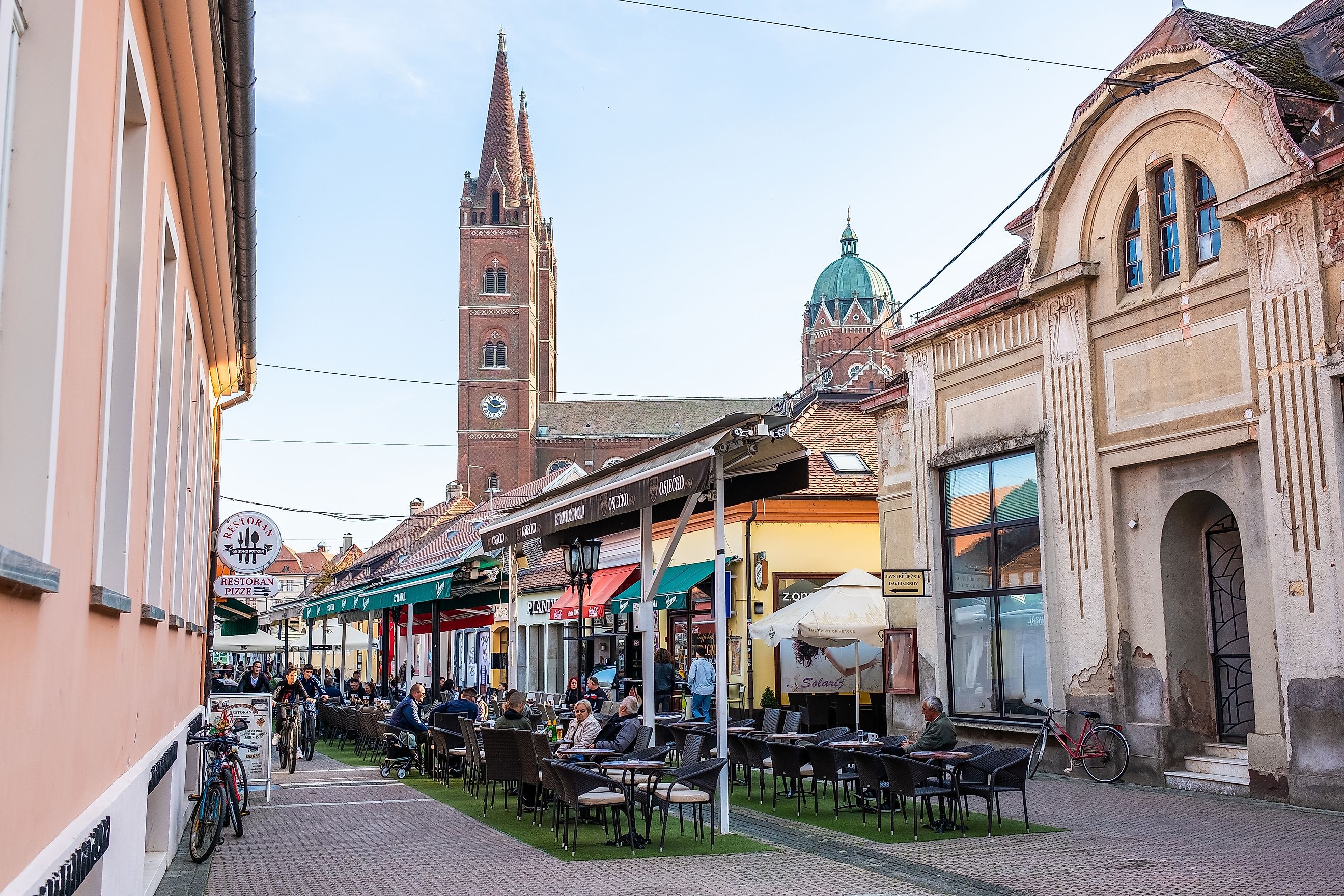
Horses are equally important to Đakovo's identity. At the Đakovo State Stud Farm, visitors can see Lipizzaners from a breeding tradition extending back centuries, with tours and equestrian programs providing reasons for repeat visits beyond the festival season. Back in the center, the twin towers of Đakovo Cathedral dominate Strossmayer Square and provide one of Slavonia's most recognizable architectural landmarks. Nearby Strossmayer Park adds paths and mature trees for everyday walks and also hosts public events. The concentration of cultural activities around the center means retirees can alternate between quieter routines in the park and much larger community celebrations without traveling far from home.
Crikvenica

Crikvenica has welcomed health travelers since the late 19th century, when its coastal climate helped the town develop into a therapeutic and vacation destination. That legacy complements an active retirement lifestyle today. Residents can use the coastal promenade and beaches for regular walks, swimming, or simply spending time beside Kvarner Bay, while additional walking and cycling routes extend into the surrounding landscape.
The Crikvenica Town Museum provides an indoor alternative, with collections and exhibitions covering archaeology, local history, fishing, and the area's natural heritage. Community life becomes particularly visible during Fishermen's Week, a tradition dating to 1966. The multiday celebration incorporates music, food, sporting activities, workshops, and programs based on the fishing heritage that shaped the town. Smaller concerts, markets, cultural programs, and seasonal events add further opportunities to gather throughout the year. For retirees, Crikvenica's combination of waterfront recreation and recurring public events makes it possible to maintain both an active routine and a connection with local traditions.
Finding Community in Croatia
The friendliest retirement destinations are not necessarily the places with the largest number of attractions. They are towns where residents have repeated opportunities to participate in public life. Varaždin opens its historic courtyards for cultural programming, Samobor fills its center for Carnival, and the Alka remains inseparable from community identity in Sinj. Along the Adriatic, maritime traditions continue to bring residents together in Mali Lošinj and Crikvenica, while Opatija and Rovinj support cultural activities beyond the busiest summer months.
These eight towns also give retirees different ways to stay active between major events, whether walking Opatija's Lungomare, exploring the hills around Samobor, cycling near Sinj, or following coastal paths on Lošinj. That combination of everyday recreation and recurring community participation gives newcomers more than things to see. It provides opportunities to become part of town life.