8 Most Hospitable Towns In Wales
Wales is dotted with many small towns that offer breathtaking scenery, rich culture, and a welcoming spirit. In the friendly town of Conwy, visitors can admire the remarkable Conwy Castle, a UNESCO World Heritage Site. Llangollen is a vibrant river town that hosts a music festival in July that draws musicians and music lovers from all over the world. Food lovers must mark a visit to Abergavenny on their calendars in September as this town celebrates the Abergavenny Food Festival, one of the biggest of its kind in the country. So, explore one of more these eight hospitable towns and all they have to offer on your next vacation to Wales.
Conwy

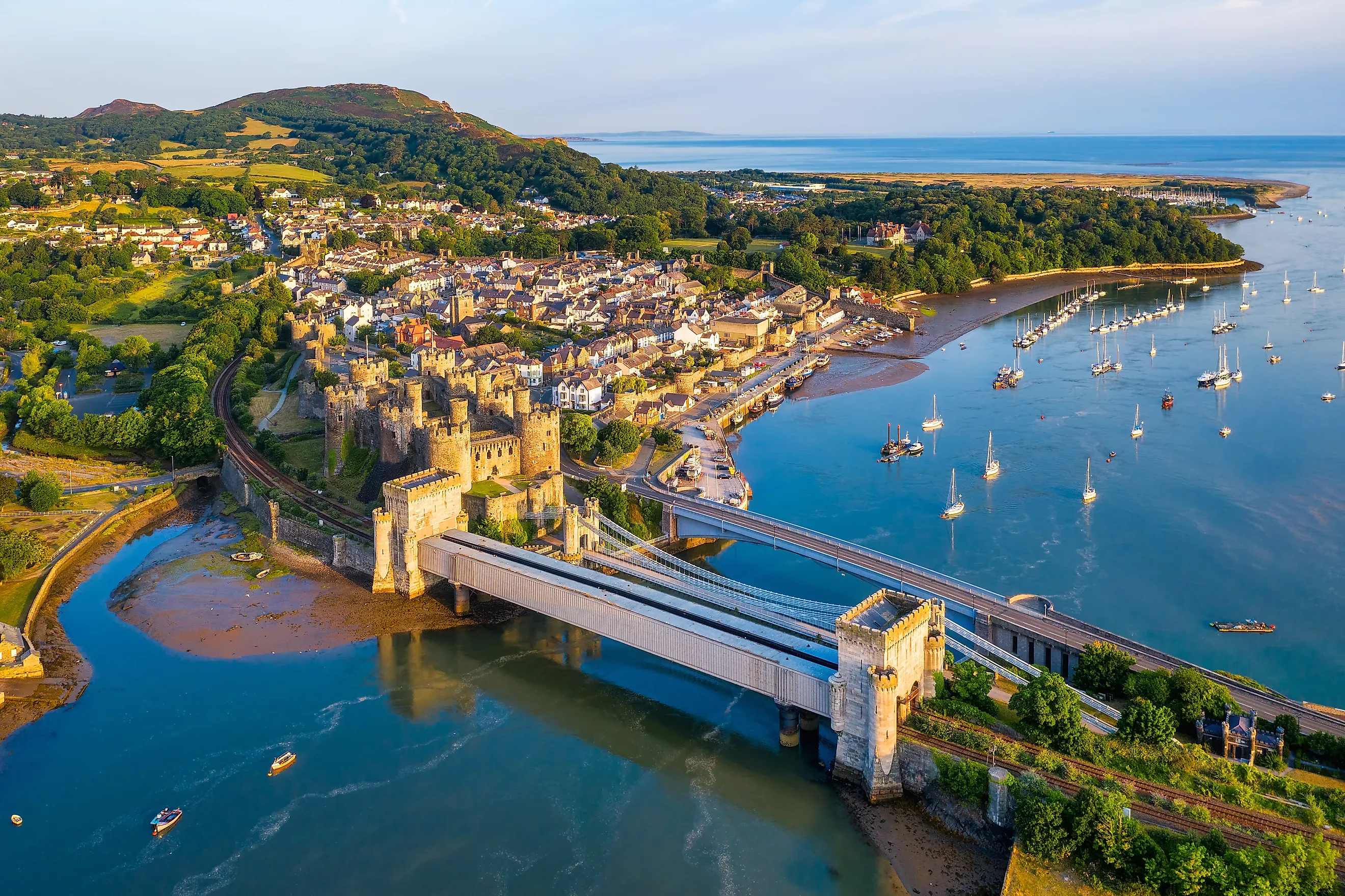
Conwy is one of the most beautifully preserved medieval towns in Wales, built by English King Edward I between 1283 and 1287 on the banks of the Conwy Estuary. Its crown jewel is Conwy Castle, a UNESCO World Heritage Site with eight massive towers that took just four years to build, offering sweeping views over the water and the mountains of Snowdonia (Eryri). The medieval town walls, which are free to walk, stretch almost a mile around the old town, can be walked in their entirety and are among the best preserved in Europe. Down on Conwy Quay, visitors will find the Smallest House in Great Britain, a six-foot-wide red cottage that was last inhabited in 1900 and draws visitors from around the world. The quay is also home to the Conwy Mussels Company, where fresh mussels pulled from the estuary have been a local tradition for centuries.
Beaumaris

Beaumaris is one of the most charming towns on the Isle of Anglesey, with views across the Menai Strait toward the mountains of Snowdonia. Its name comes from the Norman beau marais, meaning "fair marsh," the site chosen by King Edward I in 1295 as his last Welsh castle. Beaumaris Castle is a UNESCO World Heritage Site and is considered one of the greatest examples of medieval castle design in Britain, its water-filled moat and walls are still largely intact after 700 years. The Beaumaris Gaol offers a fascinating look at Victorian prison life, with the original cells, treadmill, and condemned cell all preserved for visitors. The town's main street is decorated with Georgian houses, small shops, and cafés, making for a pleasant afternoon walk and the Beaumaris Pier offers stunning views of the Snowdonian (Eryri) peaks on a clear day.
Llangollen

Llangollen is a scenic river town in north Wales, sitting on the banks of the River Dee and surrounded by the green hills of the Berwyn Mountains, where adventurous visitors can go hiking, biking, and wildlife watching. The town is best known for its International Musical Eisteddfod, a festival held every July that brings performers and choirs from over 50 countries to compete in music and dance, filling the town with color and sound for a week every summer. Above the town, the ruins of Castell Dinas Brân, a 13th-century Welsh castle, are worth the climb for the views alone. Down by the water, the Llangollen Canal offers boat trips to the Pontcysyllte Aqueduct, another UNESCO World Heritage Site built by Thomas Telford and William Jessop in 1805 that carries the canal 126 feet above the River Dee, one of the most remarkable feats of engineering in Britain. Visitors can also ride the Llangollen Railway, a vintage steam line that follows the river through the valley and is one of the most scenic short train journeys in Wales.
Aberystwyth

Aberystwyth is quickly becoming one of the most exciting towns in the west coast of Wales. It is a lively university town on Cardigan Bay with two beaches and a long Victorian seafront that has been welcoming visitors since the railway arrived in 1864. The ruins of Aberystwyth Castle, built by Edward I in the 13th century, are located at the southern end of the beach’s promenade and are free to visit. At the other end, the Aberystwyth Cliff Railway, Britain's longest electric cliff railway, has been carrying passengers up Constitution Hill since 1896, with views over the bay from the top. The Old College, a grand Gothic building on the seafront, opened as the first college in Wales in 1872 and is currently completing its transformation to reopen its galleries and exhibitions to the public. The National Library of Wales, sitting on the hill above the town, has over seven million books and is one of the most important cultural institutions in the country.
Cardigan

Cardigan, known in Welsh as Aberteifi, is a historic market town where the River Teifi meets Cardigan Bay in west Wales. It holds a remarkable place in Welsh history as the birthplace of the Eisteddfod, the national festival of Welsh music, poetry, and culture, which was first held at Cardigan Castle in 1176. The castle was beautifully restored and now houses exhibitions, a restaurant, and an outdoor summer concert series on its lawns. Cardigan Bay is home to around 300 bottlenose dolphins, and boat trips from the town offer a good chance of spotting them alongside grey seals and porpoises. Just a short drive away, Poppit Sands is a wide, expansive beach at the northern tip of the Pembrokeshire Coast National Park which offers world-class coastal hiking, historic castles, and water activities.
Abergavenny

Abergavenny is located in south Wales, on the edge of the stunning Bannau Brycheiniog National Park (formerly the Brecon Beacons), and surrounded by seven mountains, earning it the nickname the "Gateway to Wales." The town is best known across the country for its annual Abergavenny Food Festival, held every September, which has grown into one of the biggest food events in the UK and fills the streets with chefs, producers, and food lovers from across the country. Abergavenny Castle, a Norman fortress built in the 11th century, now houses a free museum tracing the town's history from Roman times to the present day. Just outside town, the ruins of Llanthony Priory, an early 12th-century monastery tucked into a remote valley in the Black Mountains, are among the most atmospheric medieval ruins in Wales. For those who enjoy the outdoors, Sugar Loaf Mountain is a great place to hike, enjoy some wine and go wild-life watching.
Monmouth

Monmouth is a welcoming border town where the River Wye and River Monnow meet on the edge of Wales and England. The Monnow Bridge, built in the late 13th century, is the only medieval bridge in Britain that still has its original gatehouse sitting on top, and it is the first thing most visitors stop to look at. The town is also the birthplace of King Henry V, known for his spectacular military triumphs against the French during the Hundred Years' War, born at Monmouth Castle in 1386, whose ruins sit in the center of town and are free to visit. Every July the Monmouth Festival brings free live music to the riverbanks and local pubs. The Wye Valley surrounding the town is some of the finest countryside in south Wales, and the ruins of Tintern Abbey a few miles south make for an easy half-day trip.
Criccieth

Criccieth is a small coastal town on the northern shore of Cardigan Bay, known locally as the Pearl of Wales on the Shores of Snowdonia. Criccieth Castle, built by the Welsh prince Llywelyn the Great in the 13th century, is located on a rocky headland above the town with views stretching across the bay and toward the mountains of Snowdonia. The town has two sandy beaches, and the relaxing seafront promenade is a perfect place to spend an afternoon. Criccieth is also the childhood home of David Lloyd George, British Prime Minister from 1916 to 1922, and the Lloyd George Museum in the nearby village of Llanystumdwy tells the story of his remarkable rise from a Welsh cottage to leading Britain through the First World War.
Come For The Castles, Stay For The People
Wales is a small country but it has never been short on welcome. From the medieval walls of Conwy to the beaches of Criccieth, these eight towns each offer their own version of Welsh hospitality, unhurried, genuine, and hard to forget. The language on the signs may take some getting used to, but the hospitality never does.