11 Nicest Small Towns In Wisconsin
Mineral Point still has the limestone cottages the Cornish miners cut in the 1830s. Sister Bay still has goats grazing on Al Johnson's sod roof. New Glarus still has the Swiss flags of its 1845 founding families flying downtown. Wisconsin fits a lot of ways to be a small town, and the eleven below each hold their own trick. The season you pick will change which one lands.
Mineral Point

Mineral Point was the first Wisconsin city on the National Register of Historic Places. The Cornish miners who worked the lead veins here in the 1830s built the limestone cottages that still frame downtown. Their walls run about eighteen to twenty inches thick. Pendarvis on Shake Rag Street is the six-cottage survivor of that era, saved from demolition by Bob Neal and Edgar Hellum starting in 1935 and now run by the Wisconsin Historical Society. Behind the cottages, forty-three acres of restored prairie climb Merry Christmas Mine Hill, named for a Christmas-week zinc discovery in 1905. The Mineral Point Opera House on High Street has run since 1915. It started as a cinema and reopened as a restored 380-seat theater booking concerts, plays, and classic films. Brewery Pottery, also on Shake Rag, shows work by about 250 regional artists and lets you watch the resident potters throw clay while you look.
Bayfield

Bayfield sits at the top of Wisconsin on Lake Superior, and the biggest draw is the boat ride out. The Apostle Islands Cruise leaves the waterfront and threads the archipelago of 22 islands past sandstone sea caves and half a dozen historic lighthouses. Come July and August, Lake Superior Big Top Chautauqua stages more than 60 concerts under a canvas tent at the base of Mt. Ashwabay, with roughly 900 seats and a run of national touring acts booked around Lake Superior music and history. The volunteer-run Bayfield Maritime Museum a few blocks off the pier handles the working end of the lake with exhibits on commercial fishing and shipwrecks. The Bayfield Fruit Loop is the drive to make in August, connecting the orchards and berry farms that earned the town its Berry Capital of Wisconsin title.
Stockholm

Stockholm has fewer than seventy people and a Saturday lineup out the door. Stockholm Pie and General Store is the reason. Homemade fruit pies come alongside pot pies, quiche, and smoked salmon plates, and the attached general store stocks Wisconsin cheeses and local jams. The compact downtown along WIS-35 fits a walkable strip of galleries and boutiques into a couple of blocks. Six minutes on foot puts you at Stockholm Village Park on Lake Pepin, where a first-come campground and a boat launch face west into some of the better sunsets on the Mississippi. If you land in July, the Stockholm Art Fair fills the village with artist booths, live music, and food carts. The fair has run since 1974 and remains the biggest weekend of the town's calendar.
New Glarus

New Glarus was founded in 1845 by Swiss settlers from the canton of Glarus and has kept the accent ever since. Chalet-front houses, Swiss flags, and flower boxes turn the village into an alpine set piece that surprises anyone crossing over from Madison. The Swiss Historical Village and Museum walks visitors through a dozen restored buildings, including a one-room schoolhouse, a blacksmith shop, and a cheese factory. Costumed interpreters work the season. Straight down 2nd Street, the Chalet of the Golden Fleece holds the eclectic collection of Edwin Barlow, the local who founded the town's Wilhelm Tell Festival in 1938. Cuckoo clocks, rare textiles, and travel oddities fill the rooms. The New Glarus Brewing Company on the south edge of the village pours the Wisconsin-only Spotted Cow that has made the state a beer pilgrimage. Dinner ends at Glarner Stube on 1st Street. The menu it opened with in the 1980s still runs fondue, rösti, schnitzel, and bratwurst.
Ephraim

Ephraim keeps its white-painted historic buildings and a wide harbor open to Green Bay. The Ephraim Yacht Club rents kayaks, paddleboards, and Rhodes 19 sailboats out onto Eagle Harbor, where the limestone bluffs across the bay belong to Peninsula State Park. The park's northern boundary meets the village directly, and its 3,776 acres carry more than 20 miles of hiking and biking trails. Eagle Tower on the bluff climbs 60 feet above the treeline, reachable by stairs or an 850-foot accessible ramp with panoramic views over Green Bay. The Ephraim Historical Foundation runs guided tram tours and keeps up the 1858 Anderson Store, the Goodletson Cabin, and the Anderson Barn Museum through the season. Wilson's Restaurant and Ice Cream Parlor closes the loop on the harbor. It has served burgers, malts, and hand-dipped cones from its striped 1906 storefront since the year it opened.
Monroe

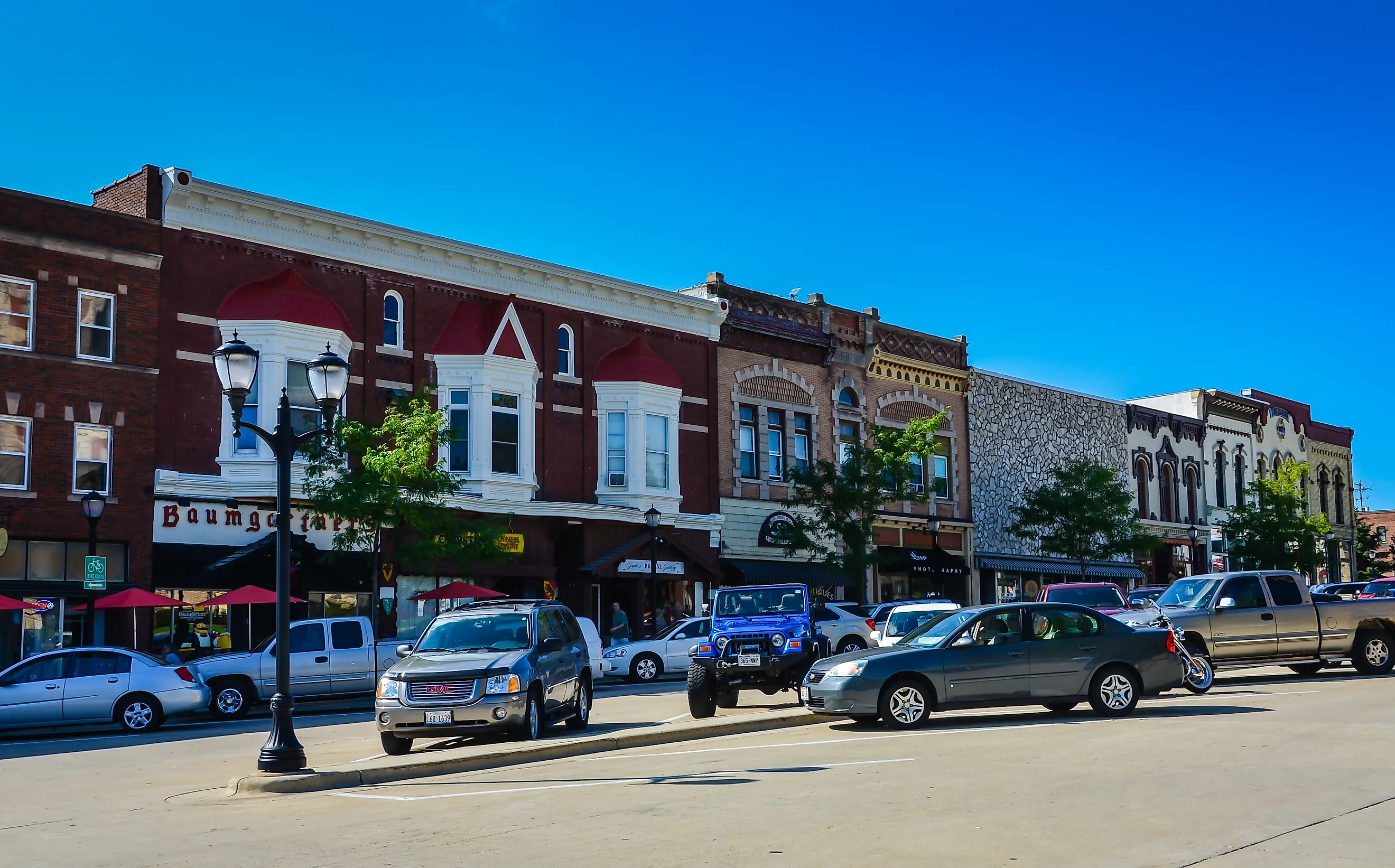
Monroe still runs on cheese. The Green County seat has held Cheese Days on its downtown square every other September since 1914. The three-day festival brings Swiss music, yodeling, cheese-making demonstrations, and enough Limburger sandwiches to send you home smelling like the courthouse basement. The National Historic Cheesemaking Center Museum on 21st Street runs interactive exhibits on the Swiss immigrant cheesemakers who built Wisconsin's dairy industry, and the restored Imobersteg cheese factory on-site still shows the original process. Baumgartner's Cheese Store and Tavern on 17th Avenue has poured beer and made sandwiches since the 1930s. Its Limburger sandwich, made with cheese from a factory just outside town, is the town's dare and its identity in one. Minhas Craft Brewery on 14th Avenue traces its site back to 1845 as the Blumer Brewery, making it the second-oldest continuously operating brewery in the country after Yuengling. Tours end in the tasting room and a small on-site museum of brewing memorabilia.
Port Washington

Port Washington sits about 28 miles up Lake Michigan from Milwaukee and hosts Fish Day, billed as the world's largest outdoor fish fry. The event has run every July since 1965. It brings fried perch by the plate, live music, a parade, and a carnival down to the harbor. The 1860 Light Station Museum above the harbor preserves the keeper's home as the Lewis family kept it. The reconstructed tower next door climbs to a view over the whole harbor and the shoreline north. Angry Fin Charter Fishing books trips out of the marina for salmon and lake trout most of the year. When the boats come back, Port Washington North Beach Park handles the shore side with a sandy swim beach, volleyball courts, and open lawn along the lake. Schooner Pub on the marina keeps a deck for the sunset return of the charter fleet with burgers, wings, and rotating Wisconsin drafts.
Algoma

Algoma calls itself Wisconsin's Trout and Salmon Capital and runs a charter fleet to back it up. Boats leave the harbor most of the fishing season for Chinook salmon, coho, rainbow trout, and brown trout out on Lake Michigan. Crescent Beach runs three-quarters of a mile along the shore in front of downtown, and its half-mile boardwalk of recycled decking earned a top-ten ranking from the Rails-to-Trails Conservancy. The Algoma Pierhead Lighthouse at the end of the breakwater has held its station since 1851, painted the standing bright red that draws photographers on any calm morning. Von Stiehl Winery on Navarino Street is Wisconsin's oldest licensed winery. It ages fruit wines, reds, whites, and dessert bottles in three limestone cellars under a Civil War-era building. The Ahnapee State Trail begins in Algoma and runs about 48 miles of crushed limestone through the Ahnapee River corridor toward Sturgeon Bay.
Lake Geneva

Lake Geneva has been a Chicago escape since the Great Chicago Fire of 1871 sent the city's wealthy families north to rebuild lakefront estates instead of ash. The Geneva Lake Shore Path runs 21 miles around the water and passes directly in front of the old Wrigley, Maytag, and Schwinn mansions on long-standing shoreline easements that predate the estates. Lake Geneva Cruise Line runs the U.S. Mailboat Tour out of the downtown pier, where a mail jumper still leaps on and off the moving boat at the private piers of lakeside houses without the boat ever stopping. Riviera Beach at the foot of Broad Street handles the swim side of the day with paddleboard and kayak rentals steps away. The Tristan Crist Magic Theatre on Broad Street runs illusions and audience work most nights of the week for a downtown that likes an indoor option after the lake closes for the season.
Fish Creek

Fish Creek is the front door to Peninsula State Park. The park's main entrance sits right at the north edge of the village. Its 3,776 acres carry hiking and biking trails, limestone bluffs, and the 10.2-mile Sunset Bike Route. The Eagle Bluff Lighthouse inside the park has stood on the bluff overlooking Green Bay since 1868, its keeper's quarters kept in the period pieces of the late 19th century for tours. Just off Peninsula Players Road, Peninsula Players Theatre bills itself as the oldest professional resident summer theater in the United States, running since 1935 in an open-sided pavilion with the sun setting behind the stage. Drinks come from the Luna Bar in a cedar-forest lobby before the curtain. If you land on a Tuesday in July or August, the free Tuesday Concerts in Noble Square play beside the 1875 Alexander Noble House, with Door County regulars like the Creek Pickers on the program.
Sister Bay

Sister Bay put goats on a sod roof in 1973, and Al Johnson's Swedish Restaurant still turns them out to graze above diners eating Swedish pancakes with lingonberries and potato sausage. The idea came from a 1969 National Geographic story on Norwegian farmhouses, and it has since produced one of Wisconsin's most photographed magnets. Waterfront Park sits below the marina and gives Sister Bay a wide public shorefront on Green Bay. A sandy swim beach, kayak launch, picnic lawns, and free Wednesday Concerts through summer all sit on the water. Sail Door County runs excursions on traditional wooden sloops from the marina. Sunset cruises book heavy in July and August. Longer sails aim for the Sister Islands, the pair of islands off the point that gave the village its name. The event calendar keeps running past Labor Day with Marina Fest, Fall Fest in October, and the Door County Christkindlmarkt in December when the downtown chalets go up.
Eleven Ways To Land In Wisconsin
Eleven towns cover a lot of Wisconsin without covering all of it. Some lean on the water. Others lean on cheese, wine, or Swiss identity. What they share is that they were built for reasons that still hold, fishing harbors that still fish and cheese factories that still make cheese. Pick the one whose reason works for you.