The Highest Towns in the Continental US
Among the remarkable geographic diversity of the United States are some towns that truly reach for the sky with their high-altitude locations. Located throughout the Rocky Mountains, these places tell distinctive stories about their areas, from the mining booms and busts of the late 19th century to the snowy conditions and rugged terrain that continue to shape access, population, and local economies today. Here’s a closer look at the eight towns that sit at the highest elevations in the continental US.
Alma, Colorado (10,578 feet above sea level)

Signpost for Alma Colorado. Editorial credit: Wikimedia Commons
The highest incorporated town in the entire US, at over two miles above sea level, Alma sits in the Rocky Mountains south of the well-known ski destination of Breckenridge. Only around 300 people call the town home, the remnants of a bustling mining community that sprang up in the area during the 19th century. As mining declined, the area did as well, settling into its current status as a small tourist stop and jumping-off point for nearby outdoor recreation spots, such as the Beaver Creek Trail. Its elevation also limits development through long winters, heavy snowfall, and a short construction season.
Montezuma, Colorado (10,300 feet above sea level)

The historic schoolhouse in Montezuma in the Colorado Rockies. Editorial credit: Wikimedia Commons
Off the beaten path in the Rockies west of Denver, Montezuma was also founded by settlers seeking the area’s rich mineral deposits. By the 1880s, it had grown into a thriving community with over 700 people and more than 100 buildings, including a post office, newspaper, hotels, saloons, and brothels. Today, it has shrunk to just a few streets and fewer than 100 residents, with nearby Keystone providing most amenities and services. Those who remain live amid historic landmarks such as the Old Montezuma Schoolhouse, while heavy snow, limited services, and the narrow mountain road into town help explain why the community has remained so small.
Blue River, Colorado (10,036 feet above sea level)

Sign for the town of Blue River, Colorado. Editorial credit: Wikimedia Commons
The final continental US town above 10,000 feet in elevation is Blue River. Unlike the many mining towns that sit at sky-high altitudes, Blue River exists primarily as a bedroom community and residential-focused expansion of Breckenridge, which lies just to the north. Homes span the narrow canyon on either side of Highway 9, which runs the length of town. Although there is little to no commercial activity, it continues to support a population of around 900, largely through access to jobs and services in the thriving ski communities nearby. Its narrow geography and high elevation leave limited room for a traditional downtown or large-scale development.
Fairplay, Colorado (9,953 feet above sea level)

View of Fairplay, Colorado, from Red Hill Pass.
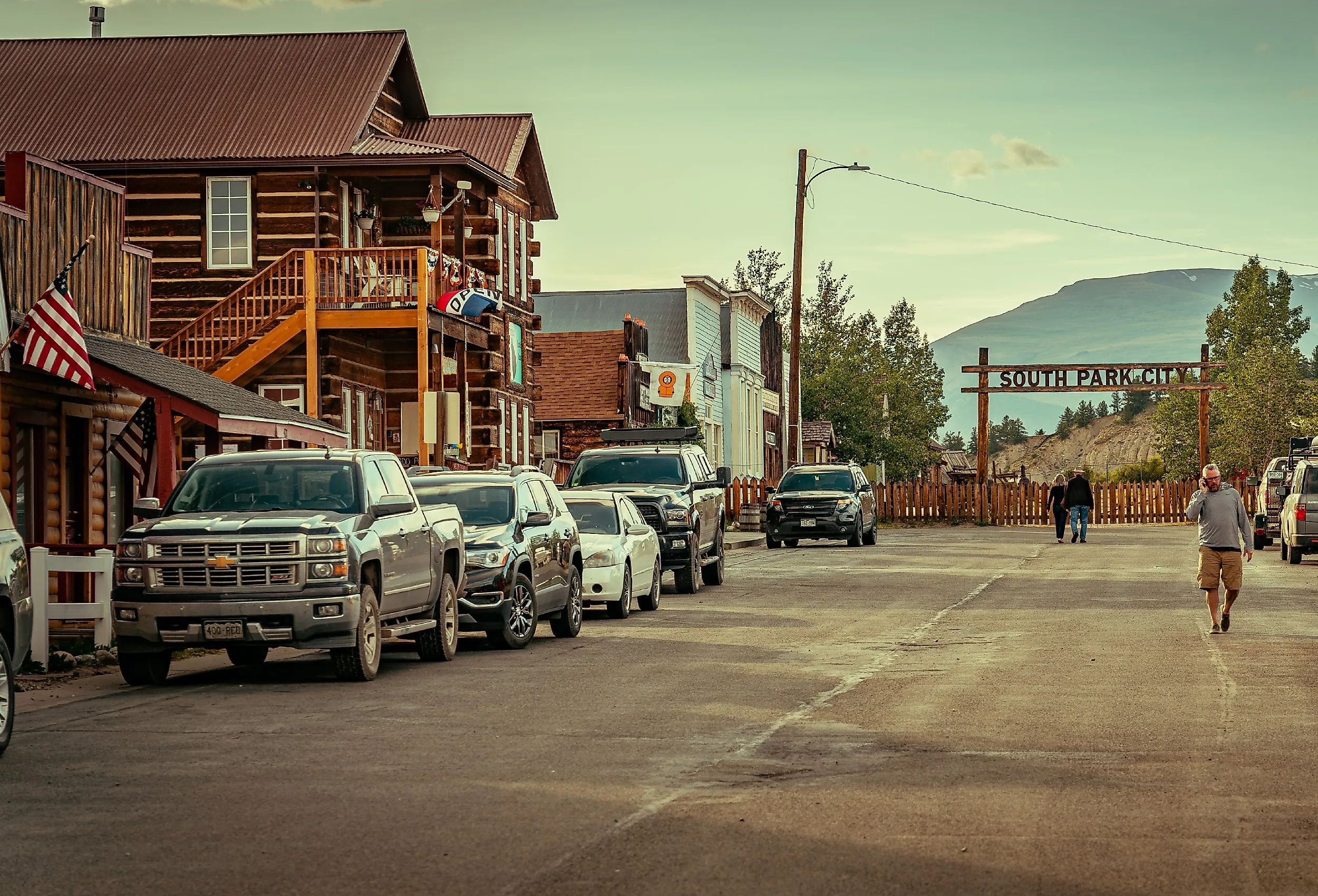
Fairplay was founded in the spirit of its name, which was meant to suggest a less greedy and more equitable alternative to nearby mining camps of the late 1800s. Although it began as another mining settlement, Fairplay gradually became an important center for trade, transportation, and government in the surrounding region. Its position on comparatively open terrain helped it develop into a regional hub despite sitting just below 10,000 feet.
It remains the seat of Park County and hosts attractions such as South Park City Museum, an open-air collection of restored historic buildings that preserves the area’s mining-era past. A variety of restaurants, bars, shops, and other businesses also gives Fairplay more everyday amenities than many of the smaller towns on this list.
Brian Head, Utah (9,800 feet above sea level)

Brian Head, Utah
“Small town” takes on a new meaning in one of the tiniest communities on this high-elevation list. Fewer than 200 full-time residents call this remote southwestern Utah town home. Although the area has been settled since the 1800s, it only truly developed in the 1960s with the construction of Brian Head Resort, which took advantage of the high plateau’s heavy snowfall and mountainous terrain.
The town was later incorporated in 1975 to provide locals with some element of control over the development and character of the area. Today, it remains a tourist haven whose economy depends directly on its elevation, while many workers commute from lower communities rather than living year-round at 9,800 feet.
Victor, Colorado (9,780 feet above sea level)

In the shadow of Pikes Peak is Victor, a Gold Rush-era community that developed into a substantial mining town before population declines took hold. Over 500 gold mines once operated in the surrounding district as part of the larger Cripple Creek Gold Rush, leading to rail and road connections to larger nearby communities like Colorado Springs. Its high location made sense when miners needed to live near the ore, but it became far less practical once mining employment disappeared.
Although the town’s small population and vacant spaces among historic buildings speak to its past prominence, Victor remains a tourist-friendly mountain stop, including at spots like the historic Victor Hotel and Victor Lowell Thomas Museum.
Ophir, Colorado (9,695 feet above sea level)

It’s hard to get more remote, even in Colorado, than Ophir. Squeezed into a narrow, steep-sided valley in the southwestern corner of the state, it is yet another example of how potentially lucrative mining opportunities could draw residents to even high-altitude destinations. In its heyday, the area thrived from its mineral wealth, although declining fortunes and natural disasters forced many to leave by the early 20th century.
Today, it perseveres with a minuscule residential community of around 180 people and no businesses or other commercial activity, with the nearest substantial services nearly 30 minutes away in Telluride. Heavy snow, avalanche hazards, limited buildable land, and the isolated road into town continue to restrict its size and accessibility.
Mountain Village, Colorado (9,545 feet above sea level)

View from Mountain Village backyard.
Unlike the mining settlements that dominate this list, Mountain Village is a relatively modern town built around the ski industry. Development began above Telluride during the late 20th century, when resort planners expanded onto the higher slopes surrounding the existing ski area. The town was incorporated in 1995 and now includes hotels, vacation homes, restaurants, shops, and ski-in, ski-out development connected to Telluride by a free gondola. Mountain Village’s altitude is central to its economy, providing reliable winter conditions and direct mountain access, although the resort-focused housing market and rugged terrain make it an expensive and unusual place to live year-round.
High-Altitude American Towns
These towns did not reach such extreme elevations by accident. Most developed because miners needed to live close to valuable deposits, while newer communities such as Brian Head, Blue River, and Mountain Village grew because high terrain offered snow, scenery, and access to outdoor recreation. Their altitude continues to shape nearly every aspect of life, from winter travel and building costs to population growth and the types of jobs available. Some have developed into functioning regional or resort centers, while others remain only a few streets surrounded by mountains.