11 Best Small Towns In Montana For A Crowd-Free Summer
Ten thousand cars a day pour through West Yellowstone in July while a silver boomtown sits nearly empty above Philipsburg. That gap is the whole point of a Montana summer done right. The towns here trade crowds for room to breathe. You can watch snow geese lift off a lake near Choteau or dig your own amethyst outside Dillon without waiting in a single line. Summer is when these places come awake with fish, fossils, and Friday-night festivals.
Philipsburg

A four-mile drive southeast of Philipsburg climbs 1,280 feet up a narrow, high-clearance road to Granite, where the richest silver mine on earth once ran three shifts a day. Today the Miners Union Hall stands in ruins and the superintendent's house still holds its roof, both preserved as Granite Ghost Town State Park. In the 1890s this hillside carried more than 3,000 people, plus 18 saloons and a hospital. The silver panic of 1893 emptied it in a matter of weeks.
Down in town, Broadway keeps the boom era intact with painted storefronts from the 1800s and the kind of walkable main street summer travelers pass through and stay in. Gem Mountain sells buckets of sapphire gravel to wash and sort, so you can leave with a stone you found yourself.
Whitehall

The best thing to do near Whitehall happens underground. Roughly 19 miles east of town, Lewis and Clark Caverns became Montana's first state park in 1937, and its limestone rooms stay a constant 50 degrees even in August. Guided tours run only from May through September, so summer is the window. The Corps of Discovery camped within a mile of the caves in 1805 and never knew they were there.
The town itself started as a Northern Pacific and Montana Railroad depot in 1889 and still carries that easy rail-stop feel. The Jefferson River runs past its edge, and three blue-ribbon trout rivers sit within an hour: the Beaverhead, the Big Hole, and the Madison. Twelve outdoor murals scattered around town trace the Lewis and Clark expedition through the valley.
Livingston

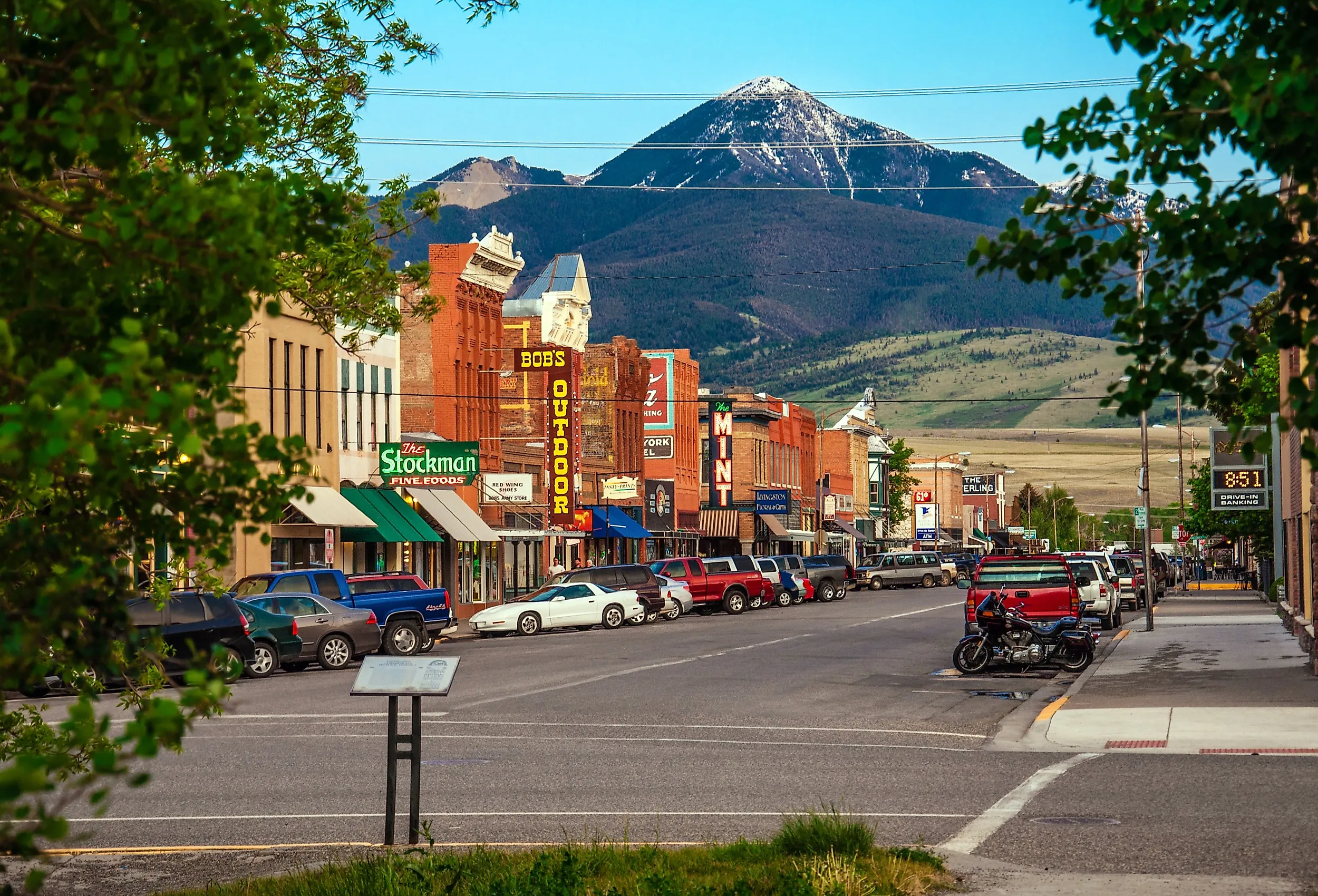
Livingston was the original gateway to Yellowstone before the crowds shifted west, and it wears that history well. The park's year-round entrance at Gardiner sits less than 60 miles south, yet downtown Livingston stays quiet enough to actually enjoy. Four mountain ranges ring the town: the Bridgers, Gallatins, Crazies, and Absarokas. The preserved 1880s brick blocks still house working saloons where video poker and keno machines hum in the corners.
Each July, the Livingston Depot Center hosts its Festival of the Arts, drawing more than 100 regional artists and craftspeople to Depot Rotary Park over the Fourth of July weekend. Painters, photographers, and food vendors fill the grounds while the Yellowstone River rolls past a few blocks away, crowd-free at the water's edge.
Darby

Fans of the show Yellowstone know the Dutton ranch house on sight, and it stands a mile south of Darby at the Chief Joseph Ranch, a working 2,500-acre spread that rents cabins when cameras are not rolling. The town anchoring the southern tip of the Bitterroot Valley was established in 1888 and grew up on logging and ranching before outdoor recreation took over. It now serves as the southern gateway to the Bitterroot National Forest.
Just west, Lake Como sits below the peaks with a sand beach and a 7-mile loop trail around the water. The Bitterroot River and its two forks draw anglers for some of the best trout fishing in the country, and summer rodeos keep the western streak alive.
Choteau

A discovery in the badlands near Choteau in 1978 rewrote what science believed about dinosaurs. Amateur fossil hunters found nests of baby duck-billed dinosaurs at a site now called Egg Mountain, the first proof anywhere that dinosaurs cared for their young. The species was named Maiasaura, "good mother lizard," and became Montana's state fossil in 1985. The Old Trail Museum on the north end of town displays a life-size model and casts from the dig.
Eight miles south, Freezeout Lake fills with tens of thousands of snow geese during the spring and fall migrations, one of the great wildlife spectacles on the Rocky Mountain Front. West of town, the Bob Marshall Wilderness Complex spreads across more than 1.5 million acres on both sides of the Continental Divide and holds the densest grizzly population in the lower 48. You reach its interior on foot or horseback, and no other way.
Lewistown

Croatian stonemasons built downtown Lewistown out of local sandstone, earning it the nickname "City of Stone" and leaving storefronts still standing at the geographic center of Montana. Five island mountain ranges ring the town, with the Judith Mountains rising behind Main Street. It is an easy place to browse on foot with the peaks always in view.
Big Spring Creek runs straight through Lewistown and ranks among the state's finest trout water, fed by one of the largest freshwater springs in the country. For a slower ride, the Charlie Russell Chew-Choo dinner train rolls out on summer evenings, crossing tall trestles and passing through a half-mile tunnel over a four-hour prime-rib run.
Ronan

The Mission Mountains rise like a wall east of Ronan, an agricultural town of just under 2,000 people on the Flathead Reservation. The peaks catch the light over the valley's hayfields, and the trailheads and wildlife-viewing spots nearby stay quiet all summer. This is farm country first, with the tourist traffic drawn off toward Flathead Lake to the north.
Near the summer solstice, the Lake County Fairgrounds host the Ronan Summer Solstice Brew and Music Festival, an evening of food trucks, craft beer, and live music that marks the season's start. Lake Mary Ronan and Kicking Horse Reservoir sit close by for a day of boating or a cast off the bank.
Big Timber

A sheep rancher named Jacob Halverson bet $20,000 on Big Timber's future in 1890 and built the Grand Hotel, a red-brick landmark on McLeod Street that still serves dinner in its restored dining room and pours drinks in an 1890 saloon. The ranching town sits where the Yellowstone and Boulder rivers meet, framed by the Crazy Mountains to the north and the Absarokas to the south.
South of town on Route 298, the Boulder River disappears underground at Natural Bridge Falls, a roughly 100-foot drop reachable by a paved, accessible trail in the Custer Gallatin National Forest. Anglers work the Boulder and the Yellowstone in near solitude, and the Crazies offer some of the most remote hiking in the state thanks to their scarce access points.
Dillon

For a small fee outside Dillon, you can carry a shovel and screen into the Pioneer Mountains backcountry, dig for smoky quartz and purple amethyst, and keep whatever you unearth. The Beaverhead Valley town grew as a shipping hub during the 1880s gold rush and still runs on a genuine working-Montana rhythm, with historic brick blocks downtown, a Patagonia outlet, and Atomic 79 for boots and western gear.
The Beaverhead-Deerlodge National Forest wraps the area, the largest national forest in Montana at 3.3 million acres, laced with trails that rarely see a summer crowd. The Beaverhead River threads the valley and holds a strong reputation among fly-fishers.
Anaconda

The tallest surviving masonry structure in the world stands over Anaconda, and most travelers drive right past it. The Anaconda smelter stack rises 585 feet, 30 feet taller than the Washington Monument, built in 1919 from nearly 2.5 million bricks and now preserved as Anaconda Smoke Stack State Park. You view it from a distance, since the old smelter grounds are still being cleaned up.
The recreation around town rewards a longer stay. Georgetown Lake draws anglers and boaters, and the Old Works Golf Course, designed by Jack Nicklaus on the reclaimed smelter site, uses black slag for its bunkers. The Anaconda-Pintler Wilderness offers high-country trails, and a short drive reaches Lost Creek State Park, where a 150-foot paved path leads to the 50-foot Lost Creek Falls.
Ekalaka

Ekalaka sits so far into Montana's southeastern corner that the road simply ends there, which is how it earned the name "The End of the Trail." For travelers who want genuine solitude, this is as remote as a Montana summer gets, with almost no tourist presence at all.
The reason to make the drive is the Carter County Museum, Montana's first county museum and the first in the state to display dinosaur fossils, including a full Anatotitan mount pulled from the surrounding badlands. A short drive out, Medicine Rocks State Park holds pine-crested sandstone formations sculpted by wind, long a sacred place for Native American tribes. You can camp and hike among them with the whole landscape nearly to yourself.
Where a Montana Summer Slows Down
The busiest corners of Montana concentrate their crowds in a handful of park gateways, which leaves most of the state wide open in July and August. A silver ghost town above Philipsburg, a dinosaur dig near Choteau, and a dinner train out of Lewistown all deliver a fuller day than a packed resort ever could. These towns ask for a little more driving and give back the rare thing a summer trip usually loses, which is space.