The State Parks With The Best Freshwater Swimming
When summer heat settles over the United States, some of the best places to cool off are nowhere near the ocean. State parks hold everything from turquoise mountain lakes and Great Lakes surf to spring-fed pools so clear you can watch fish pass beneath your feet.
At Nevada's Sand Harbor, swimmers step into Lake Tahoe beneath a granite shoreline. Balmorhea State Park offers a vast desert pool fed by millions of gallons of spring water each day. Places like Priest Lake and Flathead Lake trade warm water for mountain scenery and exceptional clarity. Some of these parks are built around broad sandy beaches; others are best for snorkeling, diving, floating, or plunging into cold water on a scorching afternoon.
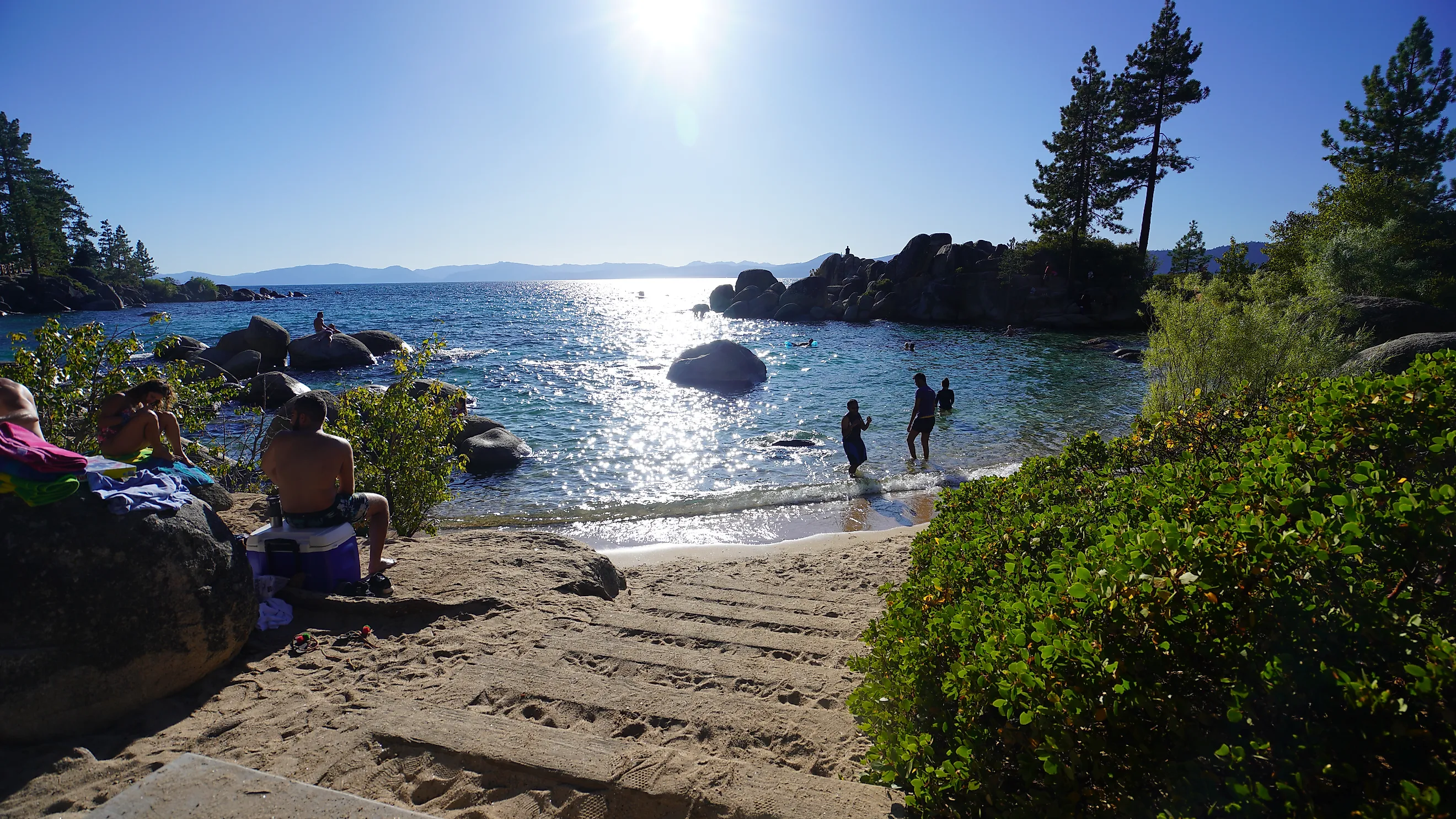
Sand Harbor, Lake Tahoe Nevada State Park, Nevada

The draw at Sand Harbor is water you can see through. Lake Tahoe's clarity, measured near the middle of the lake, averaged about 62 feet in the most recent yearly reading, and near the beach the granite bottom shows through pale blue and turquoise shallows. Swimmers and scuba divers wade in from broad, gently sloping sand broken up by rocky points and small coves. Those coves mean both open beach and sheltered pockets of calm water.
Tahoe sits more than 6,000 feet up, so even in July the water stays cold. A beach patrol works the shoreline in season. Summer crowds run heavy enough that a car often needs an advance entry reservation, so it is worth booking before you drive up.
Devils Fork State Park, South Carolina

Devils Fork is the only public way onto Lake Jocassee, a 7,565-acre reservoir walled in by the protected slopes of the Jocassee Gorges. Cold mountain streams and a string of waterfalls feed it, so its deep basin stays cooler than most reservoirs in the state. The water runs clear enough that divers treat it as one of the best sites in the Southeast.
There is no roped-off beach and no lifeguard here, so swimmers get in from open shoreline and take the lake on their own terms. Much of that shoreline stays forested, because the land around Jocassee never got developed. Divers and snorkelers work the clearer rocky stretches, while swimmers pick their own coves.
Ichetucknee Springs State Park, Florida

The north entrance has two spring pools that swim very differently. The main headspring is broad and calm, good for an easy float. Blue Hole, which cave divers call the Jug, is deeper and stronger, and it suits confident swimmers. Both sit at a steady 72 degrees all year, because the water comes straight up out of the Floridan aquifer.
Blue Hole is the standout. About 67 million gallons a day pour up through it, and the outflow is strong enough to push a swimmer back toward the surface. Roughly 40 feet down, the vent opens into a flooded cave that only certified divers may enter. Swimmers stay in the marked spring pools rather than the Ichetucknee River, which keeps foot traffic off the submerged grass beds downstream.
Priest Lake State Park, Idaho

Priest Lake stretches 19 miles under the Selkirk Mountains, with cedar, fir, and tamarack forest growing right down to much of the shore. The park's developed swimming beaches sit on water fed by clear streams off the surrounding high country. Indian Creek is the main hub, with beach access, camping, restrooms, and boat facilities nearby.
Farther north, the Lionhead unit has a quieter beach near the foot of the Selkirks. This far north, the lake stays cold well into summer. The comfortable swimming window is shorter here than at almost any other park on this list.
Balmorhea State Park, Texas

Balmorhea is built around a single spring-fed pool, billed as the largest of its kind in the world, in the middle of the West Texas desert. San Solomon Springs push more than 15 million gallons through it every day. The pool covers 1.3 acres, holds about 3.5 million gallons, and drops to 25 feet, with room to float in the shallows or swim over the deep end.
The water holds between 72 and 76 degrees year-round and gets no chlorine. Fish, turtles, and other creatures live in it alongside swimmers, and scuba divers work the deeper sections. All of this sits in bone-dry Chihuahuan Desert country, where the constant spring flow keeps an aquatic habitat alive that has nothing like it nearby.
Devil's Lake State Park, Wisconsin

Devil's Lake sits in a gap in the Baraboo Range, ringed by quartzite cliffs that stand about 500 feet over the water. Swimmers here look up at bare rock faces instead of an open horizon. The 360-acre lake is low in nutrients, which is part of why the water stays relatively clear.
About 3,300 feet of swimming beach splits between the north and south ends of the lake. Both ends have restrooms and day-use facilities, and North Shore Beach adds an access mat and a beach wheelchair. There are no lifeguards, and the beaches sit right beside some of the busiest trailheads in the park, including the climbs up the East and West bluffs.
Warren Dunes State Park, Michigan

Warren Dunes has three miles of Lake Michigan sand, with a buoyed swim area next to the main day-use beach. The lake is big enough for real waves and an open horizon, so the swimming feels more like a coast than an inland pond. Behind the beach, wind-built dunes rise as high as 260 feet.
Wind can change the water fast. The state uses colored beach flags to mark hazards, and swimming may close during dangerous waves or currents. Three accessible walkways cross the sand, and the park keeps beach and aquatic wheelchairs on hand. Swimmers can step off the beach and onto the steep dune slopes within a few minutes.
Bear Lake State Park, Utah

Bear Lake turns an unusual blue-green, the result of suspended calcium carbonate scattering light through the water. The lake runs about 18 miles along the Utah-Idaho line and reaches 208 feet deep. On the Utah side, Rendezvous Beach is the easiest place to swim, with a wide sandy shore and a shallow, gradual entry.
At close to 5,900 feet, the water stays cold early in the season. Rendezvous Beach is a different animal from the rockier Eastside units, which work better for boating than for a beach swim. The shallow grade means swimmers can wade a long way out before the bottom drops off.
Lake Ouachita State Park, Arkansas

Lake Ouachita spreads across roughly 40,000 acres in the Ouachita Mountains, broken up by islands, rocky points, and submerged structure rather than one open sheet of water. The state park's swimming beach sits on the eastern side. The water is clear enough that snorkelers and scuba divers come for it, alongside ordinary swimmers.
Most of the shoreline is forest, not houses, with big stretches backing onto the Ouachita National Forest. Summer water here runs much warmer than at Tahoe, Flathead, or Priest Lake. The state park beach is the simplest place to get in, while divers and snorkelers head for the clearer rocky areas around the lake.
Flathead Lake State Park, Montana

Flathead Lake State Park is really a set of units scattered around the lake's shoreline, so the swimming changes a lot depending on which one you pick. West Shore has forested shore and open water made for swimming. Wayfarers is rockier, with low cliffs and long views across to the Swan Mountains.
Flathead is the largest natural freshwater lake west of the Mississippi River in the lower 48. At this size and depth, and this high in the Rockies, the lake stays cold most of the year, with summer the season to actually get in. Low nutrient levels mean the water reads clearer than warmer, richer lakes, and in places you can see down 20 feet or more.
Presque Isle State Park, Pennsylvania

Presque Isle has the only lake surf swimming in Pennsylvania, out on a sandy peninsula that curls into Lake Erie. Swimming is allowed only at the beaches that are open and guarded by lifeguards. Beach 6 comes with a big beach house and a busy day-use scene, while Beach 11 has shallower, calmer water that families with young kids tend to prefer.
Lake Erie builds genuine surf here, which is what sets it apart from a calm inland beach. Waves, currents, bacteria counts, and algal blooms all get monitored, and any of them can close a beach for the day. Several beaches have accessible routes, and the peninsula's long sand means far more room than the tight beaches at most inland Pennsylvania parks.
Lake James State Park, North Carolina

Swimming at Lake James centers on the Paddy's Creek Area, where a roughly 700-foot beach runs straight into the reservoir. The entry is gradual and sandy, backed by a bathhouse, restrooms, concessions, and picnic space. Sitting at the eastern foot of the Blue Ridge, the beach comes with mountain views but skips the icy water of higher-elevation lakes.
The swimming area is seasonal and takes up just one corner of a much bigger reservoir. Out past the marked zone, boats and paddlers use the rest of the lake heavily. The park concentrates beach use in that one defined spot, with facilities right behind the sand, which keeps swimmers clear of most of the boat traffic.
Franconia Notch State Park, New Hampshire

Echo Lake is the swimming spot inside Franconia Notch, a small mountain pool at 1,931 feet with Cannon Mountain on one side and the slopes below Mount Lafayette on the other. The White Mountains stand close on every side, so the peaks show from just about anywhere in the water. A developed beach fronts the swimming, and the park rents canoes, kayaks, and pedal boats through the summer.
The elevation and the northern weather keep the water cool and hold the swimming season to summer. Echo Lake Beach can hit capacity on hot days, and the day-use lot fills first on warm weekends. Getting there early is the difference between a swim and a turnaround at the gate.
Why These State Park Swimming Spots Stand Out
The through-line here is not one kind of water. It is that swimming is the reason to come, not a bonus. Some of these parks put you in spring water that holds one temperature all year. Others sit on the Great Lakes, where Presque Isle has real surf in place of a calm shoreline. Deep mountain reservoirs like Jocassee and Ouachita stay cold and clear under protected, mostly empty slopes. High-country lakes like Bear Lake and Flathead keep an icy edge into summer, with water clear enough to see straight down. Pick by the kind of day you want in the water.