8 Most Breathtaking Towns In Victoria
Beyond the suburban sprawl of its capital, Melbourne, the Australian state of Victoria’s geography shifts into volcanic plains, temperate rainforests, alpine valleys, and exposed coastal formations. These environmental contrasts are reflected in the state’s smaller towns, many of which developed around specific industries such as gold mining, agriculture, or maritime trade. From inland goldfields and granite escarpments to coastal ports and river valleys visible from city streets, each of the eight most breathtaking towns in Victoria revels in the relationship between jaw-dropping views and inviting neighborhoods.
Beechworth

Driven by the 1850s gold rush in Australia, Beechworth’s development was uniquely defined by its granite foundation, resulting in a lasting collection of stone architecture that still houses the town's modern shops and galleries. Significant colonial sites, such as the 1864 Beechworth Gaol, notable for once holding bushranger Ned Kelly, complement the surrounding Beechworth Historic Park, where walking tracks lead to Woolshed Falls and surviving mining relics like water races. Today, the town balances this structured heritage with artisanal industries like regional honey production, maintaining a landscape that hosts walking tracks and surrounding bushland directly accessible from town’s streets.
Walhalla

Set deep within a narrow valley in the Gippsland region, Walhalla developed around gold mining in the 19th century. At its peak, the town supported thousands of residents, but today its permanent population is quite small (35 local residents as of 2021). The geography has limited the town’s spread, with steep slopes rising immediately from the valley floor and halting expansion.
This constraint influenced the placement of infrastructure, most notably the Walhalla Cricket Ground, which was carved into a flattened section of hillside above the town. The Long Tunnel Extended Gold Mine reflects the scale of the mining operations that once sustained the community, with guided tours explaining the extraction of gold from quartz reefs deep underground.
Many of the buildings along Walhalla’s main street have been reconstructed or restored to reflect their original forms, maintaining a consistent historical character. The combination of steep terrain and preserved structures, in tandem with limited modern development makes the town one of the most geographically distinct former mining settlements in Victoria.
Port Fairy

Located at the mouth of the Moyne River, Port Fairy developed as a working port and whaling station during the 19th century. Its built environment reflects this history, with numerous bluestone and timber structures still standing throughout the town. These buildings, many of which have been repurposed, contribute to a cohesive architectural character.
Griffiths Island lies just offshore and connects to the mainland by a pedestrian causeway. The island supports a seasonal population of short-tailed shearwaters, as well as a historic lighthouse. The surrounding coastal environment is shaped by exposure to the Southern Ocean, with strong winds and salt spray influencing both vegetation and construction methods. The Port Fairy Maritime and Shipwreck Heritage Walk links several key historical sites, providing context for the town’s development and its connection to shipping routes.
Daylesford

Daylesford is anchored in its high concentration of natural mineral springs that have sustained its reputation as a premier spa and wellness destination for over a century. The volcanic landscape is further highlighted by the Wombat Hill Botanical Gardens, situated atop an extinct volcano, and the nearby Hepburn Mineral Springs Reserve, where visitors still access naturally carbonated water. The commercial and crafts scene is perhaps best exemplified by the vintage collections at Mill Markets and its curated retail scene.
Bright

Bright is known for its seasonal tree plantings, particularly deciduous species that change color in autumn. These plantings line streets and public spaces, creating a noticeable aesthetic shift in the town throughout the year. The surrounding region supports activities such as cycling, hiking, and access to nearby beautiful alpine areas.
Situated along the Ovens River, Bright serves as a gateway to the Victorian Alps. The river runs directly through the town, shaping both its layout and recreational use. Sections of the riverbank have been adapted into walking paths, including the Canyon Walk, which follows a stretch of water bordered by exposed rock formations influenced by both natural erosion and historical mining activity.
Apex Lookout, located above the town, provides a spectacular view of the valley and the surrounding ranges. From this vantage point, Bright’s position within a broader alpine landscape becomes more apparent, with dense vegetation contrasting against the higher elevations of the Victorian Alps.
Marysville

Marysville was heavily impacted by the 2009 Black Saturday bushfires, which resulted in widespread destruction across the town. The subsequent rebuilding process has produced a mix of contemporary structures set within a regenerating forest environment. This contrast between new construction and established natural surroundings defines much of the town’s resilient character.
Steavenson Falls, located just outside the town, is one of the tallest waterfalls in Victoria and is accessible via a short walking track. The site includes viewing platforms that allow for clear observation of the falls, which are also illuminated at night. Bruno’s Art & Sculpture Garden offers a different type of attraction, with a large collection of sculptures arranged within a manicured landscape.
Marysville’s redevelopment has incorporated public spaces, walking paths, and community facilities, reflecting a deliberate approach to rebuilding in a high-risk fire zone. The town’s layout and infrastructure now balance accessibility with environmental considerations.
Queenscliff

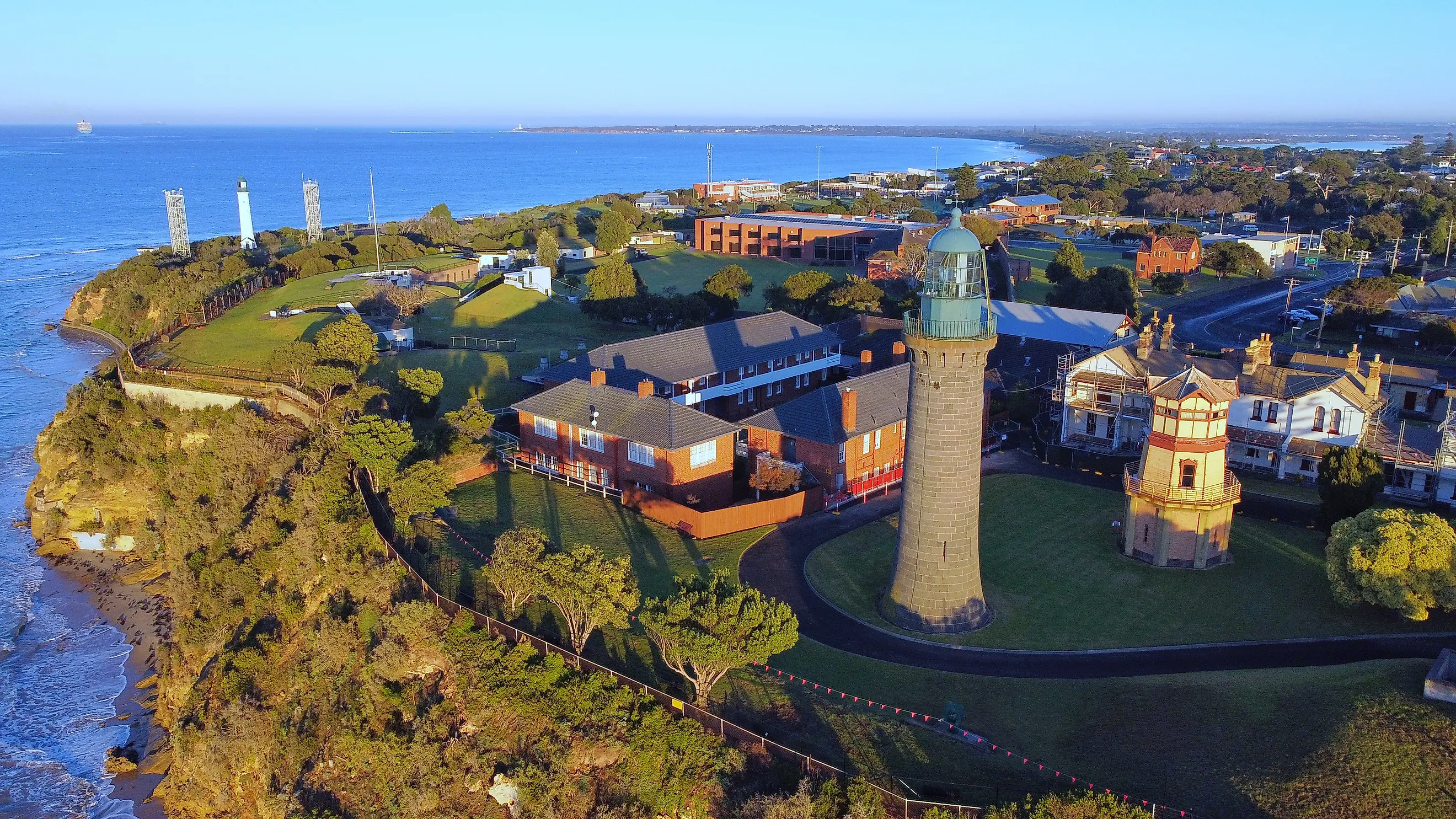
Located at the entrance to Port Phillip Bay, Queenscliff evolved as a vital maritime hub and military stronghold. The late 19th-century Fort Queenscliff remains a centerpiece of this heritage, preserving coastal defense structures designed to protect the bay, while the town’s wide streets and prominent 1880s landmarks, such as the Vue Grand Hotel, maintain a consistent and grand architectural identity.
The region's character is further defined by the Queenscliff-Sorrento Ferry transit across "the Rip," a stretch of water where the bay meets the open ocean. Known for its powerful tidal currents, this natural feature has historically dictated maritime navigation and continues to serve as a dramatic backdrop to the town’s ongoing connection with the sea.
Halls Gap

Halls Gap is located within Grampians National Park, also known as Gariwerd, and is surrounded by sandstone mountain ranges. The town itself is relatively small, with a central strip of accommodation and services, but its proximity to natural features makes it a key access point for the park.
Walking tracks extend directly from the township into the surrounding ranges, including routes to lookouts such as the Pinnacle, where one may catch glimpses of local kangaroos and various bird species. This trail passes through rock formations like Silent Street, a narrow passage formed by large sandstone slabs.
Brambuk the National Park & Cultural Centre provides information on the cultural and historical significance of the area to the Jardwadjali and Djab Wurrung peoples. The building’s design draws from natural forms, and the site serves as an educational resource for visitors seeking a broader understanding of the region.
Across Victoria, these towns reveal how geography and history continue to shape smaller communities. Whether defined by mineral-rich ground, alpine rivers, or exposure to the Southern Ocean, each location reflects the conditions that led to its development. Here, built environments, from stone streetscapes to reconstructed town centers, remain closely tied to their natural origins. Taken together, they provide a cross-section of the state’s varied landscapes, settlements, industries, and long-term plans for preservation in the rugged wilds beyond Victoria’s major urban areas.