8 Coolest Towns In The Great Lakes For A Summer Vacation In 2026
Summer on the Great Lakes draws visitors to dune climbs, working fishing shanties, and car-free ferry islands. The shoreline runs through five lakes with quiet communities pairing beaches with festivals and waterfront trails. Bayfield celebrates its 150th anniversary in 2026. Tobermory pulls visitors with shipwrecks and turquoise waters. Kelleys Island combines Lake Erie scenery with the largest accessible glacial grooves in the world. For 2026, the eight Great Lakes towns ahead each handle the summer differently.
Saugatuck, Michigan

This Lake Michigan town is known as the Art Coast of Michigan with its established arts scene. The downtown district is lively, with locally owned boutiques, restaurants, and galleries. With over 30 businesses located on Butler and Culver Streets, you can tour galleries featuring local and regional arts and crafts. There is also plenty of outdoor activity available, starting with Oval Beach. The world-famous beach features a long shoreline framed by towering sand dunes, and has been consistently ranked among the best shorelines in the world.
To take in panoramic views of the lake, climb the steep steps at Mount Baldhead Park, situated on a 250-foot-tall sand dune located between the Kalamazoo River and Lake Michigan. For the summer of 2026, you can take in the highlight of the town's festival season, the Saugatuck Venetian Festival, in late July. Located on the Kalamazoo River waterfront, this decades-old festival features live music, food, and fireworks, and raises funds for local environmental and community projects. You can also explore the dunes in a narrated open-air dune buggy tour, or cruise along the water in a rented vintage boat.
Bayfield, Ontario

This village on Lake Huron is celebrating its 150th (sesquicentennial) anniversary in the summer of 2026. There will be several community projects to celebrate this anniversary, including a street party on June 13. The Bayfield Fair predates the village by 20 years and is an annual agricultural fair, with plenty of exhibits, displays, and food trucks. Throughout the summer, there will be concerts and performances at Bayfield Town Hall, plus outdoor concerts at Pioneer Park.
The center of the historic downtown, Main Street, is a walkable commercial district with local shops, galleries, and historical buildings such as the Little Inn of Bayfield, built in 1847. Originally a stop on the Sarnia-Goderich stagecoach line, the inn is the oldest continually operating inn in Ontario. To take in the beach, Pioneer Park overlooks the Lake Huron shoreline, situated on the bluffs. There is a large wooden staircase that leads directly to the beach. Pier Beach, the main beach in the village, has soft sand and clear water that is well suited for swimming.
Kelleys Island, Ohio

This Lake Erie island is a 20-minute ferry ride from Sandusky, Ohio. The island has state parks and Victorian bed-and-breakfasts. An auto-ferry service is also available from Marblehead, Ohio. If you do not have a car, you can rent golf carts or electric bikes for more accessible travel throughout the island. Downtown Kelleys Island is the main commercial strip, with local shops, mini-golf, and restaurants and pubs featuring freshly caught Lake Erie perch. Held every July, Island Fest is a major festival on the island, featuring parades, crafts, street parties, fireworks, and food.
For a deep sense of history, the Glacial Grooves State Memorial holds the largest accessible glacial grooves in the world. Carved into limestone bedrock, they were produced 18,000 years ago by the Laurentide Ice Sheet. The grooves, or troughs, measure 400 feet long, 35 feet wide, and can be up to 15 feet deep. Inscription Rock is located on the southern shore of the island and is a historical monument known for its ancient Native American petroglyphs. A limestone boulder, it is covered in numerous prehistoric carvings depicting people and animals, and dates to between 1200 and 1600 CE.
Leland, Michigan

Located on the Leelanau Peninsula on Lake Michigan, this town is known for its historic Fishtown. One of Michigan's last working commercial fishing villages, the old wooden shanties are mostly home to boutiques and galleries, but some fisheries remain. Fishtown is now known for its seafood, particularly the Lake Michigan whitefish, and there are plenty of options for fish sandwiches, pate, and smoked fish. A short walk from Fishtown is Van's Beach, a clean area ideal for families and for looking for fossilized Petoskey stones along the shoreline.
Fishtown and Van's Beach also provide access to scenic hiking trails. The Leelanau Peninsula is wine country, and there are plenty of opportunities in town to sample local wines. The Wine & Food Festival takes place in June and features Michigan wines, food, and live music. Admission costs $35 in advance, and visitors get a commemorative wine glass and tasting tokens. A short drive from the Fishtown area, Sleeping Bear Dunes National Lakeshore features famous dunes and hiking trails.
Cobourg, Ontario

This town on the north shore of Lake Ontario is known for its lakefront ambiance, beach, and lively summer events, all while sitting less than a two-hour drive from Toronto. Cobourg's downtown core is rich in 19th-century architecture, with many of the buildings now housing locally owned shops, cafes, and restaurants. The heart of downtown Cobourg is Victoria Hall, a neoclassical building completed in 1860 that now houses offices, a concert hall, and the Art Gallery of Northumberland, a public art museum.
Cobourg Beach is recognized for its soft, white sand, unusual for Lake Ontario. The beach features a boardwalk, and at the Cobourg Marina, you can rent kayaks and paddleboards. Cobourg supports a busy schedule of summer events and festivals. The Cobourg Waterfront Festival runs from the end of June through July 1, Canada Day. The festival includes live bandshell music and a Canada Day parade, and takes place in Victoria Park and the waterfront. Later in August, the waterfront hosts the Northumberland Ribfest, three days of barbecue, music, and family events.
Mackinac Island, Michigan

Located on Lake Huron and accessible only by ferry, Mackinac Island is car-free. The island sits on the Straits of Mackinac, the waterway that connects Lake Huron and Lake Michigan and separates Michigan's Upper and Lower Peninsulas. The town is rich in historical architecture and is considered one of the best summer travel destinations. For history buffs, you can tour Fort Mackinac, an 18th-century British outpost built during the American Revolution and strategically crucial during the War of 1812.
Mackinac Island State Park has over 70 miles of trails and is home to rock formations such as Arch Rock and Skull Cave. Downtown Mackinac Island is centered on Main and Market Streets, and the district sits along the harbor. With a ban on cars, the downtown is naturally pedestrian-friendly. While bicycles are permitted, e-bikes are not. One pleasant aspect of downtown is the complete lack of chain stores and big-name brands. The island's main summer event is the Annual Lilac Festival in June, with tours, a Grand Parade, and the crowning of the Lilac Queen.
Ashland, Wisconsin

Ashland offers a mix of harbor-town character and the energy of an active downtown. Ashland sits at the end of Chequamegon Bay on Lake Superior and is well suited for visitors looking for summer adventure. As a gateway to several natural wonders, Ashland provides access to the Apostle Islands and Chequamegon-Nicolet National Forest. The Apostle Islands are 21 islands off the Bayfield Peninsula, known for their sandstone sea caves and ideal for exploration by kayak or on foot. The Chequamegon-Nicolet National Forest covers 1.5 million acres and spans multiple Wisconsin counties. The forest's woodlands and wetlands contain over 600 lakes, 2,000 miles of streams, and 800 miles of multi-use trails.
In town, take the Mural Walk through the historic downtown for the outdoor murals detailing Ashland's local history, and see why Ashland is called the Historic Mural Capital of Wisconsin. Summer annual events include the 4th of July Celebration, with a Main Street parade, and Ashland Bay Days in July, a celebration on Main Street, with live music, a car show, sidewalk sales, food, and a strongman competition.
Tobermory, Ontario

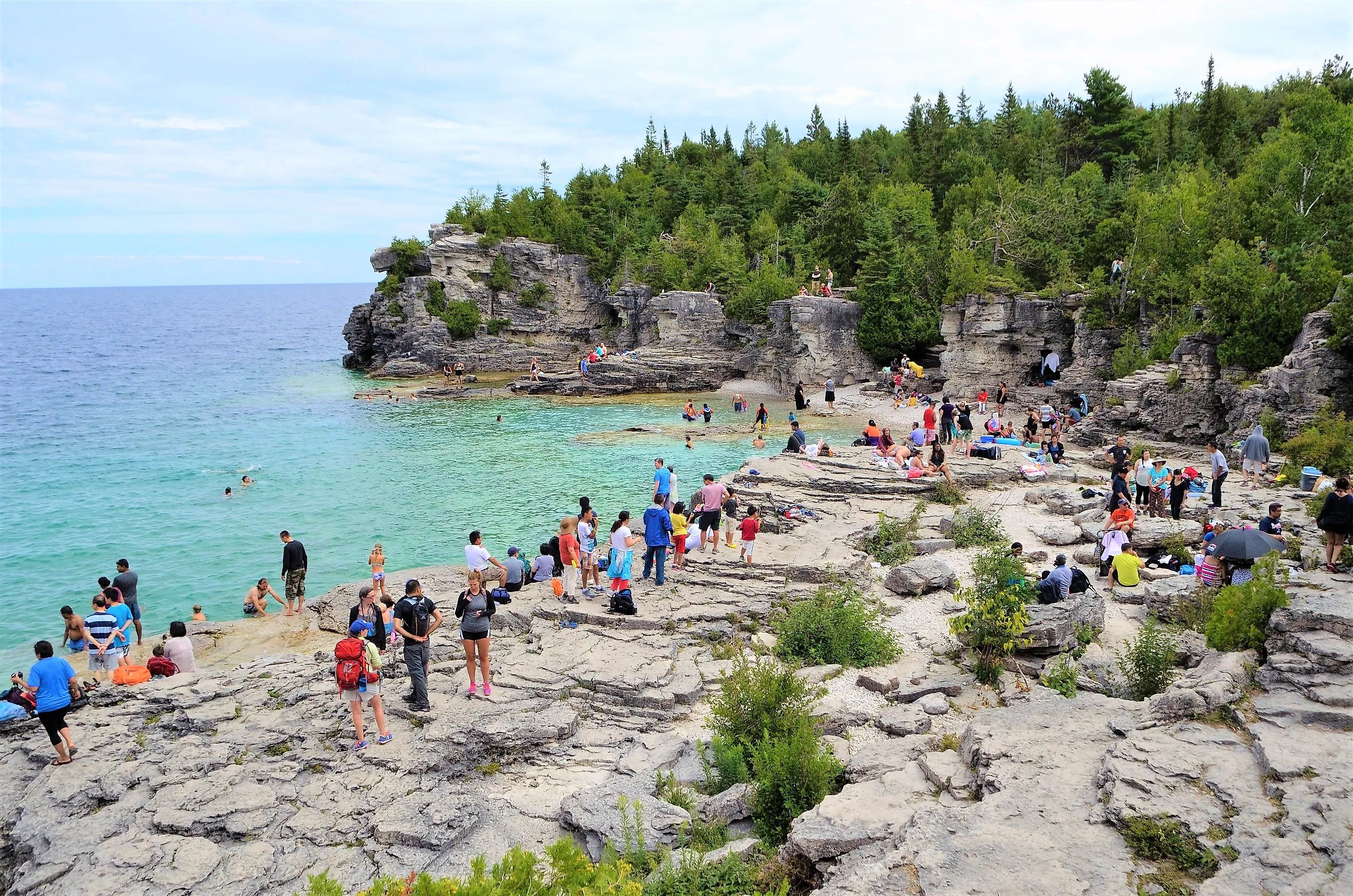
Tobermory, situated on the Bruce Peninsula between Georgian Bay and Lake Huron, is recognized for its clear water, limestone cliffs, and shipwrecks in the surrounding waters. The trails of Bruce Peninsula National Park lead to The Grotto, a limestone sea cave with turquoise water, set amid the peninsula's limestone cliffs. Flowerpot Island lies off the coast of Tobermory and is part of the Fathom Five National Marine Park, recognized for its natural sea stacks, caves, and rare plants, as well as a historic light station.
Explore shipwrecks in the marine park, including 19th-century schooners such as the Sweepstakes and City of Grand Rapids, either by glass-bottom boat or while snorkeling. Throughout the summer, the Tobermory All Seasons Market is open on Saturdays, with local artists, crafts, and food. Downtown Tobermory features Little Tub Harbour, plus locally owned shops and cafes, plus meals served on moored yachts. The northern terminus of the famous Bruce Trail is at Tobermory. The trail is over 550 miles from Queenston, Ontario, near Niagara Falls, and traces along the Niagara Escarpment, offering hiking through ancient forests and dramatic scenery.
Summer Getaways on the Great Lakes
As vacation destinations, the towns of the Great Lakes are a strong choice, offering natural scenery on five of the world's largest lakes. With the option of visiting the United States, Canada, or both, there are plenty of places on the lakes that exemplify coastal life. These are towns with deep historical stories to tell, sandy beaches, opportunities for excellent fishing, laid-back cottage life, or a more lively beach-town vibe. In 2026, these towns will have a great deal to offer as day trips or for longer stays.