8 Best Places To Live In The Great Lakes
Waterfront living usually means coastal prices. The Great Lakes keep changing that math. The eight cities below sit on four of the five lakes and cover the full range of what regional living looks like: an industrial Lake Erie port, an iron-ore harbor on Lake Superior, a cherry-growing peninsula on Lake Michigan, and a Canadian mill town across the river from its American twin. Average home values across these cities run well below the state and national lines, and most have median household incomes that comfortably support the local cost of living. Each one offers a different version of the same trade-off: shoreline proximity for a fraction of the coastal premium.
Erie, Pennsylvania

Home to about 93,000 residents, Erie sits at the northwestern corner of Pennsylvania on the lake that gives the city its name. Average home values here run around $185,000, well below the Pennsylvania state average. Year-round outdoor options include Presque Isle State Park, Asbury Woods, and the Erie Zoo, with the expERIEnce Children's Museum and Lagoon Indoor Water Park covering rainy-day plans.
Once a major railroading hub, Erie remains the primary access point to Lake Erie from Pennsylvania. Top employers include local government, manufacturing, health care, insurance, and tourism. The city has a workable public transit system and is home to Gannon University, a Catholic institution founded in 1925 with about 4,600 students and roughly 100 student organizations. The trails and beaches of Presque Isle are minutes from downtown.
Marquette, Michigan

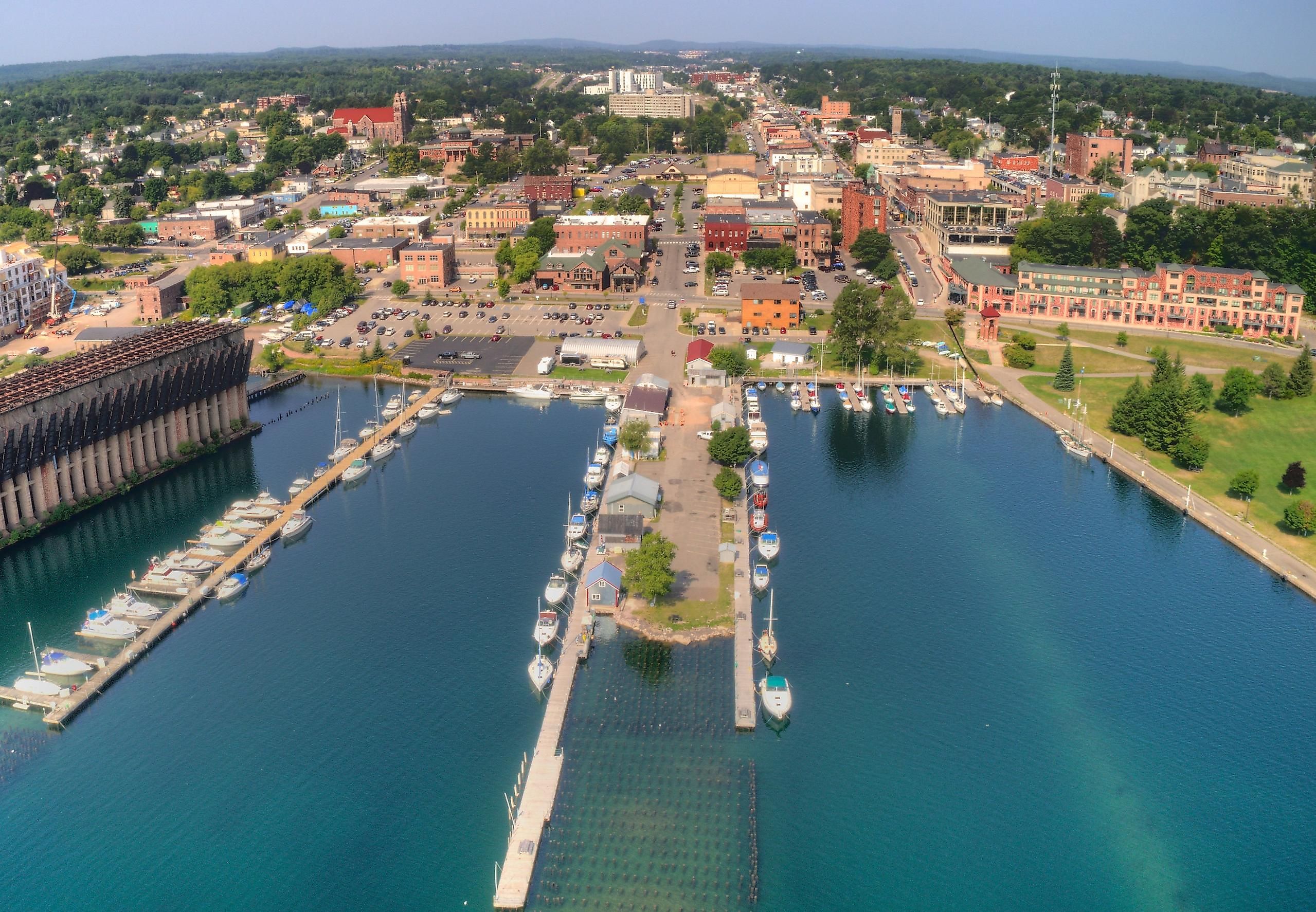
This historic port on Lake Superior's southern shore has roughly 21,000 residents. Marquette's primary industry is shipping iron ore, alongside a substantial tourism sector and jobs in hospitality, health care, and education. Average home values run around $306,000. The city's housing stock includes a mix of older single-family homes near the waterfront and newer subdivisions in outlying neighborhoods, with the Dead River cutting through the northern edge of town. Northern Michigan University is a long-standing institution along Presque Isle Avenue.
The Marquette Harbor Lighthouse, painted red and white, sits on the breakwater near downtown and is one of the city's recognizable landmarks. Presque Isle Park is a 323-acre peninsula with wooded trails and the scenic Black Rocks shoreline. Hiawatha National Forest, which covers a wide area south and east of the city, starts about 40 minutes southeast of town for water sports, camping, and trail access.
Racine, Wisconsin

Sitting between Milwaukee and Chicago, Racine offers a working downtown without the major-metro cost structure. Home to global manufacturers, family-owned firms, and a growing logistics sector, the city has steady employment in industry, health care, and social services. Gateway Technical College has a campus here, and Marquette University is about 30 miles north in Milwaukee. With a population of roughly 76,000, what most draws newcomers is the average home value of around $195,000 compared to Wisconsin's state average of about $312,000.
Racine has two historic lighthouses (Wind Point and Racine Reef) and a low-rise downtown rather than a high-rise skyline. Racine Zoological Gardens features a working collection of mammals, birds, and reptiles. The wide North Beach has been recognized in national rankings of freshwater beaches and offers swimming, sand volleyball, and shoreline fishing. The Lake Michigan shoreline runs nearly 50 acres of public beach and parkland just blocks from the downtown core.
Sault Ste. Marie, Ontario

Sault Ste. Marie sits across the St. Marys River from its American twin city in Michigan, with the International Bridge linking the two. The Canadian side has a population of roughly 75,000 and a labor market built on forestry, aviation, finance, healthcare, engineering, and the steel industry. The city's home prices run dramatically below Ontario's provincial averages: the Sault Ste. Marie Real Estate Board reported a benchmark single-family price of about $315,000 in late 2025, against an Ontario average that has run above $800,000 in recent years.
The city has an international airport and direct access to the Trans-Canada Highway. Major institutions include the Great Lakes Forestry Research Centre, Algoma Steel Inc., and the head office of the Ontario Lottery and Gaming Corporation. The Soo Locks across the river handle nearly all the shipping traffic between Lake Superior and the lower Great Lakes, and the riverfront promenade in town is one of the better viewing spots for the freighters that pass through.
St. Clair Shores, Michigan

With a population of about 57,000, St. Clair Shores sits about 15 miles northeast of Detroit on the western shore of Lake St. Clair. The city has more than 6.5 miles of shoreline, and many residential streets run on canals that connect directly to the lake, giving homeowners backyard boat access. The historic Edsel and Eleanor Ford House (the auto family's 1930s estate) sits on the waterfront in nearby Grosse Pointe Shores.
The city sits along the western chamber of the heart-shaped Lake St. Clair and bills itself as the Boating Capital of Michigan, with a network of private and public marinas serving the lake. Boating, fishing, and the local power plants drive much of the daytime economy. Average home values run around $222,000, below the state average. Veterans Memorial Park has a lakefront play area, picnic area, and beach. Blossom Heath Park lights up for the holidays.
Traverse City, Michigan

With a population of about 15,700, Traverse City sits at the base of the Old Mission and Leelanau Peninsulas at the south end of Grand Traverse Bay on Lake Michigan. The city brands itself the Cherry Capital of the World and pairs cherry production with a substantial wine industry on the surrounding peninsulas. Average home values are higher here than in most other cities on this list, around $433,000, but the housing stock runs a wide range from older downtown bungalows to peninsula waterfront estates. Tourism, healthcare, and technology anchor the year-round economy.
The annual National Cherry Festival in early July draws roughly half a million attendees over its run and brings the city to its busiest week of the year. Outside festival week, locals work the bay as sailors, kayakers, and beach-goers, with downtown's waterfront restaurants and brewpubs running steady year-round trade. The local school district feeds into Northwestern Michigan College, which offers a range of two-year degree programs.
Two Harbors, Minnesota

The county seat of Lake County and the largest town on Lake Superior's North Shore between Duluth and the Canadian border, Two Harbors has a population of about 3,600. Two lighthouses (the Two Harbors Light Station, which dates to 1892, and the Burlington Bay Breakwater Light) and a historic railroad depot give a sense of the town's industrial past as a major iron-ore shipping point. Errands work easily here with available parking, local supermarkets, pharmacies, and restaurants. Average home values run around $282,000, below the state line.
The median household income is about $63,000 and the average commute is around 25 minutes, accounting for the 30-minute drive south to Duluth for work or services. The town works as a base for North Shore hiking and Lake Superior access, and the local agate-hunting beaches along the shoreline are part of the regular weekend draw.
Duluth, Minnesota

With a population of about 86,000, Duluth sits at the western tip of Lake Superior and is one of the busiest ports on the Great Lakes by tonnage. The city's working harbor sits next to the Aerial Lift Bridge in Canal Park, the most photographed spot in town. The cost of living runs below national averages, and home prices stay reasonable for a city of this size on a major lake.
The Lakewalk runs more than seven miles along the Lake Superior shoreline through downtown. Park Point is a long sand spit that gives Duluth one of the longest freshwater beaches in the world. The University of Minnesota Duluth and the College of St. Scholastica anchor the local education sector. Beyond the lake, the North Shore drive heads northeast for waterfalls, state parks, and small towns including Two Harbors and Grand Marais.
Living the Great Lakes Life
The Great Lakes region offers a residential profile that has gotten harder to find anywhere else in North America: working downtowns, real waterfront access, and home prices that local incomes can actually support. Cool summer breezes off the lakes draw seasonal visitors, while year-round residents get the kind of waterfront proximity that costs five times as much on the coasts. The eight cities here cover the full spread of options. Some lean industrial, some lean tourism, some run college-town economies, and all of them deliver the lake-life premium without the lake-life price tag.