8 Best Small Towns To Retire In Missouri
Missouri offers retirees real value beyond quiet streets and lower-key living. In Boonville the Katy Trail brings cyclists and walkers right into a classic Missouri River town. Washington offers a different kind of appeal through a historic downtown lined with cafes plus boutiques set in 19th-century buildings. Errands and weekends out feel like part of the same walkable routine. Riverfront parks and preserved historic main streets keep showing up across the eight towns below, which might convince retirees to settle down in Missouri.
Washington

Washington has the goods: a handsome historic district, attractive river scenery, and a working downtown with enough local events to keep retirees engaged. For an easy outdoor routine, Lion's Lake is a good place to start. The park has a 1-mile walking trail around the lake, along with playgrounds and rentable pavilions, making it useful for both solo walks and family visits. Golfers can also spend time at Franklin County Country Club, where the amenities include an 18-hole championship course, clubhouse dining at Top of the Hill Grill, and a swimming pool.
Downtown Washington gives the town much of its appeal. Sunset on the Riverfront brings music, food vendors, beer, wine, and children's activities to Rennick Riverfront Park on the fourth Thursday of each month from April through September. The Washington Historical Society Museum adds a deeper historical layer. Its museum includes about 6,000 square feet of exhibit and research space devoted to Washington and the surrounding area, with displays that help explain the town's German heritage, river history, and local industries.
Washington is one of the more refined river towns on this list and its housing reflects that. Data USA reported a 2024 median property value of $231,800, close to Missouri's statewide median but still below the national figure. For retirees who want an attractive downtown without jumping to big-city prices, that balance matters.
Boonville

Boonville has a relaxed river-town character. Its spot on the Katy Trail draws a steady stream of cyclists, walkers, and weekend visitors, while the historic downtown and casino offer a range of recreational options.
The Katy Trail is Boonville's biggest outdoor advantage. Katy Trail State Park runs about 240 miles between Clinton and Machens, and the Boonville area is one of its classic stops. Riders coming from Rocheport cross the Missouri River on the Boonslick Bridge, with views of the historic Katy Bridge nearby. For entertainment, Isle of Capri Casino Hotel Boonville sits downtown and keeps things lively. The casino offers slots, poker, 15 table games, and a 29,000-square-foot gaming floor, while The Brew Brothers offers casual dining options on-site. Boonville also has a surprisingly specific piece of automotive history. Lewis Miller's Mitchell Collection is the correct name for the attraction, which focuses on Mitchell wagons, bicycles, motorcycles, and automobiles from the 19th and early 20th centuries.
Boonville also brings value, with a 2024 median property value of $187,900, below both the Missouri and national figures, giving retirees a lower-cost base with trail access, river scenery, and a walkable downtown.
Nevada

Nevada is one of the best value plays on the list, especially for retirees who care more about space, quiet, and everyday affordability than refined town character. The reported 2024 median property value of $122,700 is far below the national figure of $332,700. That gives Nevada a practical financial edge.
In Nevada, Frank E. Peters Golf Course is an 18-hole championship course that stretches more than 6,600 yards from the back tees and winds through more than 200 acres of Osage Prairie just south of town. Davis Park is a more casual destination, with picnic tables, barbecue grills, playground equipment, a shelter house, and restrooms.
Nevada's local stops keep the pace easy. A round of bowling at 10 Pin Alley or a browse through Belles Boutique gives residents simple, low-key ways to spend an afternoon without turning every outing into a full-day trip. The town's strongest cultural draw is the Bushwhacker Museum. The museum occupies a 13,000-square-foot space in the lower level of the Nevada Public Library building and focuses on Vernon County history, including the Border War and the Civil War. Nearby, the Bushwhacker Jail adds a more visceral piece of local history; the former Vernon County Jail operated from 1860 to 1960 and is closely tied to the museum experience.
Weston

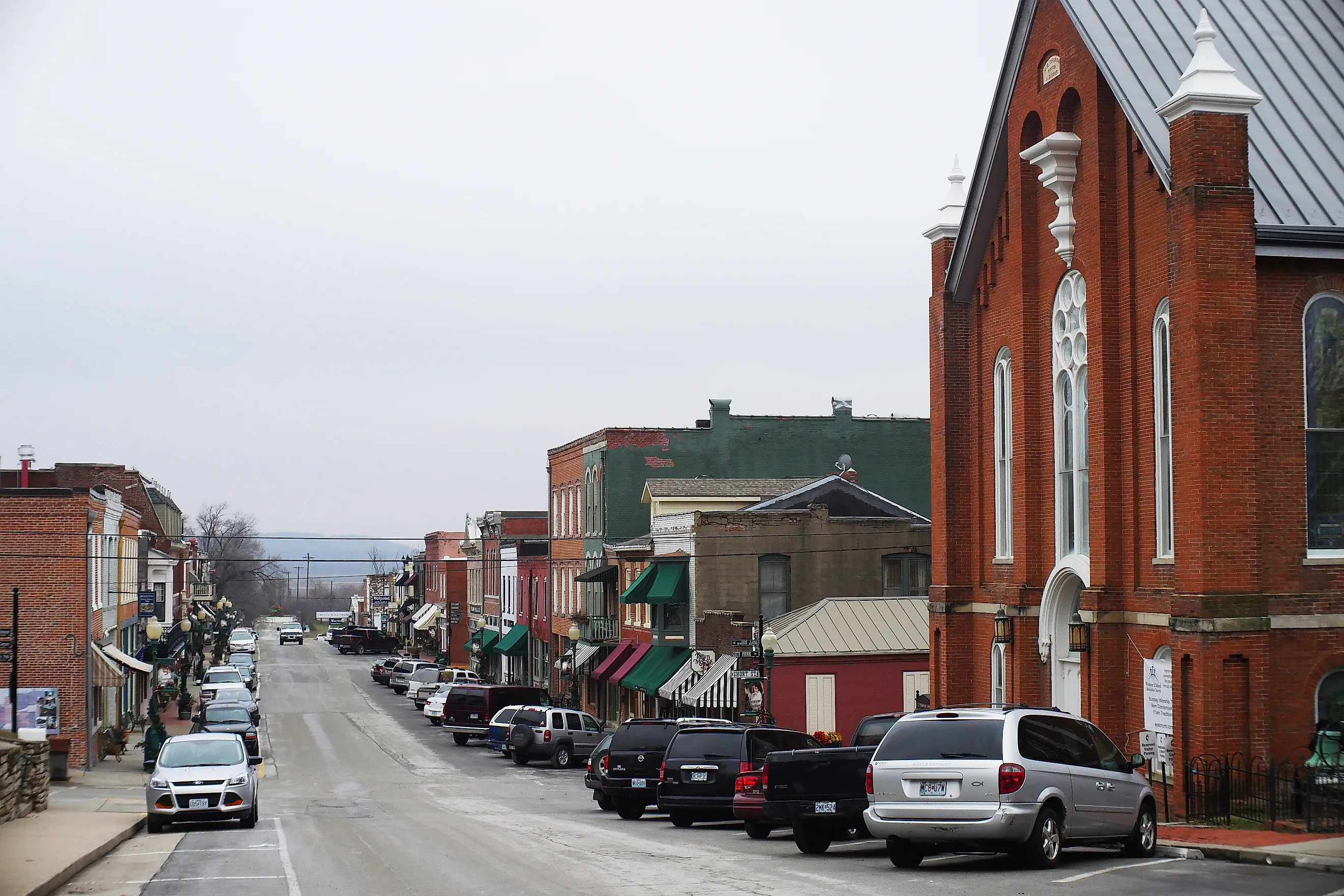
Weston's character comes from its historic streets, antique storefronts, and nearby river bluffs. It has a quiet, weekend-getaway feel, but its location near the Kansas City area keeps it from feeling isolated. The best place to take in Weston's natural beauty is Weston Bend State Park. The 1,133-acre park is especially striking in autumn, when the bluffs glow red, orange, and gold above the Missouri River. Its paved 3-mile loop is scenic but hilly in places, making it better suited to active walkers than to those looking for a completely flat path. For a slower outing, the park also has overlooks, picnic spots, and peaceful places to sit and enjoy the river valley.
After a day outdoors, Touchwork of Weston Massage Therapy offers a quiet place to unwind in town. History lovers can also visit the Herbert Bonnell Museum, located on the outskirts of Weston. Rather than a curated museum experience, it feels more like stepping into a preserved slice of 1800s farm life, with household items, tools, and outbuildings that show how everyday families once lived in rural Missouri.
Ste. Genevieve

Ste. Genevieve may be one of Missouri's most distinctive retirement towns, especially for anyone drawn to architecture and history. As one of the state's oldest European settlements, it has a French colonial character that sets it apart from many other small towns in the Midwest. Its housing remains relatively affordable compared with national averages, giving retirees a chance to live in a place with genuine historic texture without paying coastal historic-district prices.
Outdoor recreation is close by at Hawn State Park, which covers 4,956 acres in western Ste. Genevieve County. The park is known for pine and oak woods, sandstone canyons, clear streams, and longer trails for more adventurous hikers. Downtown Ste. Genevieve is compact and full of locally rooted shops. ASL Pewter Foundry is a standout, offering visitors a look at traditional pewter work in an active studio and gallery. Belle Ever After Boutique adds a softer retail stop, with women's clothing, gifts, and accessories in a family-owned setting.
The town's real strength, though, is its history. Ste. Genevieve National Historical Park includes several important buildings, including the Beauvais-Amoureux House. Visitors can learn about French colonial life in the 18th century, while the Green Tree Tavern tells a layered story of the town's past, having served over time as a home, tavern, inn, shop, and meeting place.
Cape Girardeau

Cape Girardeau works well for retirees who want more than a sleepy small town but less than a full-scale city. It has a riverfront, a historic core, university-town energy, and a stronger mix of services than many smaller communities. Housing remains comparatively reasonable, making the city especially attractive for retirees who want amenities, medical care, and culture without losing the feel of southeast Missouri.
The city's park system is one of its major strengths. Cape Girardeau maintains 27 parks totaling more than 662.5 acres, many of which offer playgrounds, shelters, walking paths, and open green space. The Cape LaCroix Trail gives residents an easy way to walk or bike through town, while nearby Trail of Tears State Park offers a more dramatic outdoor experience with wooded trails and views of the Mississippi River. Beyond the parks, downtown shopping is a must here. Annie Laurie's is a good stop for more personal browsing, where you can find antiques, vintage gems, and old treasures that reward patient browsing.
Historically, Fort D Historic Site is one of the city's most important landmarks. Built by Union troops in 1861, it is the only remaining one of four Civil War forts constructed to protect Cape Girardeau. Its earthwork walls are still intact, and the site also includes a 1937 WPA limestone building, making it a compact but meaningful stop for anyone interested in Civil War history.
Fulton

Fulton has an easygoing, practical appeal. It is affordable, historic, and active in a balanced way. Its median property values sit well below national averages, making it one of the stronger choices for retirees who want to stretch their budget while still living near colleges, museums, and walkable green space.
Stinson Creek Trail is one of the town's best everyday assets. The paved route follows the creek through parts of Fulton and connects with local streets and green spaces, making it useful for morning walks, casual bike rides, or simply getting outside without planning a full excursion. Fulton also has a good antiquing scene. Prickly Pear Antiques & More and Rock Garden Antique Barn give shoppers plenty to browse within town. Artichoke Annie's Antique Mall, located east of Columbia near the Millersburg exit, works better as a nearby regional stop than a Fulton business. For furniture, Baumgartner's Furniture has served Mid-Missouri since 1949 from its Auxvasse and Columbia locations. Auto World Museum is one of Fulton's most memorable attractions. The 18,000-square-foot museum displays vintage and modern classic cars in historical context, with vehicles spanning roughly the past century. For retirees who grew up around some of these models, it is less a museum than a drive through personal memory.
Rolla

Rolla has a different feel from many towns on this list. It is part college town, part Route 66 stop, and part Ozarks gateway, which gives it more energy and infrastructure than its size might suggest. It also remains relatively affordable, with median home values and rents well below national levels.
Schuman Park is a simple but useful in-town retreat, with walking areas, picnic spots, playgrounds, and a restored steam engine nearby. It is not a grand destination park, but that is part of its appeal. It is easy to reach, easy to use, and well suited to an ordinary afternoon outside.
Rolla's antique shops add to its old-road character. Rolla Antique Mall and Piney River Antique Mall can make a person lose track of time browsing, especially for dedicated collectors. The town also has several small but meaningful historic landmarks. The Dillon Log House, built in 1838, served as Phelps County's first courthouse and offers a look at the area's early settlement period. The Limestone Block Jail, built in 1860, is another compact piece of local history, made from locally quarried dolomite blocks measuring 22 by 22 inches.
Missouri Has A Lot To Offer
Missouri's small towns make a strong case for retirement because they offer more than low costs. What stands out most is the variety. Some towns lean into French colonial history, others into Civil War sites, river scenery, antiques, or car museums. A retiree could spend mornings on the Katy Trail, afternoons browsing downtown vintage storefronts in Cape Girardeau, and weekends visiting historic homes or state parks by the Missouri River. Missouri's best small towns are not flashy, but they are livable, textured, and often far more affordable than similar places elsewhere. For retirees looking for value without giving up character, that combination is hard to ignore.