8 Alabama Towns With A Slower Pace Of Life
Each of the eight Alabama towns ahead earns its unhurried rhythm from a different specific source. Selma has the 1965 voting rights history and the Edmund Pettus Bridge. Fort Payne has Little River Canyon and the hometown identity of the country band Alabama. Eufaula has the 45,000-acre lake and the antebellum bluff district. Demopolis has the 1817 Vine and Olive Colony of French exiles. Bayou La Batre has the working shrimp fleet and the role as the seafood-packing center of the Alabama coast.
Selma

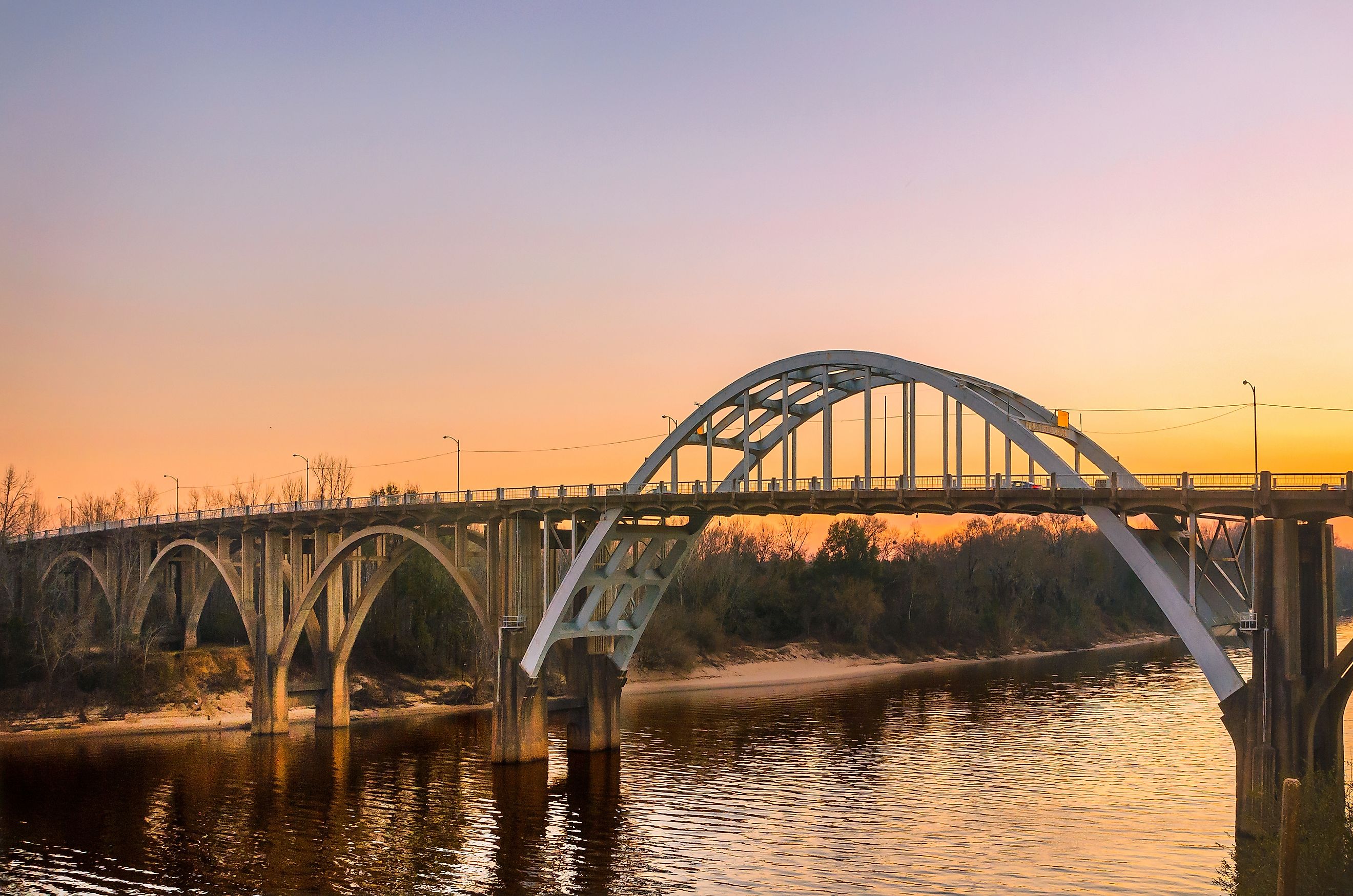
Selma, the Dallas County seat on the banks of the Alabama River, has shrunk to about 15,500 residents from a 1990 peak near 24,000. The town's quiet today contrasts sharply with its role as the center of the 1965 voting rights campaign, and most of the major civil rights sites sit within walking distance in the Old Town Historic District. The Edmund Pettus Bridge, a 1940 through-arch span over the Alabama River, was where state and county lawmen attacked roughly 600 marchers led by John Lewis and Hosea Williams on March 7, 1965, the day that became known as Bloody Sunday.
The third and successful march, protected by federalized National Guard troops, ran from March 21 through March 25, 1965, ending at the Alabama State Capitol in Montgomery with roughly 25,000 marchers. The National Voting Rights Museum and Institute, in the foot of the Pettus Bridge, runs the most comprehensive collection of voting rights movement artifacts in the country. Sturdivant Hall, an 1856 Greek Revival mansion built for Colonel Edward Watts and operated as a house museum by the city since 1957, anchors the antebellum end of the historic district. The Old Depot Museum, in the 1891 L&N Railroad depot, runs exhibits covering Selma's transportation, industrial, and civil rights history.
Fort Payne

Fort Payne sits at the foot of Lookout Mountain in DeKalb County, with a population of about 14,900. The town developed in the 1830s around a federal fort used to round up Cherokee residents for forced removal on the Trail of Tears in 1838. By the 20th century, Fort Payne had become the "Official Sock Capital of the World," running over 100 hosiery mills at peak production that supplied nearly half of all socks made worldwide. The W.B. Davis Hosiery Mill, a complex dating to 1884 and on the National Register, anchored that industry until its decline after CAFTA in the 2000s. The Hosiery Museum downtown traces that history.
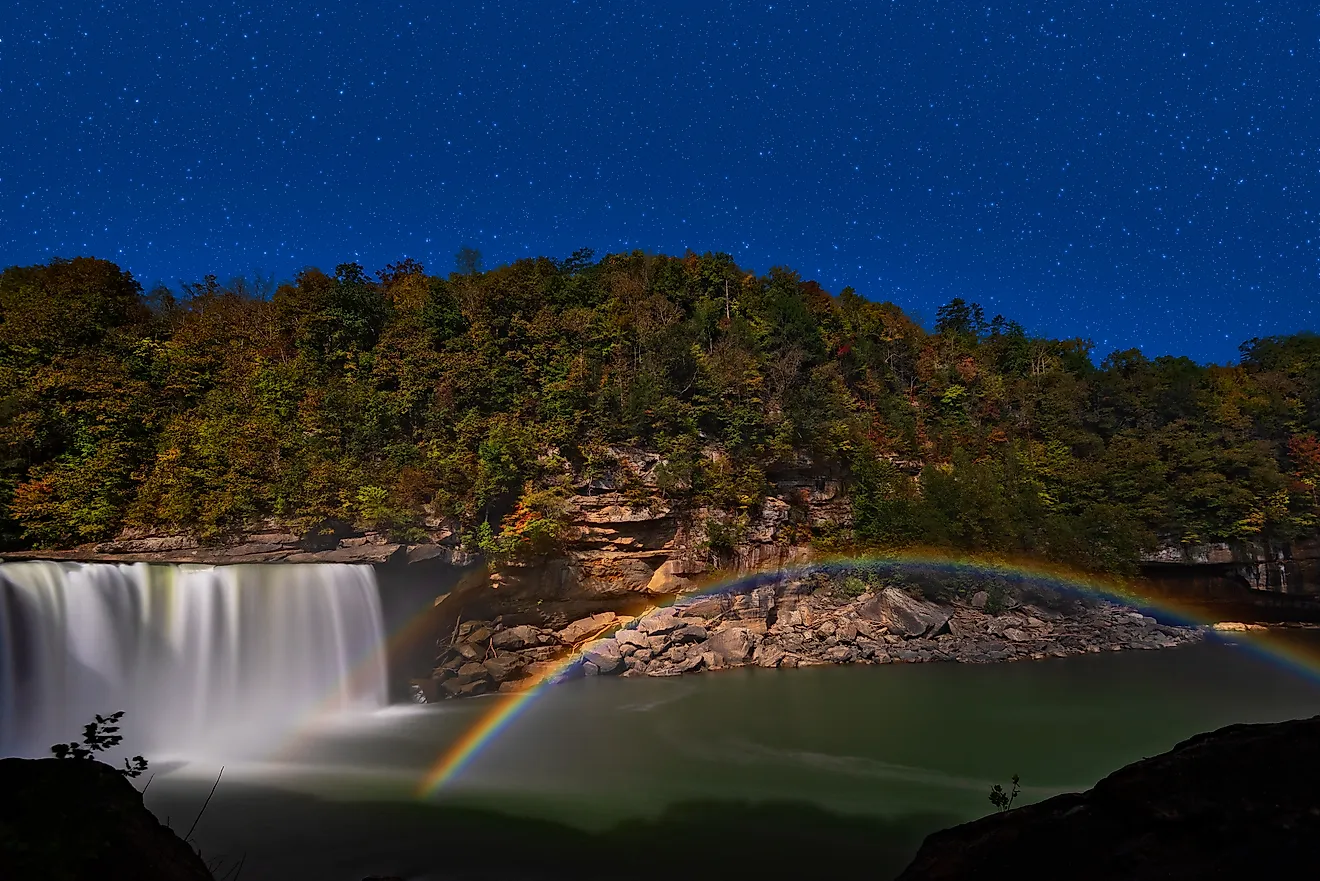
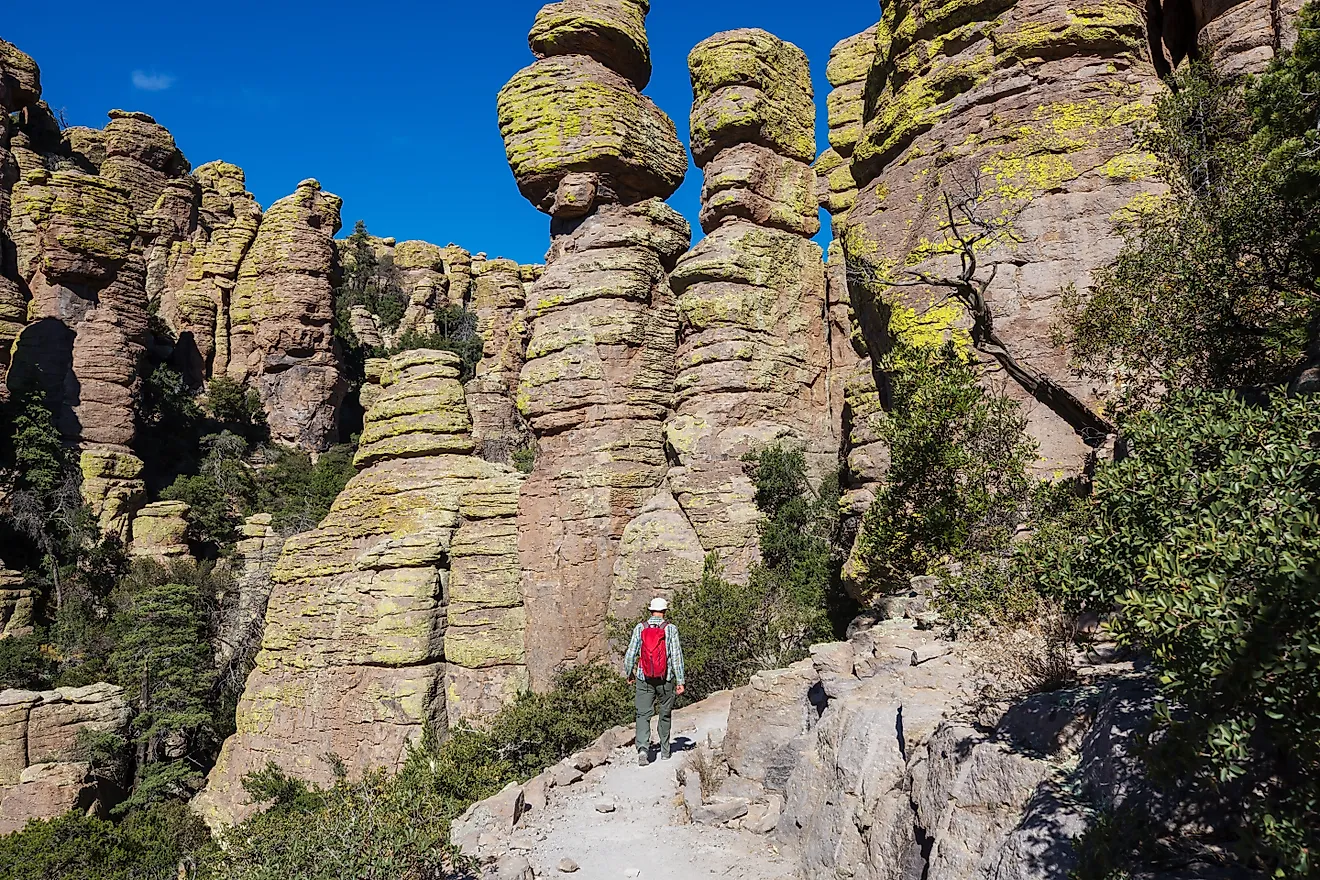
Fort Payne is also the hometown of the country band Alabama, formed there in 1969 by cousins Randy Owen and Teddy Gentry. The town's Alabama Fan Club & Museum runs awards, memorabilia, and the band's recording history, and the public park downtown holds bronze statues of each band member. Little River Canyon National Preserve, established in 1992 and covering about 15,000 acres along the top of Lookout Mountain, is the area's main natural draw. The 45-foot Little River Falls, accessible from a parking lot on Highway 35, marks the head of a 12-mile canyon that runs up to 700 feet deep. DeSoto State Park, on Lookout Mountain northeast of town, runs trails to additional waterfalls including Indian Falls, Lodge Falls, and Laurel Falls.
Eufaula

Eufaula sits on a bluff overlooking the 45,181-acre Lake Eufaula, on the Chattahoochee River along the Alabama-Georgia border about 90 miles southeast of Montgomery. The town was incorporated in 1857 and now runs about 12,000 residents. The Seth Lore and Irwinton Historic District, with more than 700 antebellum and Victorian structures across about 600 acres, is the second-largest historic district in Alabama after Selma's.
The Shorter Mansion, an 1884 Neoclassical Revival residence remodeled in 1906 with 17 Corinthian columns, anchors the architectural tour and is operated as a museum by the Eufaula Heritage Association. Lake Eufaula, officially the Walter F. George Reservoir, runs 640 miles of shoreline and is locally promoted as the "Big Bass Capital of the World," hosting major tournaments including the Bassmaster Open. The Eufaula National Wildlife Refuge, established in 1964 and covering 11,184 acres on both sides of the Chattahoochee, protects wetlands, croplands, and longleaf pine uplands and runs a seven-mile auto tour route through habitats supporting bald eagles, wood storks, and waterfowl.
Fort Deposit

Fort Deposit, in Lowndes County, was named after a supply depot established under General Andrew Jackson during the 1813 Creek War. The town was incorporated on February 13, 1891 and now runs about 1,200 residents. The Calico Fort Arts & Crafts Fair, running since 1972 and held every April, draws about 5,000 visitors to the small downtown for two days of regional craft vendors, music, and food.
Priester's Pecans, established in 1935 and headquartered in Fort Deposit, ships candied pecans, fudge, and pecan candies nationally and runs a retail store with samples on Old Federal Road. Lowndes County was central ground in the 1965 Selma to Montgomery march and earned the nickname "Bloody Lowndes" for the anti-civil-rights violence of that era. The Lowndes Interpretive Center, ten miles north of town on U.S. 80, is part of the Selma to Montgomery National Historic Trail and runs exhibits on Viola Liuzzo, the civil rights worker shot on the highway after the march, and on the Lowndes County Freedom Organization (whose black panther emblem later inspired the Black Panther Party).
Bayou La Batre

Bayou La Batre, pronounced "BY-you-la-BAT-tree," sits on the Mississippi Sound side of Mobile County in the southwest corner of Alabama. The settlement was founded in 1786 by French-born Joseph Bouzage on a 1,259-acre Spanish land grant, making it the first permanent settlement in south Mobile County. The town was incorporated in 1955 and now runs about 2,200 residents, with roughly a quarter of the population of Vietnamese, Cambodian, and Laotian descent following resettlement after the Vietnam War.
The local chamber promotes Bayou La Batre as the "Seafood Capital of Alabama," with seafood processors and shipyards lining Shell Belt Road. The annual Blessing of the Fleet, held in May at St. Margaret Catholic Church since 1949, blesses the shrimp and fishing fleet for the season ahead. Bayou La Batre served as Bubba Blue's fictional hometown in Forrest Gump (1994), and the Black Pearl ship used in the Pirates of the Caribbean films was built at one of the local shipyards. Hurricane Katrina (2005) devastated the fishing fleet and the town has gradually rebuilt since. Bayou Seafood Company and Marshall Marine Supply on Shell Belt Road keep the working-port feel obvious to any visitor.
Marion

Marion, the Perry County seat in Alabama's Black Belt agricultural region, runs about 3,000 residents and has been an education town since the antebellum era. Marion Military Institute, founded in 1842 and now a public two-year junior military college and the official preparatory school for the U.S. service academies, remains the town's only active higher-education institution. Judson College, founded in Marion in 1838 as the fifth-oldest women's college in the United States, suspended academic operations on July 31, 2021 after enrollment dropped below 80 students. Howard College, founded in Marion in 1841, relocated to Birmingham in 1887 and was renamed Samford University in 1965. The teacher training arm of the Lincoln School also relocated to Montgomery in 1887 and became Alabama State University.
The 1867 Lincoln School, founded by nine formerly enslaved men with support from the American Missionary Association, ran for 103 years as one of the most successful African American schools in the segregated South. Coretta Scott (later King), the future civil rights leader and wife of Martin Luther King Jr., graduated from Lincoln in 1945. The school closed in 1970 with integration, but its 1939 Phillips Memorial Auditorium remains on the National Register, and the Lincoln Memorial Museum opened on the former campus in 2002. The Marion Military Institute campus, the Judson College Greek Revival campus, the Mt. Tabor AME Church with its Coretta Scott King Memorial, and the surrounding antebellum residential streets all sit within easy walking distance of one another.
Demopolis

Demopolis, founded in 1817 by French exiles after the abdication of Napoleon Bonaparte, sits at the confluence of the Tombigbee and Black Warrior Rivers in Marengo County. The original Vine and Olive Colony settlers, granted land by the U.S. Congress to grow grapes and olives, found the climate and soil hostile to Mediterranean agriculture, and most of the aristocrats returned to France within a decade. The town runs about 6,800 residents today.
Gaineswood, an 1843-61 Greek Revival house designed and built by its owner Nathan Bryan Whitfield, is one of the finest examples of antebellum architecture in the country and is operated as a National Historic Landmark museum house. Bluff Hall, an 1832 Federal-style residence on the Tombigbee bluff, and Lyon Hall, an 1853 Greek Revival home with six fluted brick columns, both run as historic-house museums on the Demopolis Historic Tour. The Demopolis Riverwalk, on the Tombigbee River near downtown, runs interpretive panels covering local bird species (yellow-throated warblers, prothonotary warblers, and orchard orioles) and the river's commercial barge traffic. The Foscue Creek Park, a U.S. Army Corps of Engineers campground a mile north of town, runs camping, picnicking, and access to the Tombigbee.
Guntersville

Guntersville, the Marshall County seat, is locally known as Alabama's "Lake City" because the 69,100-acre Lake Guntersville (Alabama's largest lake) surrounds the city on three sides. The Tennessee River, dammed in 1939 to create the reservoir, stretches 75 miles from the Guntersville Dam to the Nickajack Dam. The town runs about 8,500 residents.
Lake Guntersville State Park, on a 6,000-acre tract on Taylor Mountain just outside town, runs an 18-hole championship golf course, 36 miles of hiking and biking trails, a beach complex, the Screaming Eagle Zipline, and a resort lodge perched on a 500-foot bluff with broad views over the lake. The park was first established in 1947 and opened in 1974. The Guntersville Museum & Cultural Center, in the 1936 WPA-built Rock Armory on Rayburn Avenue, runs exhibits on the Tennessee Valley Authority's flooding of the original Guntersville site, the local Cherokee history, and the Native American Paleo-Indian-era artifacts of the Percy Barnard Collection. Free admission. Lake Guntersville is one of the top bald eagle wintering locations in the southeast, and the state park runs guided eagle-watching tours every January and February.
What These Eight Towns Have in Common
The eight Alabama towns above all run on a specific identifying anchor that makes the unhurried pace genuine rather than imposed. Selma has the voting rights history. Fort Payne has the country band and the canyon. Eufaula has the bass tournaments and the antebellum bluff. Fort Deposit has the pecan candy and the 1813 Jackson supply depot. Bayou La Batre has the working shrimp fleet. Marion has Lincoln School, MMI, and the relocated roots of Alabama State and Samford. Demopolis has the 1817 Vine and Olive Colony. Guntersville has Alabama's largest lake. Each town's slower pace is what stayed when the larger industry or moment moved on, not what was manufactured to attract visitors.