7 Places Where People Are Moving To In Utah In 2026
Utahns have long settled along the Wasatch Front, where Salt Lake County built the state’s largest employment base and drew much of the growth for decades. Since 2020, Eagle Mountain and Saratoga Springs have each added more than 14,000 residents, extending Utah County's suburban edge toward the Silicon Slopes corridor. Washington County drew retirees and remote workers from northern Utah and western states such as California, Arizona and Nevada. Each remains tied to Utah's major job centers, but the growth looks less like overflow and more like settlement.
City figures use Census Bureau Vintage 2024 estimates, with migration patterns drawn from county-level IRS flows and Census components of change.
Eagle Mountain

Recent Census estimates show Eagle Mountain’s population increased from roughly 43,620 residents in 2020 to about 60,600 residents in 2024, making it one of the fastest-growing cities in Utah during the four-year period. Eagle Mountain has become a major outlet for western Utah County growth, drawing households seeking lower-cost new construction and regional job access beyond older Wasatch Front suburbs.
IRS county-to-county flows show that Utah County continues to draw new residents from Salt Lake County and other nearby Wasatch Front communities, while Census components-of-change data point to domestic migration as part of the county’s broader post-pandemic growth. Eagle Mountain represents the westward edge of Utah County’s suburban expansion, where lower land costs, large-scale residential construction, and better commuter connections have helped push growth farther from the county’s older employment centers. The Ranches master-planned community and continued westward suburban expansion have both helped transform Eagle Mountain into one of Utah’s most significant residential growth centers.
Saratoga Springs

Saratoga Springs posted one of Utah’s sharpest growth rates among larger communities, rising from roughly 37,700 residents in 2020 to more than 52,000 in 2024. Saratoga Springs has become one of Utah County’s clearest examples of lake-adjacent suburban growth, with new neighborhoods spreading outward while still keeping commuters within reach of Utah and Salt Lake County job centers.
County-level migration data further suggest that Utah County continues to gain residents through strong domestic migration, particularly from Salt Lake County and other nearby Wasatch Front communities. Much of Saratoga Springs’ growth is visible in the large residential corridors spreading along the city’s northwestern edge, where new housing, remote work flexibility, and transportation access have made it a practical suburban option. Large master-planned developments near Utah Lake have continued reshaping Saratoga Springs into one of Utah’s largest suburban expansion areas.
Lehi

Lehi remained one of Utah’s fastest-growing large cities after 2020, with its population increasing from roughly 75,900 residents to more than 90,000 by 2024. Much of that growth reflects Lehi’s position in northern Utah County’s tech corridor, where employment centers, commuter routes, and new subdivisions have expanded side by side.
At the county level, IRS migration data shows that Utah County has continued to attract strong inbound migration from Salt Lake County and neighboring Wasatch Front counties. Census estimates also suggest domestic migration has remained a major driver of overall county growth since 2020. That mix of nearby employment, commuter access, and new housing has helped make Lehi one of northern Utah County’s main residential growth centers. The Silicon Slopes corridor surrounding Thanksgiving Point remains one of the city’s most important economic anchors, supporting both office expansion and large-scale residential growth.
St. George

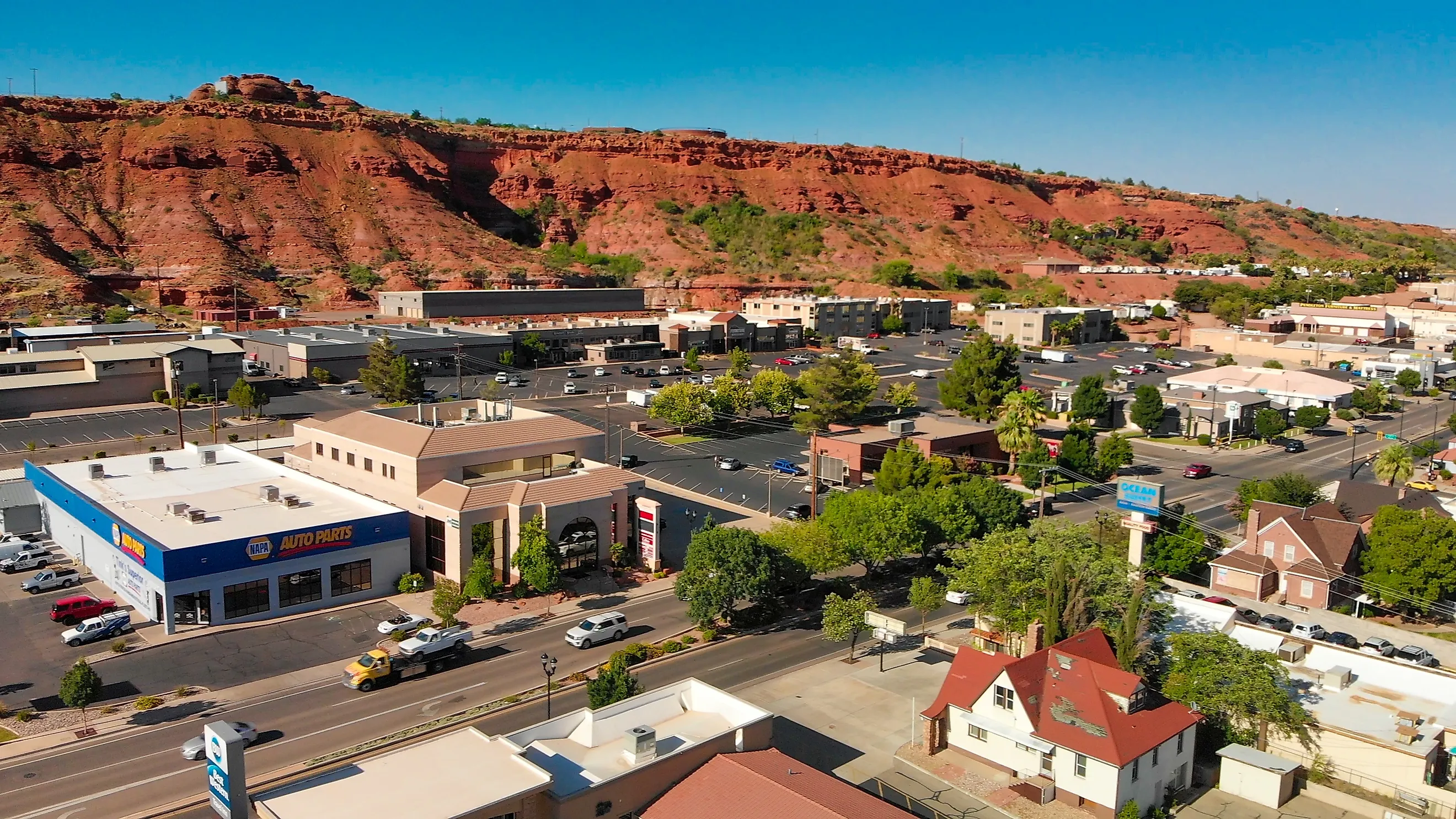
St. George continued to anchor southern Utah’s growth, increasing from roughly 95,350 residents in 2020 to about 106,300 in 2024 as retirees, remote workers, and households from larger western metros moved into the region. The city remains one of Utah’s strongest population-growth centers outside the Wasatch Front.
The surrounding county’s migration data shows that Washington County has continued to gain residents through strong domestic migration. IRS migration data further indicates that many inbound households relocating into Washington County have arrived from Salt Lake County, Utah County, California, Arizona, and Nevada. St. George’s growth has a different profile than the Utah County suburbs. It is less about commuting to Salt Lake County and more about southern Utah’s mix of healthcare growth, new housing, recreation access, and remote-work flexibility. Desert Color and new commercial development south of St. George have helped give that growth a clearer local footprint.
Washington

Washington’s population climbed from roughly 28,000 residents in 2020 to about 35,500 in 2024, reflecting the rapid suburban expansion of the greater St. George metropolitan area. The city has increasingly attracted households seeking suburban neighborhoods near southern Utah’s expanding employment and healthcare sectors.
County-level migration data suggest Washington County continues to benefit from strong inbound migration from northern Utah and neighboring western states. Census estimates further indicate domestic migration has remained a central driver of county population growth in recent years. Washington’s growth is closely tied to the greater St. George area, but the clearest change is visible in Washington Fields and Green Springs, where new neighborhoods have extended the city’s suburban footprint.
Hurricane

Hurricane added several thousand residents between 2020 and 2024, growing from roughly 20,040 people to approximately 24,750 as more households relocated to eastern Washington County. Hurricane sits at the eastern edge of Washington County’s growth story, where lower-density housing, retirement migration, remote work, and recreation access overlap.
The county-level migration picture indicates that Washington County has continued to receive substantial inbound migration from California, Arizona, Nevada, Salt Lake County, and other parts of Utah. Census components-of-change estimates likewise suggest domestic migration has remained an important contributor to county population growth. That growth has been supported by retirement migration, remote-work flexibility, and ongoing housing construction throughout eastern Washington County. Proximity to Sand Hollow State Park and Zion National Park has also helped sustain residential demand throughout the area.
Tooele

Tooele crossed the 40,000-resident mark by 2024, up from roughly 36,000 residents in 2020 as suburban growth expanded west of Salt Lake County. Tooele’s role in this pattern is affordability, giving households a way to move west while staying connected to the region’s job market.
Migration data suggest Tooele County has continued to benefit from inbound migration from Salt Lake County and neighboring Wasatch Front communities. Census components-of-change estimates also indicate domestic migration has become an increasingly important contributor to county growth during the post-pandemic period. Several factors continue attracting residents to Tooele, including commuter access along Interstate 80, remote-work flexibility, and ongoing residential construction west of Salt Lake County. The Midvalley Highway corridor has become one of Tooele’s clearest growth markers, linking new housing areas with the city’s older downtown and the commute back toward Salt Lake County.
Where Utah Population Growth Is Headed Next
Recent data suggests Utah’s population growth is increasingly concentrated in Utah County, communities west of Salt Lake County, and southern Utah. Together, these communities show how Utah’s growth is spreading into suburban corridors and southern Utah cities, where new housing, commuter access, and lower relative costs are reshaping where residents settle. For many Utah households, the trade-off is becoming clearer: move farther from the traditional urban core to gain newer housing, more space, and continued access to regional job markets. Although Utah continues to attract residents from across the western United States, recent migration data also suggest that much of the state’s growth has increasingly come from households relocating within Utah itself to rapidly expanding suburban and mid-sized communities.