8 Undisturbed Towns To Visit In Minnesota
Almost every town on this list started with one thing worth traveling for: a lake, an ore vein, a rail line, a wave of people who wanted a fresh start. What makes these eight Minnesota towns worth a weekend now is that they never stopped living around that first thing. The mines that miners dug at Crosby filled with water and turned into swimming holes. The railroad grade that once hauled white pine out of the north woods is a bike path today. The people who founded New Ulm still throw the parade. These are not preserved places behind glass. They are working towns where people kept the good parts and let the rest go quiet.
Grand Marais

The harbor at Grand Marais opens straight onto Lake Superior, and the streets are laid out around it. Artist's Point is the low rock peninsula that reaches out past the lighthouse, and it is the first place locals send you at sunrise, when the light comes flat across the water and the harbor is dead calm. Painters and woodworkers settled here decades ago for that light, and their descendants keep the trade alive at the North House Folk School, where the class list runs from timber framing to building a wooden boat you can actually sail. Drive inland on the Gunflint Trail and you pass the last of the shops within a mile. The road grade rises through spruce and lake country toward the edge of the Boundary Waters, and drivers spot moose and the occasional gray wolf along the shoulder. Grand Marais is where the wilderness begins, and the people here have built their lives around that fact rather than against it.
Ely

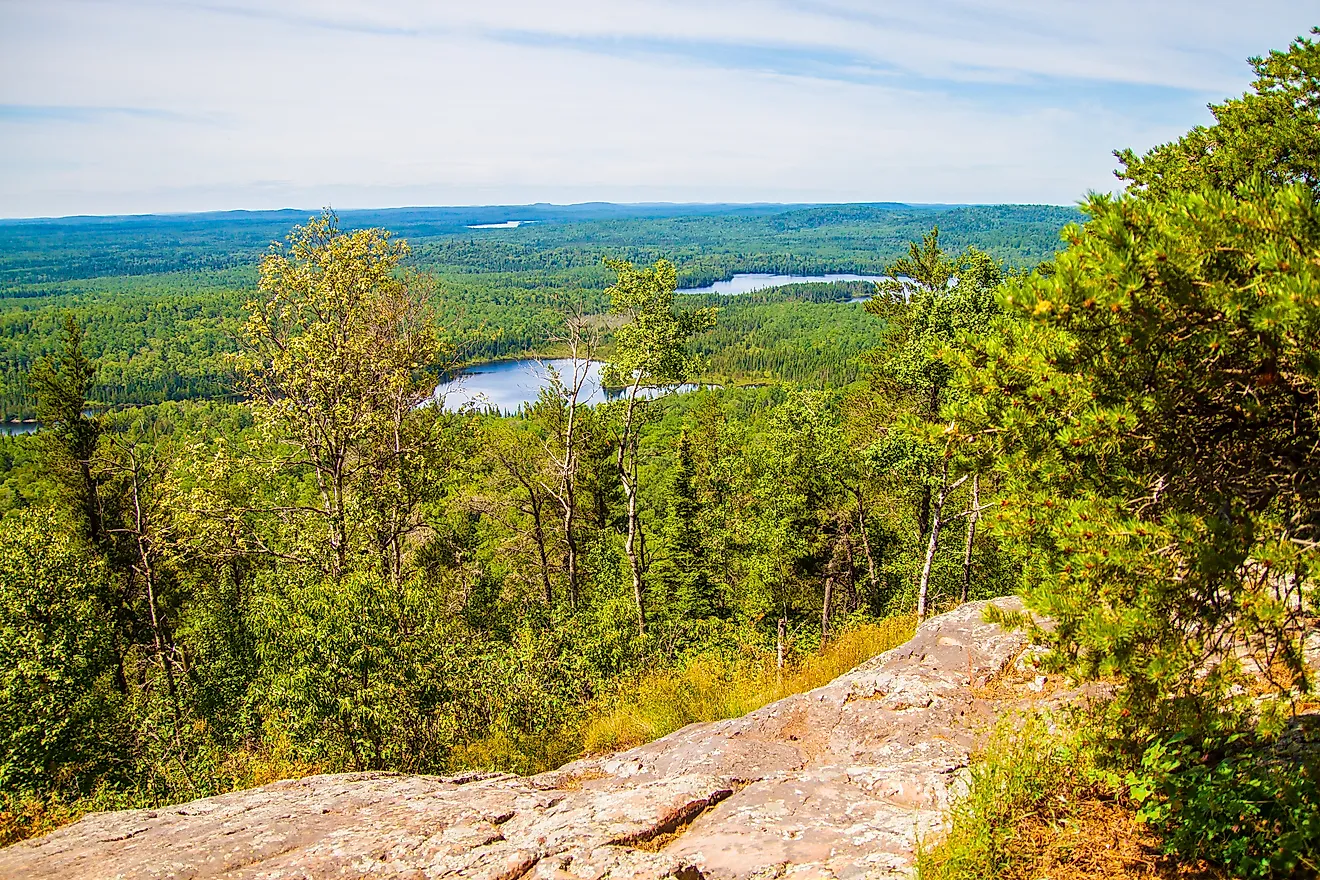
Ely is the last town before the map turns to blue. Push north from Main Street and you enter the Boundary Waters Canoe Area Wilderness, a million-plus acres of lakes stitched together by portage trails, where the only way forward is a paddle. Outfitters here have spent generations loading canoes and sending people off for a day or a week. Two of the best wildlife education centers in the country stand within a few blocks of each other here. At the International Wolf Center you can watch a resident pack through the glass and learn how the animals actually behave, and the North American Bear Center does the same for black bears. Spend a morning at both, then trade the classroom for the real thing on the water. Few towns make it this easy to go from reading about the north woods to sitting in the middle of them.
Two Harbors

Iron ore built Two Harbors. The first shipment of ore from Minnesota's Iron Range left from the docks here in 1884, and the ore boats still load at Agate Bay, close enough that you can watch them from shore while you hunt the beach for the banded stones the bay is named for. A few miles down the shore, Split Rock Lighthouse stands on a 130-foot cliff, put there after a single November gale in 1905 wrecked or damaged dozens of ships on this coast. It is one of the most photographed spots in the state, and for good reason. The old rail depot downtown is now a county railroad and shipping museum, which is really the town's own story told twice. Far fewer visitors come to Two Harbors than to the flashier North Shore stops up the road, and that is exactly its appeal.
Red Wing

The people of Red Wing know exactly what their town is famous for, and they have fun with it. The Red Wing Shoe Company has made work boots in this Mississippi River town since 1905, and to mark its hundredth birthday it built the world's largest boot, a size 638½ giant that took the hides of some 80 cows and now stands over 20 feet tall inside the downtown store. The free museum upstairs tells the rest. For the view that has drawn people here far longer, climb Barn Bluff, the flat-topped rock that rises straight off the riverbank; Henry David Thoreau made the same climb in 1861. Down at river level, walking paths and picnic tables fill Bay Point Park, right where the working barges pass. The boot factory and the river have coexisted here for over a century, and neither is going anywhere.
New Ulm

German immigrants founded New Ulm in the 1850s and named it for a city back home, and their descendants still carry that inheritance in the open. On the hill above downtown stands the Hermann Monument, a 102-foot copper figure of the ancient chieftain Arminius, raised by a German-American fraternal order and finished in 1897; a spiral staircase inside climbs to a platform with a long view over the Minnesota River Valley. The Brown County Historical Society tells the harder, fuller story of that settlement, including the U.S.-Dakota War of 1862 that the town sat at the center of. And on the edge of town, August Schell started brewing beer in 1860. Schell's is now the second-oldest family-owned brewery in the country, and tours still wind past the mansion gardens and the resident peacocks. New Ulm feels unlike anywhere else in Minnesota because the people who made it never let the thread break.
Crosby

Crosby is proof of the hardest trick a mining town can pull off: the people here outlasted the mines and turned the wreckage into a playground. When the iron pits of the Cuyuna Range closed, they filled with groundwater so clear that scuba divers now drop into them; Portsmouth Mine Pit Lake, right at the edge of town, is the deepest lake entirely inside Minnesota at over 450 feet. Around those flooded pits, trail builders carved the Cuyuna Country mountain bike system, more than 50 miles of purpose-built singletrack now listed in the Rails-to-Trails Hall of Fame and popular with riders from across the Midwest. Rent a kayak and you can paddle water that used to be a working mine. Back downtown, breweries and shops like the Linden & Lilac boutique have moved into the old brick storefronts, enough to fill an afternoon. This is reinvention done right, with the history left standing in plain sight.
Lanesboro

Down in the bluff country of the southeast, life in Lanesboro centers on the Root River and the trail beside it. The Root River State Trail is a paved ribbon along the old rail grade that follows river bottoms and farmland, and it made this small town one of the best cycling stops in the state. People pedal in, stay the night, and pedal out, which is how Lanesboro came to have more bed-and-breakfasts per capita than just about anywhere in Minnesota. The resident company at the Commonweal Theatre stages a full season of professional productions a short walk from the trailhead, an unusual thing to find in a town this size. Amish families farm the surrounding valleys, and local guides run tours that visit their workshops and roadside stands. A river, a rail bed, and a stage: it should not add up to as much as it does.
Nisswa

Nisswa is lake country the way Minnesotans picture it when they close their eyes. Families have driven up to the Brainerd Lakes for generations, and Nisswa is the town they stop in: a walkable Main Street of independent shops and specialty stores, a swimming beach on Lake Hubert, and long summer evenings that seem in no hurry to end. The one thing everyone here has in common is the Paul Bunyan State Trail, which passes right through the middle of town. At roughly 115 miles between Brainerd and Bemidji, it is the longest continuously paved rail-trail in the country, laid over the grade that once carried logs and vacationers north. On summer Wednesdays families still gather downtown for the turtle races, a tradition they have kept up for decades. Nothing about Nisswa is trying to impress you, and that is the whole point.
The Quiet That's Worth the Drive
Set these eight towns side by side and a pattern becomes clear. The thing that first put each one on the map, ore or timber, a lighthouse or a wave of immigrants, is the same thing that makes it worth visiting now, just turned to a gentler purpose. Mine pits became dive lakes. A rail line became a bike trail. A working harbor became a place to watch the boats and skip stones. That is a rarer quality than a pretty main street, and it is why a weekend in Grand Marais or Crosby or Lanesboro sticks with you. These towns did not freeze themselves for tourists. They just kept living, a little slower, right where they started.