7 Of The Quietest South Dakota Towns
The essence of South Dakota is in many ways defined by its network of small towns, many of which function as service hubs for the Black Hills National Forest and the expansive Great Plains. These towns lack the industrial noise and urban traffic of bigger cities, and their proximity and access to millions of acres of protected federal land establish them as havens of low-impact living and quiet atmospheres.
From historic gold rush settlements tucked into pine-covered canyons to prairie communities shaped by mineral springs and dramatic rock formations, these towns reflect the state’s frontier legacy, geological diversity, and deep connections to the American West. Many also serve as gateways to some of South Dakota’s most recognizable landmarks, blending tourism, preservation, and everyday rural life.
Custer

Located in the southwestern part of South Dakota, Custer is the oldest city in the Black Hills. Situated on French Creek about 40 miles from Rapid City, the town has a population of 1,919, according to the 2020 census. Custer State Park is the primary attraction in the area, offering activities such as guided trail rides and the Buffalo Jeep Safari to see local wildlife. The town also serves as a central hub for visiting nearby national landmarks, including Mount Rushmore and the Crazy Horse Memorial. Additionally, visitors can explore the underground passages of Wind Cave National Park, which is located just a short drive south of the town.
Hot Springs

Situated along the Fall River at the southern edge of the Black Hills, Hot Springs is a town defined by its natural landscapes and mineral waters. Named after the warm springs found throughout the area, the town had a population of 3,395 as of the 2020 census. One of Hot Springs’ most notable attractions is the Mammoth Site, an active paleontological dig and museum where visitors can view preserved fossils of Columbian mammoths and other Ice Age animals. The site's official website describes it as the only late Ice Age facility of its kind in North America.
For those looking to relax, the Moccasin Springs Natural Mineral Spa offers pools with temperatures ranging from the upper 90s to 105 degrees Fahrenheit. Visitors can also take a tour of the Historic Sandstone buildings to learn about the local architecture and the town's development in the late 19th century or visit the Fossil Finder Museum, which collects, displays, and preserves local and international fossils that are well worth seeing.
Hill City

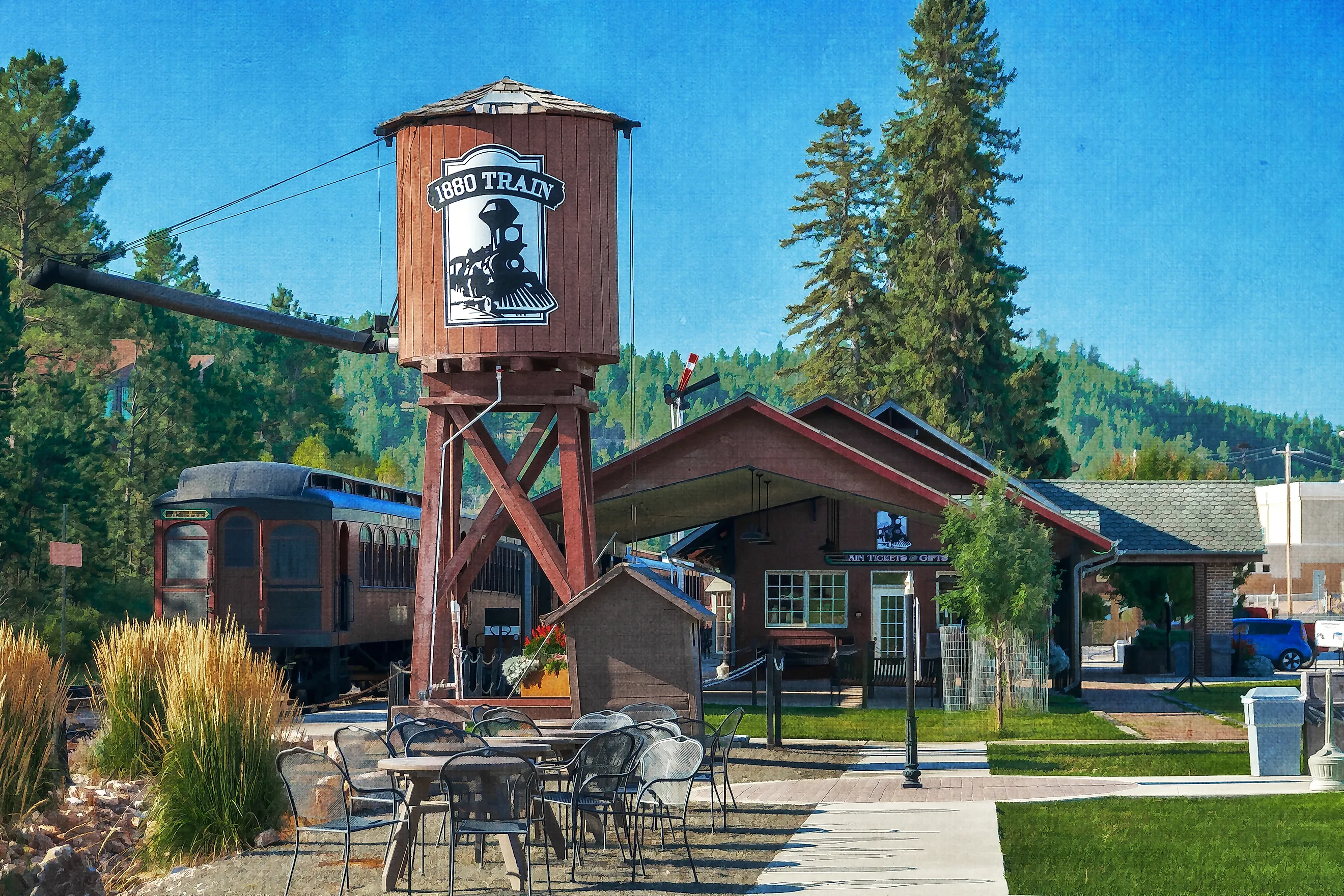
Hill City is a mountain town surrounded by the Black Hills, known for its history and geology. Often called the “Heart of the Black Hills,” this community had a population of 872 residents in the 2020 census, with more recent estimates placing it at just over 1,000. One of its most famous landmarks is the 1880 Train, an authentic steam engine that travels through the forest to the town of Keystone.
Visitors can also explore the Black Hills Institute of Geological Research, a museum that houses a significant collection of dinosaur fossils, including the famous T-Rex named Stan. For outdoor enthusiasts, the George S. Mickelson Trail passes directly through town, offering over 100 miles of gravel track for hiking and biking across western South Dakota.
Deadwood

Deadwood is a town defined by its gold rush history and is located in a narrow canyon in the northern Black Hills. This community has a population of 1,156 residents and is a National Historic Landmark. One of its primary attractions is Mount Moriah Cemetery, the burial site of famous figures like Wild Bill Hickok and Calamity Jane.
Visitors can also tour the Broken Boot Gold Mine, an underground mine dating back to 1878, or visit the Adams Museum, which houses a large collection of regional history. For a look at original local architecture, Historic Main Street features brick-paved roads and restored 19th-century buildings. Additionally, the Days of '76 Museum displays horse-drawn wagons and carriages used during the town's early years.
Garretson

Located in eastern South Dakota near the Minnesota border, Garretson is a town characterized by its geology, including the pink quartzite cliffs that rise as high as 60 feet. As of the 2020 census, the population was 1,228. The town is most famous for Devil’s Gulch, a 60-foot deep chasm where legend states outlaw Jesse James jumped his horse to escape a posse in 1876. Just south of the town center, Palisades State Park features 50-foot vertical quartzite formations and spires that are billions of years old, providing trails for hiking and spots for rock climbing.
Within city limits, Split Rock Park offers a view of a waterfall created by a dam built in 1934 and serves as a starting point for kayaking along Split Rock Creek. Additionally, the Garretson Heritage Museum, located in a building on the National Register of Historic Places, preserves artifacts including military uniforms and accessories, a bedroom and kitchen exhibited as they would have appeared in the past, and artifacts from an old bank.
Wall

Wall is a small town — known as the "Gateway to the Badlands" — located in western South Dakota along Interstate 90. The population was 699 at the 2020 census. The town’s most prominent commercial landmark is Wall Drug Store, which opened in 1931 and grew from a small pharmacy into a 76,000-square-foot roadside attraction featuring a traveler’s chapel and a large Western art gallery.
Wall serves as a primary entry point for Badlands National Park, specifically via the Pinnacles Entrance located 8 miles south of town. Within the community, the National Grasslands Visitor Center features 20 exhibits that focus on the ecology and history of the Great Plains and its native wildlife. Additionally, the Minuteman Missile National Historic Site is located just east of town, preserving Cold War-era facilities, including a launch control center and a missile silo.
Keystone

Located in the central Black Hills, Keystone is a town primarily known as the closest community to Mount Rushmore National Memorial. According to 2020 census figures, the town's population was 240. A major historical landmark is the Keystone Historical Museum, housed in a late 19th-century schoolhouse that displays artifacts from the town's gold mining era and items related to Carrie Ingalls of the "Little House on the Prairie" series.
For a look at early industry, visitors can tour the Big Thunder Gold Mine, which was discovered in 1892 by two German immigrant miners; tourists can go on mine tours and go gold panning. The town also hosts the National Presidential Wax Museum, containing over 100 life-sized figures of American presidents. Additionally, the Rushmore Tramway Adventures provides an aerial lift with views of the surrounding granite peaks and the presidential carvings in western South Dakota.
These small towns of South Dakota offer a quieter atmosphere defined by significant landmarks and natural scenery. From the gold mining history of the Black Hills to the quartzite formations of Garretson, these communities preserve the state's diverse heritage. Each town provides access to major outdoor destinations, including Badlands National Park and Custer State Park, while maintaining low populations. Exploring these locations allows visitors to experience the "Land of Infinite Variety" through its well-preserved historical sites and tranquil landscapes.