7 Main Streets Where Oklahoma Comes Alive
Oklahoma's small towns have more vibrant main streets than they get credit for. Medicine Park set its storefronts in hand-laid red granite in 1908, and they are still standing strong. Guthrie kept block after block of territorial-era brick largely because nobody could afford to tear it down. Land runs built these downtowns, and oil money rebuilt them. Then came the highway bypasses, and plenty of main streets in the state never recovered. These seven did, and they still work the way main streets were built to work, as the center of town and the heart of the community.
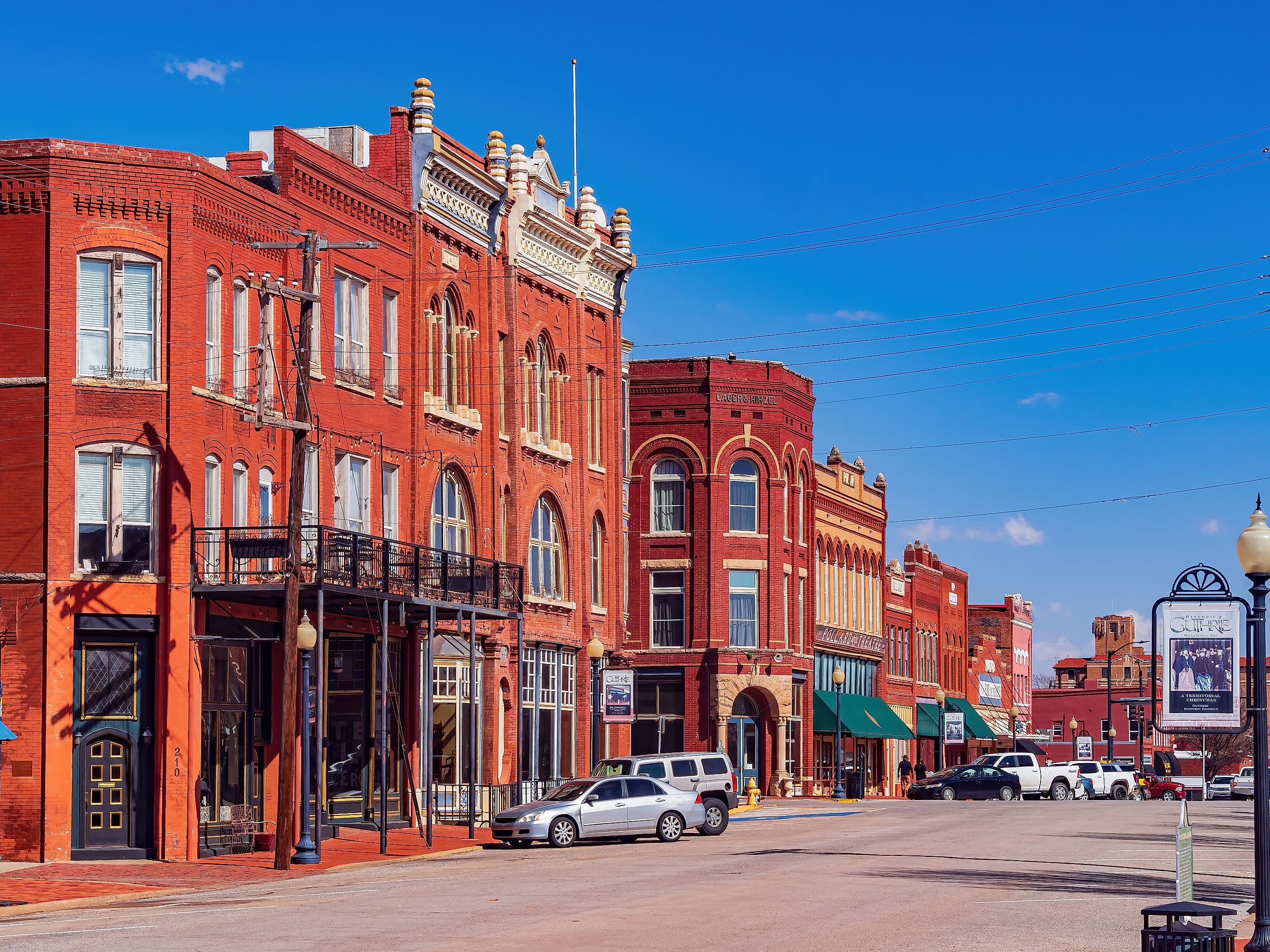
Guthrie

Guthrie's Main Street features brick storefronts with wrought-iron balconies and turn-of-the-century detailing run block after block, part of a 1,400-acre district that is the largest contiguous historic district on the National Register of Historic Places. It was the territorial capital from 1890 and then the first state capital, until the seat of government moved to Oklahoma City in 1910.
Today, those balconies overlook sidewalk tables instead of lawmakers. The Pollard Theatre still lights up its marquee most weekends inside a brick-and-native-stone building from 1901 that sold furniture and doubled as the town's funeral parlor before George Pollard turned it into a vaudeville house in 1919. The Oklahoma Territorial Museum makes for an easy detour a block off Main. Around it, the storefronts hold restaurants, antique dealers, and boutiques, with enough foot traffic to keep the block busy all day.
Enid

About an hour north of Guthrie, Enid built its downtown around one of the largest town squares in Oklahoma. The Enid Downtown Historic District spans 21 blocks of Art Deco and Classical Revival buildings, bordered by Randolph, Maine, Independence, and Grand streets. The 1931 Broadway Tower marks the Art Deco end of it, and the blocks around the square run to galleries and restaurants.
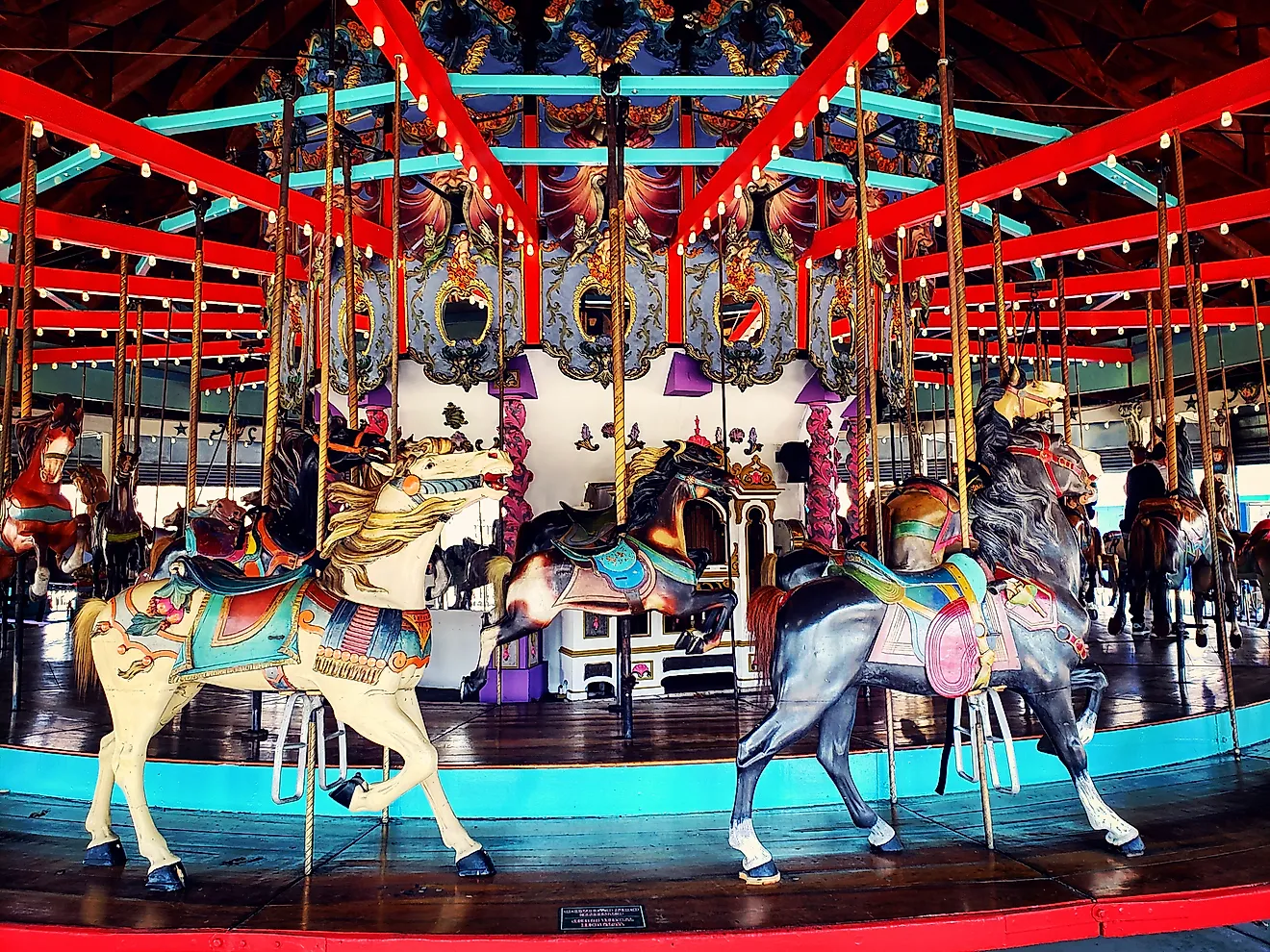
The old Masonic Temple went up in 1924 and now houses the Enid Symphony Center. The orchestra for which it was renovated has been playing since 1905, which makes it the oldest in the state. Down the block, the Gaslight Theatre runs a nine-show season and stages the state's only free Shakespeare in the Park each summer at Government Springs Park. On First Fridays from April through November, the square closes to traffic for live music and late shopping hours. Meadowlake Park, a few minutes out from downtown, adds a carousel and a miniature train through the warm months.
Claremore

The mineral-water baths that first drew crowds to Claremore are long gone, but the street they paid for is still here. Will Rogers Boulevard, named for the hometown humorist and vaudeville performer, keeps an unhurried pace that suits his reputation. The old Will Rogers Hotel still stands over the block, its brick facade intact from those bathhouse years.
The Will Rogers Memorial Museum sits a short drive off the boulevard on a hilltop Rogers picked out himself, with lawns worth walking before you head inside. A few blocks away on Historic Route 66, the J.M. Davis Arms and Historical Museum holds what it bills as the largest privately amassed firearms collection in the world. Davis ran the Mason Hotel downtown and hung guns on its walls for years, then signed the collection over to the state in 1965 on the condition that admission stay free. It still is. Through the warmer months, food trucks and live music take over a stretch of the boulevard one Thursday evening a month, and the crowd skews local.
Pawhuska

Kihekah Avenue is the main drag of the Osage Nation's capital, and it carries more per block than a street in a town this size usually does. The Osage Nation Museum, founded in 1938 and the oldest tribally owned museum in the country, occupies an 1872 sandstone building that served as a chapel and school before crews rebuilt it as a museum in the 1930s. Admission and parking are free, and the rotating galleries are worth the stop for the art alone.
The Constantine Theatre started out as the Pawhuska House Hotel in the 1880s, until a Greek immigrant named C.C. Constantine remodeled it into an opera house in 1911, complete with a Greek Revival stage. It still books live music and theater, a few steps off Kihekah on West Main. Farther up the avenue, the Pioneer Woman Mercantile is the reason Pawhuska turns up on food-travel itineraries, with Ree Drummond's restaurant and bakery inside a restored 1910 building. Grab a plate there, then walk the rest of Kihekah past storefronts that went up during the Osage oil boom.
Stillwater

Southwest of Pawhuska, Stillwater's downtown runs on the year-round buzz of a university town. The Downtown Stillwater Cultural District packs the OSU Museum of Art and the Stillwater History Museum at the Sheerar into a few walkable blocks, with the Prairie Arts Center a short walk further on. An evening downtown moves easily between the galleries and the patios.
Over on The Strip, closer to campus, Eskimo Joe's opened as a beer-and-t-shirts bar in July 1975. It only became a restaurant in 1984, when Oklahoma raised the drinking age, and the kitchen went in. The cheese fries arrived with it, and George H. W. Bush name-checked them at an OSU commencement in 1990. Back on Main Street, For Pete's Sake stocks Cowboys gear, and Wooden Nickel sells gifts and home goods. Third Friday events bring extended hours and a steady crowd downtown.
Bartlesville

A 19-story Frank Lloyd Wright skyscraper rises straight out of downtown Bartlesville, northeast of Pawhuska. The Price Tower is the only one Wright saw completed, and it gives a town this size a skyline it has no business having. Its copper-and-concrete form earned the nickname "the tree that escaped the crowded forest."
The tower itself has been closed to visitors since 2024, when its former owner ran out of money. A Tulsa company bought it in May 2025, the last of the litigation was cleared in March 2026, and a restoration is now the plan. Visit Bartlesville runs exterior tours in the meantime, and the building is just as intriguing from the sidewalk. A few blocks down Dewey, Theatre Bartlesville has been staging community productions in this town since 1926. Up Cherokee Avenue, the Frank Phillips Home preserves the oilman's 1909 mansion, 26 rooms kept close to the way the family left them.
Medicine Park

Southwest of the rest, at the foot of the Wichita Mountains, Medicine Park's Main Street looks like nowhere else in Oklahoma. Smooth, rounded red granite stones are hand-set into nearly every wall and storefront in town. The effect is a warm reddish cast over the whole place. Founded in 1908 as the state's first resort town, it earned the nickname America's First Cobblestone Community. Those cobblestone walkways lead down to Bath Lake, the swimming hole formed by damming Medicine Creek.
Bob Wills and his Texas Playboys played the town's dance hall through the 1930s, back when trains ran swimmers in from Oklahoma City. The Old Plantation, a three-story cobblestone pile built in 1910 and reopened in 2008 after a restoration, still serves steaks and catfish across from the creek. Footbridges cross the water, and the light on the granite around sunset is the reason people linger. With the Wichita Mountains Wildlife Refuge minutes away, a walk down Medicine Park's Main Street can end with bison and granite peaks rather than a parking lot.
What Keeps These Streets Moving
Architecturally, these towns have almost nothing in common. Guthrie is territorial brick, Enid is Art Deco around a square, and Medicine Park is granite set by hand. What they share is a run of occupied ground-floor storefronts with enough landmark attractions to pull people downtown on a weeknight, whether that is a theater in Guthrie, a symphony hall in Enid, an opera house in Pawhuska, or a university sitting at the edge of Stillwater's Main Street.