7 Breathtaking Towns to Visit on the Atlantic Coast
At 1,530 feet, Cadillac Mountain rises over Bar Harbor, Maine, the highest point on the Atlantic coast of the United States, and the view from its bare granite top reaches across Frenchman Bay, its spruce islands, and the open ocean past them. Far to the south, the water turns clear turquoise over the reef flats off Marathon in the Florida Keys, where the old Seven Mile Bridge stretches toward the horizon. Stonington, Connecticut, occupies a point so narrow that the water shows at the end of every street. Views like these line the coast, and these towns are where they peak.
Bar Harbor, Maine

Aerial view of Bar Harbor, Maine
Bar Harbor is on Mount Desert Island, at the gateway to Acadia National Park on the Maine coast. The park spans nearly 49,000 acres of granite domes, cobble beaches, and spruce forest, and Cadillac Mountain rises above the town, a paved road climbing to its summit. The Park Loop Road and the carriage roads financed by John D. Rockefeller Jr. reach most of it. Bar Harbor is the base most visitors work from.
Frenchman Bay opens directly off the waterfront, and whale-watching boats leave the pier through the warmer months for the feeding grounds of finback and humpback whales offshore. The Abbe Museum in town is devoted to the Wabanaki people, the region's Native inhabitants for the past 10,000 years. The Shore Path, an easy walk along the bay, passes the large summer houses left from the town's Gilded Age as a resort for wealthy families.
Portsmouth, New Hampshire

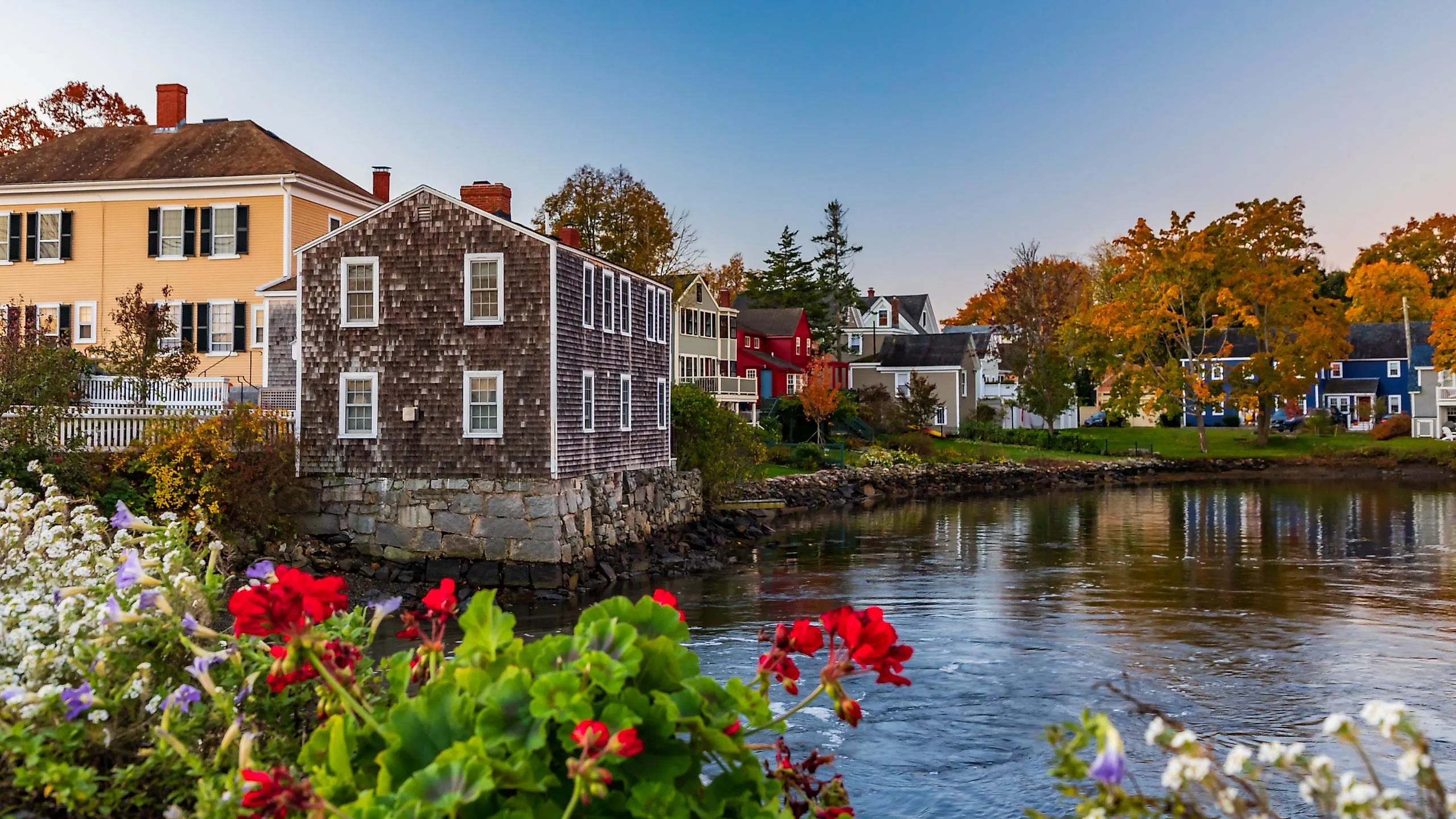
Portsmouth was settled in 1630 on the Piscataqua River, which forms the border between New Hampshire and Maine. It is one of the oldest settlements in the country. The colonists named the spot Strawbery Banke for the wild berries on the riverbank, and that neighborhood is now Strawbery Banke Museum, an outdoor living-history site of several dozen restored houses across four centuries of New England life.
The USS Albacore, a 1950s research submarine, rests in a berth in town as a museum, open to walk through. Down the river at New Castle, the Portsmouth Harbor Lighthouse was first established in 1771 and still marks the harbor entrance. Offshore lie the Isles of Shoals, a cluster of rocky islands reached by tour boat from the waterfront.
Manchester-by-the-Sea, Massachusetts

Manchester-by-the-Sea is a small town on Cape Ann, on the North Shore of Massachusetts. It went by Manchester until 1989, when residents voted to add the suffix and settle the long-standing confusion with the much larger Manchester, New Hampshire. The vote was close, 97 to 95.
Singing Beach, named for the squeak of its sand underfoot, is the best known of the town's beaches and a short walk from the commuter rail station. White Beach is the quieter option. The Manchester Historical Museum, in the 1820s Trask House, lays out the town's maritime and domestic history. Hammond Castle, a stone medieval-style house the inventor John Hays Hammond Jr. built in the 1920s, stands just over the line in Gloucester.
Stonington, Connecticut

Stonington Borough is a long, narrow point reaching into Fishers Island Sound near the Rhode Island line, one of the few places where Connecticut faces close to open ocean. The streets are tight and walkable, lined with 18th- and 19th-century houses, and Water Street threads the length of the borough past its cafes and shops. A small fishing fleet, one of the last in Connecticut, still works out of the harbor below the point.
The Captain Nathaniel B. Palmer House, the Victorian home of the sealing captain who sighted Antarctica, is open seasonally as a museum run by the Stonington Historical Society. The Old Lighthouse Museum, in a granite tower from 1840, traces the borough's whaling and War of 1812 past, including the British naval attack the town repelled in 1814. A few miles north, in Mystic, the Mystic Seaport Museum is the largest maritime museum in the United States, with a re-created 19th-century village and the last wooden whaleship afloat.
Lewes, Delaware

View of downtown Lewes, Delaware.
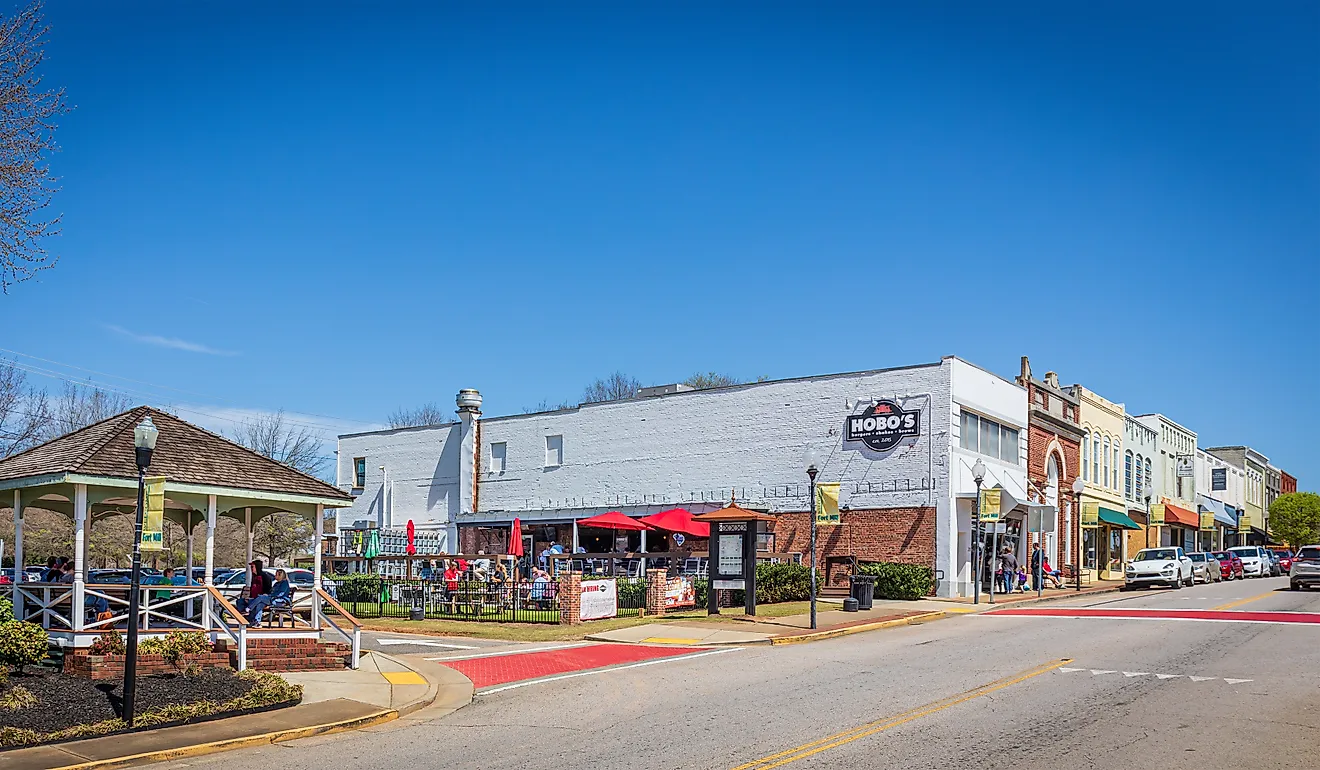
Lewes was the first European settlement in Delaware, founded by Dutch colonists in 1631 as a whaling station they called Zwaanendael. The original colony lasted barely a year before a conflict with the Lenape ended it, but the town that later took hold on the site calls itself the first town in the first state. The Zwaanendael Museum, built in 1931 in the style of a Dutch town hall, lays out that history.
The Cannonball House on Front Street still carries a British cannonball in its wall from the War of 1812 bombardment, and it now serves as the town's maritime museum. Just east of town, Cape Henlopen State Park spreads over the dunes where Delaware Bay meets the Atlantic, with swimming beaches, trails, and the gun batteries and observation towers of Fort Miles, a World War II coastal defense. Pirates of Lewes Expeditions offers a costumed pirate cruise on the bay for families.
Manteo, North Carolina

Downtown Manteo, North Carolina, showing the brick sidewalks and Poor Richard's Sandwich Shop.
Manteo is the seat of Dare County, a town on Roanoke Island between the North Carolina mainland and the Outer Banks. The island carries the first chapter of English America. At Fort Raleigh, on the north end, English colonists landed in 1585 and again in 1587, and the second group, remembered as the Lost Colony, vanished without a trace by 1590. Virginia Dare, the first English child born in the New World, was born there in 1587.
On the Manteo waterfront, the Roanoke Marshes Lighthouse is a reconstructed screwpile light, a square cottage on stilts over Shallowbag Bay. The Outer Banks History Center collects records and photographs of the region, and the Pea Island Cookhouse Museum preserves the building tied to the all-Black life-saving crew that worked this coast. The North Carolina Aquarium, on the same island, has sharks, rays, and sea turtles.
Marathon, Florida

Marathon spreads across a string of islands in the middle of the Florida Keys, about halfway between Key Largo and Key West. It started as a fishing and railroad town and still works the water, with charter boats and a commercial fleet out of its harbors. The Original Marathon Seafood Festival, held each spring, brings thousands for local lobster and stone crab.
Sombrero Beach, on the ocean side, is the town's main public beach, with soft sand and calm, shallow water. Crane Point Museum and Nature Center protects a 63-acre hardwood hammock with nature trails, a natural history museum, and one of the oldest houses in the Keys outside Key West. The Shady Palm Art Gallery shows work by local artists. Just west of town, the old Seven Mile Bridge, a relic of Henry Flagler's Over-Sea Railroad, parallels its modern replacement and reopened to walkers out to Pigeon Key in 2022.
The Towns The Atlantic Built
The Atlantic shows up differently in each of these towns. In Portsmouth it is three centuries of colonial brick, in Lewes the Dutch foothold of 1631, and in Manteo the lost English colony. What ties them together is the ocean itself, the reason each town exists and the thing that still sets its rhythm. The colonial seaports of the north and the island towns of the south have little else in common, but they share a coastline and centuries of living along it.