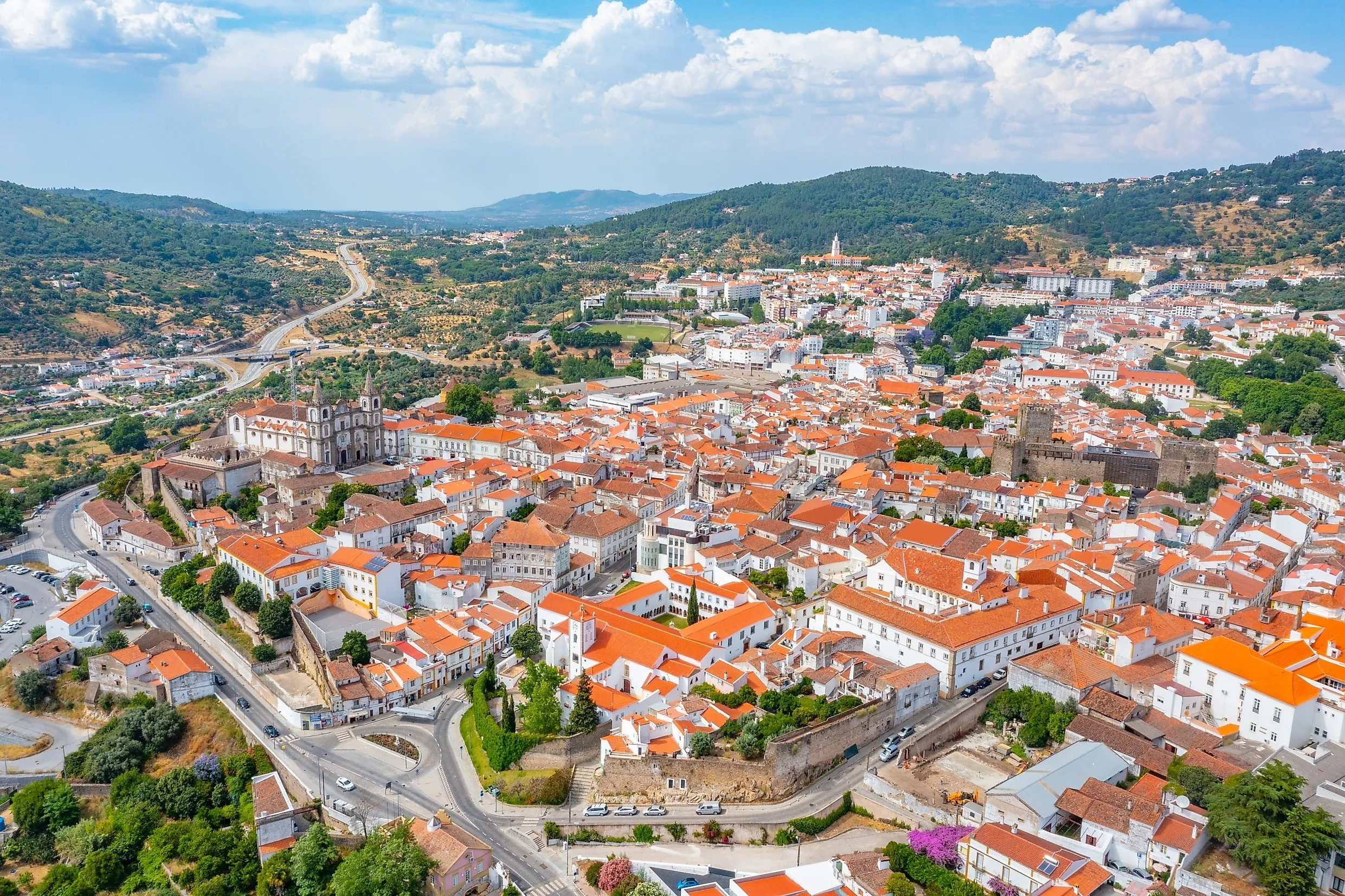
6 Wallet-Friendly Small Towns To Retire In Portugal
The hot springs in Chaves come out of the ground at 76°C, and you can drink a glass for free at the town fountain. That's the kind of detail that gets lost when Portugal retirement talk stalls at the coast. The interior has Templar castles, thermal spas, and a fair that's run since 1273. Property in these six towns lists at half the national rate or lower. The unhurried Portugal that made the country famous still lives here.
Chaves (Norte)

Your joints will thank you. Termas de Chaves taps some of the hottest natural springs in Europe at 76°C, and its bicarbonate-rich waters are used clinically for arthritis, musculoskeletal pain, digestive disorders, and respiratory complaints. The spa expanded in March 2025 with the Aquae Salutem complex, the first outdoor thermal pools in mainland Portugal, so the wellness infrastructure here is brand new. The Romans named the town Aquae Flaviae and took the waters seriously enough to build the Roman Bridge of Chaves under Emperor Trajan around 100 AD. It still carries foot traffic, and it remains one of the best-preserved Roman bridges in the country.
Daily life is just as practical. The 14th-century granite keep of the Castelo de Chaves houses the town's military museum and looks out over the valley, the weekly market and local tascas keep things sociable, and the smoked chouriço and presunto are reason enough to move here on their own. Usefully for older residents, the town center is notably flat, which is rare in northern Portugal. For those planning ahead, the licensed Hotel Geriátrico de Chaves provides residential senior care with nursing services a couple of minutes from the historic center. The expat community is small and well integrated, mostly French, British, and Dutch. The local property market lists around €1,000 per square meter, less than half the national figure per properstar's recent market data.
Guarda (Centro)

The Portuguese describe Guarda with five Fs: fria, farta, forte, fiel e formosa, meaning cold, abundant, strong, faithful, and beautiful. Take the first one seriously. This is the highest city in Portugal, set in the northeastern interior with four genuine seasons and direct access to the Serra da Estrela mountains for hiking. If you want a Portuguese retirement that feels alpine rather than coastal, this is the one, and it is one of the cheapest cities in the country to buy into, at roughly €860 per square meter. The historic center is built almost entirely from local granite, with the 14th-century Sé da Guarda cathedral at its core, still drawing daily foot traffic rather than tour groups.
The cultural calendar reaches beyond the city. About 30 minutes north, the walled town of Trancoso hosts the Feira de São Bartolomeu each August, founded in 1273 by royal charter of King Afonso III and recognized as the oldest free fair in Portugal. After 750+ years it still draws crowds for concerts, crafts, and regional food. Back in Guarda, the Museu da Guarda covers the region's history, the Teatro Municipal da Guarda puts you close enough to the stage to read the musicians' set lists, and the surrounding highlands supply mountain cheese and high-altitude wines through local shops like Nobre Vinhos e Tal. Cool summers, serious history, and granite that has outlasted seven centuries.
Portalegre (Alto Alentejo)

Portalegre's claim to fame hangs on walls. The Museu da Tapeçaria de Portalegre preserves the town's hand-woven tapestry tradition, an artistic practice with international recognition, and its collection includes works after some of the biggest names in 20th-century Portuguese art, Almada Negreiros and Vieira da Silva among them. It's the kind of museum a town ten times this size would brag about. The town around it runs greener and cooler than the Alentejo stereotype, with tree-lined avenues and shaded gardens that take the edge off summer, which matters more in retirement than any brochure admits.
When you want bigger landscapes, the Parque Natural da Serra de São Mamede begins essentially at the edge of town, with hiking trails, native wildlife, and medieval villages scattered through the hills. For evenings, the Centro de Artes e Espectáculos de Portalegre runs concerts and performances in a hall with acoustics that outclass the ticket prices. The entry cost stays low at roughly €1,010 per square meter, still less than half the national figure, for a town with genuine cultural depth and a national park on its doorstep.
Tomar (Centro)

Tomar was the headquarters of the Knights Templar in Portugal, and the Convento de Cristo they began on the hill above town is now a UNESCO World Heritage Site, open daily for visits and guided tours. Living below a monument like that changes the texture of a town. Tomar gets a steady, cultured stream of visitors year-round without ever being overrun, and the cafés, restaurants, and services stay better than a town of this size has any right to expect. It sits in the old Ribatejo province, Portugal's agricultural heartland, roughly 90 minutes from Lisbon by road or rail, which keeps the airport and specialist hospitals within practical reach.
The day-to-day pace is set by water. The Nabão River runs straight through the center with banks made for slow walks, and the Castelo do Bode reservoir adds boating, fishing, and swimming twenty minutes away. For a lighter evening, the Cineteatro Paraíso programs films and live shows in town. The property market sits at the high end of this list at around €1,560 per square meter, still roughly 30 percent below the national median. Tomar is what you choose when you want the connection to Lisbon without the Lisbon invoice.
Beja (Baixo Alentejo)

Beja has been continuously inhabited for more than two millennia, and the layers show. Roman foundations, medieval fortifications, and whitewashed Alentejo streets all stack within a few blocks, crowned by the Castelo de Beja, whose marble-and-granite keep is one of the tallest in Portugal and pays out long views over the wheat plains. For a city of its size, the cultural infrastructure is dense, with seven museums, seasonal festivals, and the Casa da Cultura de Beja, a working cultural center whose cafeteria doubles as a refuge from the Alentejo heat. The Museu Regional de Beja, housed in the 15th-century Convento da Conceição, holds gilded baroque woodcarving and one of the deepest archaeological collections in the south.
Outside the walls, the montado, the oak-and-wheat parkland that defines this region, rewards slow walking and birdwatching, and the Barragem do Roxo reservoir nearby adds open water to a famously dry landscape. The practical case is just as strong. Beja is a district capital with a hospital, rail links, and full services, and listings still run only about €1,380 per square meter. If your ideal retirement involves history underfoot, big skies, and an actual community calendar, Beja makes one of the most complete offers in the south.
Seia (Serra da Estrela, Guarda District)

Seia hands you the strangest combination in Portuguese retirement, the country's only ski slopes and a museum devoted entirely to bread. The town sits in the foothills of the Serra da Estrela with direct access to Torre, mainland Portugal's highest point, and to the Estância de Ski da Serra da Estrela, the mainland's only ski resort. Down in town, the Museu do Pão, billed as the largest museum complex devoted to bread anywhere in the world, has drawn around 80,000 visitors a year since opening in 2002, complete with a restaurant and a historic grocery where the bread comes out warm. It sounds like a joke until you visit, and then it becomes a habit.
In Portugal's overheated property market, Seia's numbers read like a typo. Listings sit at roughly €925 per square meter, the second-cheapest entry on this list. The town backs that up with real amenities. The Casa Municipal da Cultura hosts the CineEco environmental film festival each October in a theater with first-rate acoustics, and for those planning long-term care, the Residência Sénior D. Emília, a purpose-built senior residence open since 2018, operates in town. Mountain air, festival season, fresh bread, and four-figure-per-square-meter prices that still start with a nine hundred. Hard to argue with the pitch.
Choosing Your Corner of Portugal
The cheapest doors in are Guarda and Seia, both under €1,000 per square meter, both in the mountains, and both built for retirees who prefer seasons to sand. Chaves adds thermal medicine and a flat town center for about the same money. Beja and Portalegre split the Alentejo between them, one with deep museums and big plains, the other with tapestries and shade. Tomar costs the most and earns it with Templar history and the Lisbon connection. None of these towns requires wealth, and all of them deliver the part of Portugal that made the country famous in the first place: the unhurried days, the long tables, and neighbors who learn your name.