6 Towns In the Southern United States That Were Frozen In Time
As anyone who lives in or has visited the Southern United States will attest, this beautiful part of the country is filled with towns of brick courthouse squares, centuries-old churches, and oak-shaded streets. From colonial-era communities in Virginia to Mississippi and Louisiana river towns lined with antebellum mansions, these fascinating places have held tightly to their architectural character and local traditions, making a visit feel a little like stepping straight into the past.
Some of these historic Southern towns are valued for their role in key moments of American history, while others reflect the region’s cultural roots. Whether settled by early colonists, shaped by the Civil War, or influenced by the development of industry and transportation, they each have fascinating stories to tell. For those interested in an authentic experience of the past, these six towns in the South definitely feel as if they were frozen in time.
Williamsburg, Virginia

Founded in 1699, Williamsburg served as the capital of the Virginia Colony until 1780 and is one of the most historically significant towns in the entire United States. Once the political and cultural heart of Virginia, it played a key role in the American Revolution as well as the formative years of the country. Today, Williamsburg is best known for its remarkable preservation as Colonial Williamsburg, a living history museum that brings the 18th century to life.

This 301-acre site features historic landmarks such as the Governor's Palace (1706), once home to Virginia's royal governors, and the Capitol Building (1705), where the Virginia House of Burgesses convened to discuss key issues like independence from Britain. Other notable sites include Bruton Parish Church (1715), an active Episcopal church that has hosted significant events in early American history and numerous social and political gatherings. Additionally, visitors can explore an impressive collection of 18th-century American furniture, silver, and ceramics at the DeWitt Wallace Decorative Arts Museum, founded in 1934 and recognized as a world-class institution.
Natchez, Mississippi

Natchez was established in 1716 and lays claim to being one of the oldest cities in the Mississippi River Valley. Once a key trading hub during the colonial era, Natchez became a prosperous center for cotton production in the antebellum South, a legacy that’s marked by an impressive collection of grand old plantation homes. Some of the best examples can be visited, including the magnificent Longwood, built in 1860 for the wealthy Wade family and featuring a striking octagonal design. Tours are available, or you can see this and many other mansions from this period during the Natchez Spring Pilgrimage, an event that’s been running for close to 100 years. Another important site that appears as if frozen in time is Natchez National Historical Park, which preserves key sites like Fort Rosalie, a French outpost dating from 1716.
The Natchez Trace Parkway is truly one of the South’s most beautiful drives, offering a scenic journey along a historic route that was cherished by Native Americans and later used by loggers. Stretching 444 miles along the Mississippi River to Nashville, it’s a wonderful place to explore history and nature. Plus, the town is home to the fascinating Natchez Indian Mounds, ancient earthworks built by the region’s early Native American communities, adding even more cultural richness to your visit.
Jefferson, Texas

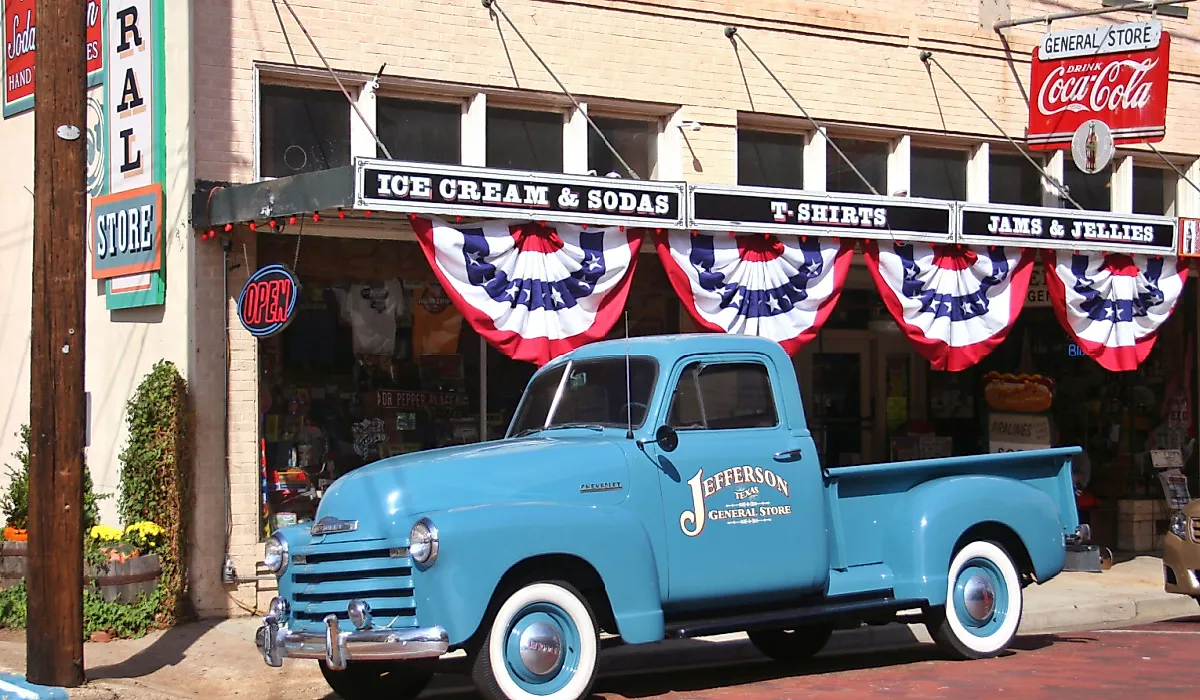
Founded in the 1840s, Jefferson developed into one of East Texas’s most important riverports as steamboats traveled along Big Cypress Bayou, giving the town a prosperous 19th-century boom that still shapes its character today. With its brick storefronts, historic homes, and old-fashioned downtown streets, Jefferson feels wonderfully preserved, offering visitors a strong sense of the region’s past. Its long-standing reputation as a place where history lingers makes it an easy fit for any list of Southern towns that seem frozen in time.
Start your exploration at the charming Jefferson Historical Museum, located in the town’s historic federal courthouse and post office. This stunning late-19th-century building is filled with fascinating exhibits about local commerce, culture, and river travel, offering a warm welcome to visitors. Don't miss the Excelsior House Hotel, a beloved historic inn that has been hosting guests since 1858, bringing an authentic old-world charm to downtown Jefferson. Plus, Jefferson's ideal location makes it perfect for a trip to nearby Caddo Lake, where serene bayous, graceful cypress trees, and peaceful waters enhance the town’s already rich historic character.
St. Francisville, Louisiana

Pretty St. Francisville was established in 1809 and these days serves as a cultural and historical gateway to Louisiana’s plantation past. This charming town is home to several well-preserved antebellum estates, including Rosedown Plantation, built in 1835 and now a State Historic Site. This large estate boasts magnificent formal gardens that reflect the former grandeur of Louisiana’s once-active plantations. Another key attraction is the Oakley Plantation at Audubon State Historic Site, built in 1806 and where famed naturalist John James Audubon stayed and painted in the 1820s. This must-visit attraction in St. Francisville does a great job of preserving both the plantation and the natural environment that inspired his work.

The town boasts a vibrant Louisiana Creole culture, reflected in its French and Spanish-influenced architecture and traditions. Visitors can experience this heritage during the St. Francisville Fall Festival, featuring local crafts, food, and music. Its close proximity to the Mississippi River makes it an ideal starting point for exploring nearby natural landmarks, such as the Tunica Hills, with their scenic forested ridges perfect for hiking.
Washington, Georgia

Among the approximately 94 communities named after America’s first President, Washington, Georgia, stands out as one of the most charming. Established in 1780, it’s one of Georgia’s oldest settlements and has a rich history connected to the Revolutionary and Civil Wars. Visitors will love the town’s Historic District, which beautifully preserves its 19th-century architecture, offering a charming step back in time. Notable sights include the Robert Toombs House, built in 1813, and the historic Old Jail from 1810.
The Washington-Wilkes Historical Museum is a must-visit and displays artifacts from the Revolutionary War, including items from the town’s role as a temporary capital during the conflict. For those wanting to combine their love of history with a little exercise, the Cherokee Path trail, which traces the route of the Cherokee nation, runs through the area, providing both a historic and geographic context to the town’s development.
Abbeville, South Carolina

Founded in 1838, Abbeville is a charming small town full of history connected to the South’s antebellum period. It’s a favorite spot in South Carolina, especially for exploring the memorable Abbeville Historic District. One highlight is the Abbeville Opera House, built in 1908, which still hosts lively performances today. Abbeville also holds a special place in history as the site of the last gathering of the Confederate Cabinet in 1865, held at the Burt-Stark Mansion, which visitors can tour. Other interesting sights include the Old Jail, built in 1839, and the Confederate Cemetery from 1865, both worth exploring for history buffs.
The best time to visit this frozen-in-time town? Consider arriving in early 2026 for a chance to join in the Abbeville Spring Festival, now in its 49th year and featuring parades, arts and crafts, and great Southern food.
Dadeville, Alabama

The historic Alabama town of Dadeville was established in 1836 and is a great destination for those wanting to sample a little of that classic old Southern charm. Start your exploration in the Dadeville Historic District with its well-preserved 19th-century buildings, many of which retain the town’s antebellum character. Highlights include the Old Dadeville Courthouse, built in 1854 in the early years of Alabama’s statehood.
The town is conveniently located near Lake Martin, a beautiful reservoir that’s become a favorite spot for visitors to enjoy outdoor adventures like kayaking and fishing. If you're planning to visit, consider timing your trip with the Dadeville Fall Festival, a warm and inviting community event perfect for families. It features a Kid Zone with fun bouncy houses, pony rides, and a petting zoo. Plus, there are lively music performances, an exciting raptor bird show, charming arts and craft vendors, and a variety of delicious food and drinks to enjoy.
The Final Word
For those who enjoy a little history with their travels, these towns in America’s South have much to offer. Boasting downtown areas that seem as if they’ve been frozen in time, they each present a unique perspective on the region’s rich history and cultural evolution. Whether through Civil War landmarks, antebellum estates, or fascinating local traditions, each preserves aspects of American history that continue to resonate today. Visiting these six frozen-in-time towns in the Southern United States will definitely allow you to experience history in its most authentic form.