4 Rattlesnake Hotspots In Missouri
For some people, the mere mention of a snake is enough to make them recoil in fear, but perhaps no snake in the United States is as well-known as the venomous Rattlesnake, known best for the iconic rattle it makes at the end of its tail to ward off predators. Missouri has close to 50 species and subspecies of snakes. Historically, four rattlesnakes are known from within its borders, though only three are still currently found there. Missouri’s diverse wildlife habitats, including prairies, Ozark Mountains, river valleys, and lakes, make for a more than hospitable environment for the state's serpents. Read on to find out where Missouri’s Rattlesnake hotspots are located.
Taum Sauk Mountain State Park

Taum Sauk Mountain State Park spans 7,500 acres in the St. Francois Mountains and is home to the highest point in Missouri. The park is popular among hikers and campers alike, and has ample opportunities for picnicking. One of the most popular hikes leads to the top of Taum Sauk Mountain, which rises to 1,772 feet above sea level. Its remote setting provides those who visit it with a truly authentic wilderness experience; however, its remoteness is exactly why a couple of the state’s venomous snakes also call it home.

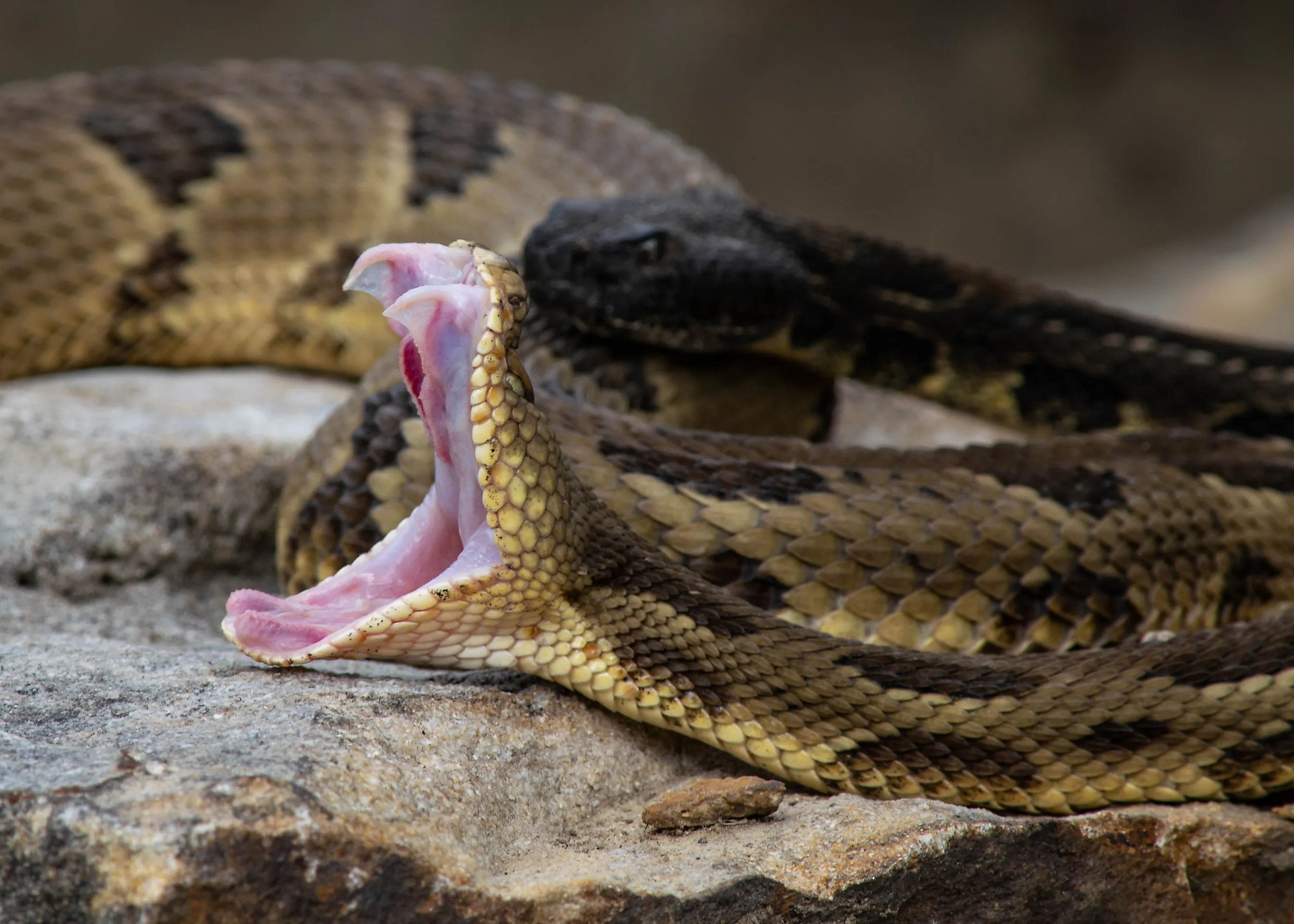
The park is home to Missouri’s largest species of venomous snake, the Timber Rattlesnake (Crotalus horridus), which has been known to attain lengths of up to 75 inches. The park is also home to one of the smallest species of Rattlesnakes in North America, the Western Pygmy Rattlesnake (Sistrurus miliarius streckeri), which reaches average lengths of 15 to 22 inches, although individuals have been known to reach 33 inches. This species is limited to counties bordering Arkansas and the eastern Missouri Ozarks.
Mississippi River

The Mississippi River flows for 2,350 miles from its origin at Lake Itasca in Minnesota to the Gulf of Mexico. The river has a massive watershed that drains 3.2 million square kilometers across 31 different states and two provinces of Canada. The Mississippi River and its floodplain provide habitat for a diverse range of animals, including Rattlesnakes.
The Timber Rattlesnake (Crotalus horridus) can be found in rocky river bluffs, including sections of Missouri’s Mississippi River blufflands. It favors rugged, forested hillsides with ledges and bluffs; in the northern half of Missouri, individuals may congregate at overwintering dens in rock ledges and river bluffs. Although dangerously venomous, it is generally secretive and usually avoids people. The Eastern Massasauga (Sistrurus catenatus) historically occurred along the Mississippi River floodplain but has largely been extirpated from Missouri and is federally threatened.
Ozark National Scenic Riverways

The Ozark National Scenic Riverways is the first National Park to protect a river system. The park covers over 80,000 acres around the Current River and its major tributary, the Jacks Fork River. These rivers are known for their clear, spring-fed water that is optimal for fishing, swimming, and canoeing. The rivers flow through the Ozark Mountains countryside and include remarkable natural features, including scenic bluffs, sprawling pastures, and over 300 caves and hundreds of freshwater springs within the park.

The Timber Rattlesnake and Pygmy Rattlesnake are also present within the park. Timber Rattlesnakes have a preference for wooded forest hillsides, south-facing rocky areas, and river bottoms. Pygmy Rattlesnakes are most likely to be seen in semi-shaded hillsides; however, they are fairly secretive, so people seldom encounter them.
Mark Twain Lake

Mark Twain Lake is an 18,600-acre lake in northeast Missouri that is a popular spot for water-based activities. There are several horseback riding and hiking trails around the lake, camping facilities range from primitive sites to developed sites; many offer hookups, grills, picnic tables, showers, and restrooms.

The lake itself is a premier fishing destination, known for its crappie and bass tournaments. However, the rocky ledges and bluffs around the lake are favored by Timber Rattlesnakes, which can often be seen basking in the sun. They can also be observed on roadways near Mark Twain Lake, where the flat surface absorbs heat, allowing them to bask. Luckily, Timber Rattlesnakes are shy and usually choose to remain still to avoid being noticed.
Missouri's Secretive Rattlesnakes
Although there are certified Rattlesnake-dense areas throughout Missouri, some species, like the Eastern Massasauga, are state-endangered and now have a limited range in the state, whereas others that are statewide, like the Timber Rattlesnake, are shy and generally avoid people. Missouri was also historically home to the Prairie Massasauga (Sistrurus tergeminus), which now has a highly restricted, endangered presence in parts of the state. However, even though you are unlikely to see a Rattlesnake, proper precautions should be exercised when recreating outdoors in Missouri, such as wearing protective footwear, avoiding heavily wooded areas, and keeping your hands and feet out from under rocks and logs.