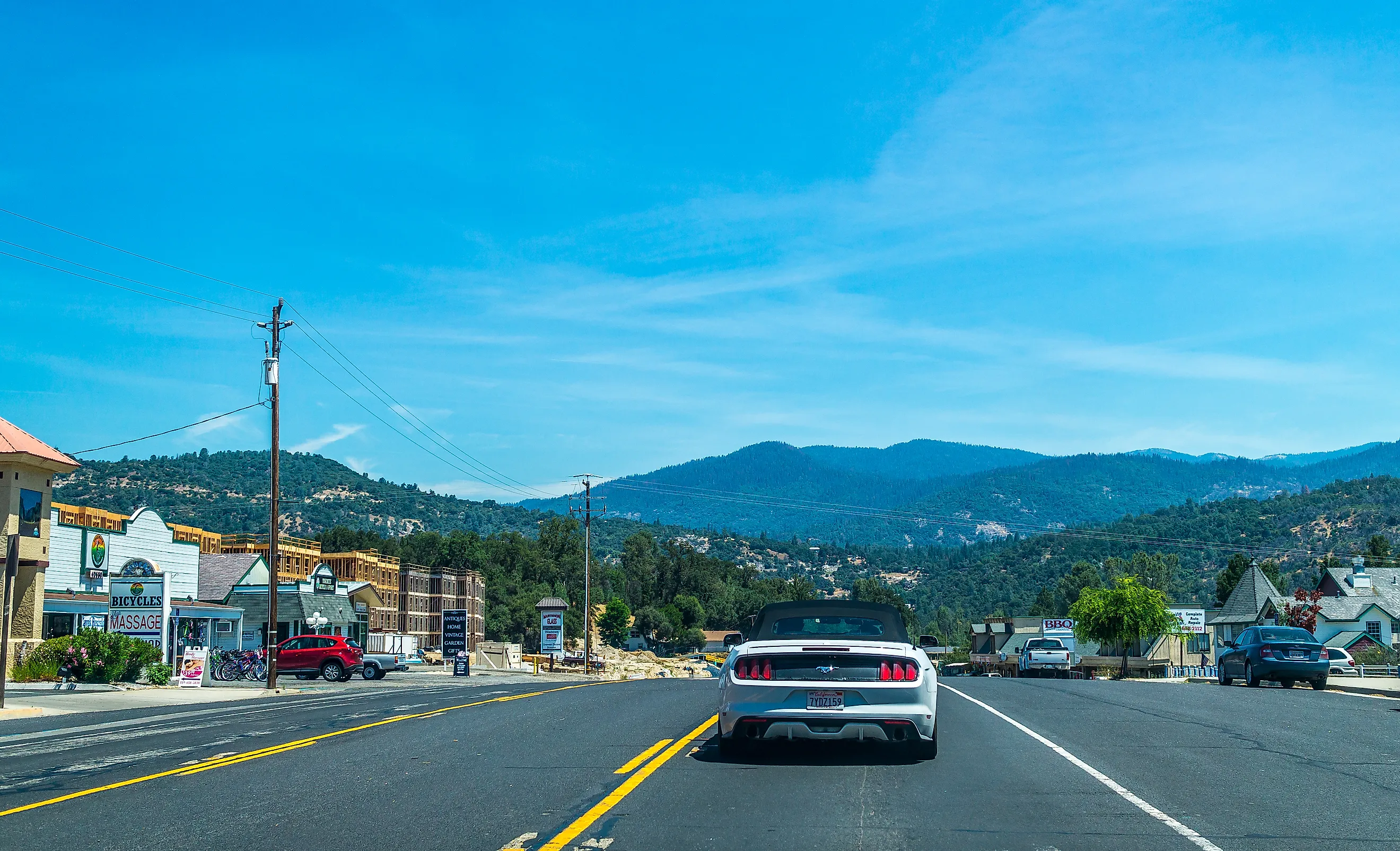
2026's 10 Best Small Towns To Visit In California's Sierra Nevada
US Highway 395 runs below the abrupt eastern face of the Sierra Nevada, passing sagebrush, volcanic formations, and roads that climb toward cold mountain lakes. Across the western foothills, granite gives way to oak woodland, river canyons, and towns shaped by the California Gold Rush. That variety is what makes the communities scattered through the region worth more than an overnight stop. Bishop sends travelers west into a canyon filled with lakes and trailheads. Sonora puts a preserved Gold Rush district and historic railroad within a short drive, while Nevada City has trails that leave from near its nineteenth-century downtown. These towns give travelers specific reasons to stop the car and spend a day or two outside California's larger cities and tourist destinations.
Mammoth Lakes

Mammoth Lakes can keep a traveler busy without requiring much time behind the wheel. The Village at Mammoth sits at the base of a gondola up Mammoth Mountain and gathers most of the restaurants and shops a visitor needs within one pedestrian plaza. Uphill from town, the road enters the Mammoth Lakes Basin, where several lakes sit within a few miles of one another. Lake Mary is the largest in the basin and a favorite for fishing and boating. South of town at Convict Lake, Mount Morrison rises sharply behind the water, giving photographers one of the Eastern Sierra's most recognizable compositions. A roughly three-mile trail circles the lake, so visitors do not need to commit to an all-day hike to see it from several angles.
Volcanic history becomes the focus at Devils Postpile National Monument, where columns of basalt reach as high as 60 feet. Rainbow Falls, a 101-foot waterfall on the Middle Fork of the San Joaquin River, lies farther down the trail. Note that access requires extra planning in 2026, as Reds Meadow Road has construction-related restrictions, with openings limited to certain days during much of the summer. The town itself holds an afternoon without any of that planning. The Mammoth Museum occupies the Hayden Cabin, an early twentieth-century log cabin on Mammoth Creek. The Southern Mono Historical Society runs it and keeps snowshoes, quilts, and the tools of the ranching and mining families who wintered here.
Truckee

Donner Lake is only a few minutes from downtown Truckee, but there is a reason to stop before heading directly to the water. Donner Memorial State Park tells a much broader story of the Sierra than its name might suggest. Inside the park, exhibits cover the Washoe people, westward migration, the Donner Party, and the railroad that eventually crossed these mountains. The Pioneer Monument stands near the visitor center. Trails continue from there through the forest toward Donner Lake.
On a summer afternoon, the lake is better suited to kayaking, paddleboarding, fishing, or swimming. Truckee's railroad history is still visible after returning to town. Commercial Row follows the tracks through the historic center, where brick and wooden buildings now contain shops and restaurants. The Truckee Railroad Museum stands beside the visitor center on the same street, inside a railcar, and covers the Chinese labor crews who cut the line through these mountains. Two blocks north on Jibboom Street, the Old Truckee Jail Museum held prisoners from the 1870s into the 1960s, and both original cells remain in place.
South Lake Tahoe

Emerald Bay is the place to prioritize if there is time for only one outing around South Lake Tahoe. Highway 89 follows Lake Tahoe's southwestern shore toward overlooks above the narrow bay, where Fannette Island rises from the water. A trail descends roughly one mile from the highway to Vikingsholm, the 38-room Scandinavian-style house built on the shoreline in 1929. The climb back to the road is considerably less forgiving than the walk down, so visitors who want an easier day can admire the bay from the overlooks instead.
Eagle Falls lies nearby and can be combined with Emerald Bay when trail conditions allow. Staying near town has advantages on a warm day. Kayaks and paddleboards put visitors directly on Tahoe rather than above it. After snowfall, Heavenly Mountain shifts attention from the shoreline to ski runs high above the lake. Heavenly Village keeps its restaurants and shops going year-round at the gondola base on Lake Tahoe Boulevard. The gondola itself runs through the summer to an observation deck partway up the mountain. Farther west along the same boulevard, the Lake Tahoe Historical Museum traces the basin's pioneer and early resort years and keeps a relocated log cabin on its grounds.
Bishop

The drive west from Bishop toward Bishop Creek Canyon explains the town's appeal better than downtown ever could. The road leaves the broad Owens Valley and climbs into the Sierra, eventually branching toward separate high lake basins. Lake Sabrina sits at the end of one branch, surrounded by high peaks and trailheads. The road to North Lake becomes especially popular when nearby aspens turn yellow in fall. Bishop also has an outdoor attraction that requires considerably less elevation gain. The Buttermilk Country spreads across the base of the Sierra west of town, where enormous granite boulders have made the area internationally known among climbers.
Not every Bishop day needs hiking boots, however. Laws Railroad Museum and Historical Site occupies the original 1883 railroad depot and an 11-acre site north of town. Historic buildings, rail equipment, mining artifacts, and household objects show what life in the Owens Valley looked like when railroads connected its scattered communities. Erick Schat's Bakkerÿ on North Main Street draws a line most mornings for the sheepherder bread it has been turning out for decades. Over Memorial Day weekend, the Tri-County Fairgrounds fills for Mule Days, a run of packing competitions and a parade the organizers bill as the longest non-motorized one anywhere.
Mariposa

Highway 140 makes Mariposa an obvious base for Yosemite, but the road into the national park is part of the experience rather than dead time between destinations. East of town, the highway meets the Merced River and follows its canyon toward Yosemite. Spring snowmelt can turn the river into a powerful whitewater corridor. Rafting companies run trips when conditions permit. Yosemite Valley is close enough for a full day devoted to Yosemite Falls, El Capitan, and the trails beneath the granite walls.
The Mariposa Museum and History Center is worth an hour before that drive. Exhibits cover Native American history, the Gold Rush, mining, and the development of Mariposa County. The museum gives useful context to the historic buildings still standing around town. Built in 1854, the Mariposa County Courthouse on Bullion Street is the oldest courthouse still in use in California, and its second-floor courtroom has changed little since the nineteenth century. At the county fairgrounds south of downtown, the California State Mining and Mineral Museum displays the state's official gem and mineral collection. Its centerpiece is the Fricot Nugget, a crystalline gold specimen recovered in 1864.
Oakhurst

On a hot Sierra foothill afternoon, Bass Lake makes a convincing argument for postponing Yosemite until the following morning. The lake lies a few miles east of Oakhurst at roughly 3,400 feet and stretches about 4.5 miles. Its relatively warm water draws swimmers as well as boaters, water skiers, anglers, and paddleboarders. Yosemite's giant sequoias are the reason to get an earlier start the next day. Highway 41 leads from Oakhurst toward the park's South Entrance and Mariposa Grove, the largest of Yosemite's three giant sequoia groves. More than 500 mature giant sequoias grow there.
The Big Trees Loop reaches the Fallen Monarch and works for visitors short on time. The two-mile Grizzly Giant Loop goes farther, passing the Grizzly Giant and California Tunnel Tree. Fresno Flats Historic Village and Park on School Road collects buildings moved in from around the southern foothills. The group includes an 1870s schoolhouse, a jail, and a working print shop. For arts and entertainment, the Golden Chain Theatre puts on plays and musicals along Highway 41 throughout most of the year.
Groveland

Most travelers on Highway 120 have Yosemite Valley in mind, but Groveland also gives them access to a less-visited section of the national park. Hetch Hetchy occupies a granite valley in northwestern Yosemite. From O'Shaughnessy Dam, visitors can look across the reservoir toward the cliffs and waterfalls before deciding how far they want to hike. The trail toward Wapama Falls follows the reservoir and eventually reaches the waterfall, which drops about 1,400 feet. Spring generally brings its strongest flow.
Hetch Hetchy sits lower than much of Yosemite's high country, extending its hiking season, although summer afternoons can become hot. Back in town, the Groveland Yosemite Gateway Museum fills in the human history behind the landscape. Its collections cover mining, transportation, regional history, and Yosemite. On Main Street, the Iron Door Saloon and the Groveland Hotel carry most of the town's history between them. The saloon is billed as the oldest continuously operating one in California, with iron shutters shipped in during the 1850s and a ceiling papered in dollar bills. The hotel a few doors down dates to 1849 and still takes guests.
Sonora

Sonora makes it possible to see three versions of the Sierra foothills without repeatedly packing and unpacking at different hotels. The first outing runs a few miles north to Columbia State Historic Park. Rather than placing Gold Rush objects behind museum glass, Columbia preserves the old business district. Visitors can walk past historic storefronts, try gold panning, or take a stagecoach ride through streets that once served one of California's major mining communities.
Jamestown changes the subject to steam power. Railtown 1897 State Historic Park preserves locomotives, a roundhouse, and other equipment associated with the Sierra Railway. Sierra No. 3 has appeared in numerous film and television productions, including High Noon, Unforgiven, and Back to the Future Part III. Sonora itself accounts for the third. The Tuolumne County Museum on Bradford Street occupies an 1857 county jail, and the cellblocks now hold displays of mining tools, photographs, and settlers' belongings. Uphill on Snell Street, St. James Episcopal Church has stood since 1859, a Gothic Revival building locals call the Red Church.
Nevada City

A traveler can leave downtown Nevada City on foot and reach wooded creek trails without first driving deep into Tahoe National Forest. Broad Street contains many of the buildings that give the historic district its character. Nevada Theatre dates to 1865 and continues to host performances. Firehouse No. 1 Museum fills in the rest of the local record from an 1861 building on Main Street, and its holdings include an altar from a Chinese joss house that once served the county's mining camps.
From near downtown, trails descend toward Deer Creek. The Tribute Trail system links sections of forest and creekside terrain, including the Nisenan Tribute "Angkula Seo" Suspension Bridge. The South Yuba River is the one stop that still needs the car. Roads outside town reach trails, rocky banks, swimming areas, and historic crossings along the river corridor. Water conditions matter, particularly during periods of strong current, so swimming requires more judgment than a day at a developed lake beach.
Auburn

Old Town Auburn occupies hills above a much rougher landscape than its historic storefronts initially suggest. Toward the American River, roads and trails descend into steep canyons that were once filled with miners. The Placer County Courthouse rises above Old Town and dates from the 1890s. The Placer County Museum, on its first floor, covers local history and makes a sensible stop before following Highway 49 toward the river.
Auburn State Recreation Area protects about 40 miles along the North and Middle Forks of the American River. Hiking, fishing, mountain biking, horseback riding, and whitewater rafting all take place within the recreation area. Foresthill Bridge supplies the opposite perspective. Instead of standing beside the American River, visitors look down into its canyon from one of the area's most recognizable structures. Old Town repays a second look on the way back. The Bernhard Museum on Auburn Folsom Road began in 1851 as a hotel called the Traveler's Rest and later became a family home and winery. The rooms are furnished to the period. A block off the courthouse hill, the Old Town firehouse and its narrow bell tower still shelter a restored engine.
The Sierra Beyond The Famous Parks
The best Sierra Nevada itinerary does not have to race between Yosemite and Lake Tahoe. Some of the range's most memorable days happen on the roads between those headline destinations. Bishop Creek Canyon climbs from desert-like Owens Valley terrain toward high mountain water. Near Sonora, visitors can ride a stagecoach through Columbia and then spend an afternoon in the former county jail that now holds the local museum. Even the history changes with the landscape. Truckee tells the story of crossing the Sierra by wagon and railroad, while Nevada City and Auburn preserve pieces of the mining era along rivers that helped drive the Gold Rush.